

McGregor Is Recovering in Isolation — His Final UFC Fight Still Has No Date
GOATIFYConor McGregor's next comeback has a location and a personal ambition, but still no fight date. More than three months after a knee injury ended his return against Max Holloway in just 69 seconds, longtime training partner Dillon Danis says the former two-division UFC champion is recovering in isolation in Los Angeles, receiving round-the-clock care and working through rehabilitation.
Danis also described a difficult emotional aftermath to the July 11 fight before saying McGregor is now in a better place mentally. That is a meaningful update, particularly after five years away from competition, but it should not be confused with a medical clearance or a confirmed booking. McGregor wants to fight during International Fight Week in July 2027 and has one bout remaining on his UFC contract. Whether those two ambitions meet depends on a knee, a training camp and a promotion that has not yet named an opponent.
Danis Says McGregor Is in a Better Place — But He Is Not His Doctor
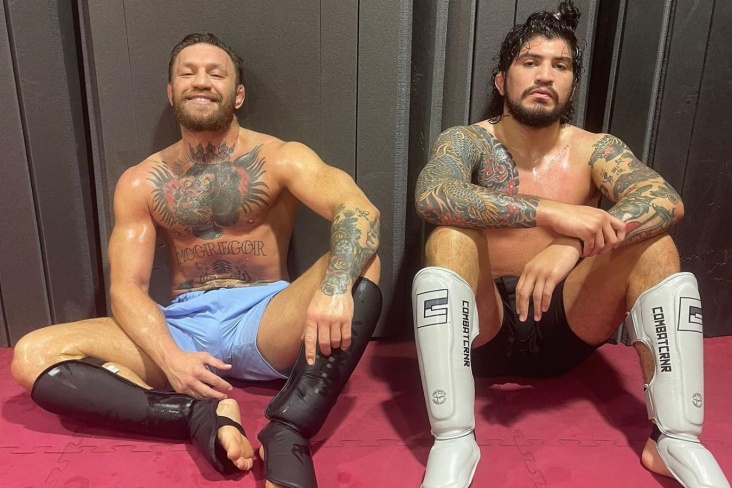
Dillon Danis has known McGregor for years as a friend and training partner, which makes his latest account more personal than the usual promotional speculation. He says McGregor struggled emotionally after his long-awaited return ended almost immediately, then gradually refocused on the work required to recover. Danis describes the fighter as isolated in Los Angeles, with round-the-clock nursing support and a regular exercise routine. He also says they speak frequently and that McGregor is in a better frame of mind.
Those details matter because this was not an ordinary defeat. McGregor spent five years trying to return after the leg fracture he suffered against Dustin Poirier in 2021. The Holloway rematch was supposed to provide a competitive answer to years of questions about whether his speed, timing and appetite for fighting had survived. Instead, a damaged knee stopped the contest before the audience could learn much about his current level. Losing the opportunity to test himself may have been as difficult to process as the physical setback.
Danis' relationship with McGregor also explains why his words should be read carefully. He has been part of the Irishman's wider training circle and is openly invested in seeing him succeed. That access can make an update informative, especially about mood and day-to-day motivation. It does not make Danis a surgeon, physiotherapist or UFC matchmaker. His description is a report from someone close to McGregor, not a public medical assessment.
There is a useful difference between an athlete feeling mentally ready to return and being ready to absorb takedowns, change direction under pressure and complete five hard rounds. The first can improve well before the second. McGregor's apparent shift toward a structured routine is positive news; it is not evidence that he can already handle the stresses of a fight camp. Until the fighter and his medical team provide a concrete training milestone, that distinction should frame every comeback headline.
The 69-Second Holloway Fight Turned a Five-Year Comeback Into Another Recovery
On July 11, 2026, McGregor stepped into the Octagon against Max Holloway for his first fight since July 2021. The rematch was thirteen years in the making: McGregor had beaten Holloway by decision in their first meeting in 2013, a fight during which he also suffered a knee injury. Their second encounter was supposed to show how both men had evolved. It lasted only 69 seconds.
McGregor attempted an explosive kicking attack early in the opening round, landed awkwardly and could no longer move reliably on the injured leg. Holloway was awarded a stoppage victory, but the result revealed almost nothing about how a healthy McGregor would have performed across a full fight. The bout's brevity created a particularly cruel uncertainty: the comeback ended, yet the central sporting question remained unanswered.
Subsequent updates established that McGregor had torn an anterior cruciate ligament and underwent reconstructive surgery in August. He had already faced an extended absence after the serious leg break against Poirier, making this another major interruption rather than a routine post-fight injury. A repaired ligament is only the beginning of a return-to-sport process. Restoring range of motion and strength is different from rebuilding the confidence and reactive movement required when an opponent is actively trying to upset your balance.
That distinction is especially important in mixed martial arts. A fighter needs to plant, pivot, kick, sprawl, wrestle and defend sudden changes of direction without consciously protecting one leg. McGregor's style has historically relied on distance management, fast counters and sharp movement. The test will not simply be whether he can run or lift weights; it will be whether he can execute those skills repeatedly at competition speed and tolerate the chaos of a live exchange.
None of this establishes that another comeback is impossible. It does explain why footage of a workout, a positive message from a friend or an optimistic social-media post cannot substitute for a staged progression back to full-contact training. The knee has to withstand the demands of fighting, not just the demands of rehabilitation.

July 2027 Is a Goal, Not a Cleared Return Date
McGregor has pointed toward International Fight Week in July 2027 as the stage for another return. The timing makes sense as an ambition. It would place a comeback roughly a year after the ACL injury, and the UFC has traditionally used that week for a major summer event. A healthy McGregor would be an obvious attraction. Yet a calendar target is not the same thing as a date agreed with a promoter, an opponent or a doctor.
After the injury, UFC chief Dana White publicly indicated that McGregor would be out for about a year. That broad expectation aligns with the caution normally surrounding serious ligament reconstruction, but individual recovery timelines vary. A twelve-month interval does not guarantee that a fighter can immediately take the stresses of full-speed sparring. Nor does it say when he will regain the timing needed to compete against ranked opponents after so little recent cage time.
The practical sequence matters more than the headline month. First comes successful rehabilitation and a progressive return to demanding movement. Then comes the ability to complete unrestricted wrestling and striking sessions. Only after that can a full training camp provide reliable information about endurance, reactions and the knee's response to repeated high-intensity work. A bout agreement made too early could put pressure on that sequence, especially with the commercial expectations attached to McGregor's name.
There is also the question of the opponent. Holloway is an obvious narrative choice because the July bout ended without the kind of contest either man wanted. Their series is tied at one victory apiece after McGregor's 2013 decision and Holloway's 2026 stoppage. But Holloway has a career of his own and cannot be assumed to wait for a medical timetable that has not been finalized. Other opponents might present different tactical and physical demands, so choosing one before McGregor's fitness is clear would be premature.
The most accurate description today is that July 2027 is McGregor's stated ambition. It is not a confirmed UFC event assignment. Treating that distinction seriously does not diminish his determination; it gives a future announcement a clear standard. A credible booking should follow demonstrated training readiness rather than serve as a substitute for it.
One Fight Remains on McGregor's UFC Deal — and That Changes the Stakes
McGregor has said that one fight remains on his current UFC agreement. That fact gives the comeback discussion a sharper edge than a routine injury update. The next appearance could be both a sporting test and a decision point about his future in mixed martial arts. A final contracted bout carries obvious commercial appeal, but it also creates a temptation to discuss the opponent, venue and broadcast numbers before the more basic question of health has been answered.
At his July 2026 weigh-in, McGregor looked prepared to make his return at welterweight. He officially weighed 170.5 pounds against Holloway's 170. The public saw the familiar stage presence, confidence and physical size that made his earlier fights global events. What fans did not get to see was whether those qualities translated into a sustainable performance after five years away. A weigh-in photograph cannot answer that, and the 69-second fight did not either.
McGregor's recent record is a reminder of the difference between drawing attention and winning in the cage. His last UFC victory came in January 2020, and the intervening years have featured injuries, inactivity and losses rather than a sustained competitive run. The audience may still be enormous when he returns, but an elite opponent will evaluate his footwork, defensive reactions, wrestling and conditioning rather than the size of the occasion. Those are skills that need repetitions under pressure, not just rehabilitation exercises.
A sensible path back would keep the order of operations clear: medical approval, unrestricted technical training, a complete camp and then a matchup that makes sense for the fighter's actual condition. It would also allow the UFC to build an event around an available athlete rather than require the athlete to match a marketing deadline. If McGregor ultimately decides that another fight is not worth the physical risk, that would be a different outcome from failing to honor a promise. No contract clause can make a reconstructed knee recover on command.
Danis' latest update is therefore encouraging without being definitive. It says the former champion is engaged with recovery and has not abandoned the idea of competing again. It does not settle the weight class, opponent, event, training readiness or medical timetable. Those missing pieces are precisely what the next meaningful McGregor update should address.

Danis' account suggests that McGregor has moved from the immediate shock of his UFC 329 injury toward a more disciplined rehabilitation routine. It does not establish how quickly the knee will tolerate elite-level training or whether the UFC will book him for July 2027. Those are separate questions, and both remain open.
For now, the most encouraging development is not a proposed opponent or another promotional promise. It is that McGregor appears focused on the unglamorous work required before either becomes relevant. His final contracted UFC fight would be an enormous event, but the strongest comeback story would begin with a healthy fighter who has earned his way back to a full camp—not a date that forces the recovery to catch up.

















