Nusa Broke Wales. Haaland's 66th Norway Goal Finished the Job.
GOATIFYWales spent the first half at Ullevaal Stadium looking capable of taking something from Norway. By the end, Antonio Nusa, Andreas Schjelderup and Erling Haaland had supplied three different blows, and Craig Bellamy's side had lost 3–1 in a Nations League match that carried consequences far beyond the scoreline. The visitors' early pressing and Daniel James' chances suggested an upset was possible. Norway's sharper finishing after the interval made those opportunities expensive to miss.
Nusa broke through in the 59th minute, substitute Schjelderup extended the lead nine minutes later and David Brooks briefly revived Wales with a clever 79th-minute chip. Haaland then converted an 88th-minute penalty for his 66th international goal, ending the comeback and keeping Norway in contention for second place in Group A4. For Wales, the fourth-place finish was confirmed, but the battle to avoid automatic relegation was not over. The real story was how quickly a promising first half was turned into a result Wales could no longer retrieve.
Wales Had the First-Half Chances. Nusa Had the Moment That Counted.
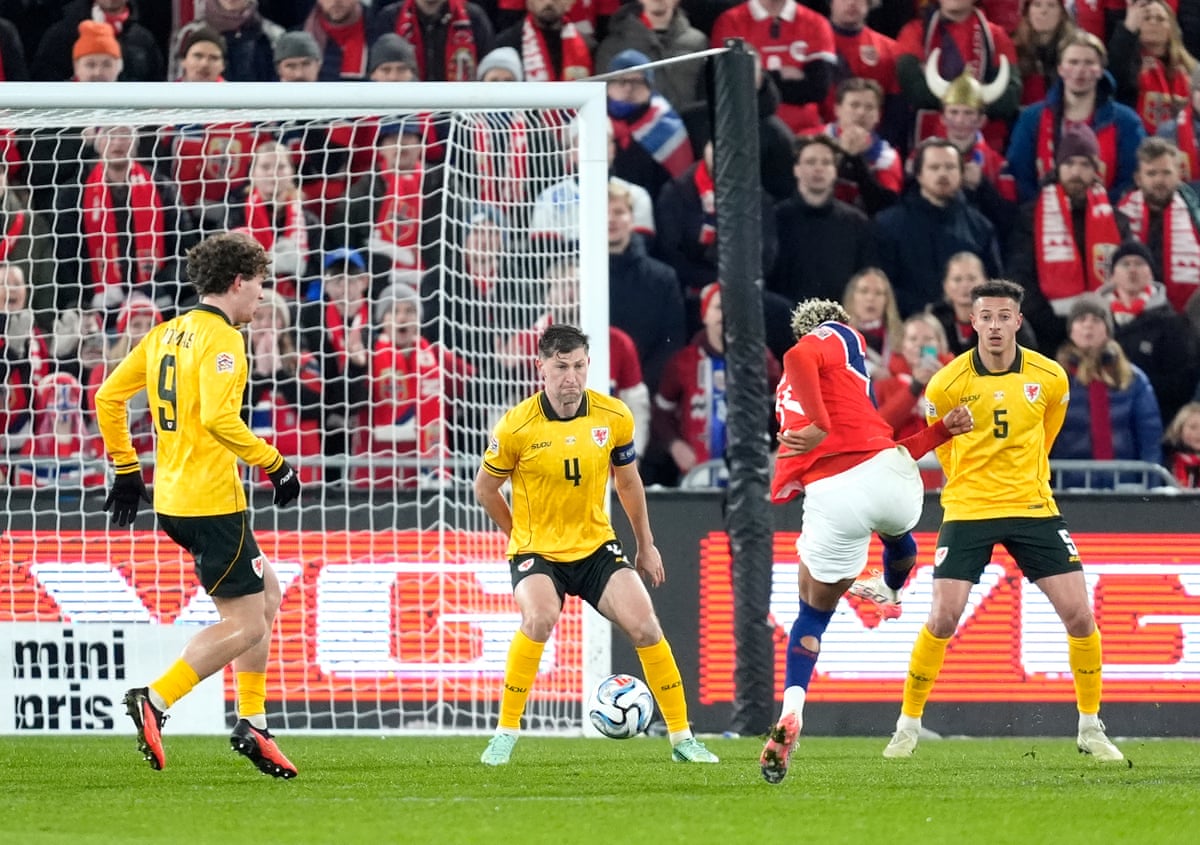
For 45 minutes in Oslo, Wales gave themselves reasons to believe this could become the away performance Craig Bellamy had wanted. Their pressure was coordinated enough to interrupt Norway's rhythm, and the visitors were willing to carry the ball into useful areas rather than simply endure a night of defending. The scoreboard at half-time read 0–0. On the balance of the first-half opportunities, that was a frustration for Wales rather than an escape.
Daniel James offered the clearest evidence. His pace created repeated openings, but three moments in which Wales might have turned territory into a lead came and went. One first-half attempt clipped the outside of the post, and Wales did not translate those openings into an easy lead: Norway goalkeeper Egil Selvik still made the saves required to keep the score level. The distinction between playing well and taking advantage of it was about to become the decisive theme. Bellamy could point to productive phases without being able to point to a goal.
That is a difficult margin to live with against an attack that does not need prolonged dominance to punish an opponent. Norway had Erling Haaland as the obvious finishing reference, but they were not reduced to asking him to beat several defenders on every possession. Antonio Nusa supplied another route: acceleration from a wider position, the confidence to drive at a retreating back line and the ability to finish an attack himself. Wales had to monitor both the central threat and the explosive movement around it.
After the interval, the contest gradually shifted. The energetic pressing that had helped Wales control parts of the opening period became harder to sustain. Norway could advance with more purpose and push Wales closer to their own penalty area. In the 59th minute, Nusa finally made that changing balance visible on the scoreboard. He took his opportunity and drove a composed low finish into the bottom corner. The breakthrough was not a spectacular accident; it was the kind of direct, decisive action that Wales had failed to produce from their earlier promise.
GOATIFY
GOATIFY Soccer
Nusa's quick change of direction gave Norway a crucial attacking edge. Browse GOATIFY Soccer designs while looking at how the home side broke through.


Harry Kane – It’s Coming Home GOAT Sticker
Add football personality to your favourite gear.
Shop Now ↗


Manchester United Ratcliffe Out, Glazers Out / Mug
Add football personality to your coffee break.
Shop Now ↗
OUTEOS INEOS OUT Manchester United Protest Hoodie
A football fan design for everyday wear.
Shop Now ↗Nusa's goal also changed the tactical question. Before it, Wales could attack with the assurance that the match was level and Norway still needed to take risks. Once behind, the visitors had to find a way forward without leaving inviting space for Haaland and Norway's runners. That is where a first-half performance judged on energy and structure began to look inadequate. A strong 45 minutes away from home is useful evidence of progress, but if the best chances are left unfinished, the opponent gets another 45 minutes to find a superior answer.
Schjelderup Needed Two Minutes to Turn Norwegian Pressure Into a Cushion
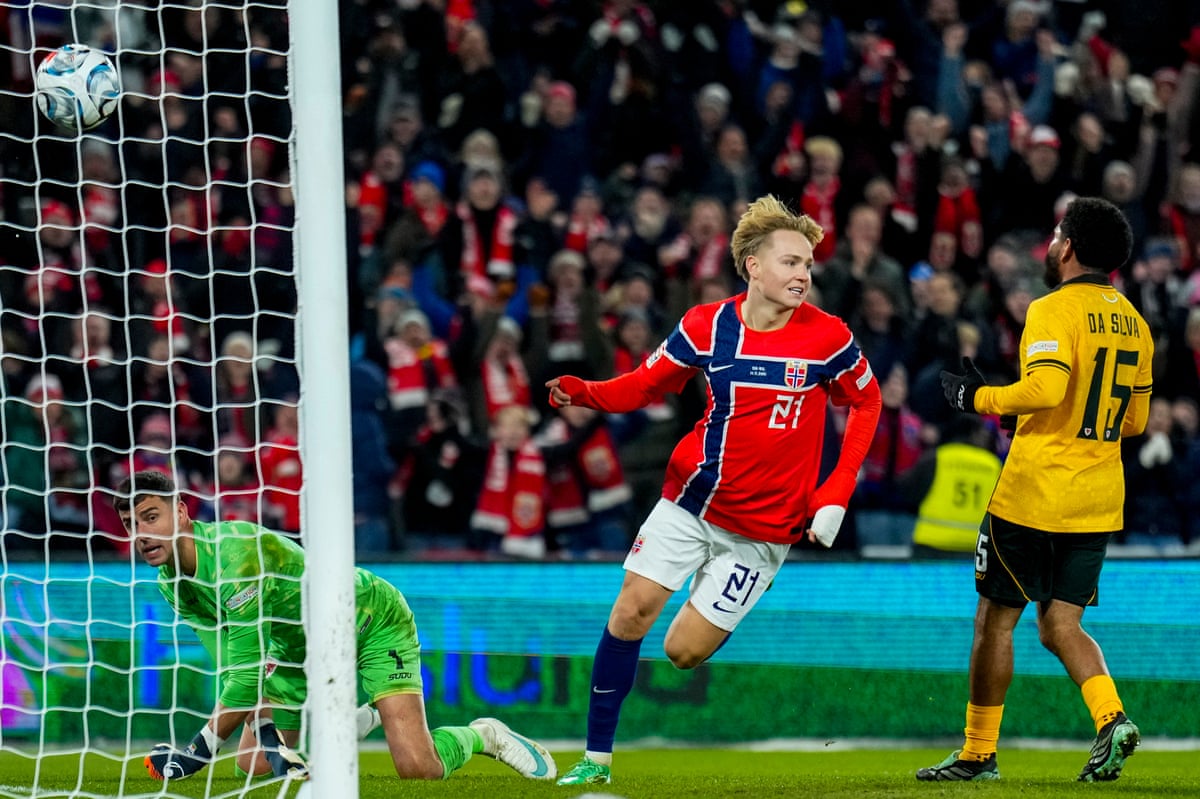
Norway did not wait long to make their lead more comfortable. Andreas Schjelderup was introduced in the 66th minute, replacing Oscar Bobb, and within roughly two minutes the substitute was celebrating a goal. The move ended with Haaland laying the ball into his path for a close-range finish. On the scoresheet, that is an assist and a tap-in. In the context of this game, it was evidence that Norway's attacking danger was spread across several players, not concentrated entirely in their centre-forward.
The timing mattered as much as the identity of the scorer. Wales had spent the first half frustrating Norway and creating enough to imagine three points. Nusa's 59th-minute opener forced a change in posture, but a one-goal deficit can still be managed with patience. At 2–0 in the 68th minute, patience suddenly had a deadline. Wales now needed a quicker and riskier response, while Norway could attack the newly available gaps rather than forcing every movement against a compact, level-score defensive shape.
Haaland's part in the second goal was a reminder that his presence changes decisions even when he is not taking the final shot. Defenders know the Manchester City forward can turn a half-chance into a goal from a surprisingly small patch of space. Tracking him therefore feels urgent. Yet if the entire defensive line narrows towards Haaland, Norway can find a supporting runner in the space that attention has left behind. Schjelderup's immediate impact exposed the cost of viewing a prolific scorer as the only possible destination for the ball.
Schjelderup also represented something Norway needed in a match with a short turnaround between opening and stretching the lead: fresh legs willing to arrive in the box. Goals from substitutes often get described as inspired management, but the more revealing point here was the clarity of the role. He did not have to invent the whole attack or dominate possession for 20 minutes. He had to recognize the opportunity, join the move at speed and finish the pass Haaland provided. That is precisely the kind of contribution that can decide tight international games.
For Wales, the two goals revealed different failures of control. Nusa had been allowed the opening to shoot low into the corner; Schjelderup then arrived to capitalize on combination play around Haaland. The former was a moment of individual quality, the latter a collective sequence whose danger grew from several moving parts. Bellamy's side could not solve either in time. Their first-half press had created genuine questions for Norway, but the home side's efficiency after the break made Wales' better spells feel increasingly distant.
GOATIFY
GOATIFY Soccer
Norway's second goal showed the value of well-timed support runs around Haaland. Explore soccer shirts, hoodies and stickers inspired by the game's biggest moments.


Championshit Tottenham Hotspur Parody , Sweatshirt
A football fan design for everyday wear.
Shop Now ↗
Erling Haaland Thor Avenger Manchester City Sticker
Add football personality to your favourite gear.
Shop Now ↗
Harry ''The Fridge'' Maguire with Color Inside Mug
Add football personality to your coffee break.
Shop Now ↗
Brooks Offered Wales a Way Back. The Window Closed Almost Immediately.
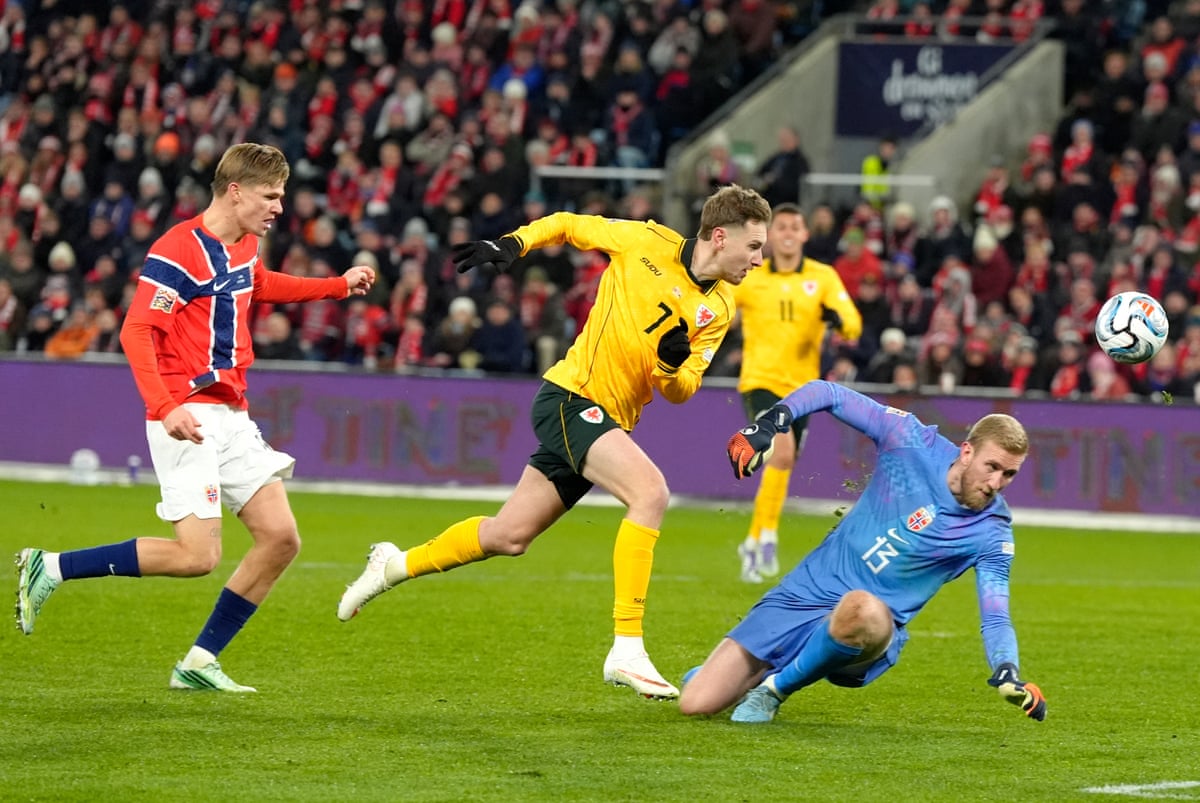
The first Welsh response after going two goals behind came from Bellamy's bench. David Brooks, Rubin Colwill and Mark Harris brought urgency to an attack that had started the evening brightly but been pushed backwards as Norway gained control. Their arrival altered the rhythm. There were more players making positive runs, more willingness to connect through the inside channels and, for a brief spell, the feeling that a match apparently slipping away might yet have an unexpected finish.
Brooks made that possibility concrete in the 79th minute. Harry Wilson provided the opening and the Bournemouth forward supplied a delicate chipped finish, lifting the ball past the goalkeeper rather than trying to force his shot through the last line of defenders. It was Wales' best piece of execution in the final third all evening: a composed touch in a moment that invited panic. The score became 2–1, and the pressure of the final 10 minutes abruptly shifted towards Norway.
That goal also sharpened the contrast with Wales' missed opportunities before half-time. James had helped Wales create danger when the match was level, but the opening 45 minutes ended without a reward. Brooks needed less time on the pitch to convert one of the chances created by Welsh movement. It would be too simplistic to conclude that one attacker was effective and the other was not. James' running had already stretched Norway and tested its shape. The larger lesson was that chances and territory create leverage only when someone supplies the last accurate touch.
Bellamy afterwards praised the substitutions, highlighting the energy Harris provided and the influence of Colwill and Brooks. His broader assessment recognized the positives in Wales' first-half approach without denying the loss of momentum after the interval. That combination of optimism and disappointment captured the match. Wales were not passive for 90 minutes, nor were they outplayed in every phase. But the sections in which they looked like the more threatening side did not last long enough, and the periods when Norway took its opportunities were punishingly decisive.
At 2–1, a point still required another Welsh goal. That meant committing extra bodies in support and accepting the danger of turnovers against a home side with Haaland waiting for transition opportunities. This is the uncomfortable position created by conceding twice in nine minutes: even a beautifully taken reply does not erase the earlier deficit. Brooks gave Wales a chance to demand a nervy finish. The final phase, however, would end with a third Norwegian goal rather than another Welsh breakthrough.
Haaland's 66th International Goal Came With a Group Still to Decide
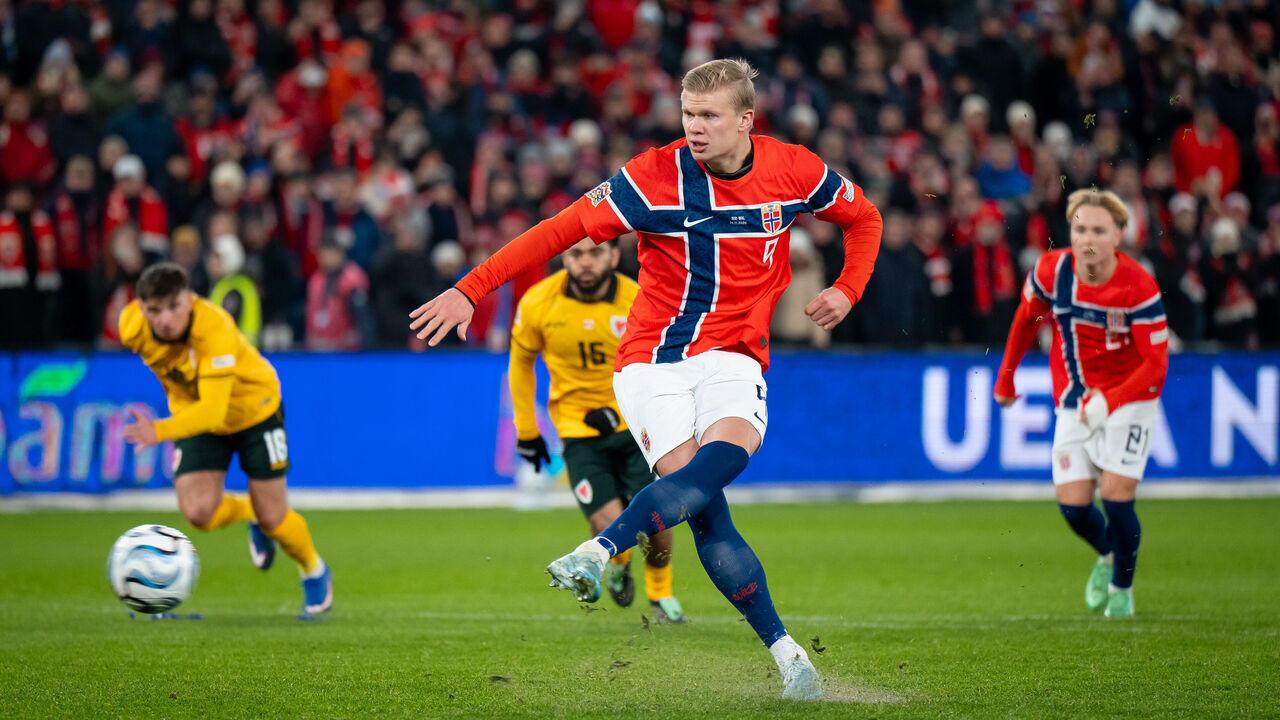
Wales' hopes of staging a comeback disappeared in a sequence that showed why Norway remain so dangerous when opponents chase a match. A loose Welsh defensive moment allowed Haaland to find Schjelderup moving towards goal. Connor Roberts brought the substitute down in the penalty area, the referee pointed to the spot, and Haaland converted in the 88th minute. The penalty restored the two-goal cushion and set the final score at 3–1. A late Welsh equalizer was no longer a realistic prospect.
GOATIFY
GOATIFY Soccer
Haaland's late penalty took his Norway tally to 66 international goals. Discover GOATIFY Soccer collections as Nations League Group A4 reaches its final fixtures.


Erling Haaland Thor Avenger Manchester City Hoodie
A football fan design for everyday wear.
Shop Now ↗

Erling Haaland Thor Avenger Manchester City Mug
Add football personality to your coffee break.
Shop Now ↗The scorer was already the headline attraction, and the goal added to an astonishing international record. Haaland reached 66 goals in just 60 appearances for Norway, a rate that remains extraordinary at national-team level. This was not one of the towering striker's more elaborate finishes. He calmly took the penalty after doing useful creative work for Norway's second goal. That combination—one assist to help double the lead and a decisive conversion from the spot—illustrated why his contribution is bigger than the number of shots he takes.
Norway's victory mattered beyond the individual milestone. Portugal's 4–1 win over Denmark on the same evening left Portugal on 12 points in Nations League Group A4, with Denmark on nine and Norway on six. Norway's final group fixture against Denmark on November 17 therefore carried real significance for the race behind Portugal. A win would draw Norway level on points with the Danes; because Norway had also beaten Denmark 3–2 in their earlier meeting, another victory would settle the head-to-head in Norway's favour. Anything less would leave Denmark ahead. Norway had put itself in position to play for qualification rather than merely finish the group respectably.
For Wales, the implications were less celebratory. Three points from five matches left Bellamy's team fourth in A4 and unable to catch either Norway or Denmark on head-to-head terms. The last group game against Portugal in Cardiff remained important, however, because League A's fourth-placed teams do not all face the same outcome. Their results against other bottom-placed sides determine whether they fall automatically into League B or enter a relegation play-off against League B opposition. Wales still had an avenue to protect their top-tier status, even though a victory on the final matchday could not lift them out of fourth.
Bellamy also connected the defeat to a separate ambition: earning favourable seeding for the Euro 2028 qualifying draw. Wales are among that tournament's co-hosts, and a place among the leading seeds would have been valuable. The manager did not hide his belief that his side can perform at that level; the first half in Oslo supplied reasons for optimism. But Norway's second-half efficiency also exposed the unfinished work. Wales can keep the bravery of their press and the attacking intent of their substitutes. The next task is to make those strengths survive the moments when an opponent's elite players suddenly change a game.
Norway turned a complicated first half into an important victory because its attacking options were decisive when the game began to open. Nusa's low shot, Schjelderup's rapid impact from the bench and Haaland's late penalty were three different examples of the same quality: turning a promising situation into an actual goal. That finishing has kept the hosts' Nations League ambitions alive for a final showdown with Denmark.
Wales leave Oslo knowing that their first-half pressing, James' running and Brooks' excellent finish are useful building blocks rather than consolation prizes. Bellamy's frustration will be that those good phases did not translate into enough goals or enough control after the break. Portugal now visit Cardiff for a match that cannot rescue Wales from fourth place but can still influence the difference between a relegation play-off and automatic demotion. The task is not simply to look competitive against a stronger opponent again; it is to make the competitive periods count.
GOATIFY
GOATIFY Soccer
Shop GOATIFY soccer and football shirts, hoodies and stickers.

Amad Diallo Goal Celebration AMADNESS Sweatshirt
A football fan design for everyday wear.
Shop Now ↗

Amad Diallo Goal Celebration AMADNESS Sticker
Add football personality to your favourite gear.
Shop Now ↗
Kylian Mbappe Ninja Turtles football/ soccer Mug
Add football personality to your coffee break.
Shop Now ↗