Jabari Scores 30, Smart Hits Seven Threes — Rockets Bury Thunder 119-98
GOATIFYOklahoma City arrived in Houston with a depleted rotation and the hope that Shai Gilgeous-Alexander could keep the Thunder competitive. Instead, the Rockets turned Saturday's meeting into a shooting exhibition. Jabari Smith Jr. scored 30 points, Marcus Smart hit seven three-pointers, and Houston beat Oklahoma City 119-98 at Toyota Center on October 31.
The margin was emphatic, but the more revealing detail was how Houston produced it. The Rockets were not simply asking Kevin Durant to rescue possessions. Smith attacked openings from the perimeter, Smart punished the defense for leaving him space, and Alperen Sengun's return restored another creative passing option. Houston made 18 threes, moved the ball for 29 assists and led by as many as 27.
For Oklahoma City, this was its first game after news that Chet Holmgren would miss significant time with a knee injury. The Thunder's second consecutive loss exposed the difference between having a superstar and having enough healthy pieces around him. Houston took advantage without pretending the injury situation was irrelevant.
Jabari Smith's 30 Points Were the Shot Oklahoma City Could Not Take Away
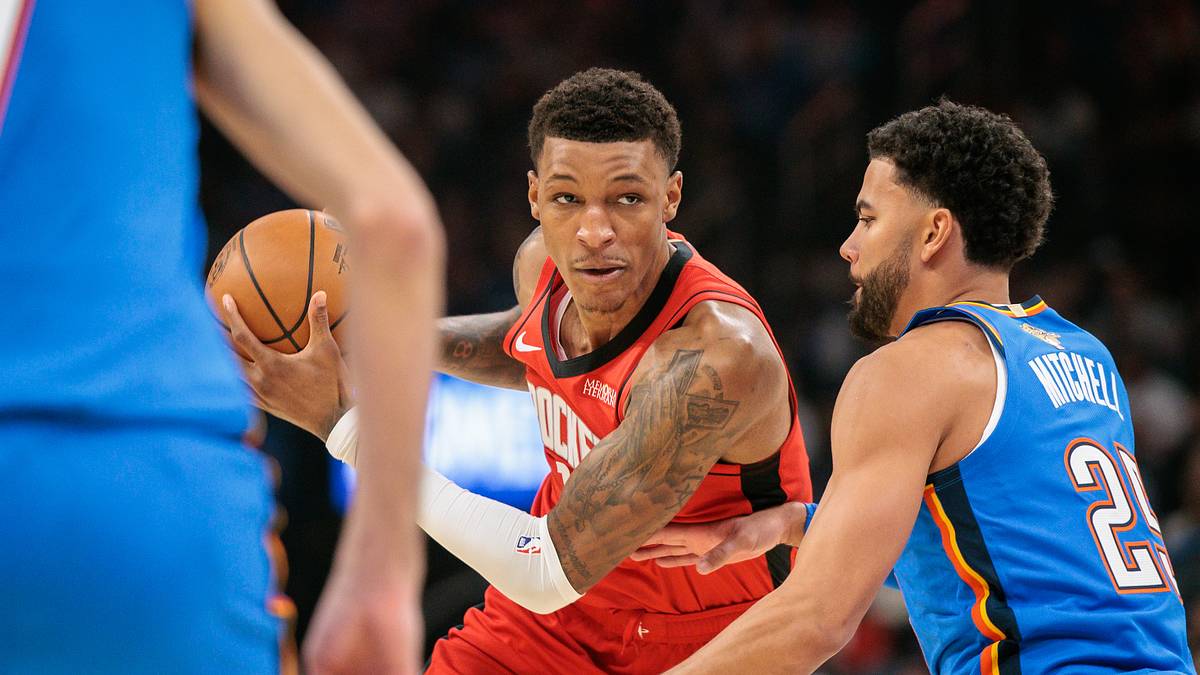
Jabari Smith Jr. did not need a complicated offensive script to dominate this matchup. He needed the Thunder to give him a fraction of daylight, and he made them pay repeatedly. The Rockets forward finished with 30 points on 10-of-18 shooting, made six of his 12 attempts from beyond the arc, collected nine rebounds and added five assists. Those numbers describe a scorer who was efficient without being one-dimensional.
Houston's opening quarter was an early warning. The Rockets scored 35 points, established a nine-point lead and made Oklahoma City defend the entire width of the floor. Smith's perimeter threat mattered because the Thunder could not simply collapse toward the basket whenever Houston worked through a bigger playmaker. When a defense is missing important starters, every extra rotation is a chance for a mistake. Houston kept manufacturing those decisions.
The visitors did show resistance. Oklahoma City used a 10-0 burst in the second quarter to make the game uncomfortable, and Shai Gilgeous-Alexander later hit consecutive threes that brought a large deficit back toward manageable territory. But the Rockets kept finding Smith in the moments that demanded a response. Early in the third quarter he hit from deep as Houston rebuilt its advantage, and in the fourth he followed a pull-up jumper with another three to push the score to 103-81.
That is the difference between a productive stat line and a game-shaping performance. Smith did not merely collect points while his team cruised. His baskets interrupted Oklahoma City's attempted recoveries and forced the Thunder to defend with urgency even after Houston had built a cushion. He also contributed on the glass and as a passer, which prevented his offense from becoming a sequence of isolated catch-and-shoot attempts.
For Houston, the encouraging part is not that Smith will score 30 every night. That would be an unreasonable demand in a lineup that includes Durant, Sengun and multiple other creators. It is that the Rockets can win a high-profile Western Conference matchup with Smith as the leading scorer and without asking their most famous player to dominate every possession. On a night when Oklahoma City could not afford defensive breakdowns, Smith turned those breakdowns into a decisive advantage.

Marcus Smart Hit Seven Threes — and Durant Did Not Need to Take Over
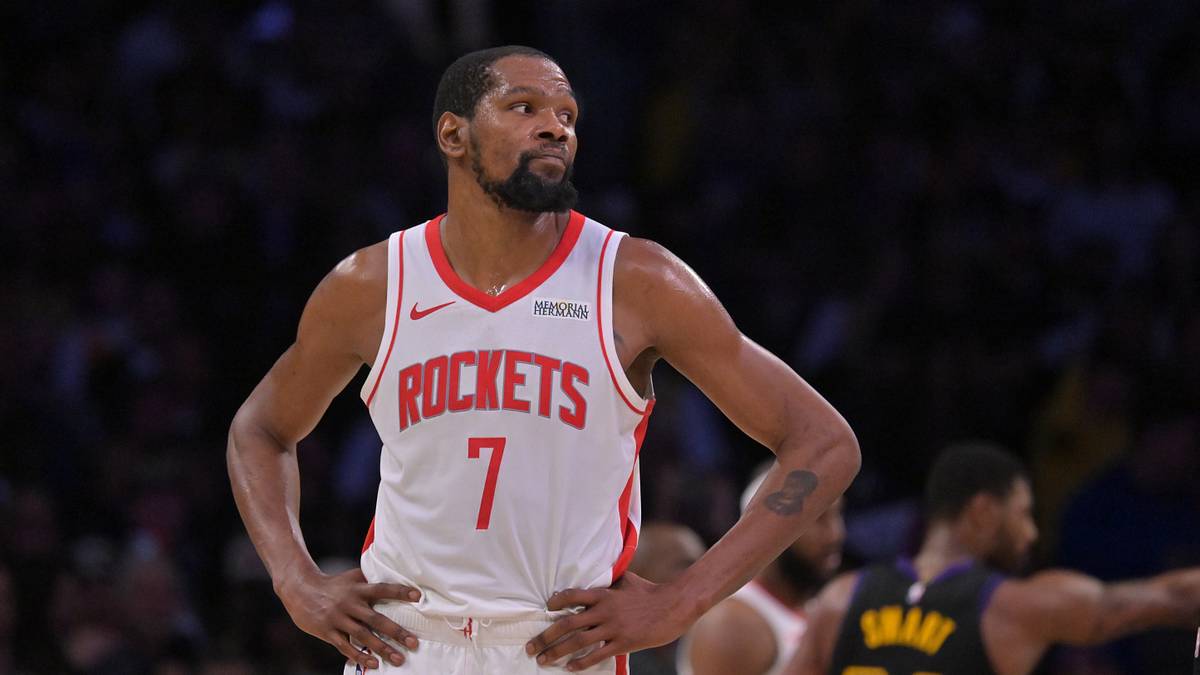
Marcus Smart was not signed by Houston because anyone expected him to be a nightly three-point specialist. His reputation was built on defense, toughness and making uncomfortable possessions for opposing guards. Against Oklahoma City, however, the veteran delivered the kind of shooting night that changes the geometry of an entire game: 24 points, seven makes on 10 attempts from deep and a relentless early presence.
Smart set the tone in the first quarter with 12 points and three three-pointers. Fred VanVleet was unavailable for the game, giving Smart the starting assignment and a chance to affect the contest immediately. Rather than allowing Oklahoma City to load up on the more obvious scorers, Smart made open looks expensive. Once he hit several in succession, the Thunder had to account for another perimeter threat instead of treating him primarily as a defender who happened to be standing beyond the arc.
That mattered for Kevin Durant as much as it mattered for Smart. Durant scored 14 points, and Houston did not require him to force difficult shots late in the clock. The Rockets could move the defense with his presence, then let Smith, Smart or another teammate finish the possession. It is tempting to judge a star's influence by whether he leads the box score. In this game, Durant's relatively modest scoring total is better understood as evidence that Houston had enough alternatives.
The broader shooting figures were unforgiving. Houston made 18 of 41 three-pointers, a 43.9 percent success rate, while Oklahoma City hit 10 of 32. That eight-make difference represented a 24-point swing in scoring from beyond the arc alone, larger than the final 21-point margin. It does not prove the three-point line was the only factor, but it explains why the Thunder's individual defensive stops rarely seemed to change the direction of the game.
Smart will not shoot 70 percent from deep every night, and Houston should not build its entire offense around the assumption that he will. What the Rockets can reasonably take from this performance is the value of having another credible shooter available when their primary scorers attract attention. Smart's defensive pedigree already gives Ime Udoka reasons to trust him. On Saturday, he supplied the offensive surprise that made a difficult Thunder assignment look remarkably straightforward.

Sengun's Return Gave Houston a Second Engine and Better Ball Movement
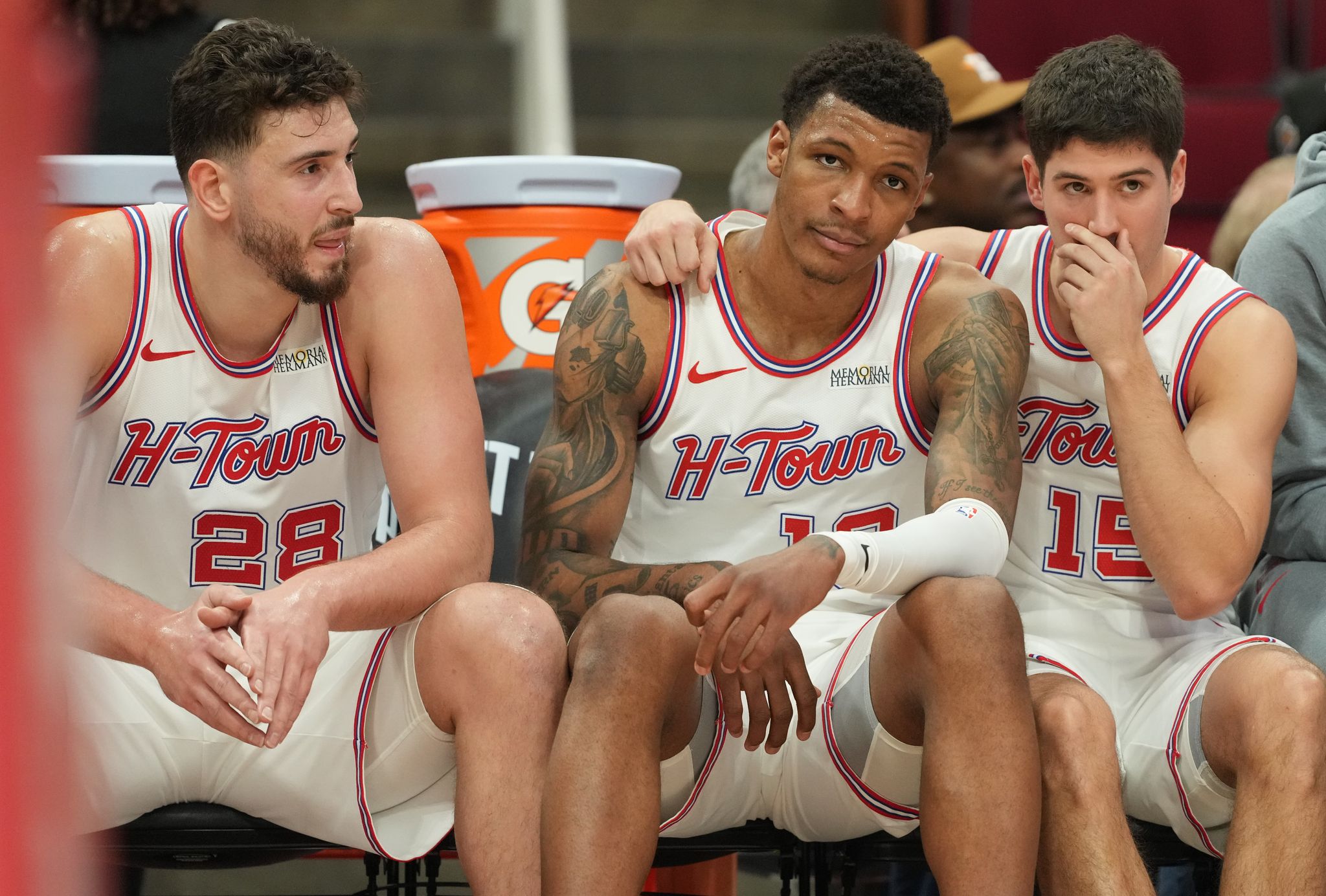
Alperen Sengun's return may have been overshadowed by the 30-point headline and Smart's shooting, but it helped explain why the Rockets looked so organized. The Houston center had missed two games with lower-back soreness. Back in the lineup, he contributed 16 points and nine rebounds while operating as a passing hub who could draw attention inside and move the ball before the defense recovered.
Houston finished with 29 assists to Oklahoma City's 20. That difference is not simply a measure of generosity. It reflects how often the Rockets made the extra decision before a defender could settle. A post touch from Sengun could force a second defender to shade inward; the next pass could find a shooter with his feet set. The same principle applied when Durant attracted a difficult matchup or when Amen Thompson pushed the ball toward the paint.
The Rockets were not flawless. Sengun's own scoring came with missed attempts, and Oklahoma City produced stretches of competent resistance. But the home team had enough ways to score that one imperfect possession did not dictate the next. Houston also edged the Thunder 44-42 in total rebounds, collected 13 offensive boards and committed only 10 turnovers. Those small advantages added possessions and prevented Oklahoma City from turning every stop into a quick transition chance.
One particularly revealing stretch came in the second quarter. Houston pushed its lead to 51-34 on a Sengun reverse layup, then extended the gap further before the Thunder's rally. The sequence showed why his interior skill matters even in a game defined by perimeter shooting. If opponents overreact to Smith and Smart beyond the arc, Sengun can find space closer to the rim. If they pack the lane, the ball can move back outside.
For a team with Durant, it would be easy to make every close game a referendum on whether the veteran can still carry a high-volume scoring burden. Houston's more promising identity is collective. Sengun can organize possessions, Smith can provide size and perimeter accuracy, Smart can defend and occasionally erupt as a shooter, and Durant can choose his spots. Saturday was a particularly sharp example of those pieces working together, with a healthy dose of unsustainably hot shooting layered on top.
Shai Scored 26, but Oklahoma City's Injury Crisis Left Too Much to Cover
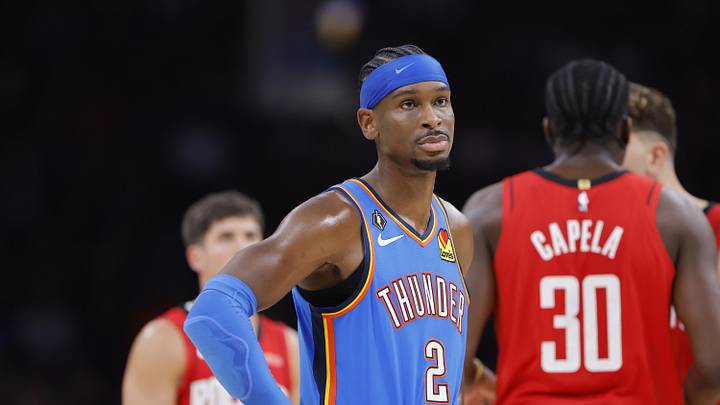
Shai Gilgeous-Alexander did enough to show that Oklahoma City's star power had not vanished. He scored 26 points on 10-of-20 shooting, hit timely threes and repeatedly tried to pull the Thunder back into the game. The problem was everything around him. Oklahoma City was missing Chet Holmgren, Jalen Williams and Cason Wallace, while other rotation absences further restricted the available combinations. That is an enormous amount of size, creation and defensive flexibility to replace against a team shooting this well.
Holmgren's absence was especially significant because the Thunder had just learned that his right-knee injury would keep him out for an extended period. Without his rim protection and ability to cover space, the defense has fewer ways to recover after a perimeter breakdown. Missing Jalen Williams also removes a major secondary scorer and ball-handler, while Wallace's absence narrows the options for defending guards. A single replacement can offer energy; replacing the combined roles of multiple starters is a different challenge.
Oklahoma City's supporting players did contribute. Kenrich Williams scored 11, Bennett Stirtz also supplied 11, and Isaiah Hartenstein and Jared McCain reached double figures. Those efforts prevented the game from becoming a one-man box score, but they did not match Houston's spread of offensive threats. The Thunder made 10 threes to the Rockets' 18, committed three more turnovers and never found a sustained defensive stretch that would allow a serious fourth-quarter push.
There was a moment in the third when Gilgeous-Alexander appeared capable of changing the mood. His consecutive perimeter baskets cut a 21-point deficit to 13. Houston answered, reached the final period ahead 92-75 and soon stretched the gap again. That pattern is why the final margin is more informative than any single Thunder run. Oklahoma City could create bursts of offense; it could not combine those bursts with enough stops to make Houston uncomfortable for long.
The sensible conclusion is not that Oklahoma City has suddenly become a poor team. It began the season 4-0 and still has an elite lead guard. The issue is whether its depleted rotation can protect enough possessions while injured starters recover. A trip to Cleveland comes next, followed by further demanding fixtures. Until the defensive infrastructure is healthier, Gilgeous-Alexander may have to deliver spectacular performances just to keep games within reach. Saturday showed how high that burden can become.
There is also a difference between a temporary injury response and a permanent change of identity. Oklahoma City can simplify assignments, shorten rotations or ask its available guards to work harder at the point of attack, but none of those choices automatically recreates Holmgren's reach or Williams' two-way versatility. Coaches can adjust the plan; they cannot manufacture the missing personnel. The coming stretch will test whether the Thunder can keep their defensive standards close enough to normal while leaning on Shai's scoring and the development of younger contributors.

Houston's 119-98 win does not settle the Western Conference hierarchy in October. The Thunder were missing major pieces, and a single night of extraordinary shooting is not a guarantee of the same percentages in a playoff series. But it does show why the Rockets are dangerous when their scoring responsibility is distributed rather than concentrated on Durant.
Smith's 30-point performance gave Houston a leading scorer, Smart's seven triples turned a defensive reputation into an offensive weapon, and Sengun's return gave the attack more ways to move. Oklahoma City has a different problem: it must survive the coming weeks without the size and perimeter coverage that make its usual defense so difficult. Shai can keep the scoreboard moving; he cannot replace three injured starters by himself.
Houston leaves this one at 6-1 with Boston next on the schedule. Oklahoma City falls to 4-2 and heads toward a Cleveland matchup with more questions about its rotation. The headline is a 21-point win. The bigger story is how many answers Houston had when the Thunder ran out of them.