2027 MLB Mock Draft: Projecting All 30 First-Round Picks
GOATIFYThe 2027 MLB draft class is beginning to take shape, and the early first-round picture is packed with premium shortstops, power bats and a deep group of college pitchers. There is still an entire spring season, a draft lottery and months of evaluation ahead, so the order will move repeatedly. For now, though, the current standings provide a useful framework for matching the top names in the class with all 30 first-round slots.
Mississippi State left-hander Tomas Valincius has a legitimate path to the No. 1 pick, while California prep shortstop Dylan Seward brings the kind of athleticism that can keep a high-school player near the very top of a draft board. Florida infielder Brendan Lawson and Arizona State outfielder Landon Hairston give the class more high-end offensive options, and injured Oregon State right-hander Dax Whitney remains one of the most fascinating risk-reward names in the entire group.
This is an early projection rather than a prediction of exact team preferences. The eventual draft order will be reshaped by the lottery and luxury-tax rules, and teams will spend the next several months gathering far more information. The value right now is seeing which prospects already look like first-round talents, where the strongest position groups are forming and which players have the clearest opportunity to climb.
Picks 1-3: Valincius, Seward and Hairston Lead the Early Board
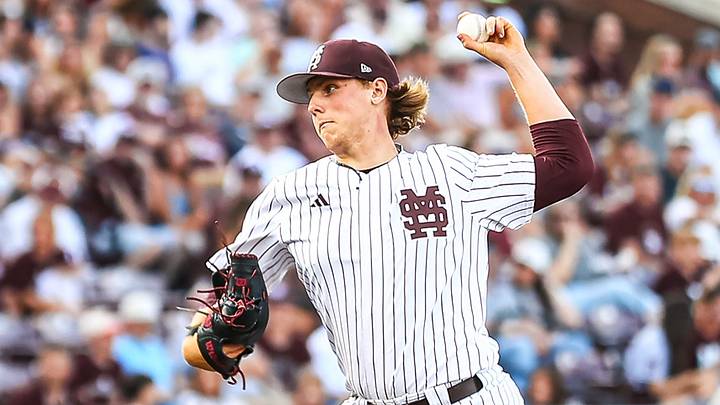
1. Los Angeles Angels — LHP Tomas Valincius, Mississippi State. A college left-hander going first overall would be unusual, but Valincius has the combination of performance, physicality and strike-throwing to make it realistic. After transferring from Virginia, he produced an 11-2 record with a 3.50 ERA and a 134-to-20 strikeout-to-walk ratio over 97.2 innings. The biggest attraction is not simply the stat line. He already looks like a starter with multiple pitches capable of missing major-league hitters, and another step forward would give the Angels a defensible choice at No. 1.
2. Colorado Rockies — SS Dylan Seward, Norco High School. Seward is the most dynamic athlete near the top of the prep class. His speed is a carrying tool, his hands work quickly at the plate and his bat speed gives him more offensive upside than his lean frame suggests. The defensive projection matters just as much. He has the range, instincts and arm strength to remain at shortstop, which makes his profile much safer than that of a high-school hitter who may eventually have to move down the defensive spectrum.
3. Athletics — OF Landon Hairston, Arizona State. Hairston already owns one of the strongest offensive résumés in college baseball. His .400/.509/.860 line in 2026 came with 28 home runs, 20 doubles and more walks than strikeouts. That balance between contact quality, power and strike-zone control is exactly what teams want from a college bat selected this high. If he repeats anything close to that production, there may be very little reason for clubs to overthink him.
Picks 4-6: Lawson's Bat, Whitney's Upside and Another Wake Forest Arm

4. Kansas City Royals — SS Brendan Lawson, Florida. Lawson has been a consistently productive hitter through his first two seasons at Florida, but the power jump he showed in 2026 changed the ceiling of his draft profile. He reached base at better than a .500 clip and slugged nearly .700 while hitting 19 home runs. He may eventually fit better at second or third base than shortstop, yet that becomes a secondary concern if the middle-of-the-order production continues.
5. New York Mets — RHP Dax Whitney, Oregon State. Whitney is the boldest projection in the top five because he is expected to miss the 2027 season after UCL surgery. The reason he can still remain this high is the quality of the pre-injury track record: 224 strikeouts in 139.2 college innings and some of the best pure pitching talent in the class. A team picking him would need confidence in the medical outlook and rehab, but elite starting pitching is valuable enough that the Mets could accept the risk if his recovery progresses well.
6. Detroit Tigers — RHP Chris Levonas, Wake Forest. Levonas took a major step as a sophomore, posting a 2.82 ERA and 116 strikeouts in 73.1 innings. His fastball can reach triple digits, and his extension helps the pitch play even harder than the radar gun suggests. Wake Forest has become one of college baseball's most closely watched pitching programs, and Levonas has the kind of stuff that can push him toward the very top of the first round with a healthy, consistent junior year.
Picks 7-9: Three College Producers With Very Different Profiles
7. Seattle Mariners — C/2B Gavin Kelly, West Virginia. Kelly combines positional flexibility with an advanced bat. He helped carry West Virginia to the College World Series while hitting .382/.477/.725 with 19 home runs and 21 doubles, then continued to produce with the Collegiate National Team. Whether he is ultimately viewed as a catcher, second baseman or multi-position offensive player, teams will be buying the bat first. Seattle has consistently valued polished amateur performers, and Kelly fits that mold.
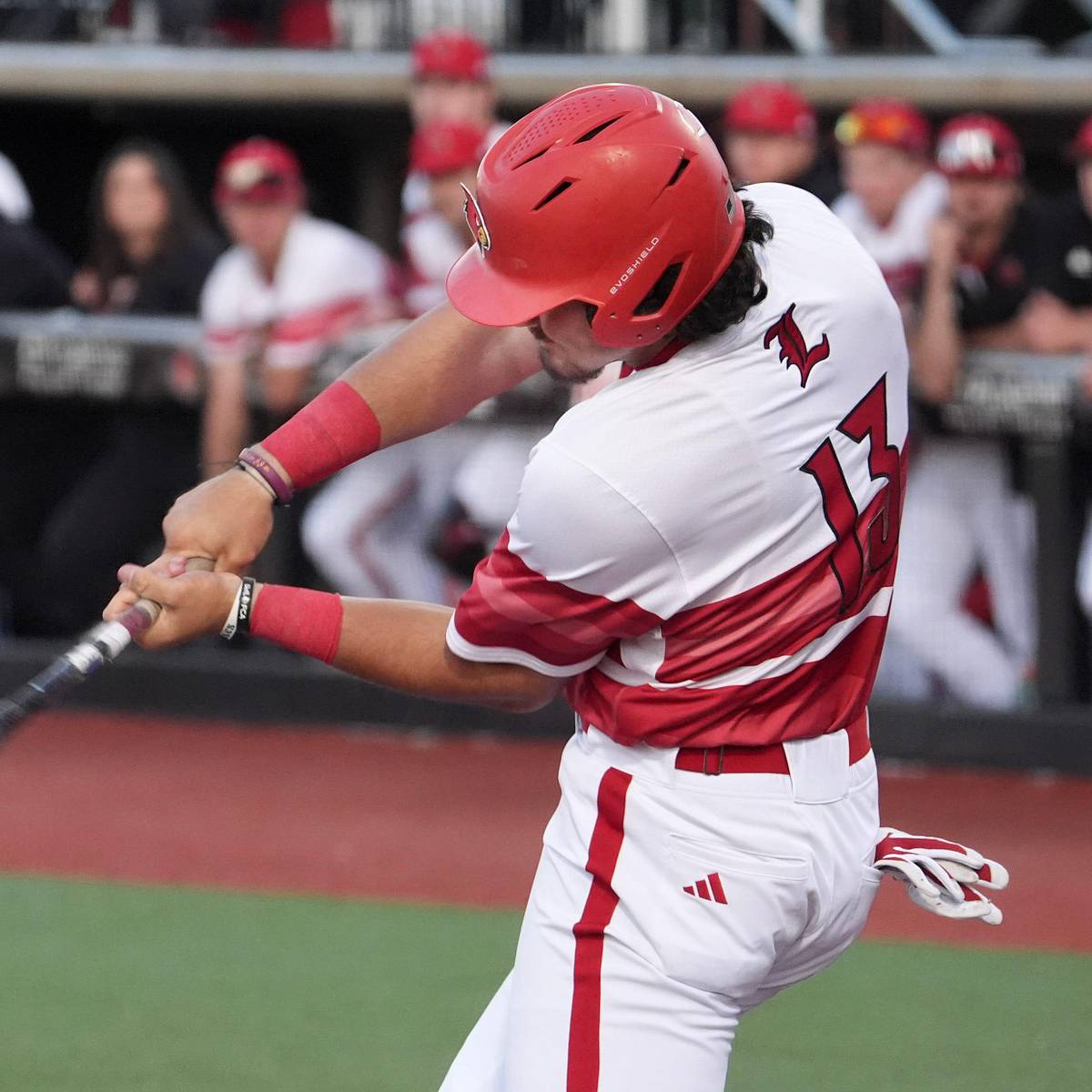
8. Washington Nationals — 1B Tague Davis, Louisville. Davis may have the loudest pure power in the class after leading the NCAA with 34 home runs and driving in 98 runs in 57 games. The limitations are obvious: he is a first baseman and there is swing-and-miss in the profile. That puts more pressure on his offense than it would for a premium defender. But if Davis improves his chase decisions while maintaining this level of damage, the power is too significant to let him slide far.
9. Minnesota Twins — RHP Ryan McPherson, Mississippi State. McPherson was limited to 43 innings in 2026, but he still struck out 51 hitters and showed a fastball capable of reaching 99 mph. At 6-foot-3 and 205 pounds, he has a more conventional starter's frame than some of the other high-velocity arms in the class. A healthy season with improved workload would give evaluators the missing evidence they need and could move him well above this slot.
Picks 10-12: A Power-Hitting Catcher and Two High-Upside Prep Bats
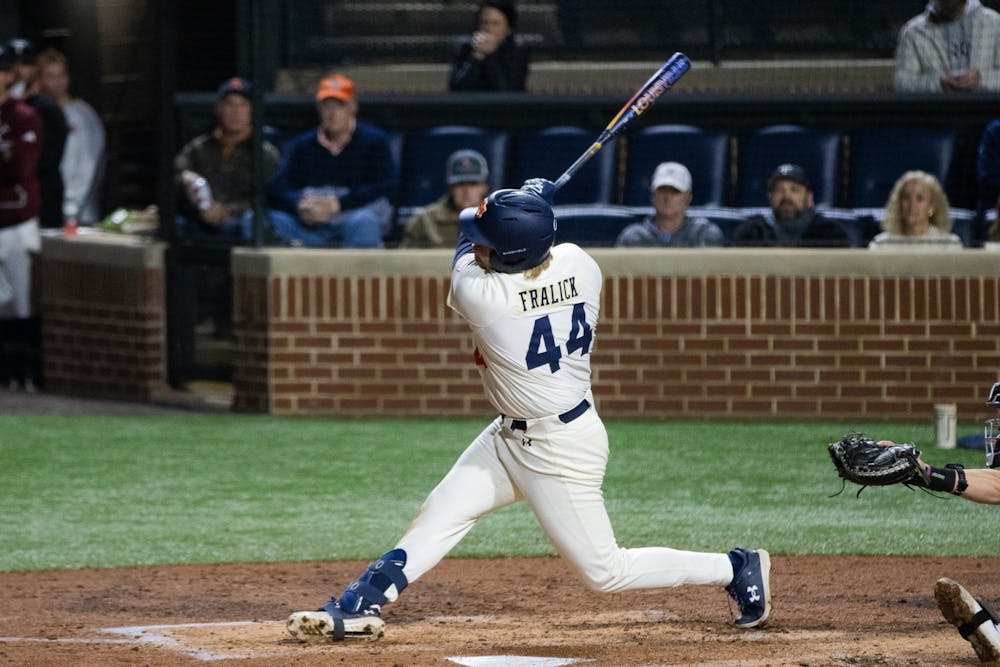
10. San Francisco Giants — C Chase Fralick, Auburn. Fralick's home-run total jumped from four as a freshman to 20 as a sophomore, and he paired the new power with a .314 average and strong on-base production. That is an encouraging combination for a catcher with significant experience in the SEC. His arm is a strength; the area scouts will keep studying is receiving. If the defensive polish catches up to the bat, he can move beyond the back end of the top ten.
11. Cincinnati Reds — OF Jacob Seamon, Metrolina Christian Academy. Seamon is a classic projection bet. He is already 6-foot-5 with major raw power, but he also moves well enough that center field remains possible for now. That mix of size, speed and offensive ceiling is rare in a high-school player. He will also be only 17 on draft day, giving a player-development group a huge runway. The key question is how the hit tool develops as he faces better velocity and more advanced breaking pitches.
12. Pittsburgh Pirates — SS Malachi Butler, McEachern High School. Butler does not need one overwhelming tool to stand out. His value comes from having very few obvious weaknesses. He uses the whole field, handles shortstop smoothly and has enough size to project additional power as he matures. For a Pittsburgh organization that has spent heavily on upside in recent drafts, Butler would offer a more balanced skill set with a realistic chance to stay at a premium position.
Picks 13-15: Tokheim's Rise, Volantis' Track Record and Rincon's Shortstop Value
13. Baltimore Orioles — OF Teddy Tokheim, Stanford. Tokheim immediately established himself as one of Stanford's most dangerous hitters, batting .352/.414/.704 with 17 home runs as a freshman. He then carried that performance into summer competition, which is important because scouts want to see elite college hitters succeed with wood bats as well as aluminum. Another strong season could put him in the top-ten discussion, especially if evaluators become comfortable with his eventual defensive home.
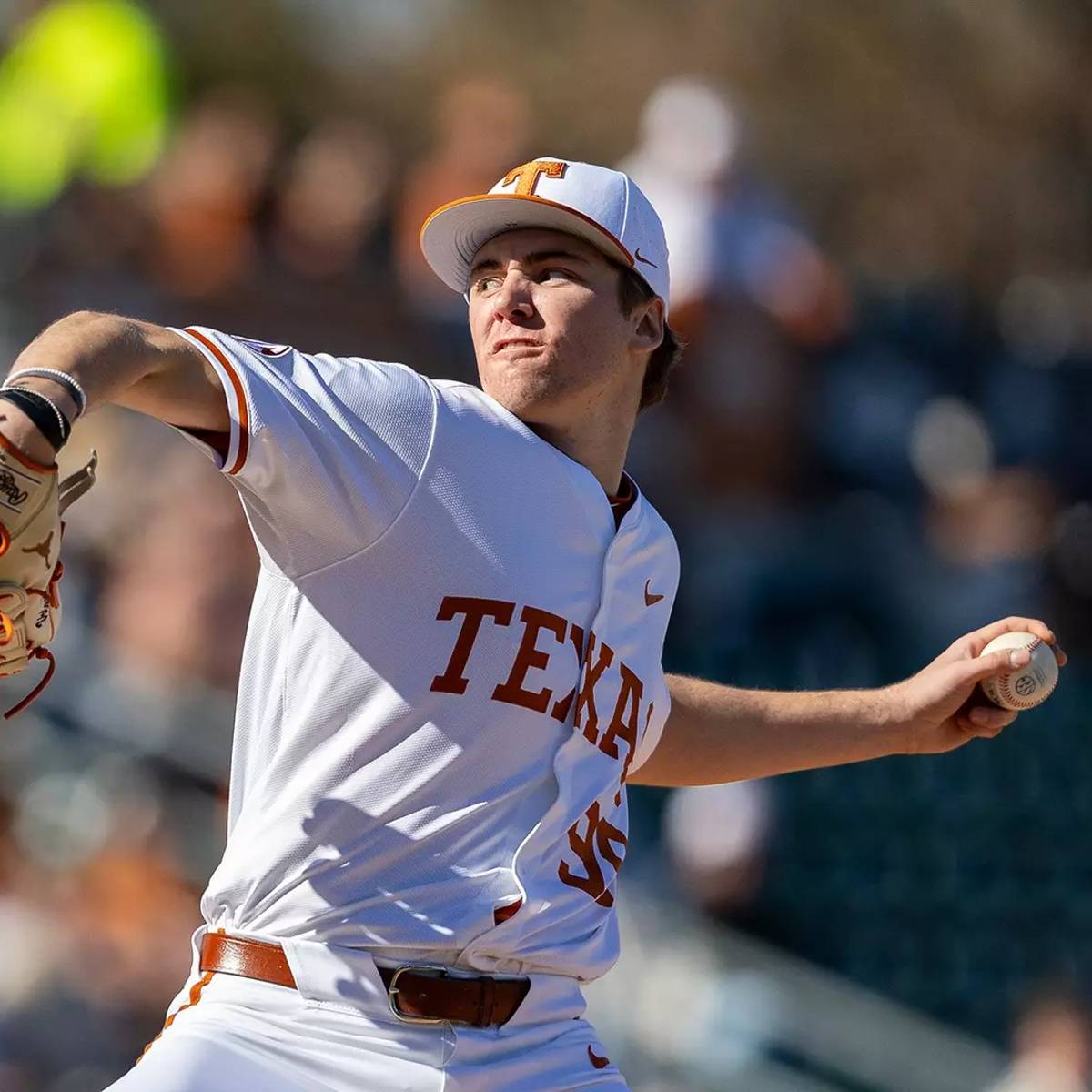
14. Texas Rangers — LHP Dylan Volantis, Texas. Volantis has already demonstrated that his stuff works in multiple roles. He earned first-team All-America recognition as a freshman closer and then repeated the honor after moving into the rotation. His sophomore line—10-2, 2.08 ERA, 1.00 WHIP and 135 strikeouts in 95 innings—gives him one of the cleanest performance records among college pitchers in the class. The unconventional delivery adds deception and makes his arsenal difficult to square up.
15. Toronto Blue Jays — SS Lubin Rincon, The Bennett School. Rincon's value starts with a compact left-handed swing and a mature understanding of the strike zone. At 6-foot-3 and 185 pounds, he still has room to add strength, so the current gap between his contact skills and power could narrow quickly. He also has a credible chance to remain at shortstop. That combination means Toronto would not need to project a huge power breakout for this pick to make sense.
Picks 16-18: SEC Performance Meets High-School Pitching Upside

16. St. Louis Cardinals — RHP Aidan King, Florida. King is the kind of college pitcher who can appeal to teams looking for both probability and upside. He earned SEC Pitcher of the Year honors after going 8-2 with a 3.21 ERA, 1.03 WHIP and 92 strikeouts in 87 innings. The fact that he has already handled a major-conference rotation for two years lowers some of the developmental uncertainty that accompanies younger arms.
17. Miami Marlins — C Trent Grindlinger, Tennessee. Grindlinger forced his way into Tennessee's lineup as a freshman and hit .345/.414/.572 across 43 games, spending much of his time at designated hitter. The bat is already ahead of the glove, so his spring will be particularly important defensively. If he proves he can receive and throw well enough to remain behind the plate, the positional value will push the offensive profile much higher.
18. San Diego Padres — LHP Connor Salerno, Sun Valley High School. Salerno has the physical look teams want from a prep starter: 6-foot-4, 225 pounds, a fastball that has already touched 98 and enough feel for secondary pitches to project more than a pure velocity arm. High-school pitchers always carry development risk, but a left-hander with this blend of size, stuff and present command will attract clubs willing to invest in ceiling.
Picks 19-21: Mississippi State Adds Another Arm While Boston Bets on Athleticism
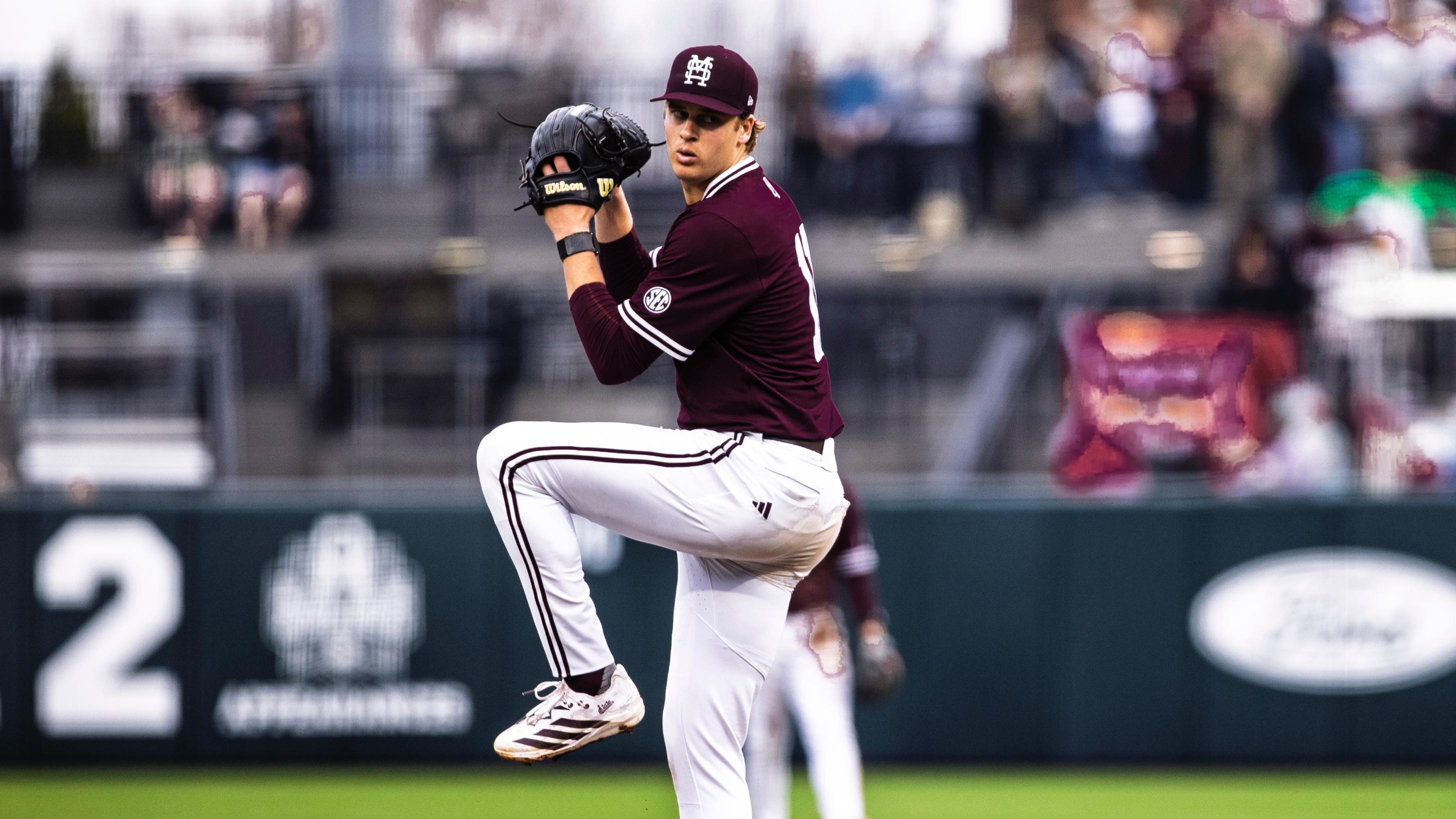
19. Cleveland Guardians — RHP Duke Stone, Mississippi State. Stone's 5.31 ERA in 2026 is the obvious blemish, but the underlying strikeout performance tells a more interesting story. He fanned 107 hitters in 79.2 innings, and the size, pitch quality and repertoire suggest there is more ability than the run prevention showed. Cleveland has a long history of extracting more from pitchers, making this the kind of profile that would fit the organization's development reputation.
20. Arizona Diamondbacks — SS Carter Hadnot, Aquinas High School. Hadnot is already regarded as one of the stronger defensive shortstops in the prep class. His reads, hands and actions give him a good chance to stay at the position, while his offensive approach is more advanced than the current power output. The remaining question is strength. If his 6-foot-2 frame fills out without costing him quickness, the total package can become much more impactful.
21. Boston Red Sox — SS Chase Fuller, Lincoln High School. Fuller is one of the most athletic two-way players in the class. He can reach the mid-90s on the mound, but the more exciting long-term projection may be at shortstop, where his explosiveness and 6-foot-3 frame create an unusual combination. Boston has not been afraid to invest in high-ceiling position players, and Fuller would give the organization another premium athlete to develop.
Picks 22-24: Texas Versatility, Tennessee Stuff and Troy's College World Series Star
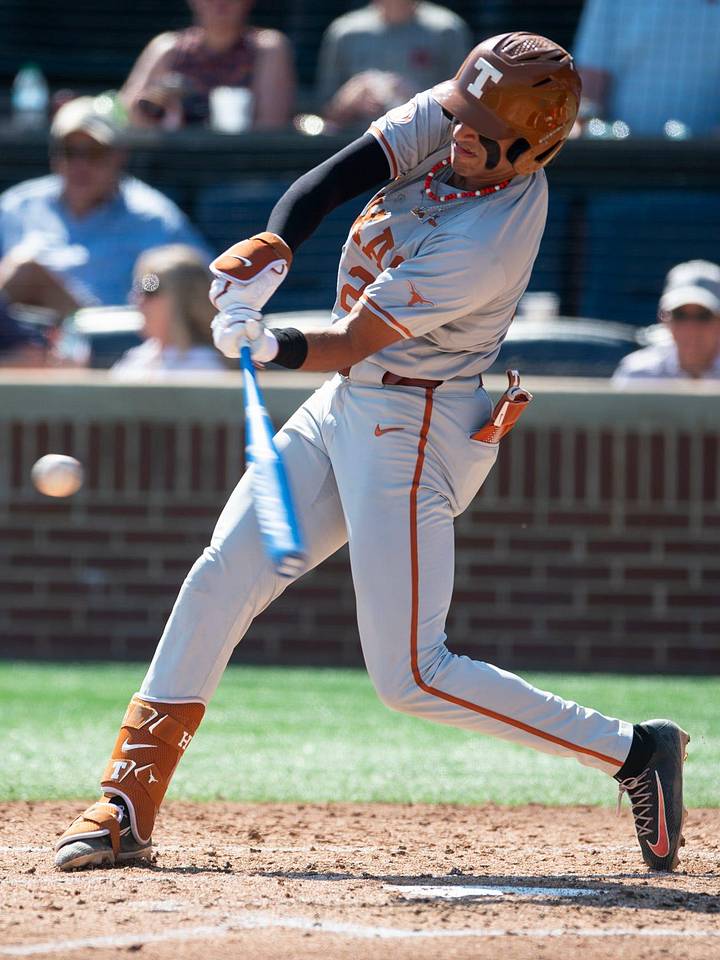
22. Chicago Cubs — IF Adrian Rodriguez, Texas. Rodriguez has been a steady offensive contributor for two years, hitting .327/.417/.514 over 461 plate appearances while handling multiple defensive positions. The intrigue comes from how hard he hits the ball relative to his home-run totals. Elite exit velocities indicate there may be considerably more game power available, and a fully healthy season after hand issues could unlock it.
23. Houston Astros — RHP Landon Mack, Tennessee. Mack's results have not always matched the raw ingredients, which is why he lands here rather than in the top ten. His upper-90s sinker and high-spin cutter are difficult pitches to barrel, and the delivery creates deception. The challenge is turning that stuff into more consistent innings. If his command improves and the ERA falls with it, scouts will have little trouble seeing first-round arm talent.
24. Philadelphia Phillies — C/OF Jimmy Janicki, Troy. Janicki was the centerpiece of Troy's breakthrough run to the College World Series, producing 26 doubles, 21 home runs and 87 RBI while slugging .664. His 6-foot-4, 225-pound body creates legitimate questions about whether catcher will remain his long-term position, but the offensive impact is strong enough that the answer may not matter. If he has to move to an outfield corner, the bat still gives him a first-round path.
Picks 25-27: The Yankees and Dodgers Take Different Kinds of Upside
25. New York Yankees — RHP Camden Clark, Southern Mississippi. Clark raised his profile with the Collegiate National Team and brings a powerful fastball along with experience in several pitching roles. He posted a 2.93 ERA with 81 strikeouts in 55.1 innings, giving evaluators a productive baseline as he enters the most important season of his amateur career. The Yankees have consistently targeted arms with traits their development group believes it can amplify, and Clark fits that approach.
26. Los Angeles Dodgers — 3B Brady Cunningham, Brother Rice High School. Cunningham is already physically mature at 6-foot-3 and 225 pounds, so the appeal is less about dreaming on future size and more about converting present strength into game power consistently. The hit tool is not as polished as some of the prep bats projected ahead of him, but the impact potential is significant. Los Angeles can afford to take a longer developmental view on a high-upside high-school hitter.
27. Chicago White Sox — RHP Sam Cozart, Texas. Cozart was dominant in relief, posting a 1.72 ERA, 13.2 strikeouts per nine innings and nine saves. Now the important evaluation moves to the rotation. At 6-foot-6 and 260 pounds with five pitches and solid command, he has the ingredients to start. If that transition holds over a full spring, this projection could prove conservative rather than aggressive.
Picks 28-30: Three More Arms Close Out a Deep First Round

28. Atlanta Braves — RHP Jackson Barberi, Florida. Barberi was electric out of Florida's bullpen, striking out 55 hitters in 37.1 innings and allowing only 21 hits. His fastball averaged around the upper 90s and has reached 101, while two legitimate secondary offerings give him a better foundation than a one-pitch reliever. The next question is whether he can carry that arsenal through longer outings. A successful move into a larger role would push him firmly into first-round territory.
29. Tampa Bay Rays — SS Leo Nockley, Wyoming Seminary. Nockley does not have the physical size of most first-round prep players, but his performance and baseball instincts keep forcing evaluators to take him seriously. He controls the barrel, competes against quality pitching and plays a dependable shortstop. Tampa Bay has never been afraid of unconventional profiles when the underlying skills are strong, and Nockley would be a very Rays-style bet on performance over body type.
30. Milwaukee Brewers — RHP Wylan Moss, UCLA. Moss has worked in a piggyback role rather than carrying a traditional Friday-night starter workload, but the results have been excellent: a 2.70 ERA, 1.15 WHIP and 125 strikeouts in 113.1 innings across two seasons. His size and three-pitch mix give him one of the steadier starter projections in this range. If UCLA gives him a conventional weekend role and he handles it, he could move comfortably into the middle of the first round.
The biggest theme in this early 2027 picture is depth rather than one unquestioned superstar. Valincius, Seward, Lawson and Hairston all have plausible arguments near the top, while the college pitching group stretches deep into the round. That creates exactly the kind of class that can change quickly once the spring begins. A healthy season from Whitney, a power jump from one of the prep shortstops or a breakout from an already productive college arm could reorder the first ten picks in a matter of weeks.