

Lamar Is Questionable — and Baltimore's Bigger Problem Isn't Just His Ankle
GOATIFYThe Baltimore Ravens have a quarterback decision to make before Sunday's AFC North meeting with the Cincinnati Bengals, but the official injury designation only tells half the story. Lamar Jackson is questionable after a high ankle sprain, having returned to limited practice for the first time since his October 4 injury. Whether he can dress is one question. Whether he can play like Lamar Jackson is the more important one.
Baltimore enters Week 7 at 4–2, Cincinnati at 3–2. The Bengals have enjoyed a bye week and arrive without an injury designation, while the Ravens are balancing their most important offensive uncertainty with a defense that has just lost a leading pass rusher for the season. The stakes extend beyond one October result: a division race this crowded can be shaped by which team survives its first head-to-head meeting.
Jackson has been careful not to promise a return. His movement remains the test, and that distinction matters for an offense built around the constant threat that he can escape, extend and punish a defense that guesses wrong. The Ravens have won without him, but the numbers show how much of their attacking identity changes when Tyler Huntley is under center.
Jackson's real test is movement, not a medical clearance

Jackson injured his left ankle against Tennessee on October 4 when a defender landed on the leg as he planted to escape pressure. He missed the second half of that victory and then sat out Baltimore's next two games. This week brought a meaningful step: limited practice on Wednesday, Thursday and Friday, with coaches able to see him work alongside teammates rather than merely progress through individual rehabilitation.
On Friday, Jackson confirmed that the injury was a high ankle sprain. The swelling had improved, but he acknowledged that running still hurt. He did not frame the decision as a demand to be perfectly healthy. His concern was whether he could move well enough to help Baltimore win, rather than become a stationary target who strips the offense of its most unusual advantage.
That is a critical football distinction. A healthy Jackson can hold a backside defender with the possibility of a keeper, turn a broken pass play into a first down and force a defense to choose between containing him and covering receivers downfield. A limited Jackson may still deliver accurate throws, but opponents can tighten their assignments if they no longer respect the full range of his movement. The effect reaches Derrick Henry's running lanes, the timing of play-action and the amount of time receivers have to uncover.
Head coach Jesse Minter has said the decision will depend on Jackson's condition and effectiveness, not simply his willingness to compete. That approach leaves open a game-day call. It also explains why limited participation across three practices is encouraging evidence rather than a guarantee. Coaches need to judge what Jackson can do after several drives, not only what he can demonstrate in controlled practice periods.
If Jackson plays, a sensible plan would emphasize protection, defined reads and selective movement instead of asking him to reproduce every improvisational escape immediately. The temptation to unleash the complete offense must be balanced against the danger of a quarterback who cannot plant or accelerate naturally. Baltimore's decision is less about toughness than about whether its greatest weapon can still function as a weapon.
Huntley keeps the Ravens competitive, but the offense loses its margin

Tyler Huntley has already shown that Baltimore can survive a Sunday without its franchise quarterback. He helped deliver an overtime win at Atlanta, then started the 13–10 defeat in Cleveland. Those results point in different directions, but together they show the narrow path available to a team trying to keep its broader system intact without the player who usually makes it explosive.
The scoring split is striking. Baltimore produced 116 points and 14 touchdowns in the portion of the season Jackson played, compared with 40 points and four touchdowns in the time without him, including the second half against Tennessee. Those figures do not isolate quarterback performance from opponent quality, field position or the health of other players. They do illustrate why simply asking Huntley to run the same playbook is unlikely to reproduce the same results.
Huntley can move and has experience in Baltimore's offense, so he is not an immobile placeholder. The difference is how defenses react to him. Jackson's speed and reputation demand unusual discipline from edge defenders and second-level tacklers. Against Huntley, opponents may be more comfortable squeezing the run, challenging shorter routes and making the Ravens sustain long drives without explosive gains. One penalty or third-down failure then becomes much harder to overcome.
There are ways to reduce that burden. Henry can establish physicality and create manageable second downs, while Zay Flowers offers the separation and run-after-catch threat needed to turn ordinary completions into field-position swings. The return of center Cam Jurgens to full practice after concussion protocol could also stabilize the interior and allow rookie Vega Ioane to work at his more natural guard position. Better protection is valuable whichever quarterback starts.
Baltimore should not confuse caution with passivity. A conservative plan that produces only third-and-long situations would expose Huntley to precisely the downs Cincinnati wants. The alternative is controlled aggression: early-down throws, motion that reveals coverage, designed touches for playmakers and a willingness to attack when the defense overcommits to Henry. Huntley does not need to impersonate Jackson. He needs an offense built honestly around what he can execute.

Burrow and a rested Bengals offense can punish every stalled drive
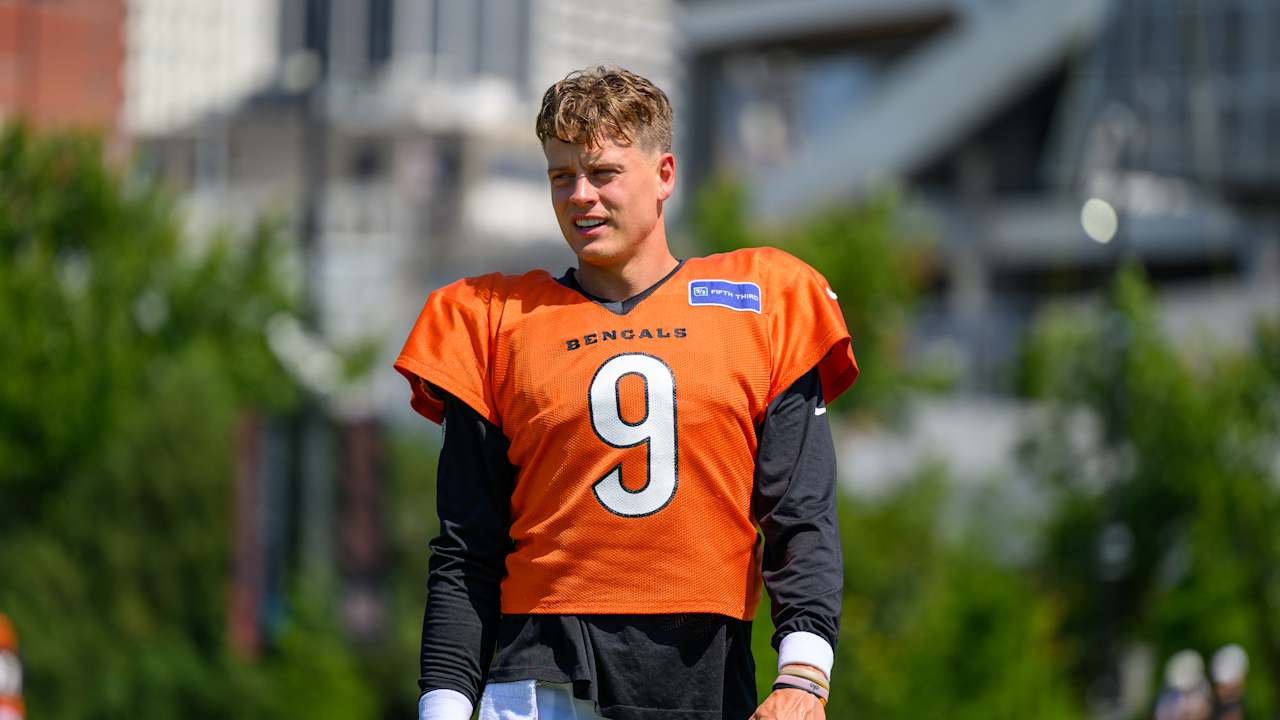
Cincinnati arrives with a luxury Baltimore does not have: a clean final injury report. Coming off its bye, the Bengals can prepare for two possible Ravens quarterbacks without having to redesign their own lineup around a major absence. Joe Burrow and his receivers offer the kind of passing threat that can turn a quiet first quarter into a game played entirely on their terms.
That matters because Baltimore's offensive uncertainty can become a defensive problem. If the Ravens repeatedly punt after short possessions, Burrow gets more chances to diagnose coverages and exploit tired defenders. Cincinnati does not need to dominate every series; it can win through accumulation, forcing Baltimore to chase points in a game where its quarterback may be restricted or absent.
There is also a historical reason the Bengals will be wary of Jackson even if he is less than fully healthy. He has an 11–2 record as a starter against Cincinnati, with 3,699 total yards and 26 touchdowns in those meetings. Those numbers cannot guarantee anything about Sunday, especially with an ankle injury changing his movement. They do explain why Cincinnati cannot plan as though a questionable designation removes his capacity to decide a game.
The matchup has an intriguing twist on Baltimore's defensive front. Trey Hendrickson, now a Raven after his years in Cincinnati, is expected to face his former team. His familiarity with the Bengals does not substitute for execution, but an effective rush can disrupt the rhythm Burrow relies on. Baltimore needs pressure that arrives without sacrificing coverage discipline, because sending too many defenders leaves one-on-one opportunities for a receiving corps capable of exploiting them.
For the Bengals, patience may be the winning strategy. They can test the Ravens' depth, avoid giving the defense short fields and let their healthy offense work through the full menu of plays. For Baltimore, the counter is to control the ball and make Cincinnati earn every possession. The quarterback story will dominate the headlines, but field position, third downs and the ability to finish drives may determine whether Jackson's status becomes the explanation for the result.

Baltimore's defensive injuries make the quarterback call even bigger

Even if Jackson returns, Baltimore will not enter Sunday with its preferred defensive lineup. Outside linebacker Tavius Robinson has been ruled out for the rest of the season with a pectoral injury, while safety Jaylinn Hawkins is out against Cincinnati with a knee problem. Robinson leads the Ravens with 3.5 sacks, so his loss is more than a missing name on a depth chart. It removes an established edge presence from a unit that must contain Burrow without allowing easy throwing windows.
The immediate replacement work falls to Mike Green and younger rushers such as Zion Young and Ethan Burke. Their challenge is not merely to produce a sack. They must set edges, keep rushing lanes coordinated and avoid allowing Burrow to step comfortably into the pocket. A defense can win individual pass-rush snaps and still lose a drive if its rush pattern opens the center of the field or its coverage breaks down behind the pressure.
Hawkins' absence creates a different kind of problem. Baltimore could turn to Keondre Jackson, who has not yet played a defensive snap this season, or change the alignment of Kyle Hamilton to cover the missing responsibilities. Hamilton's versatility gives coaches options, but moving an elite chess piece from one assignment to another changes what the rest of the defense can do. Every adjustment has a cost, particularly against a quarterback who recognizes mismatches quickly.
The wider injury report offers little room for comfort. Cornerback T.J. Tampa is doubtful, and defensive tackle Broderick Washington Jr. is questionable. Baltimore has scored 156 points through six games, but it has also allowed 132, the most in its division entering the weekend. That gap between offensive production and defensive vulnerability explains why the Ravens have so often needed Jackson to generate a cushion rather than merely manage a lead.
Sunday therefore becomes a test of organizational depth as much as star power. If Jackson is unavailable, the defense may need to win a lower-scoring contest without two starters. If he returns but cannot run freely, the same pressure remains. Baltimore can still win with disciplined coverage, an efficient rushing attack and timely plays from its replacements. What it cannot afford is to treat the quarterback decision as the only decision that matters.
Baltimore has enough talent to beat Cincinnati with either quarterback, but the routes to victory are not identical. A mobile Jackson can change the geometry of the game on his own. A limited Jackson needs a plan that protects his movement, while Huntley needs help from the running game, receivers and field position. None of those approaches works if the defense gives Burrow a steady supply of extra possessions.
The Ravens should resist turning Sunday's decision into a referendum on Jackson's toughness. The smarter question is whether his presence expands the offense or merely puts an injured player in the middle of it. With Robinson lost for the season, Hawkins unavailable and a rested division rival arriving healthy, Baltimore's margin is already thin. The outcome will show how well this team can adapt when its most recognizable advantage is suddenly uncertain.
Shop GOATIFY NFL and American football shirts, hoodies and stickers.

















