

Ferrari Wants P2. Hamilton Says Las Vegas Is Also a 2027 Test.
GOATIFYFerrari has come to Las Vegas with two assignments that sound compatible until somebody has to choose a car setup. Lewis Hamilton wants to secure second place in the 2026 Formula 1 Constructors' Championship. He also wants to use the final races to test ideas that could improve Ferrari's 2027 campaign. The problem is that the best experiment is not necessarily the fastest way around a cold street circuit on the weekend when championship points are available.
Hamilton made the dual objective unusually explicit during the November 18 media activities. Ferrari has no new components available for a formal upgrade test, but it can change settings, compare responses and learn what its current package does well or poorly. Charles Leclerc has a more immediate request: find enough speed and consistency to fight for another victory, especially after a punishing Brazilian Grand Prix where both red cars finished well down the order.
That creates a more revealing Las Vegas storyline than another prediction about Ferrari qualifying pace. Mercedes has already wrapped up the constructors' title. Ferrari must defend the next position and understand why its car can be competitive one weekend and almost impossible to keep in the proper tyre window the next. Vegas, with long straights and cool nighttime running, threatens to expose those weaknesses in the same race where Ferrari needs evidence that it has identified them.
Ferrari has two jobs in Las Vegas, and they can pull in opposite directions
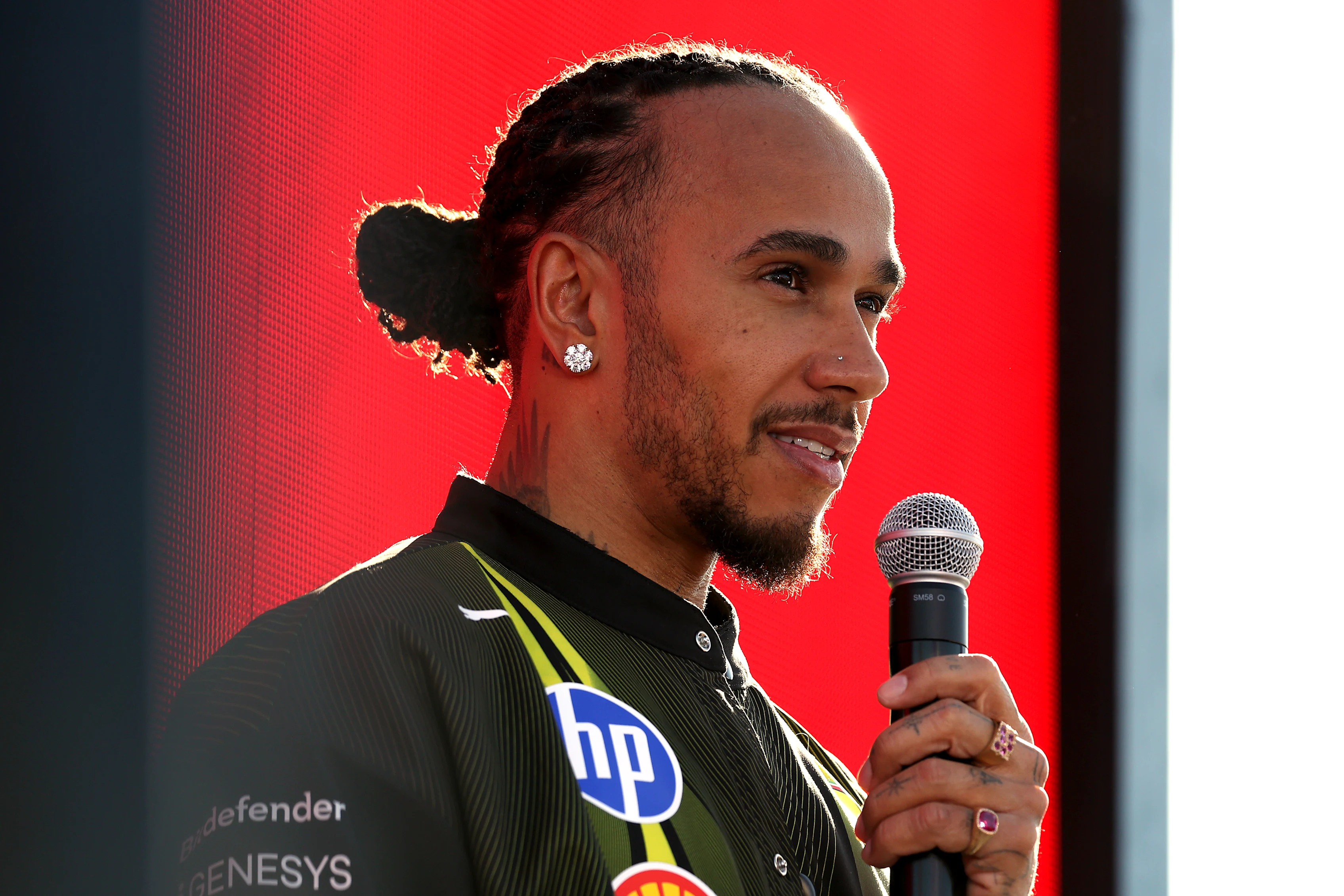
The shorthand description of Ferrari's season would be that it wants to finish as the best team behind Mercedes. But the distinction between second and third is not a cosmetic one for a factory of Ferrari's size. A runner-up result gives engineers, mechanics and management something concrete to defend in a year when the overall prize is already out of reach. It also supplies a meaningful benchmark for winter decisions. If the team gives away valuable points while experimenting, even a useful spreadsheet of new findings may feel like an expensive consolation.
Hamilton said his priority is protecting second in the constructors' standings because that position matters to the people working at Maranello. He also sees a chance to regain places in the drivers' table over the closing races. Neither ambition is extraordinary by itself. What matters is that he discussed both alongside setup investigations for 2027: use this race and the two weekends that follow to try different approaches, inspect their effects and avoid repeating the same misunderstandings next year.
A setup experiment is not a physical upgrade. Ferrari cannot bolt an imaginary 2027 front wing onto the 2026 car and judge its future performance from that. It can, however, change choices that affect balance, tyre energy, stability, corner entry or traction, and see whether predicted behaviour appears on track. It can compare the two drivers' comments with telemetry. It can examine whether an adjustment that helps a single lap undermines a longer stint. Those details are often less dramatic than a new aerodynamic package, but they determine whether an existing one can be used well.
The complication is timing. Formula 1 practice time is finite, circuit grip evolves rapidly and the Las Vegas Strip Circuit changes character as darkness falls and temperatures move. Testing several configurations divides that time into smaller samples. A deliberate comparison might require a driver to run with a compromised setting, which is entirely defensible on Friday but harder to justify if the same uncertainty survives into qualifying. Ferrari needs to know which questions must be answered now and which can be postponed until the result is safe.
The two-car structure creates both opportunity and risk. Hamilton and Leclerc can explore different baselines, accelerating comparison, but each then begins with a different understanding of how the car behaves. If one changes direction halfway through practice, track evolution and tyre history make the comparison less clean. A reliable test plan must control for those variables instead of treating every faster lap as proof of a better setup. The reward is not just a tenths-of-a-second discovery; it is confidence about why a change worked.
GOATIFY
GOATIFY Formula 1
Ferrari's chase for a strong finish makes race weekends matter. Explore GOATIFY F1 designs while the points battle continues.


For a team already chasing the runner-up prize, the strongest weekend would produce both things: enough performance to score heavily and a clear explanation of what produced that performance. A podium without understanding may be hard to repeat. A clever experimental programme that ends in a point-less Saturday night would be difficult to sell. Ferrari's task is to stop those outcomes being mutually exclusive.
Brazil exposed the tyre problem. The radio debate exposed the decision problem.
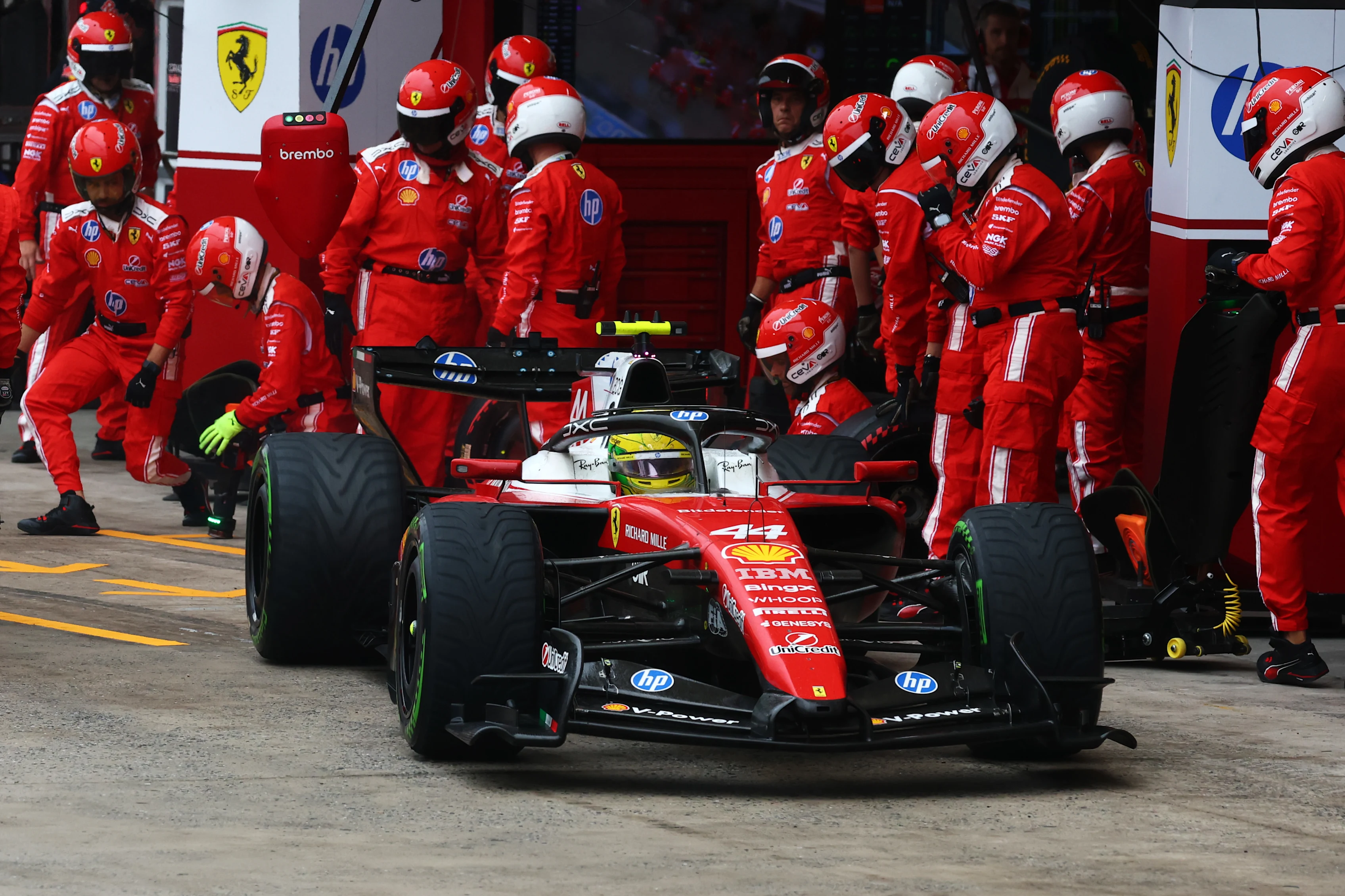
To understand why Ferrari's Vegas preparation is about more than setting a qualifying time, go back to Interlagos. Hamilton finished ninth and Leclerc eighth. The standings alone suggest a mediocre race, but that hides how strange the afternoon became. Both drivers were carrying power-unit-related grid penalties. Hamilton had further engine trouble before qualifying, ultimately starting 20th, while Leclerc began 14th. Early progress was possible, yet neither Ferrari found a stable route through the changing conditions.
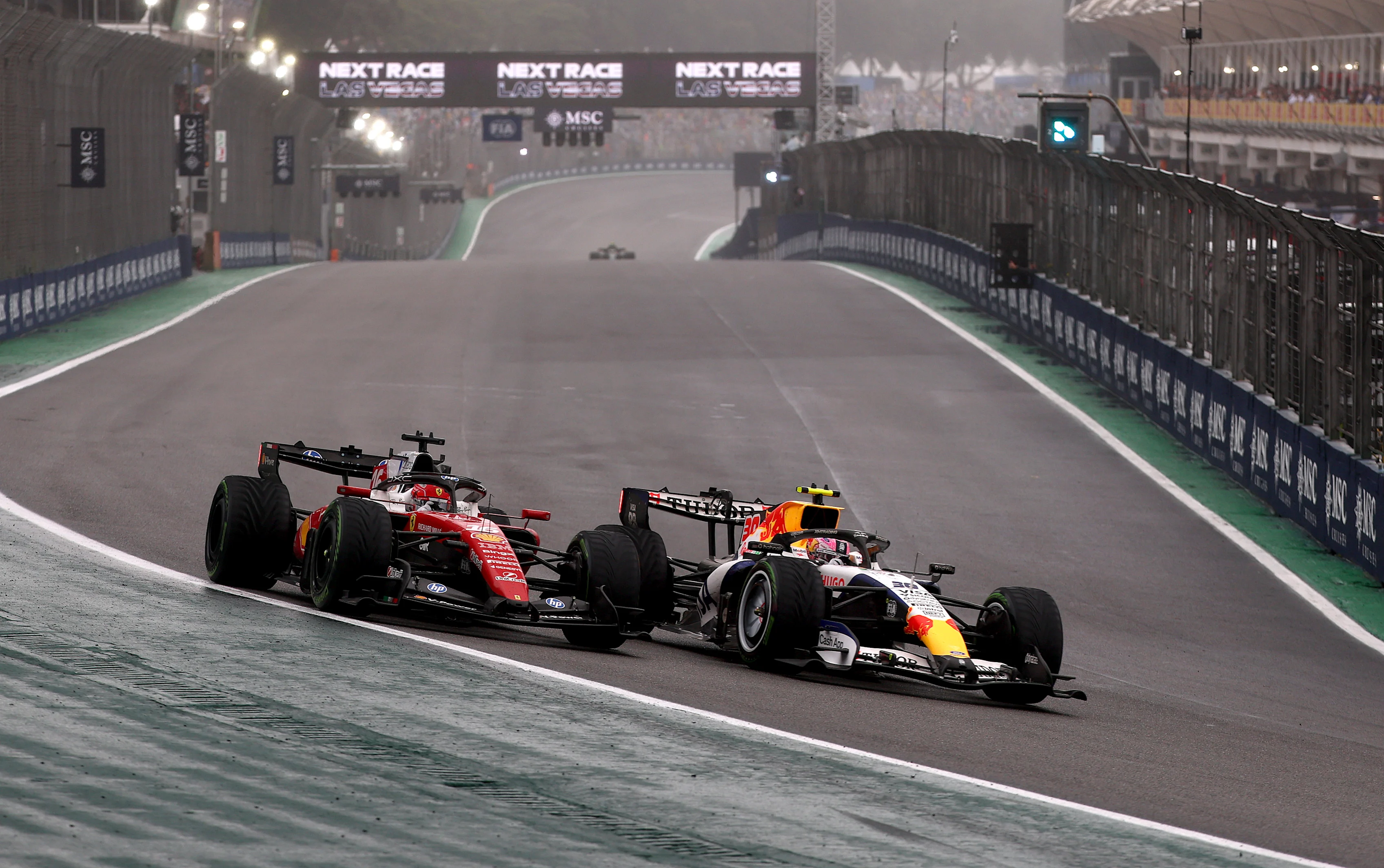
Hamilton's opening lap was spectacular by the standards of his starting position: he gained 11 places before tyre degradation and grip inconsistencies began undoing the gain. Leclerc described his opening stint as extremely difficult, then found better pace later when the tyres and track came closer to the car's preferred operating range. Rain and a changeable surface made the challenge more severe. Leclerc crossed the line seventh but was classified eighth following a penalty for contact with Liam Lawson, while Hamilton recovered from a spin before finishing ninth.
Fred Vasseur's post-race explanation pinpointed the size of the performance swing. When Ferrari's tyres were outside their useful temperature window, their deficit became much larger than the gains a modest technical upgrade could provide. That matters in Vegas because a car that merely lacks a few tenths on a long straight is one problem; a car that cannot switch on its tyres without sliding, overheating or eating them too quickly is a problem that multiplies the consequences of everything else. The initial error can produce an entire stint of lost lap time.
Brazil also demonstrated the messy human side of decision-making. Hamilton pushed for a switch from intermediate tyres to slicks as conditions evolved. Ferrari agreed to an aggressive move, but Vasseur later suggested the timing had probably been too early. It is possible for the team's models to make one recommendation, the driver to feel something different from inside the cockpit and both to be acting reasonably with incomplete information. A wet-to-dry crossover does not announce itself with a perfect number; every team estimates it.
There has been scrutiny of Hamilton's communication with the pit wall after recent races. Ahead of Las Vegas, he denied that these moments amounted to a breakdown of trust. That distinction deserves to survive the headline. Strong disagreement over one strategic call is not proof that a driver refuses to work with his engineers, and silence over the radio is not necessarily evidence of good coordination. The useful test is whether the group can reconstruct why its information diverged and improve the next decision rather than simply deciding who was right.
Ferrari's challenges are connected. A driver who cannot predict whether the tyres will grip under braking is less able to judge precisely when an alternative compound will become faster. The pit wall needs credible pace forecasts, but those forecasts depend on understanding the operating window. If the car behaves unpredictably, strategy becomes guesswork dressed in impressive graphics. Better communication helps, yet the most valuable fix is reducing uncertainty in the underlying performance model.
Las Vegas therefore offers a chance to test both machine and process. How quickly can Ferrari warm its tyres on a cold surface? Do Hamilton and Leclerc describe the same balance changes in similar terms? When temperatures fall or a race-control interruption changes conditions, can driver feedback and pit-wall modelling converge faster than they did in Brazil? Those questions will not generate a new trophy on Friday, but they could decide whether another promising race result disappears in the pits.
GOATIFY
GOATIFY Formula 1
Hamilton's Brazil recovery showed why every decision matters. Discover GOATIFY racing-themed tees, hoodies and stickers.


Leclerc's warning is specific: cold tyres and long straights are a dangerous combination
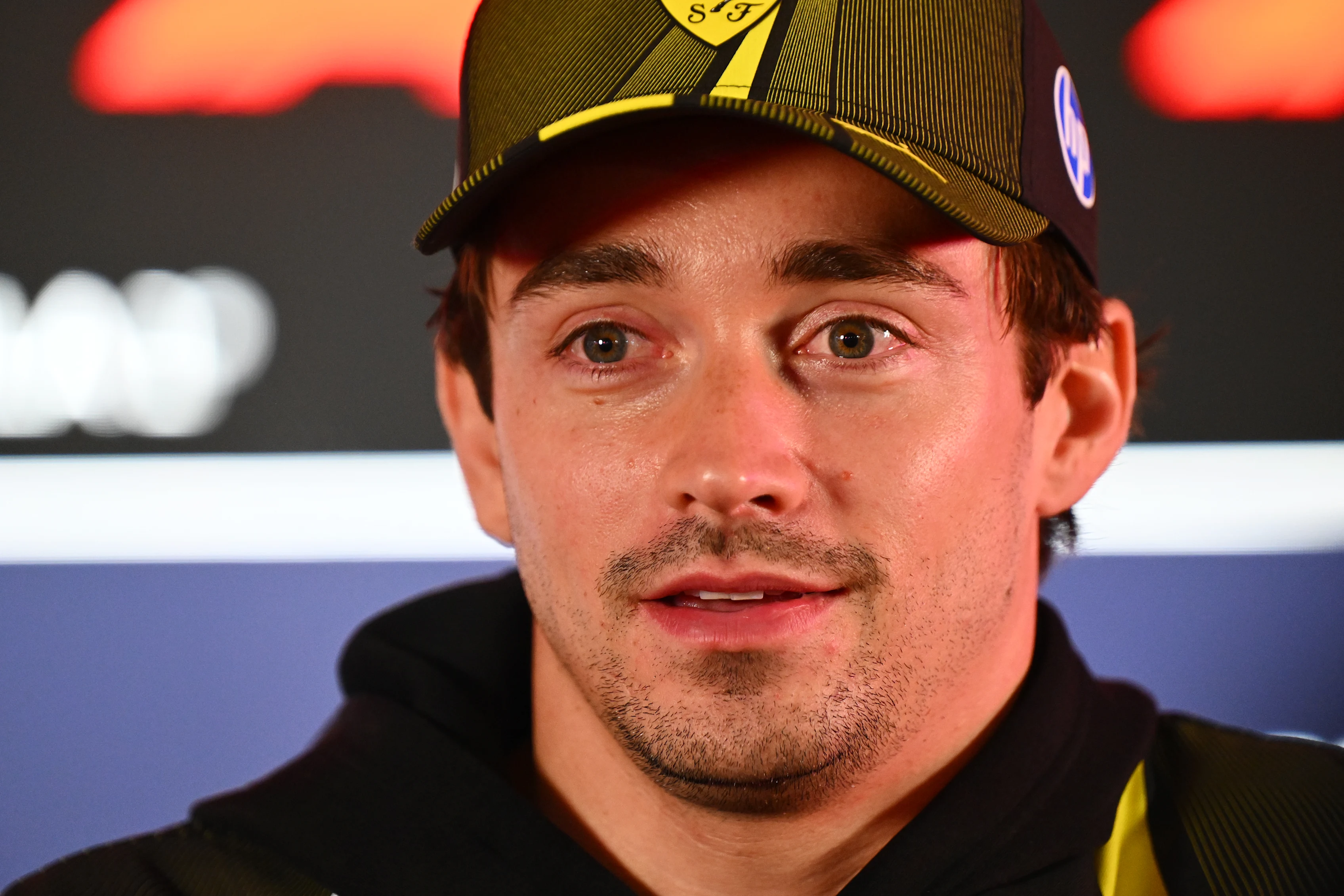
Leclerc has been less interested in narrating his finishing position in the drivers' championship than in finding another win before the season ends. He knows a higher placement would naturally follow stronger performances. More importantly, he wants Ferrari to enter the long winter with evidence that it can still execute a complete competitive weekend. In Las Vegas, that requires admitting the weaknesses before anyone tries to solve them with optimism.
The Nevada race is unusually unfriendly to a team struggling with tyre temperatures. It is a fast street layout with substantial flat-out sections, sharp stops and a schedule built around nighttime running. Cooler asphalt can slow the process of bringing tyres into their preferred working range. Meanwhile the lengthy straights deprive tyres of continuous lateral loading and place a premium on efficient straight-line performance. A car that takes too long to warm its rubber may reach the braking zone with less grip than its aerodynamic potential suggests.
Leclerc has acknowledged that Ferrari is not holding a simple technical fix in reserve. If one existed and could easily be installed, the team would have used it. That is a more useful starting point than promising an upgrade that will not arrive. He specifically identified tyre warm-up as an area Ferrari can influence with preparation and setup choices, even though power-unit characteristics and other underlying limitations cannot be rewritten in the garage between practice sessions.
The trade-off is subtle. A setup that puts energy into the tyres quickly can improve confidence in the opening qualifying laps, but may come with a cost in tyre wear, balance or race consistency. More downforce can help the car stay planted through technical corners while increasing drag on the long straights. Aggressive suspension or brake settings might produce better single-lap temperature behaviour but leave a driver fighting instability over a full stint. The correct solution depends on the night's conditions and the actual speed of rivals, not on one universal formula.
Vegas also punishes teams that confuse tyre preparation with tyre management. On an out-lap, the immediate challenge is reaching the window. Over a race distance, the challenge becomes keeping the rubber there while fuel burns off, track grip changes and competitors force the driver into dirty air. Those are different tasks. Ferrari could make progress in qualifying without having cured its underlying race behaviour, or it could produce stronger race pace only after starting too far back to exploit it.
Ferrari's Brazil weekend illustrates both sides of the danger. Leclerc was frustrated with grip at the beginning of the race, yet found respectable speed later. The variable was not only the car's permanent aerodynamic capability. Temperature, compound behaviour, traffic, track moisture and choices made along the way changed what the car could deliver. The important question for Las Vegas is whether the team can engineer that useful state deliberately instead of waiting until half a race has disappeared.
That is why Leclerc's comments matter beyond cautious pre-race soundbites. If Ferrari can get its tyres ready for a fast qualifying lap, limit losses on the long straights and preserve the balance through a stint, it can put both drivers in a position to attack. If any of those pieces fails, the strengths of its chassis may become irrelevant. Winning is possible only after Ferrari has made itself predictable enough to race.
The real 2027 test is whether Ferrari can explain its next result
Hamilton's talk of 2027 changes should not be mistaken for a promise that Ferrari can validate next year's entire car on the current one. The rules, chassis development choices and eventual mechanical package will differ in ways a normal Grand Prix weekend cannot reproduce. What Ferrari can learn now is how accurately its engineers predict the consequences of a change, whether the drivers can use the car's available performance and which operational habits produce reliable decisions under pressure.
GOATIFY
GOATIFY Formula 1
Vegas tyre temperature can make or break the lap. Browse GOATIFY Formula 1 fanwear for the nighttime Grand Prix.


That is valuable because a complicated racing car is not improved by collecting more data indiscriminately. The team needs controlled comparisons. A change in front-end balance, ride-height philosophy or tyre preparation routine should have a clear question behind it. What was the predicted improvement? What did the sensors show? Did both drivers feel the expected difference? Did lap time change because of the setting or because the track had gained grip? Without that discipline, the richest telemetry archive becomes a collection of anecdotes.
Ferrari must also separate symptoms from causes. A difficult opening stint might look like a tyre problem, but the underlying cause could be insufficient tyre energy on the formation lap, an aerodynamic balance shift, traffic or a compromise made to protect the car over the straights. Likewise, a slow sector on the Las Vegas Strip might suggest a power-unit deficit, but could partly reflect a driver unwilling to attack the preceding corner on cold tyres. Identifying the difference matters before winter development resources are committed.
The team's immediate goals do not have to be complicated. First, both drivers should reach qualifying with a car they understand, rather than spending the final practice session reversing earlier guesses. Second, Ferrari needs to convert opportunities into clean execution: starts, pit decisions, tyre choices and traffic management. Third, the race should provide consistent information about what it does well and where it still loses performance. Strong points and reliable explanations are better than one dramatic lap masking repeated problems.
Hamilton and Leclerc have complementary reasons to want that clarity. Hamilton is trying to make his Ferrari partnership produce the consistently competitive weekends that his move promised; his experience is useful only if feedback changes the team's decisions. Leclerc has spent years learning the strengths and flaws of different Ferrari cars; he can spot when a supposed fix creates a familiar compromise. Their value together is not merely the combined speed of two highly rated drivers, but the possibility of testing hypotheses from different perspectives.
There is also a motivational element that spreadsheets cannot fully capture. Leclerc has spoken about the importance of ending the season positively before a long winter break. Hamilton has framed second place in the constructors' standings as meaningful to the whole factory. Those are not competing views. A strong late result can give the organisation belief, while honest analysis of that result helps prevent belief from turning into complacency. The danger is becoming satisfied with the classification and ignoring why it happened.
By the chequered flag, Ferrari should be able to answer specific questions about tyre warm-up, straight-line losses, race balance and the interaction between driver feedback and strategy. The team will still have winter engineering work to do. But a Las Vegas weekend that protects second in the championship and produces a dependable performance model would give that work a better starting line than another isolated flash of pace.
Las Vegas does not offer Ferrari a secret shortcut to 2027. It offers a difficult, highly public test of whether the team's two drivers and engineers can connect a car's behaviour to decisions that make it faster. The immediate stakes are the constructors' runner-up position and a chance for Leclerc or Hamilton to finish the year with something stronger than another explanation of a disappointing result.
Ferrari's ideal outcome is not choosing between points and learning. It is scoring points because it understands its car better, then carrying that understanding into the last two rounds and the winter. If Hamilton and Leclerc leave Vegas knowing why the red cars were quick or slow, that will matter almost as much as where they finish. If they leave with only another mystery about cold tyres and warm-up laps, the 2027 experiment will have taught the team very little.
GOATIFY
GOATIFY Formula 1
Before the next chequered flag, explore GOATIFY Formula 1 shirts, hoodies, mugs and stickers for race-weekend fans.


















