Court McGee Didn’t Get the Storybook Ending — His UFC Career Meant More Than One Last Win
GOATIFYCourt McGee did not get the Hollywood ending. In front of his home-state crowd in Salt Lake City, the 41-year-old veteran was stopped by Eric Nolan at 3:26 of the third round at UFC 332, then removed his gloves and closed a UFC career that had lasted more than 16 years.
The result matters, but it is not the most important thing about the night. McGee entered the Octagon knowing this was the final fight of his career, and the bout itself almost became a compressed version of why he lasted so long: pressure, stubbornness, wrestling attempts, a willingness to keep working after being hurt, and eventually the hard physical reality that every fighter reaches. Nolan earned the finish and his first UFC victory. McGee left with something harder to quantify — a career whose meaning was always larger than its win-loss record.
The last fight summarized McGee’s career

McGee’s final fight was competitive for longer than the result suggests. He pushed forward early, mixed boxing with wrestling pressure and made Nolan work through the kind of uncomfortable minutes that defined much of McGee’s career. Nolan gained momentum late in the first round, but McGee recovered and kept forcing exchanges in the second. The fight was level on the judges’ cards after two rounds.
That detail matters because the matchup was not arranged as a ceremonial goodbye. Nolan entered needing his first UFC victory after two losses, while McGee was trying to leave with one more win in Utah. The younger fighter had every incentive to ignore the occasion and treat McGee as a name he could use to stabilize his own UFC career. That competitive tension made the bout more meaningful than an easy farewell opponent would have.
Nolan was stronger in the final round and earned the stoppage at 3:26. It was his first UFC victory and a legitimate achievement on a night centered emotionally on McGee. McGee still tried to close distance and wrestle when the pace became difficult, which was consistent with the pressure-first identity he had carried for years.
Retirement fights are often framed as if the veteran is owed a perfect ending. MMA rarely works that way. The opponent is building his own career, and the sport does not protect sentiment. What made McGee’s exit meaningful was not a final victory; it was that he competed in the same pressure-based style that carried him through 25 official UFC bouts.
There was also something appropriate about the location. McGee grew up in Utah, built much of his life there and had one of his best late-career nights at the same Delta Center two years earlier. UFC 332 did not give him the result he wanted, but it gave him the audience he wanted: family, friends and a home crowd that understood why the walk mattered.
UFC 307 proved McGee still had one more real moment left

The most useful counterpoint to the UFC 332 loss came two years earlier in the same city. At UFC 307, McGee submitted fellow veteran Tim Means in the first round. It was his first stoppage victory in roughly 14 years and arrived after a difficult stretch that included neck surgery and questions about whether continuing to compete still made sense.
That win mattered because veteran careers rarely move in a clean downward line. McGee was no longer chasing a title, but he could still prepare, execute and beat an experienced opponent under UFC lights. The performance gave his final contract a genuine competitive highlight rather than turning the last years into a ceremonial farewell.
The context made it even more valuable. McGee had lost three straight before facing Means, and at 39 he was competing in a division increasingly populated by younger, faster athletes. A first-round submission did not reset his career clock, but it showed that experience, preparation and positional discipline could still produce a decisive result. For a veteran deciding how much longer to continue, that kind of night can be both validating and clarifying.
It also explains why his retirement decision feels measured. McGee had considered leaving before surgery, then returned and negotiated one final four-fight deal knowing the end was approaching. He was finishing a commitment on his own terms. The Means win proved the work could still translate, while the fights that followed helped clarify where the limit had moved.
By UFC 332, McGee could leave without wondering whether he had stopped at the first sign of decline. He had already come back, won once more, and then recognized that another comeback cycle did not need to begin. That distinction matters. Retirement was not an admission that the previous years had been a mistake; it was the conclusion of a plan he had been managing for several seasons.

From The Ultimate Fighter to 25 UFC bouts, longevity became the achievement
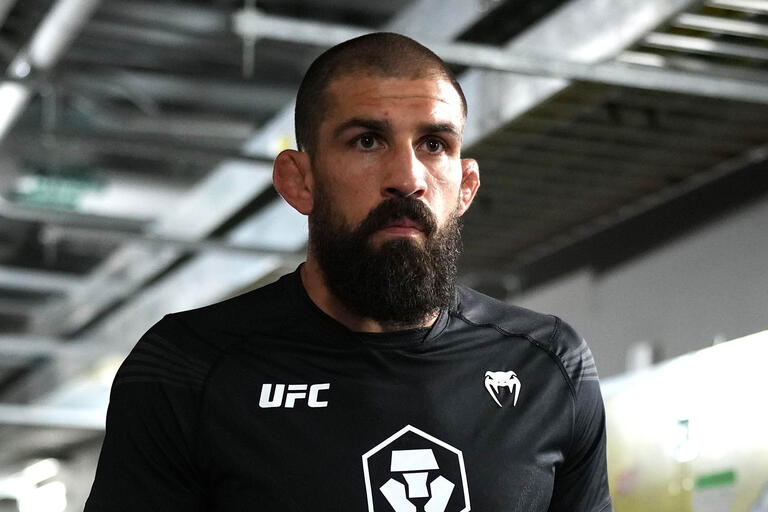
McGee entered the UFC through a route that now feels like another era. He won Season 11 of The Ultimate Fighter in 2010 and stayed on the roster long enough to compete against several generations of welterweights and middleweights. His résumé includes wins over Robert Whittaker, Josh Neer, Tim Means and Ramiz Brahimaj, along with bouts against Sean Strickland, Carlos Condit, Sean Brady, Matt Brown and Michael Chiesa.
That list shows what longevity in the UFC actually requires. Staying employed for 16 years means making weight repeatedly, managing injuries, adapting to younger opponents, accepting difficult matchups and remaining useful to a promotion that constantly introduces new prospects. McGee finished with an 11-14 official UFC record, a number that looks ordinary until the context is added: 25 fights at the highest level across a career that began before many of his final opponents were professionals.
He was rarely marketed as a superstar and never fought for a UFC championship. His value came from reliability. McGee pressured, wrestled, made opponents work and usually forced them to beat him over long minutes. That style is not designed to create a viral highlight every weekend, but it is exactly the kind of style that tests whether another fighter belongs.
For most fighters, reaching the UFC is the defining achievement. McGee reached it, won a reality-show tournament to get there, and turned the opportunity into a decade and a half of work. That is a different category of success than a belt, but it is still success.
That durability also gave the UFC a dependable measuring stick. Prospects and established names alike knew McGee would bring conditioning, physical pressure and veteran problem-solving. Beating him rarely meant solving one spectacular weapon; it meant staying organized against a fighter who had seen almost every kind of UFC matchup before.
The part of McGee’s legacy that cannot be scored on a fight card

McGee’s most important statistic may be the one he mentioned after the fight: 20 years sober. He has long spoken publicly about recovery and rebuilding his life. Fighting became part of that rebuild, but he never treated recovery as a private footnote once he had a platform.
That is why the retirement speech landed differently from the usual farewell. McGee did not frame the night as a tragedy because Nolan beat him. He thanked the crowd, acknowledged his opponent and told people not to let others convince them their dreams were impossible. The message was consistent with the one he carried after winning The Ultimate Fighter: a difficult past does not have to dictate what comes next.
He has also spent years building work outside the cage, including coaching and outreach. That matters for the next phase. Retirement can be difficult for athletes whose entire identity is tied to competition. McGee has spent much of his career constructing an identity that can survive after competition ends.
The UFC tribute after his final bout recognized that distinction. Plenty of fighters leave with better records, bigger purses or championship belts. Far fewer leave with a public story that has helped people who will never compete professionally. McGee’s fighting career is finished. The part of his career that may matter most does not need an Octagon.

McGee’s final record will not tell the whole story. Neither will the third-round stoppage at UFC 332. The better measure is the distance between the life he once feared he had lost and the one he built afterward: Ultimate Fighter winner, 25-fight UFC veteran, respected teammate, coach, father and public advocate for recovery.
There was no storybook win in Salt Lake City. There was something more honest. McGee fought until the sport told him it was time, thanked the people who helped him get there, and walked away on a decision he had made before the cage door closed. For a career built on refusing to quit when quitting would have been easier, that was a fitting ending.