

Bonner Hasn't Chosen Retirement. Atlanta Can't Ignore Its Bench.
GOATIFYAtlanta came within one victory of its first WNBA championship. It did not come within one decision of knowing how to reach the next one. After losing Game 7 of the 2026 Finals to Golden State, the Dream face a choice about a veteran who arrived late in the season and helped extend the title pursuit. DeWanna Bonner, 39, has not announced whether she will play another season. Her decision matters, but it cannot be the entire offseason strategy.
The immediate question is what Atlanta does about its reserves. The Valkyries' bench outscored the Dream's in six of seven Finals games, according to fresh reporting on November 22. A team built around Angel Reese, Allisha Gray and Rhyne Howard should not need its stars to solve every possession. Bonner can still contribute, but Atlanta has to decide whether bringing her back is one piece of a deeper rotation or a way of postponing the harder decisions.
Golden State Won More Than Game 7: It Won the Depth Battle
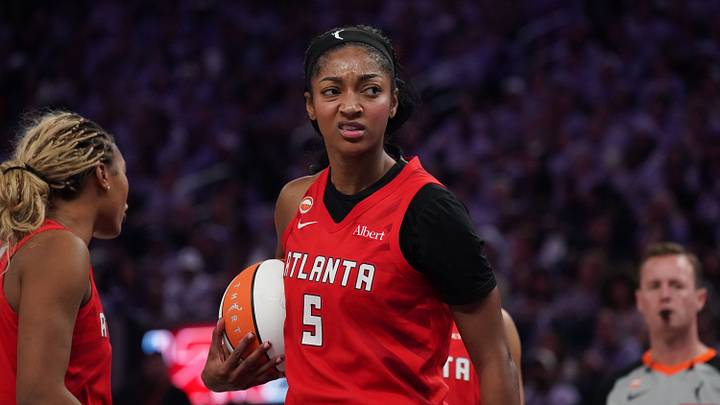
Golden State's 68–63 Game 7 victory settled the championship, but the result was broader than a single closing possession. The Valkyries won their first title in only their second season; Atlanta went home after a seven-game series that showed both the quality of its stars and the limits of its rotation. A five-point defeat invites endless second-guessing about the final shot. A serious contender has to examine what happened throughout all seven games.
On November 22, fresh reporting highlighted a consistent problem: Golden State's bench outscored Atlanta's in six of the seven Finals games. That does not prove each reserve on the champion's roster outplayed every Atlanta reserve. Bench production depends on minutes and game situations. Yet the repeated edge is a powerful indicator that the Valkyries had more ways to remain productive when their opening lineup changed.
Consider what an effective second unit accomplishes. It prevents the scoreboard from lurching whenever a high-usage scorer sits. It gives the coaching staff permission to rest a starter through an opponent's short run. It can maintain defensive pressure without relying on a weary lead player to cover every rotation. In a one-game upset, those benefits can be hidden. Across seven games against an increasingly familiar opponent, they become much harder to ignore.
Atlanta's best players still created a genuine chance. Angel Reese was a major two-way presence and produced a 30-point, 16-rebound Game 2; Allisha Gray supplied crucial perimeter scoring, and Rhyne Howard remained a serious threat from distance. That foundation deserves respect. The concern is that the team's other combinations too often lacked the same ability to create a useful possession. Great starters cannot play forty minutes at maximum energy every night.
Golden State offered a different set of answers. Gabby Williams could change a game through aggression and shot creation, and guards such as Veronica Burton could support a coherent defensive system. Other veterans offered spacing, size or an outlet against pressure. The Valkyries did not merely collect bench players. They had contributors with different jobs who could enter without forcing the rest of the team to improvise an entirely new identity.
GOATIFY
GOATIFY WNBA
Shop WNBA designs while Atlanta reviews its Finals depth problem.

Caitlin Clark Golden Goose - Women's Sticker
Add basketball personality to your favourite gear.
Shop Now ↗
Caitlin Clark G.O.A.T. - Greatest of All Hoodie
A basketball fan design for everyday wear.
Shop Now ↗

BALLERina Girl's Basketball Ballet Air Mug
Add basketball personality to your coffee break.
Shop Now ↗
BALLERina Girl's Basketball Ballet Air Sticker
Add basketball personality to your favourite gear.
Shop Now ↗
Five points can represent one converted open three, a pair of offensive rebounds or the cost of a short turnover sequence. It would be irresponsible to pretend we know which hypothetical possession changes Game 7. What we can identify is the series-long vulnerability. When the championship turns on narrow margins, a rotation that consistently produces more reliable possessions has a measurable edge before any last-minute heroics are required.
There is also a less visible cost when reserves cannot score. Starters return sooner, sometimes against the freshest defenders the opponent has available. An offense with too few secondary creators becomes easier to trap, and empty possessions expose teammates to transition attacks. Even when the bench does not commit the turnover itself, a poorly spaced lineup can force one of the stars into a desperate pass or a contested shot.
The Dream should review lineup-by-lineup numbers rather than treating the series as a referendum on one substitute. How efficiently did each lineup score with Reese off the floor? Which combinations generated corner threes for Howard or catches for Gray? When was the opponent able to switch every screen? Those are actionable questions. The answer may involve a veteran such as DeWanna Bonner, but it almost certainly involves more than one player.
The title-losing game was not an argument for dismantling a team that reached the Finals. It was an argument for strengthening the least resilient minutes in that team's schedule. Atlanta can appreciate what its starters achieved and still be dissatisfied with the limited support behind them. That is the frame in which Bonner's future needs to be judged.
Bonner's 17th Season Made Her Valuable—and the Decision Complicated
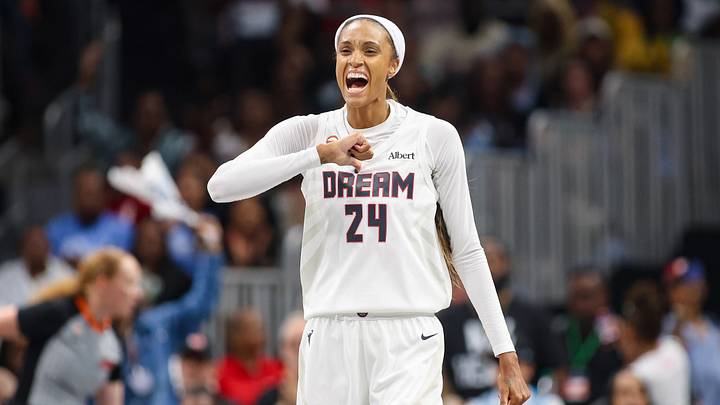
Bonner did not begin 2026 as a Dream player. She was with the Phoenix Mercury, and a late-season buyout opened the way for her to join Atlanta. That context changes the analysis. She was not a year-long rotation piece asked to develop chemistry across dozens of ordinary games. She joined a contender with a narrow window and a direct purpose: bring experience, versatile minutes and composure to a championship push.
On November 22, Bonner was 39 and had completed her seventeenth WNBA season. She had not announced a return or a retirement. The distinction matters. Meghan L. Hall's view, relayed in fresh reporting, is that Atlanta should be ready to bring her back if she wants another campaign. That is a recommendation from an analyst, not a report of negotiations or a contract offer. No responsible reading turns it into a confirmed signing.
The numerical case for the veteran's utility is modest but real. The report cites 7.7 points and 3.9 rebounds per playoff game. Nobody should mistake that for star-level scoring. At the same time, a supporting player does not have to average twenty points to matter. Her length, experience and ability to find a useful spot in a lineup can make the difference between a second unit with purpose and one that merely runs down the clock.
Bonner also offered a vivid demonstration of her ceiling. When Allisha Gray suffered a hand injury against New York in the semifinals, Bonner responded with 23 points and nine rebounds in extended minutes. That was more than routine bench production. It showed that a veteran who had arrived only weeks earlier could adapt to a larger responsibility under playoff pressure. Atlanta's front office should value that example without assuming it will happen every week.
GOATIFY
GOATIFY WNBA
Explore WNBA fan gear as DeWanna Bonner weighs another season.

BALLERina Girl's Basketball Ballet Air Sticker
Add basketball personality to your favourite gear.
Shop Now ↗
BALLERina Girl's Basketball Ballet Air Mug
Add basketball personality to your coffee break.
Shop Now ↗


Caitlin Clark Golden Goose - Women's Sweatshirt
A basketball fan design for everyday wear.
Shop Now ↗
Leadership is frequently used as a substitute for basketball analysis. A better definition is visible on the floor. Does a player organize teammates through a late-clock possession? Can she switch assignments without losing the team's defensive coverage? Does she recognize when a younger scorer needs space rather than another screen? Does she make the right pass after a star draws two defenders? Those contributions are not all recorded as points but they have practical value.
The cost side has to be equally concrete. Age affects recovery, minute load and repeatability. A productive fourteen-minute spell does not prove someone can deliver twenty-five minutes on consecutive nights. The Dream need to ask how Bonner would defend quicker wings, how much shooting volume she can realistically provide beside Reese, and whether her role would protect or overload her. A player's best playoff highlight is not a substitute for an offseason workload plan.
The Mercury departure also shaped the story. She accepted a late opportunity to pursue a championship at a time when her previous team was no longer in contention. Reaching the Finals and losing in seven games may leave her motivated to try once more. It may also lead her to close a long career on her own terms. Atlanta should not presume either outcome. The player is entitled to make that personal decision without a fanbase declaring it for her.
The strongest case for bringing Bonner back is conditional: she wants to play, she accepts a clearly defined supporting role, and the team can still invest in other bench creators. The weakest case is pure sentiment: she helped reach Game 7, therefore the roster cannot change. A capable franchise has to separate appreciation for a remarkable career from the practical demands of chasing another title.
Reese, Gray and Howard Need Support, Not More Minutes
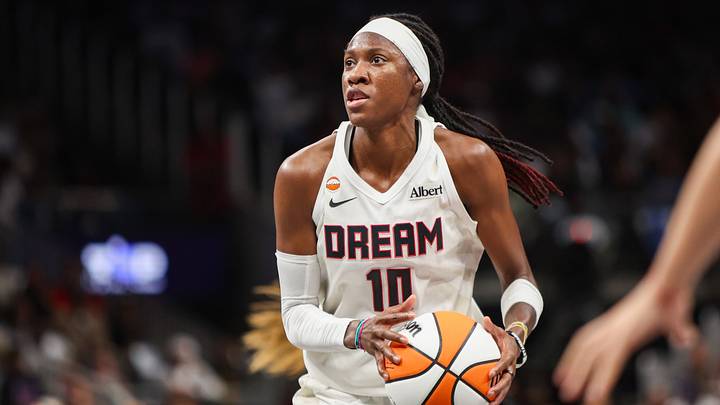
The debate over a single veteran can distract from Atlanta's strongest asset: its established core. Reese, Gray and Howard create different kinds of problems for opponents, and that diversity was a major reason the Dream reached the championship series. Reese turns difficult rebounds into extra chances, Gray can attack space from the perimeter, and Howard's shot-making stretches the geometry of a defense. None of that disappears because Golden State won Game 7.
The front office's task is to make those strengths easier to repeat. Reese cannot be asked to rescue every broken play on the glass. Gray should not have to return early from the bench whenever a reserve lineup loses its spacing. Howard should have alternatives to contested long jumpers when a defense sends an extra body toward her. Depth is valuable because it increases the number of good options available to a team's best players.
Gray's injury in the semifinals illustrated how fragile a contender can become. She averaged 19 points during the regular season, according to reporting from that postseason period, and her absence changed which players had to carry offense. Bonner's 23-point response was impressive, but it should not be mistaken for a permanent solution to every potential injury. Even an established star can miss games, pick up fouls or simply need a longer rest.
GOATIFY
GOATIFY WNBA
Find WNBA designs inspired by the stars who drove Atlanta's Finals run.

Caitlin Clark G.O.A.T. - Greatest of All Sweatshirt
A basketball fan design for everyday wear.
Shop Now ↗


BALLERina Girl's Basketball Ballet Air Sticker
Add basketball personality to your favourite gear.
Shop Now ↗
Reese's frontcourt impact is similarly dependent on context. Rebounding and interior defense improve a lineup, but the opponent still has to respect the players stationed outside the paint. A second unit that cannot make a three or attack a closeout allows defenders to crowd the rim. That makes a useful rebound more difficult and forces the same players to spend additional energy creating the next scoring chance.
Howard provides a higher-upside offensive outlet, particularly when opponents defend her shooting aggressively. But asking a perimeter scorer to create against a set defense every trip is inefficient roster construction. A guard who can take care of the ball, a wing who cuts decisively and a forward who makes simple reads can collectively generate better attempts for Howard without any of them becoming a household name.
Jordin Canada and Naz Hillmon belong in the same conversation. Canada offers a different shape of ball-handling pressure, while Hillmon contributes physical work and defensive reliability. The question is not whether they matter; it is which combinations of those skills make the Dream difficult to guard when the opening five changes. Reliable rotation minutes are built by testing partnerships, not collecting individual names in isolation.
Bonner may fit particularly well alongside two of the stars instead of being assigned an all-purpose rescue role. Her length can help on switches, and her experience can create structure when the half-court offense loses momentum. Yet the team must consider whether a given lineup has enough shooting and pace. Experience cannot make up for five players standing in the same area of the floor.
A useful evaluation asks a simple question: remove two starters, then decide if the remaining five can still create a credible shot and finish a defensive possession. If the answer depends on one veteran making a difficult jumper, the plan is not robust enough. Atlanta does not need a roster packed with superstars. It needs reserves with distinct functions and a coaching staff that can trust them when the series gets tight.
Atlanta Has Two 2027 Paths. Neither Is Just 'Bring Bonner Back.'
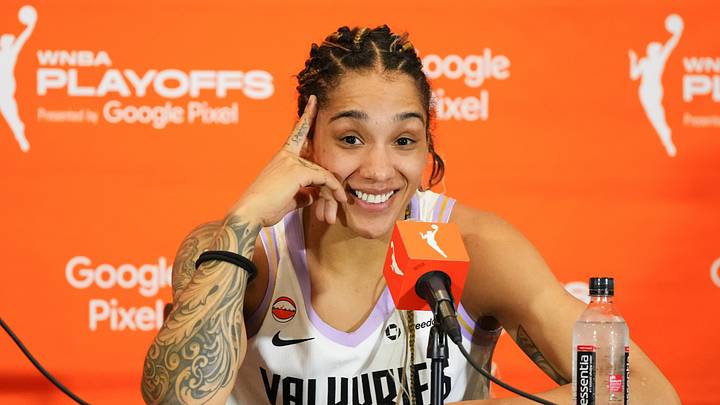
Atlanta's first path is continuity with conditions. If Bonner wants to play in 2027, the Dream could explore a clearly defined reserve role that makes use of her length, leadership and selective scoring. In that scenario, bringing her back is a supporting transaction, not the entire plan. The team would still need to pursue another reliable ball-handler or wing and consider how to distribute minutes across a long season.
The second path is a rotation refresh without Bonner. A different veteran or a younger player might provide more speed, defensive mobility or outside shooting. That would not imply that Bonner's 2026 contribution lacked importance. It would reflect a judgment about what the next roster needs after encountering Golden State's depth across seven games. The right player is the one whose skills fit the lineup, not simply the one whose career has the most highlights.
Neither path should become a popularity contest. A front office needs to compare on-court production with specific teammates, not only points per game. How often does a reserve lineup get to the rim? How many defensive rebounds does it secure? Which lineups give up open threes? Does the offense still move when a star faces a double team? A veteran with modest scoring can be extremely valuable if she fixes several of those issues.
GOATIFY
GOATIFY WNBA
Discover WNBA gear while the Dream plot another championship push.

Caitlin Clark G.O.A.T. - Greatest of All Sticker
Add basketball personality to your favourite gear.
Shop Now ↗
Caitlin Clark Golden Goose - WNBA Indiana Hoodie
A basketball fan design for everyday wear.
Shop Now ↗

BALLERina Girl's Basketball Ballet Air Sweatshirt
A basketball fan design for everyday wear.
Shop Now ↗BALLERina Girl's Basketball Ballet Air Sticker
Add basketball personality to your favourite gear.
Shop Now ↗
Golden State provides a comparison rather than a template that can be copied. The Valkyries reached the championship level with a wider group of contributors and enough tactical options for coach Natalie Nakase to change lineups as needed. Gabby Williams emerged as a major postseason force, but Golden State's advantage was not limited to one star's scoring explosions. The roster's varied skills allowed the team to ask different questions of Atlanta from game to game.
Atlanta cannot recreate that championship depth by making one sentimental signing. Nor must it discard every familiar contributor to chase novelty. A useful offseason would be comfortable with two truths at the same time: the Dream were good enough to reach the final, and the team that beat them exposed a real weakness. The objective is to improve the specific minutes where that weakness appeared without weakening the star foundation.
Timing could complicate the plan. Bonner is entitled to consider retirement at her own pace. Atlanta, meanwhile, cannot indefinitely suspend every other roster conversation while it waits. The sensible approach is to identify the role a reunion would fill and the cost it could sustain, then maintain alternatives. If the veteran ultimately retires, the club should already know which basketball functions it must replace.
Fans understandably imagine a storybook ending: Bonner returns, the Dream recover from a painful Game 7, and the veteran finishes with another championship. Sports organizations cannot build a budget around a perfect final chapter. A better version would be a deep enough roster that she does not have to play at an All-Star level every night. Then the reunion could be an advantage instead of an emergency plan.
If she does not return, the team should not treat the departure as an impossible void. It should find a player capable of defending multiple positions, making a useful decision in a short clock and spacing the floor when the stars attack. Those functions matter more than whether the replacement has appeared in an All-Star Game. The Dream must replace the contributions, not manufacture a copy of the career.
As of November 22 there is no confirmed Bonner return and no confirmed retirement. The recommendation to re-sign her is an argument worth examining, not an announcement. Atlanta's next championship opportunity will depend on what it does with the entire rotation. It came five points short of the title; the next five points might be hiding in the minutes most people stop watching.
Atlanta already knows its leading players can carry it to the championship series. It now knows that a seven-game final can expose a thin rotation even when the margins are narrow. Retaining Bonner could help if she wants another year, the role is clear and the team adds other dependable contributors.
The mistake would be treating her undecided future as the only choice. The real test is whether the 2027 Dream can score, rebound and defend when Reese, Gray or Howard sits. Solve that, and Atlanta can challenge again. Ignore it, and another famous name will not erase the depth advantage Golden State showed in October.
GOATIFY
GOATIFY WNBA
Shop GOATIFY WNBA products from the WNBA-filtered basketball collection.

Caitlin Clark Golden Goose - WNBA Indiana Sweatshirt
A basketball fan design for everyday wear.
Shop Now ↗

BALLERina Girl's Basketball Ballet Air Sweatshirt
A basketball fan design for everyday wear.
Shop Now ↗
Caitlin Clark Golden Goose - WNBA Indiana Sticker
Add basketball personality to your favourite gear.
Shop Now ↗

















