

Three Contenders, Three Picks. The WNBA Draft Can't Fix Everything.
GOATIFYThe Indiana Fever are slated to choose tenth, the Golden State Valkyries fourteenth and the Minnesota Lynx fifteenth in the 2027 WNBA draft. Those three numbers sound like an offseason plan. They are not. For teams hoping to win immediately, a late first-rounder is an opportunity to find a role player, not a reliable substitute for an All-WNBA star or an answer to a roster that does not yet exist.
The immediate questions are far larger than the draft board. Kelsey Mitchell and Napheesa Collier are among the notable free agents whose decisions could reshape the league's contenders. The Valkyries can influence that market too. Meanwhile, a trio of college prospects illustrates the central draft tension: Talaysia Cooper brings disruptive defensive potential, Ashlyn Watkins brings rim protection and post-injury uncertainty, while Kaylene Smikle brings scoring that must translate to a smaller professional role.
Here is where each player might actually help—and why the current pick numbers cannot be treated as guarantees. The outlook reflects information available on November 22, 2026, not a prediction that any named college player will declare or remain available.
Mitchell and Collier Come Before Any Mock Draft
Three teams can hold three first-round picks and still be shopping for three completely different things. Indiana, Golden State and Minnesota currently own selections 10, 14 and 15 in the projected 2027 WNBA draft order. That sounds like a convenient way to reinforce three rosters with postseason ambitions. In reality, the value of each pick cannot be understood before the far larger questions of free agency, payroll, rotations and available minutes have been answered. Draft night is the final move in that sequence, not necessarily the first.
Consider the Fever. Caitlin Clark can organize an attack, score at volume and manufacture open looks, but a second elite scorer changes the defensive choices opponents are able to make. Kelsey Mitchell delivered a historic 2026 scoring season, averaging 24.7 points for Indiana. Retaining her would preserve a devastating backcourt partnership. Losing her would create an entirely different assignment for general manager Amber Cox. A rookie selected at number 10 should not be treated as a ready-made replacement for a player who has spent years perfecting difficult shot creation against WNBA defenses.
The point applies even more starkly to Napheesa Collier and Minnesota. The Lynx's approach has revolved around disciplined defensive reads and a star forward capable of supplying offense without demanding a single predictable pattern. If Collier returns, the draft can be used to address a narrower weakness, perhaps a reserve creator, a dependable spot-up shooter or a versatile defender. If her future is unsettled, the organization has a franchise-level decision before it can judge the right rookie profile. The difference between a rotation supplement and an eventual foundation is not a semantic detail; it should change scouting priorities.
Golden State adds another layer. The Valkyries have demonstrated that a coherent system and quality defense can give a team meaningful leverage even without simply accumulating the biggest individual names. But a system also has specific requirements. A ball-dominant guard who cannot defend could compromise the same identity that created success. A defender who offers almost nothing on offense might make an already difficult half-court possession even harder. A rookie's reputation matters less than whether the coaching staff can find eight reliable minutes for her in a meaningful game.
That is why the three picks should be treated as different bets. Indiana may need inexpensive defensive insurance alongside an expensive backcourt. Minnesota may want the cleanest immediate fit beside established stars. Golden State may have more freedom to experiment with a higher-upside specialist, provided its coaches can protect her weaknesses. All of these are conditional judgments, not declarations about roster decisions that have not occurred.
GOATIFY
GOATIFY WNBA
Explore WNBA designs while following the Fever, Lynx and Valkyries roster questions.

Caitlin Clark Golden Goose - WNBA Indiana Sticker
Add basketball personality to your favourite gear.
Shop Now ↗
Caitlin Clark G.O.A.T. - Greatest of All Hoodie
A basketball fan design for everyday wear.
Shop Now ↗
BALLERina Girl's Basketball Ballet Air Sweatshirt
A basketball fan design for everyday wear.
Shop Now ↗
BALLERina Girl's Basketball Ballet Air Sticker
Add basketball personality to your favourite gear.
Shop Now ↗

BALLERina Girl's Basketball Ballet Air Sticker
Add basketball personality to your favourite gear.
Shop Now ↗There is a second obstacle: a draft board is never fixed in November. Young players improve, recover from injury, change roles or decide whether to enter the professional pool. Teams also trade picks. The current numbers are useful markers for the conversation, not promises that these franchises will actually select in those positions next spring. Anyone selling a guaranteed future starter at number 14 is skipping the hard part of team-building.
Cooper Has the Defensive Tools. The Off-Ball Test Is Harder.
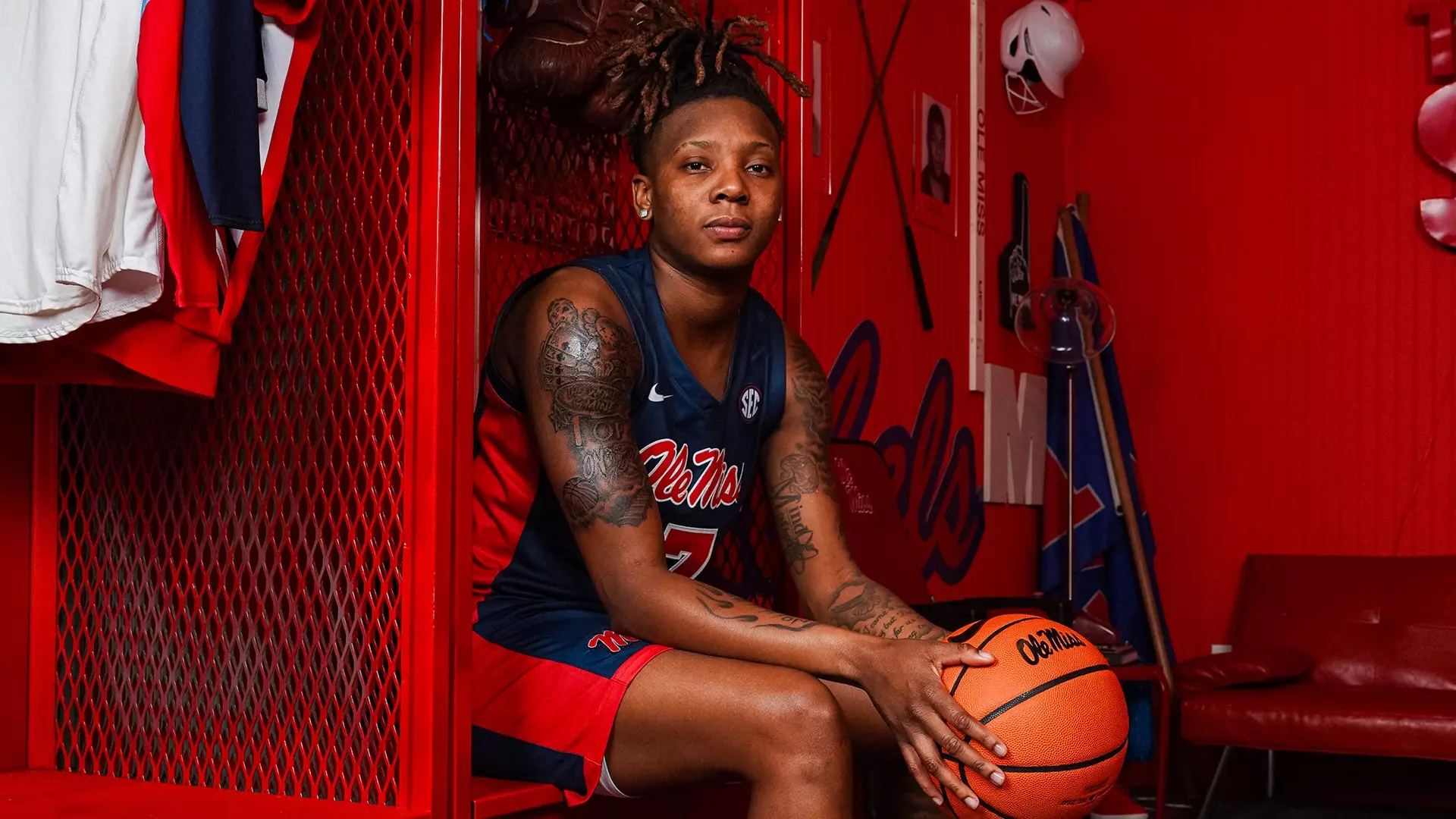
Talaysia Cooper makes the appeal of a later first-round selection easy to understand. She is not a mystery project who needs to learn what a high-pressure defensive possession feels like. At Tennessee she produced turnovers and lived with the responsibility of guarding dangerous perimeter players. She then moved to Ole Miss ahead of the 2026–27 college season, where she is working through a different offensive ecosystem and another set of demands. The question for a WNBA front office is not whether she has talent. It is whether that talent can travel into a smaller, more constrained professional role.
A star college guard often has the ball because the entire offense is organized to give it to her. A rookie joining Clark and Mitchell would not enjoy that arrangement in Indiana. She might receive the ball only when the defense has already shifted, with an instruction to attack a closeout, move it again or turn a modest advantage into one clean attempt. Coaches would expect her to execute that task without needing several touches to find rhythm. Transitioning from lead scorer to auxiliary contributor can look like a demotion on a stat sheet while representing a significant increase in basketball sophistication.
Cooper's defensive instincts give her an alternative path to useful minutes. A guard with active hands, competitive feet and a willingness to chase the next pass can influence a game without taking many shots. That is particularly valuable when playing beside a star whose offensive workload is substantial. Indiana's best version of such a rookie might be someone who works at the point of attack, helps recover possession and then simply gives the ball back to Clark. It is an unglamorous job with obvious championship value.
But steals alone do not demonstrate complete defense. Professional opponents punish overcommitted gambles, especially when a defender reaches past the ball or loses contact with a shooter. The real tape study should look at how Cooper navigates off-ball screens, resists the urge to chase a turnover and communicates when a possession changes shape. There is also the question of size and switchability. A guard who can bother another guard is helpful; one who can stay functional when an offense deliberately hunts her is substantially more valuable.
The shooting is the hinge. Cooper's college opportunities can create a tempting projection, but an NBA-style thought experiment does not solve the WNBA geometry: if opponents do not respect her spot-up jumper, they can crowd the stars while trusting that she will not punish them. The 2026–27 Ole Miss season is therefore more than a showcase for individual scoring. It is a test of cleaner catch-and-shoot decisions, stable mechanics and the ability to produce useful offense on nights when she is not the leading option.
A team choosing Cooper late in the first round would be buying a two-way upside case, not a guaranteed immediate fix. If Indiana keeps its scorers, the fit is particularly interesting. If the roster changes dramatically, her placement on the board should be reconsidered alongside every other candidate rather than treated as an automatic answer.
Watkins' Rim Protection Must Survive the Hardest Test
There is a type of player who changes what opponents attempt before she even touches the ball. Ashlyn Watkins has shown flashes of that kind of interior defensive presence for South Carolina. A well-timed contest at the rim forces a driver to throw a pass a beat earlier. A blocked shot can be dramatic; the subtler value is a possession that never gets to its first-choice finish. For a team such as Golden State, which has placed such emphasis on defense, that is a compelling foundation for a late first-round discussion.
GOATIFY
GOATIFY WNBA
For fans following college-to-WNBA careers, browse GOATIFY WNBA apparel and gifts.

Caitlin Clark G.O.A.T. - Greatest of All Sweatshirt
A basketball fan design for everyday wear.
Shop Now ↗


BALLERina Girl's Basketball Ballet Air Mug
Add basketball personality to your coffee break.
Shop Now ↗Watkins' best healthy college sample is instructive. In the 2023–24 championship season, she contributed 7.4 rebounds and 2.4 blocks in roughly 20 minutes a game, numbers that suggest strong production relative to playing time. The value was not solely her jump height. It was the combination of timing, second-effort activity and the ability to recover into the play after the initial action broke down. Those traits can make a reserve big genuinely useful even if nobody runs a single offensive possession for her.
Drafting her based on that version alone, however, would be irresponsible. An ACL injury interrupted her college progression and complicated the timeline for judging her professional readiness. Any front office interested in the 2027 draft will need to watch how she moves over a long stretch of games rather than relying on a short highlight package. Is the second jump as confident? Does she change direction without hesitation? How does her defensive impact hold up late in a demanding game? Those questions cannot be answered from reputation or an old stat sheet.
Then comes offense. A player whose scoring is concentrated near the rim can be a valuable partner for talented guards when she sets effective screens, finishes through contact and makes a simple pass to the right spot. She can also become a problem when a defense can ignore her outside the paint and send an extra defender toward the ball. Her role would need to be defined carefully. That is especially true on a team already searching for more efficient half-court creation. The difference between a screen-and-dive contributor and an offensive passenger is enormous.
For Golden State, the appealing comparison is to a defensive center who supplies a stable backline rather than points. The temptation would be to call Watkins a future replacement for a veteran such as Kiah Stokes. A more responsible assessment is that she has a plausible path toward that role if her health, positioning and offensive decisions meet professional demands. There is no reason to declare a succession plan before she has played a complete, convincing college season after injury.
Minnesota could also see some utility in her defensive profile, but the roster question is slightly different. A championship-minded team can seldom dedicate an entire rotation slot to an exciting prospect who is not yet ready to function in the playoffs. Its development resources, veteran contracts and positional depth matter. A talented player becoming available at 15 does not automatically mean the Lynx should select her.
That is the interesting thing about Watkins: the ceiling is visible in the defensive film, while the floor is still uncertain. A late pick is exactly the place to consider calculated upside, provided a team does not confuse its own optimism with a medical or basketball guarantee.
Smikle Can Score. Can She Do It on a Contender's Terms?

Kaylene Smikle is the prospect who makes the other end of the argument. If Cooper and Watkins are selected primarily for what they might prevent, Smikle is interesting because of what she might create. Her early work at Tennessee in the 2026–27 season has advertised a willingness to score quickly without waiting for an offense to orbit around her. A contender short on bench points can see the attraction immediately. Those are often the possessions that separate a strong starting five from a team capable of surviving a difficult playoff stretch.
GOATIFY
GOATIFY WNBA
Follow the defensive-minded WNBA contenders with sport-specific GOATIFY styles.

Caitlin Clark G.O.A.T. - Greatest of All Sticker
Add basketball personality to your favourite gear.
Shop Now ↗
Caitlin Clark Golden Goose - WNBA Indiana Sweatshirt
A basketball fan design for everyday wear.
Shop Now ↗


Her development path has already crossed several very different environments. After playing at Rutgers and Maryland, Smikle joined the Lady Vols under coach Kim Caldwell. She is a mature college guard rather than a teenager being projected from a few flashes. That experience does not automatically make her WNBA-ready, but it gives scouts useful evidence about adaptation: different teammates, different expectations and defensive schemes that demand relentless attention. The source's early-season scoring rate, more than a point per minute, is eye-catching precisely because it is unlikely to remain at that level against a full schedule of stronger opponents.
The critical distinction is between being an efficient college first option and being a useful professional secondary scorer. A reserve shooter might enter with four minutes left in a quarter, take only two attempts, and still be asked to make an immediate contribution. She will see longer defenders close out, faster help rotations and fewer possessions in which she can dribble into a comfortable move. Smikle's shooting volume matters, but so do shot selection, the speed of her release and how often she makes a teammate's job easier when her own shot is not available.
Indiana is a fascinating hypothetical fit. The Fever already have a proven offensive engine in Clark, and Mitchell's free agency is a much bigger issue than any one rookie draft slot. If Mitchell stays, a scorer off the bench might enjoy unusually clean opportunities next to a playmaker who sees defenses early. If Mitchell leaves, selecting Smikle and expecting her to replicate the All-WNBA guard's volume would be a poor strategy. She could be one of several pieces in the solution, not the same solution in a cheaper uniform.
Golden State offers a different trade-off. The Valkyries' commitment to team defense means a bench scorer cannot be excused from every hard assignment simply because she can get a basket. Smikle would need to hold her own at the point of attack, rotate on time and avoid fouls when isolated. Her college steals and rebounding suggest energy, but those are signals to investigate, not final proof of professional defensive reliability. A shooter who gives back as many easy points as she scores is not really solving a contender's problem.
Minnesota might prioritize a more specialized role still: a player who can move the ball fast, stay spaced around Collier and provide dependable scoring in a short stint. The right rookie is often the one who understands exactly when not to be the hero. That is not a criticism of Smikle's aggression. It is the adjustment every scoring prospect must make when the talent around her rises.
The broader draft lesson is that team needs will be reshuffled by free agency long before the three selections are made. Cooper offers defensive activity, Watkins interior deterrence with real health questions, and Smikle an offensive spark with tougher professional efficiency tests ahead. None is assured to enter the draft, remain on the board or become a Day One rotation player. The smart scouting approach is to monitor those questions through the college season and make the choice only when the actual roster and actual draft pool are known.
There is a useful way to judge a late first-round selection: can a coaching staff name the exact job a rookie will perform, and can the player perform it under postseason pressure? For Indiana, Golden State and Minnesota, that question depends on transactions that have not happened yet. Mitchell's and Collier's decisions could alter the priorities overnight. A roster built for defense might need a scorer; a team with two elite guards might need only a defender who can survive without the ball.
Cooper, Watkins and Smikle offer different possible answers. Each carries meaningful upside and a different set of conditions. The 2027 draft may give one of these franchises a bargain. It will not erase the need to get its star contracts, lineup balance and player development right first.
GOATIFY
GOATIFY WNBA
Shop GOATIFY WNBA products from the WNBA-filtered basketball collection.


BALLERina Girl's Basketball Ballet Air Sweatshirt
A basketball fan design for everyday wear.
Shop Now ↗BALLERina Girl's Basketball Ballet Air Sticker
Add basketball personality to your favourite gear.
Shop Now ↗
BALLERina Girl's Basketball Ballet Air Sticker
Add basketball personality to your favourite gear.
Shop Now ↗















