

Spain Brings Eight Top-10 Women to Doha — Argentina Has Brea and a 16-Year-Old
GOATIFYPadel's best partnerships are about to become international rivalries. Arturo Coello and Agustín Tapia spend most of the season winning together, but the FIP World Cup in Doha will put the Spaniard and the Argentine on opposite sides of a national-team contest. The same split awaits the women's world No. 1 partnership: Spain's Gemma Triay and Argentina's Delfi Brea are teammates on the professional tour, but potential opponents when the national anthems begin.
The confirmed World Cup field, announced on October 26, makes the stakes unusually clear. Thirty-two national teams — 16 men's and 16 women's — will compete at the Khalifa International Tennis and Squash Complex from November 2–7. Argentina's men arrive chasing a third straight title; Spain's women have assembled an extraordinary eight-player squad entirely drawn from the world top 10. The team format means individual rankings alone cannot settle either contest. Pair combinations, the order of the three matches in a tie and the ability to handle a deciding rubber will matter just as much.
Argentina Has Tapia, Chingotto and the Two Men Who Broke Spain in 2024

Argentina is not bringing a ceremonial defending-champion squad to Qatar. The men won the world team title in both 2022 and 2024, and their 2026 group includes Agustín Tapia, Federico Chingotto, Leo Augsburger, Tino Libaak, Franco Stupaczuk and Martín Di Nenno. That is a remarkable combination of established champions, elite defenders and players capable of turning a match with one explosive attacking run.
The most revealing names might be Augsburger and Libaak. In the 2024 final against Spain, the young Argentines won the deciding rubber after dropping the first set, beating Paquito Navarro and Mike Yanguas 3-6, 7-5, 7-6. Their performance turned a close contest into Argentina's second consecutive world crown. They now return with greater tour experience, but the memory of that deciding match also creates a difficult selection question: do the coaches trust the proven championship pairing or mix their personnel to maximize three separate rubbers?
Tapia is the obvious headline. He and Coello have accumulated twelve titles together on the 2026 professional circuit, a record of consistency that makes their usual partnership the standard everyone else is chasing. At the World Cup, however, Argentina cannot borrow Coello's left-handed coverage or the automatic understanding the pair has built. Tapia's spectacular shot-making remains, but he will have to translate it into a different partnership under national-team pressure. That is an adjustment even the world's best players cannot simply assume will be effortless.
Chingotto offers another kind of security. His relentless defense, intelligent positioning and willingness to extend rallies can make a more aggressive partner's job easier. Stupaczuk and Di Nenno bring a long history of playing together, while Augsburger supplies the sort of power that can change the shape of a set. Argentina has options rather than one untouchable combination, and that depth is its biggest advantage in a format where a team must win more than one match.
There is also an emotional distinction between a Premier Padel final and a World Cup final. A tour defeat affects a partnership's ranking and momentum; a deciding national-team rubber carries the weight of the previous two titles and the expectation of another. Argentina has already proved it can handle that burden. Its challenge is to repeat the feat with a deeper, more closely watched roster.
Spain Wants Its Men's Crown Back — and Galán's Fitness Is a Complication

Spain has not lifted the men's world team trophy since 2021, and the loss to Argentina in Doha two years ago still defines the immediate challenge. The 2026 squad has the star power to reverse that result: Coello, Alejandro Galán, Juan Lebrón and Paquito Navarro are among the names expected to lead the attempt. The country can field exceptional attacking quality across several combinations rather than relying on one superstar pair.
Coello is the central paradox of this tournament. On tour, his left-handed power and reach are integrated into Tapia's game so smoothly that their victories often look inevitable. In a Spain–Argentina tie, those familiar strengths become information the opposing team knows intimately. Both players understand the other's preferred patterns, defensive habits and reactions when the point breaks down. A possible meeting would therefore be more than a contest between world No. 1s: it would test which national setup can better use knowledge accumulated during a dominant partnership.
Spain must also watch Galán's condition. The October 26 World Cup squad update noted that official information was still awaited after an injury-related withdrawal in Kuwait, with a replacement deadline approaching on Saturday. That is not confirmation that he will miss Doha. It is a meaningful uncertainty for a team that would normally expect his athleticism and finishing power to be a central asset. The sensible approach is to distinguish the announced roster from the eventual available lineup rather than treating the selection as guaranteed.
Lebrón and Navarro give Spain substantial experience, and the broader roster offers multiple tactical approaches. A national-team coach must decide not only who is strongest individually but also who plays comfortably on the right and left, which combinations can protect a lead, and which are equipped to chase a match after losing the first set. In a three-match tie, one outstanding pair cannot win the championship alone.
Nor is the men's draw a guaranteed two-country exhibition. Portugal took bronze in 2024 and returns with players including the Deus brothers, Nuno and Miguel, alongside Peu Araújo and Pedro Graça. Italy, fourth at the last edition, has Flavio Abbate and Álvaro Montiel among its representatives. France is betting on young talent such as Jérémy Robert, Yoan Boronad and Timéo Fonteny. These squads may lack the same concentration of top-five names, but an upset in one rubber can transform an entire tie. Spain and Argentina remain the benchmark; neither is entitled to a final.

Spain's Women's Squad Has Eight Top-10 Players — and No Easy Selection Calls
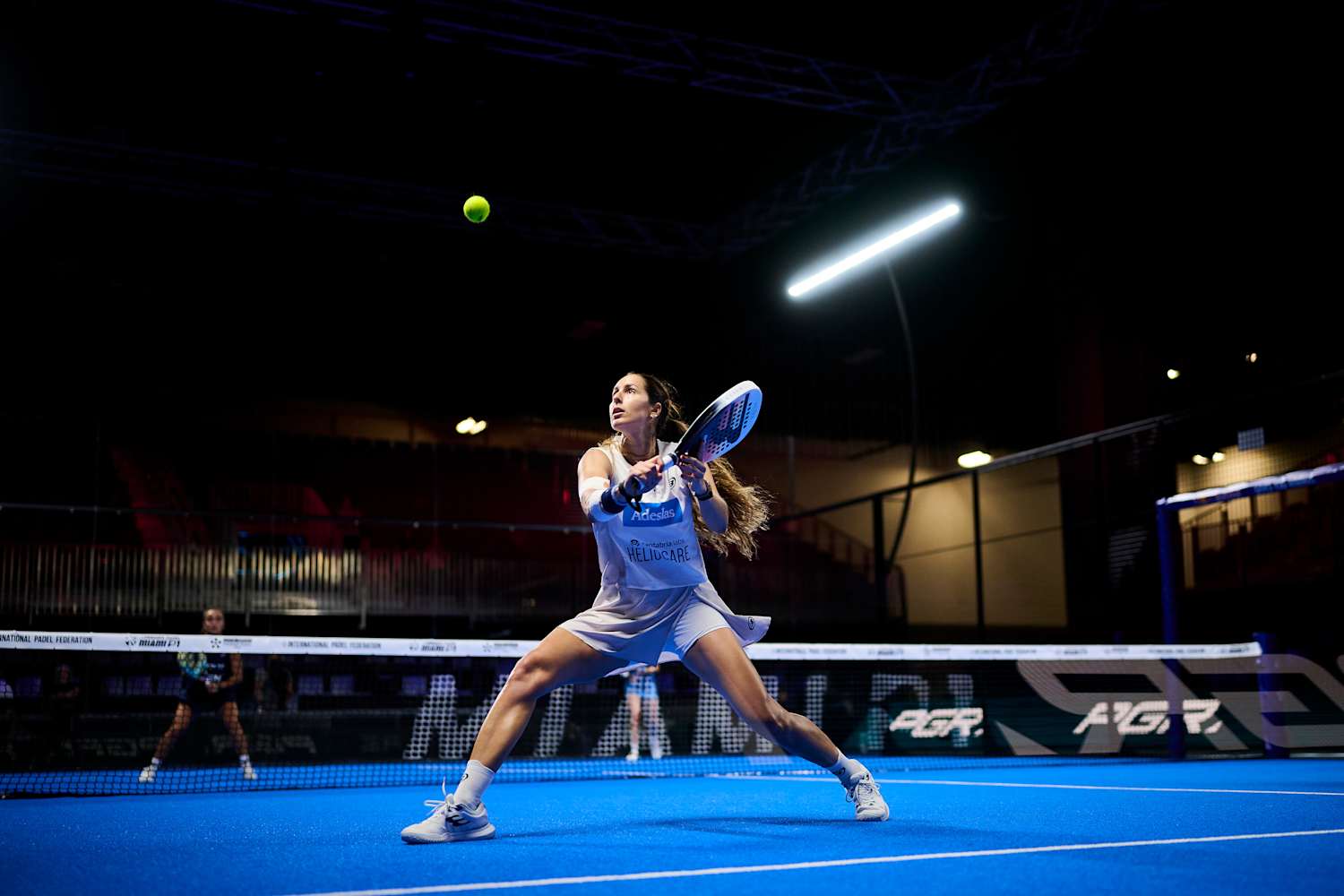
If the men's tournament is framed by Argentina's title defense, the women's competition begins with an astonishing Spanish roster. Every one of Spain's eight selected players is inside the world's top 10. The list includes world No. 1 Gemma Triay, Bea González, Ari Sánchez, Paula Josemaría, Andrea Ustero, Claudia Fernández and Martina Calvo, with Marta Ortega completing a group that can field elite-level combinations throughout a tie.
That depth is more than a collection of famous names. A team competition requires different pairs to deliver on the same day, often against opponents with contrasting styles. Spain can choose between experience, patient construction of points, quick hands at the net and the speed of younger players who have already proved themselves on the biggest stages. In many national teams, an injury or a poor matchup can force a major compromise. Spain has enough depth to change its tactical plan without sacrificing world-class quality.
There is a particular challenge in turning tour rivals into teammates. Triay and Brea are the leading women's partnership on the professional circuit, yet Brea will represent Argentina. Meanwhile, Spanish players who normally compete against one another may be asked to combine for a short, intense tournament. Their individual quality is established; their ability to reproduce it together under the national flag will be tested in practice rather than assumed from the rankings.
Spain also has the confidence of its recent history. The women beat Argentina in the 2024 final and enter Doha as defending champions. The question is not whether they have enough talent to win another title. It is whether the chosen pairings can perform as effectively as the roster looks on paper, particularly when a rival forces the contest into a deciding match and removes the luxury of gradual adjustment.
Ustero, Fernández and Calvo make the balance especially interesting. They represent the younger end of a squad that also includes players who have been central to Spanish padel for years. Selecting three pairs means somebody with an excellent individual ranking will still have to accept a supporting role. Managing those decisions without diluting the team's collective confidence may be as important as any one spectacular winner.

Brea Leads Argentina's Revenge Bid — but the New Generation Changes the Story

Argentina's women have a different mission from their male compatriots. They are not defending a title; they are trying to overturn Spain's hold on it after finishing runners-up in 2024. Delfi Brea, the Argentine half of the world's leading women's partnership, gives them a genuine superstar. Claudia Jensen and Aranzazu Osoro add proven tour-level experience, while the squad's younger players make the team more than a repeat of the previous final.
Victoria Vílchez is the most intriguing new name. Born in 2010, she is only sixteen and preparing for a senior World Cup debut. That does not make her an automatic starter or a player who should be asked to carry the team. It makes her selection a statement about the federation's willingness to accelerate the next generation alongside its established leaders. A week spent around Brea and other elite players can be valuable even if her competitive role is carefully managed.
Brea faces a challenge that is unusual even for an experienced world No. 1. In the professional season she and Triay share information, solve problems together and build the patterns that make their partnership so effective. In Doha, they could become opposing anchors in a Spain–Argentina tie. That does not erase their mutual respect, but it changes the tactical problem: the shot selection and court coverage that normally help each other become weaknesses the opponent may understand better than anyone else.
Argentina cannot rely on Brea alone, particularly against a Spanish squad with eight top-10 players. The supporting pairs must keep service games stable, resist the urge to finish points too quickly and avoid allowing one loss to become a team-wide collapse. In a best-of-three tie, the most valuable performance may come from a pair outside the headline matchup that wins a disciplined, close contest.
The wider women's field deserves attention too. Italy, third in 2024, has Giulia Dal Pozzo, Carolina Orsi and Giorgia Marchetti among its players. Portugal, fourth last time, can call on Sofia Araújo, veteran Ana Catarina Nogueira and fifteen-year-old Andrea Achando. The Netherlands is bringing an experienced group, while Brazil has a promising seventeen-year-old debutant in Julia Giusti Gomes. The established Spain–Argentina rivalry supplies the headline, but those teams give the competition genuine depth and a route for a surprise semifinalist.
Doha will ultimately reward collective execution rather than individual star billing. Spain's women appear strongest on paper; Argentina has the player capable of making any tie uncomfortable. Their potential rematch would reveal whether the depth of the defending champions outweighs the ambition of a challenger built around one of the sport's best players and an emerging generation.

The World Cup begins November 2 and runs through November 7 in Doha. Its defining twist is simple: the partnerships that dominate Premier Padel will not be wearing the same national colors. Coello and Tapia may have to solve each other. Triay and Brea may be asked to turn their shared knowledge into an advantage for opposite teams.
Argentina's men have the titles, Spain's women have the deepest roster, and both countries have enough quality to reach the final in each competition. Yet three-match ties leave room for the one pairing, the one tactical change or the one fearless young player who changes a national team's week. That is why Doha promises something different from another tour showdown: the biggest stars are present, but no superstar can win a team World Cup by themselves.
Shop GOATIFY padel products from the Padel-filtered collection scope.

















