

Doval Is Back for $6.3M. The Giants Still Need a Closer.
GOATIFYThe San Francisco Giants have decided that the most interesting arm in their recent bullpen history is still worth another look. Camilo Doval, once the club’s All-Star closer and later a player who bounced through two other organizations, is coming back for 2027 on a one-year agreement reportedly worth $6.3 million. It is a reunion that makes sense for both sides. San Francisco needs late-inning talent, and Doval needs a place that knows what his best pitches look like. Neither side, however, has bought a guaranteed return to the ninth inning.
The distinction matters. A contract can signal belief in a pitcher’s upside without resolving his role, and an emotional return is not a substitute for dependable outs. Doval was effective in a tiny late-September sample after rejoining the Giants, yet the larger 2026 record shows why an automatic promotion would be premature. The front office also kept other potential relief pieces and moved an infielder in a separate roster transaction, revealing a team trying to create options rather than pretend one familiar name solves everything.
The most useful way to evaluate this deal is not to ask whether the Giants got the old Doval back. It is to ask what they have to do, tactically and financially, to create an environment in which his electric arm helps them win again.
The $6.3 million agreement buys an opportunity, not the ninth inning

On a busy non-tender deadline, San Francisco did more than extend a familiar invitation. The Giants reached a one-year arrangement with Doval rather than allowing his final arbitration year to turn into an unrestricted departure. The reported $6.3 million figure is strikingly close to the $6.1 million he earned in 2026. That is not the kind of price usually attached to a certain elite closer, but it is meaningful money for a reliever who recently changed teams more than once. It is an investment in a possibility.
One-year structure is central to the bet. For the club, it avoids the long-term exposure that would accompany treating Doval as the fully restored 2023 version of himself. For the pitcher, it provides a chance to build an entire season of evidence in familiar surroundings rather than continuing to introduce himself to new coaches, catchers and front offices. If he pitches well, his value can rise quickly. If he cannot secure late-inning command, the team has not committed several future seasons to finding out.
That logic also explains why the reported dollar amount should not be confused with a job description. A team can pay for late-inning upside without promising the closer role, particularly when its relief corps still has questions across several innings. The Giants have to decide which pitcher handles the highest-leverage hitters, not merely which pitcher is handed a three-out save opportunity. Those are sometimes the same assignment, but a stronger bullpen usually has more than one answer.
The crucial questions are not just velocity or highlight-reel strikeouts. How often can Doval land a first-pitch strike? Can he work efficiently enough to pitch on consecutive days? Can he hold the running game and protect a one-run lead when contact falls in? What does his stuff look like the second time he faces the heart of a lineup over a short series? Those are the situations that translate raw ability into reliable relief value.
GOATIFY
GOATIFY Baseball
Doval's Giants reunion renews the closer debate. Browse GOATIFY baseball fan gear for the season ahead.


Gold Baseball GOAT Sweatshirt
Rep baseball’s greatest with a gold GOAT graphic sweatshirt.
Shop Now ↗
White Baseball GOAT Sticker
A white baseball GOAT decal for your bottle, laptop or game-day gear.
Shop Now ↗


Reuniting with a former All-Star is an attractive offseason story. Yet if the Giants stop shopping for relief help because they have Doval back, they will turn a sensible upside play into a structural gamble. The deal works best when Doval is one candidate in a genuine competition, with contingency plans behind him. A familiar closer can make the bullpen better; he should not be asked to disguise everything the bullpen still lacks.
From 39 saves to a three-team detour: the case for patience
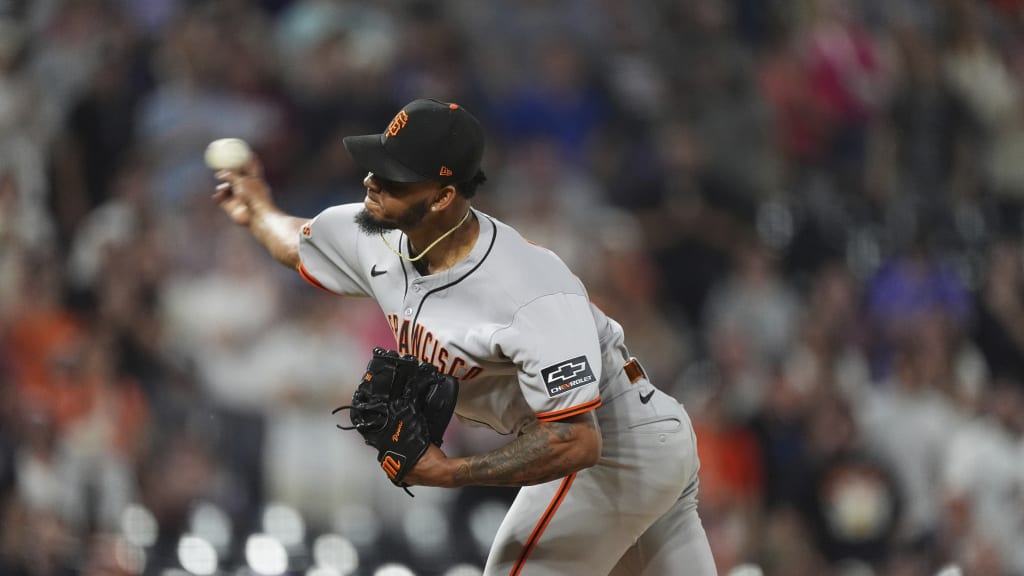
It is easy to remember why the Giants trusted Doval in the first place. In 2023 he recorded 39 saves, tied for the National League lead, with a 2.93 ERA and an All-Star selection. For a young reliever equipped with unusual power, it appeared to be the start of an extended run as a recognizable late-game fixture. Fans learned to expect tension, movement and swings that looked late even when hitters knew the fastball was coming.
But bullpen careers are rarely linear. The dominance became less dependable in the following seasons, and by 2024 Doval had experienced a demotion to the Minors. His 2025 departure to the Yankees at the trade deadline turned what had once seemed a long-term Giants cornerstone into a problem another organization hoped to solve. The speed of that turn is a reminder that closing games involves repeatable control and confidence, not simply an ability to produce the hardest pitch in an inning.
The 2026 season reinforced that uncertainty rather than erasing it. Across 64 appearances for the Yankees and Pirates, Doval registered a 4.30 ERA. No single number explains a relief pitcher, and ERA alone cannot isolate command, defense, inherited runners and ballpark effects. Still, a pitcher moving through those situations and eventually being designated for assignment is not arriving with a clean recent record. There are reasons San Francisco can believe in the talent and reasons it should demand proof.
Then came the reunion. After the Giants claimed him off waivers in late September, Doval struck out four batters across two scoreless innings in his final two appearances of the season for the club. That is an encouraging first look, especially for a pitcher whose history in San Francisco is complicated. It also represents just six outs. Even perfect execution over that span cannot predict what will happen over fifty or sixty appearances, multiple travel swings, or a stretch of one-run games.
Baseball teams often overreact in both directions to a reliever’s small sample. A rough week becomes evidence that the stuff is gone; two spotless innings become proof that a coaching staff has cured everything. The more disciplined approach is to watch how Doval repeats his delivery, whether his misses are competitive, and whether his plan survives when hitters refuse to chase. Those observations matter more than turning a sentimental late-season cameo into a foregone conclusion.
There is a human advantage to returning to a familiar park and organization, too. Doval knows the city, the atmosphere and the expectations that come with his old role. Familiarity may reduce transition costs; it cannot throw strikes for him. If the Giants approach 2027 as a genuine reset instead of a re-creation of 2023, Doval’s return has a much better chance to become a baseball success rather than merely a pleasing announcement.
GOATIFY
GOATIFY Baseball
From 39 saves to a second chance in San Francisco, celebrate the sport with GOATIFY baseball designs.


White Baseball GOAT Dad Hat
A white baseball GOAT design for ballpark days and everyday fan style.
Shop Now ↗
White Baseball GOAT Sweatshirt
Rep baseball’s greatest with a white GOAT graphic sweatshirt.
Shop Now ↗


Rodríguez, Hentges and the bullpen hierarchy still to be built

Doval was not the only player addressed at Friday’s deadline. San Francisco also tendered contracts to infielder Casey Schmitt, right-hander Randy Rodríguez and left-hander Sam Hentges. These are different roster decisions made together, but the group helps explain the intended shape of the team. Retaining possible relief contributors gives the club options for 2027, rather than forcing one acquisition to carry every late-inning matchup.
Rodríguez and Hentges are especially relevant because the value of Doval’s deal depends on what happens around him. If other pitchers are healthy, effective and capable of handling difficult pockets of a lineup, the manager can deploy Doval where his pitches create the greatest advantage. If the relief depth is thin, the pressure to use the most recognizable name in every ninth inning grows, whether or not the matchup is ideal. The official tender decisions establish roster control; they do not establish opening-day health or specific roles.
There is a difference between assembling a list of talented pitchers and building a functioning bullpen. One right-hander may be most effective against a dangerous cluster of hitters in the seventh. A left-hander may offer the cleaner path through a left-heavy part of an opposing order. Another pitcher may be best prepared for entering with runners aboard. A closer is valuable, but so is the pitcher who prevents a two-run lead from becoming a one-run lead before the ninth begins.
That is why the Giants should resist naming the late-game pecking order too early. Spring training can reveal whether Doval’s command has settled, whether Rodríguez and Hentges are ready for full competitive work, and which newly acquired arms can help immediately. The club may still need external additions. A deep staff makes it possible to recover from ordinary fatigue, temporary mechanical trouble or a bad matchup without redefining the entire season after one blown save.
Consider the worst-case tactical scenario: Doval shows flashes of his signature stuff but struggles with walks in consecutive appearances. A shallow bullpen forces the manager to choose between leaving him in a role he cannot currently execute and moving an unprepared pitcher into it. A deeper group allows a temporary move into more favorable spots while somebody else handles the ninth. That flexibility protects both the team’s wins and the pitcher’s chance to stabilize.
The best version of this offseason is therefore bigger than Doval. San Francisco can give him the chance to win leverage, define roles through results and still seek additional dependable strike-throwing. Fans naturally focus on who will collect the saves. The front office’s more urgent question is how many trustworthy paths it can create to the final out. If the Giants solve that, whether Doval finishes games becomes a good problem rather than a desperate one.
The Christian Koss trade shows the other side of San Francisco's reset
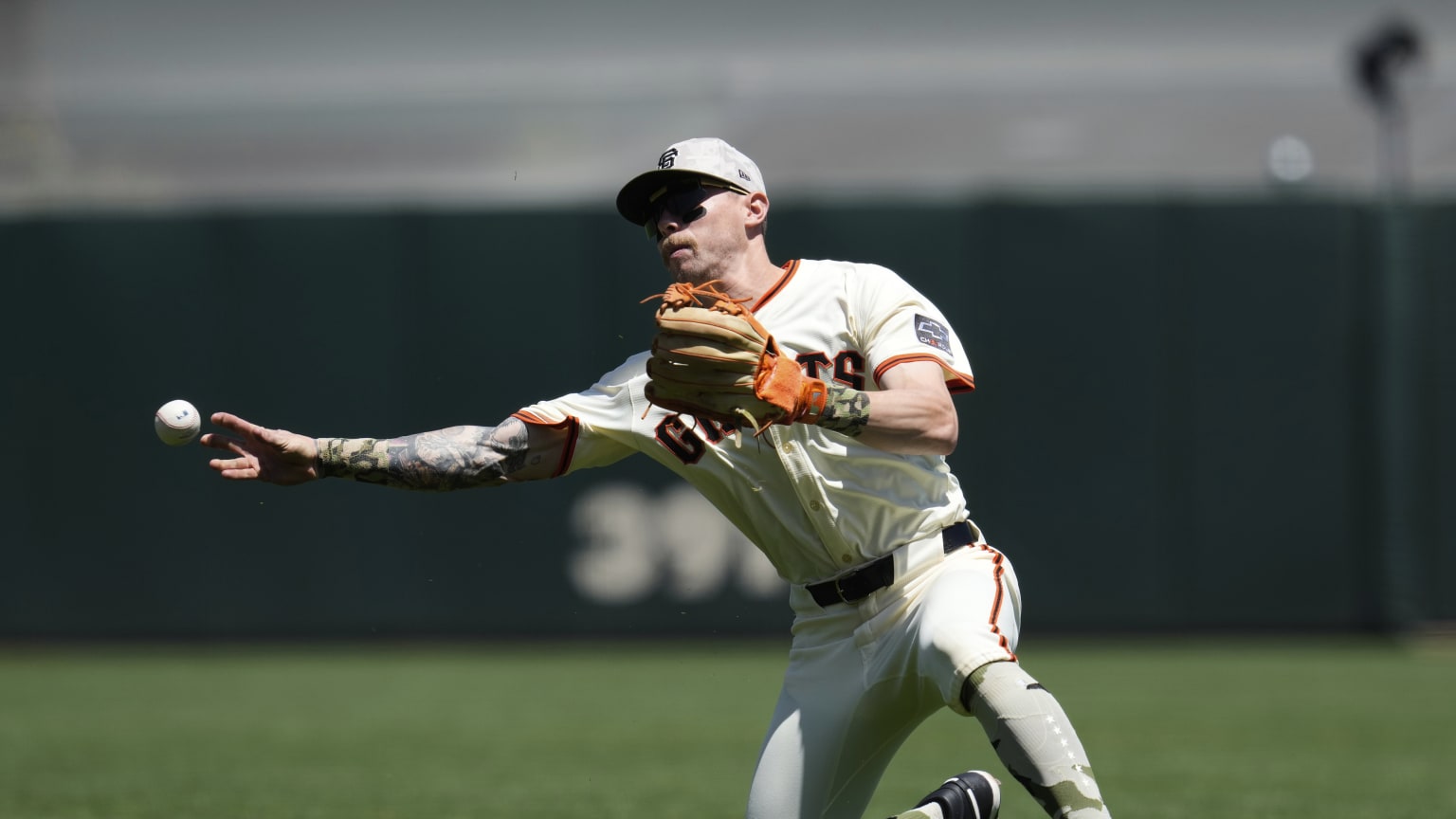
The headline return of a former closer can obscure a quieter transaction that may matter to the Giants’ longer-term roster construction. San Francisco traded infielder Christian Koss to the Tampa Bay Rays in exchange for minor league right-hander Cole Stokes. Unlike the Doval agreement, this move is less about immediate name recognition and more about turning a squeezed roster spot into a different kind of future asset.
GOATIFY
GOATIFY Baseball
The Giants still need a complete bullpen. Explore baseball apparel and gifts for fans of every inning.


Gold Baseball GOAT Sticker
A gold baseball GOAT decal for your bottle, laptop or game-day gear.
Shop Now ↗White Baseball GOAT Dad Hat
A white baseball GOAT design for ballpark days and everyday fan style.
Shop Now ↗
Koss, 28, had already been designated for assignment to create room on San Francisco’s 40-man roster for pitching prospects Henry Lalane, Marty Gair and Josh Bostick. Those three needed protection ahead of the Rule 5 Draft. The important detail is timing: the Giants did not move Koss simply because they suddenly wanted another young pitcher. Their roster-protection decisions had already created a crunch, and the trade allowed them to recover some value from a player squeezed off the list.
That distinction should temper expectations for Stokes. The 21-year-old right-hander was selected by Tampa Bay in the 12th round of the 2026 draft out of Florida State. The six-foot-six pitcher, who comes from Santa Rosa, California, had not yet made his professional debut at the time of the trade announcement. There is an intriguing frame and a local connection, but there is not yet a professional performance record on which to forecast a major league role. It would be misleading to describe him as the answer to next season’s bullpen problem.
Instead, the return represents flexibility. A young arm can develop in the minors without being asked to solve a big league crisis immediately. A roster spot can be devoted to a prospect the organization considers vulnerable in the Rule 5 process. At the same time, losing an infielder changes the depth chart and puts a premium on understanding what other infield options remain. These are the less glamorous exchanges behind every polished offseason roster graphic.
The same philosophy can be applied to Doval’s reunion. One decision keeps an established arm with volatile recent results in the organization for one more evaluation year; the other exchanges an expendable major league depth piece for a younger pitching prospect. Neither guarantees success. Together, they show a club searching for different kinds of options at different time horizons rather than betting exclusively on one path to improvement.
There is still plenty of work between this deadline and the first meaningful ninth inning of 2027. The Giants need to see which pitchers are healthy, which prospects are ready, how newcomers fit and whether their best late-inning arms can repeatedly control the strike zone. Doval may eventually regain his old job, and Stokes may someday grow into useful depth. The smart way to read these transactions is as the beginning of that evaluation, not the conclusion.
The Giants did not sign a certainty when they kept Camilo Doval. They bought a chance to find out whether a once-dominant reliever can put his repertoire and confidence back together in an environment he understands. At a reported $6.3 million for a single year, the risk is contained and the upside is obvious, particularly for a bullpen that badly needs trustworthy late-game options.
That upside becomes real only if it is supported by a stronger group around him. Rodríguez, Hentges and any further offseason additions must give San Francisco more than one route to the ninth inning. The separate Koss-for-Stokes trade is another reminder that rebuilding a roster takes a succession of smaller decisions, not one dramatic announcement.
Doval’s comeback will be measured in repeatable strikes and difficult outs, not in the familiarity of his name above the locker. He has earned the chance to compete. The Giants still have to build the staff that makes competing for that job meaningful.
GOATIFY
GOATIFY Baseball
Shop GOATIFY baseball shirts, hoodies and stickers.


Gold Baseball GOAT Dad Hat
A gold baseball GOAT design for ballpark days and everyday fan style.
Shop Now ↗White Baseball GOAT Sticker
A white baseball GOAT decal for your bottle, laptop or game-day gear.
Shop Now ↗Gold Baseball GOAT Sweatshirt
Rep baseball’s greatest with a gold GOAT graphic sweatshirt.
Shop Now ↗


















