Eagles Finally Won. Four Elliott Kicks Still Couldn't Fix the Offense.
GOATIFYPhiladelphia finally stopped losing, but the scoreboard didn't make the problems disappear. On Sunday, November 22, 2026, the Eagles beat the Pittsburgh Steelers 19–16 at Lincoln Financial Field, ending a seven-game skid and improving to 3–7. A 38-yard Saquon Barkley touchdown, four Jake Elliott field goals and five defensive sacks were enough. None of those achievements made the offense look consistently functional.
The contrast was almost comical: Philadelphia scored 13 points early, then spent much of the afternoon protecting that start. Joe Milton threw for 141 yards in his second NFL start, Aaron Rodgers faced relentless pressure, and a late Pittsburgh touchdown brought the entire result down to one possession. Milton's third-down completion to DeVonta Smith ultimately closed the door. This was a win worth celebrating because the losing streak had become suffocating. It was also a performance worth examining because Dallas waits on Thanksgiving, and a narrow escape isn't a blueprint.
Barkley Broke the Game Open. The Eagles Offense Still Went Quiet

There was a moment in the first quarter when the Eagles looked capable of ending the afternoon before Pittsburgh had properly adjusted. Their defense won the first fourth-down battle, the offense turned that field position into a field goal, and another drive produced three more points. On Philadelphia's third scoring possession, Saquon Barkley found a crease on the left side and ran 38 yards for a touchdown. A team that had spent two months searching for confidence suddenly led 13–0.
The blocking was the important detail behind the highlight. Left tackle Jordan Mailata and left guard Landon Dickerson helped create the lane, allowing Barkley to attack decisively rather than stop in the backfield and improvise. That kind of run changes how an opponent has to defend the next snap. Pittsburgh had entered the game particularly difficult to move on the ground, yet Barkley finished with 75 yards on 17 attempts. He made the Eagles' attack look dangerous when the ball was in his hands and there was space to use.
But 75 yards and one long touchdown aren't evidence that the running game was in control for four quarters. The Eagles collectively ran for 91 yards on 26 carries. Remove the 38-yard touchdown and the production looks considerably less imposing. It's a warning about treating explosive plays as substitutes for reliable gains. The best offenses can do both: create the sudden breakaway and consistently turn first-and-10 into manageable second downs. Philadelphia showed the first quality; the second was less convincing.
Joe Milton brought a different dilemma. In his second start for the team, the quarterback completed 11 of 21 passes for 141 yards, with neither a passing touchdown nor an interception. A 38-yard catch-and-run to Dallas Goedert and a 29-yard third-down connection with Darius Cooper showed exactly why his arm and movement intrigue coaches. The Steelers pressured him aggressively, and there were brief stretches when he could move outside the structure of a play and make something useful happen.
Those flashes sat alongside missed opportunities and three sacks. A quarterback who completes barely half his throws can still win if the defense controls the game and the kicker keeps converting, but that isn't an offensive identity. Milton also had an early fumble against Alex Highsmith that Mailata recovered. Avoiding the turnover mattered immensely; the way the ball ended up on the ground mattered too. The margin between escaping a mistake and losing a possession is not a coaching strategy.
The return of DeVonta Smith gave Philadelphia another credible receiving threat. Smith's five catches for 41 yards came on 12 targets, a workload that shows how much of the passing offense still ran through him. The raw numbers were underwhelming, yet his movement forced the secondary to account for a legitimate route runner. That attention should eventually open space for Goedert, Cooper and other options. It didn't translate into enough sustained drives on this day.
GOATIFY
GOATIFY NFL
Browse GOATIFY NFL designs as the Eagles' Barkley-powered opening drive gives way to Milton's challenge.


There is also a health question that cannot be glossed over. Barkley was shaken up late and wasn't on the field for the game-closing sequence. His status for the quick turnaround to Dallas needed further evaluation rather than speculation. If he can't supply explosive runs on demand, the Eagles must find ways to complete ordinary drives without treating every third down as an audition for a miracle throw.
Trotter Set the Tone and Philadelphia's Pass Rush Finished It
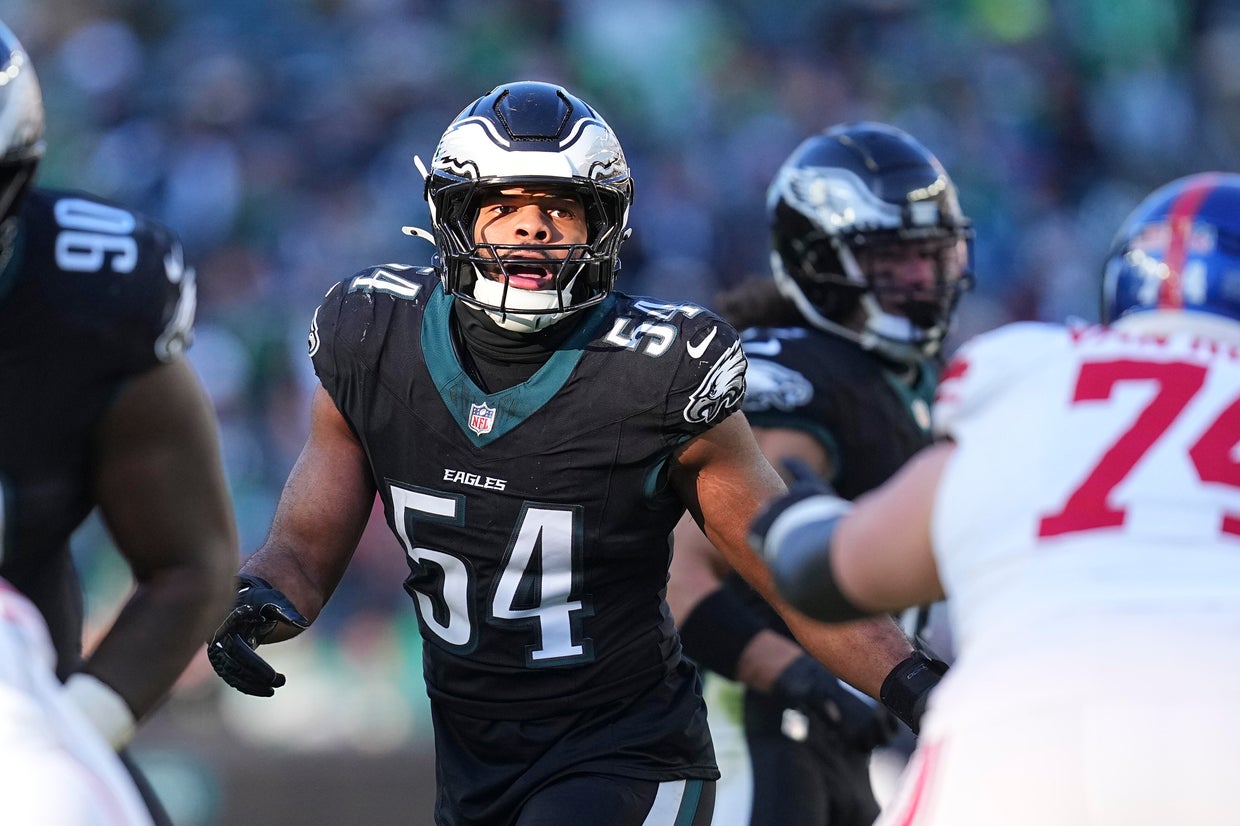
For a 3–7 team, the temptation is to make the quarterback the entire story. That would miss the group that actually made a narrow score hold up. Philadelphia's defense never allowed Pittsburgh to find a comfortable rhythm, and it began on the first meaningful test of the afternoon. On fourth down, Jeremiah Trotter Jr. attacked the rushing lane and stopped Jaylen Warren. The stop handed the offense an opportunity, and it also told Pittsburgh that the Eagles weren't going to be bullied into the kind of easy, physical yards that settle an away game.
Trotter's final tally was 13 tackles, nine solo. Numbers like those are useful, but they mean more when connected to context. His early penetration shortened a drive before the Steelers could build momentum. He wasn't merely cleaning up gains deep downfield. With Zack Baun unavailable, Trotter and Jihaad Campbell had to provide dependable positioning and fast reactions behind an unfamiliar mix of defensive linemen. Campbell contributed seven tackles, including one behind the line, and helped keep the interior from becoming a shortcut.
The Pittsburgh run game finished with just 73 yards on 20 carries, and 29 of those yards came from Aaron Rodgers on scrambles. Against a conventional rushing attack, Philadelphia was therefore even sturdier than the headline number suggests. A defense that can limit first-down rushing gains changes the next two plays: the opponent has to show its passing intentions earlier, protection becomes more predictable, and pass rushers can attack instead of waiting to confirm a handoff.
That pattern showed up in the sack count. Rodgers went down five times. Byron Young delivered two of those sacks; Jonathan Greenard, Nolan Smith and Gabe Hall recorded one apiece. Young's presence was particularly significant after Philadelphia traded Jordan Davis away. Losing an established interior presence can expose a defense to both power runs and pockets that stay intact too long. This time, the group supplied pressure from different angles without allowing the Steelers to simply run out of difficult situations.
Pittsburgh ended with 255 net offensive yards and converted only five of 17 third-down chances. It reached the red zone twice without scoring a touchdown on either trip. That is the defining difference between the box-score sensation of a close game and the actual texture of this matchup. The Steelers had enough moments to keep the result alive, but not enough successful possessions to control it. Philadelphia repeatedly turned promising territory into a field-goal problem.
Credit shouldn't be reduced to the players with sacks next to their names. Defensive tackle Moro Ojomo disrupted the backfield, Jalen Carter occupied attention inside, and Marcus Epps added six tackles from the secondary. A good pass rush is often the final scene of a play that begins with coverage holding its assignment and the linebackers refusing to give away an easy release. Philadelphia's defense was coordinated enough to make a veteran quarterback wait, then punish that extra beat.
The unresolved issue is whether this was a genuine stabilizing performance or a matchup-specific answer. One Sunday doesn't erase the losses that came before it. But the unit has now shown that it can keep an opponent out of the end zone for long stretches even when its own offense contributes little. That gives the Eagles something concrete to build upon before they try to reproduce it on a short week.
GOATIFY
GOATIFY NFL
Shop GOATIFY football fan styles while looking at Trotter's tackles and the Eagles' five-sack defense.
Four Elliott Field Goals Were the Margin, Not an Offensive Cure

There was a cleaner way for Philadelphia to win, and then there was the way the game actually unfolded. Jake Elliott converted field goals from 41, 29, 53 and 55 yards. The two longest kicks came when Philadelphia badly needed someone to rescue stalled possessions. It's easy to frame a kicker's day as a bonus in a football victory. On Sunday, those 12 points weren't a bonus. They were the reason the Eagles could withstand an offense that kept losing momentum after its opening burst.
Field goals are often treated as compromises, and in an offense built to compete deep into January that is generally fair. Six points from two scoring opportunities is worse than 14. But circumstances matter. When a unit isn't moving the ball consistently, a 53-yard kick is the difference between an empty possession and making the other team score twice. Elliott's accuracy made that compromise viable four separate times. His 55-yarder late in the fourth quarter turned out to be the final margin Philadelphia could not afford to lose.
Special teams were more than one man's leg. Braden Mann averaged 59.3 yards on four punts, with a 50.3-yard net average. Britain Covey produced 13.8 yards per return on four returns. Punting distance without corresponding coverage can simply produce longer runbacks; the net number indicates that the kicking and coverage units worked together. In a game where both offenses had stretches of frustration, field position became a way to win possessions without running another play from scrimmage.
Pittsburgh had its own kicker doing steady work. Chris Boswell connected from 25, 40 and 52 yards, reflecting how often the Eagles' defense forced the visitors to accept three rather than seven. Those kicks kept the contest close and gave Aaron Rodgers the chance to make a late push. They also underlined a shared problem: neither side was consistently finishing drives. The difference was that Philadelphia already had Barkley's touchdown and better defensive answers at crucial points.
After halftime, the Steelers briefly looked ready to flip the script when rookie safety Robert Spears-Jennings forced a loose ball on a kickoff and Carson Bruener recovered in Eagles territory. A sudden-change play like that can be the pivot in a tight game. Instead, Pittsburgh got a field goal. It was a win for Philadelphia's defense disguised as a special-teams mistake. The Eagles had given the ball away in a dangerous location, then limited the damage to one kick.
The danger in celebrating a four-field-goal victory too enthusiastically is confusing reliability with sustainability. Elliott can be dependable and still be asked to do too much. Philadelphia had 13 points in its first quarter, followed by a long spell in which its ability to sustain possessions was questioned again and again. No amount of kicking accuracy turns a one-dimensional approach into a balanced offense. A team that expects its kicker to convert from beyond 50 yards every week is eventually going to face the wrong weather, the wrong field or one miss at the wrong moment.
Still, Sunday's margin was earned. Elliott hit every opportunity presented to him, Mann helped protect the field-position battle and the coverage units avoided allowing the Steelers an immediate response in return. On a day when finishing drives was difficult, the special teams kept Philadelphia's defensive work from being wasted. That deserves its own share of the credit, even as the offense must work toward needing less of it.
Metcalf Lost His Cool. Milton Kept His on the Play That Counted
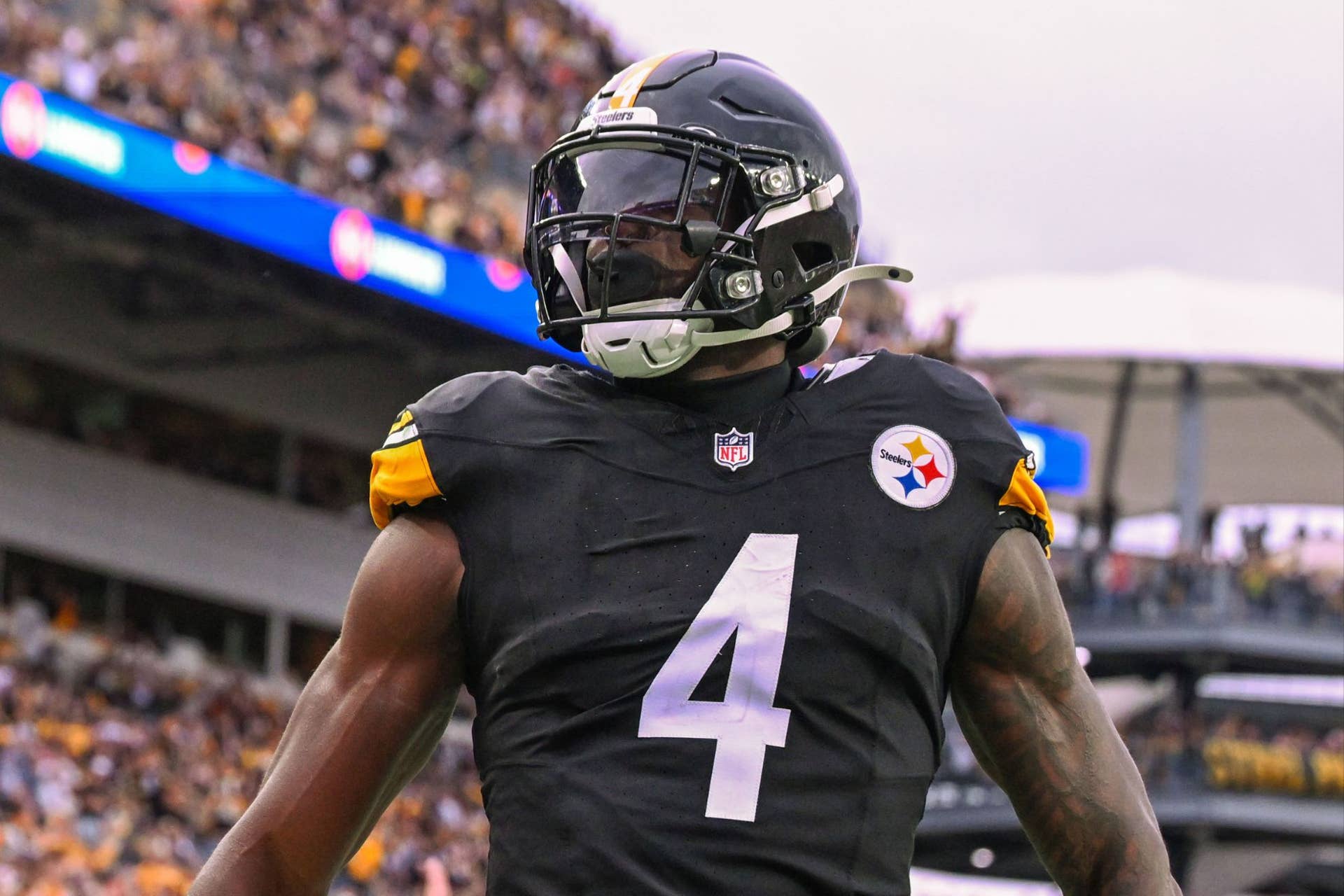
The Steelers' most frustrating afternoon may have belonged to DK Metcalf. The big receiver was supposed to be a physical matchup problem for the Eagles' defensive backs. Instead, he finished with one catch for two yards on four targets and was ejected after receiving two unsportsmanlike conduct penalties in an exchange with Cooper DeJean. The contrast was striking: Philadelphia's coverage played the game with discipline, while one of Pittsburgh's featured targets let irritation become part of the defensive advantage.
GOATIFY
GOATIFY NFL
Explore GOATIFY NFL graphics after Elliott's four-for-four field-goal performance.
DeJean's role went beyond the moment everyone wanted to discuss. He registered four tackles and a pass defended, and Philadelphia's secondary limited Pittsburgh's access to explosive throws. Quinyon Mitchell was also central to that work until he departed late with a hamstring issue. If receivers are made to fight through contested routes on every down, the quarterback has to hang on to the ball that little bit longer. Against a pass rush that was already winning, that extra time became another problem Rodgers couldn't solve reliably.
Pittsburgh's offense did eventually make the ending uncomfortable. With 1:21 remaining, Max Hurleman made a 20-yard touchdown catch in the back left corner of the end zone. The pass from Rodgers reduced Philadelphia's advantage to 19–16, and suddenly all the defensive stops and Elliott kicks were being squeezed into the question that decides close games: could the team with the lead produce one more first down? There was no margin for a three-and-out and a quick Steelers possession.
At third-and-six from the Eagles' own 39, coach Nick Sirianni could have tried to drain clock with a predictable run. Barkley was unavailable after being shaken up, and a safe rushing play might not have reached the marker. Instead, the Eagles put the outcome in Milton's hands. He found DeVonta Smith on a short out route for seven yards. With Pittsburgh running short of timeouts, the completion let Philadelphia kneel out the game. One accurate, correctly timed pass mattered more at that instant than a dozen earlier debates about Milton's arm talent.
That play doesn't transform an uneven 11-for-21 passing day into a star-making performance. It does show the difference between having physical ability and executing a specific, high-pressure assignment. Milton's earlier mistakes were visible, and he will need to eliminate them. But the final drive offered evidence that he could read the clock, work within the situation and deliver a ball to the receiver who could end the contest. Quarterback development often happens in precisely those unspectacular moments.
What comes next is tougher than the celebration. Philadelphia travels to Dallas on Thanksgiving, November 26. Short weeks compress film study, recovery and installation. Barkley's late injury question adds uncertainty, and the offense cannot reasonably expect a perfect kicking performance to cover for multiple stalled possessions. Even Smith's return creates decisions about target distribution and how the Eagles can unlock simpler throws for Milton. Those are tangible coaching tasks, not problems that disappear because one result moved into the win column.
The Steelers leave with their own accountability questions, including why a defense that kept the Eagles from getting comfortable couldn't capitalize on more of its offense's opportunities. For Philadelphia, the better perspective is neither triumphalism nor cynicism. The losing streak is over. The defensive front, kicker and decisive final throw earned that result. The next test is whether the team can turn a 19–16 rescue into something that looks less like survival.
Philadelphia's 19–16 win was real, and so were the warnings inside it. Barkley's burst provided the only Eagles touchdown, Trotter and the front kept Rodgers under pressure, Elliott supplied four crucial kicks, and Milton finally delivered the simple pass that ended the game. That combination was enough to snap seven consecutive defeats and give the Eagles a reason to believe their season isn't entirely drifting.
But winning once isn't the same as solving a problem. A 3–7 team facing Dallas on Thanksgiving needs more efficient early-down offense, healthier personnel and passing plays that work without requiring a big scramble or impossible kick. The Eagles can appreciate the relief of Sunday night. They should spend the next few days making sure relief isn't the most lasting thing they take from it.
GOATIFY
GOATIFY NFL
Shop GOATIFY NFL and American football shirts, hoodies and stickers.