

Randle Scored 29. Brown Made His First Start. Brooklyn Still Lost by 26.
GOATIFYJulius Randle returned to Minnesota on November 23 and scored 29 points against his former team. His new team lost by 26. Brooklyn's 142-116 defeat was an unusually clear example of how a good individual scoring performance can coexist with a disastrous team result.
There was another storyline buried in the score: Mikel Brown Jr. made his first NBA start after Nolan Traore suffered a hamstring injury. The rookie produced 17 points and seven assists, but his six turnovers were part of a much larger possession problem. Brooklyn shot 52.6 percent from the field and made half its three-point attempts, numbers that usually give a team a chance to win. Minnesota attempted twelve more field goals and scored 142 points anyway.
The Nets are now 3-13, and the Timberwolves are 13-5. Brooklyn has an opportunity to learn what its young guards can do with more responsibility, but the rest of the roster needs to make that experiment more sustainable.
Brown's First Start Exposed Brooklyn's Possession Problem
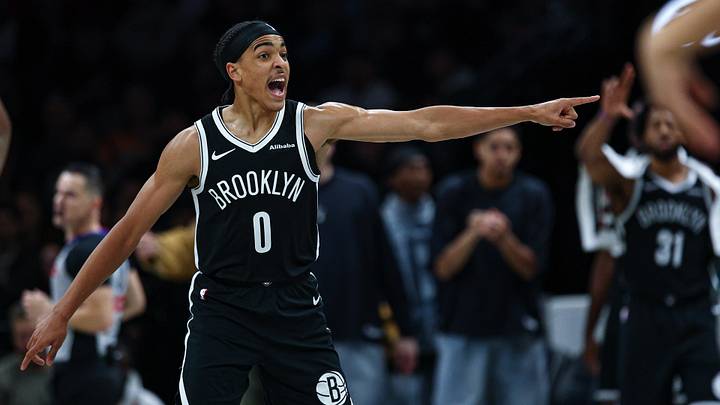
The most revealing part of Randle's homecoming was not whether he could score against defenders familiar with his game. He made 11 of 16 attempts from the floor, added four rebounds and four assists, and gave Brooklyn a reliable scoring option. His five turnovers, however, illustrate why the efficiency of a player's shots is not necessarily the efficiency of all the possessions he controls.
Brooklyn committed 21 turnovers against Minnesota's 12. Those mistakes cost the Nets opportunities to shoot and often allowed Minnesota to attack before Brooklyn had established its defense. The Timberwolves converted the turnovers into 31 points. That is an enormous burden for a team whose margin for error was already small entering the game.
Brown was productive in the first half, when he scored all 17 of his points. He finished 4-for-6 from beyond the arc and recorded five rebounds. The seven assists show why Brooklyn would want him involved as more than a spot-up shooter. His six giveaways show the cost of giving a rookie more complex reads against an established defense.
GOATIFY
GOATIFY Basketball
Explore basketball fan gear for NBA game nights.


Michael Jordan - Crying Jordan GOAT Muscle Tank
A basketball fan design for everyday wear.
Shop Now ↗

Traore's expected absence is substantial: the Nets have indicated that he will be reevaluated in eight to ten weeks following a right hamstring strain. Before the injury he was averaging 12.9 points and had been shooting effectively from the perimeter. Replacing that production is not simply a matter of redistributing shot attempts. Brooklyn also needs someone to initiate possessions, organize spacing and make decisions when the first action breaks down.
There is a practical way to reduce the burden on Brown. Randle can initiate from the elbow, and Day'Ron Sharpe and Danny Wolf can facilitate from the interior rather than asking one guard to create every advantage off the dribble. Sharpe recorded seven assists and Wolf four in Minneapolis. Those passing options can help Brown receive the ball after the defense has already moved, which is a much easier environment in which to learn NBA decision-making.
The evaluation should focus on whether Brown reduces repeat mistakes while continuing to find good shots for himself and others. His first start offered reasons to watch him closely without suggesting that one promising half has solved Brooklyn's problems. The goal during Traore's absence should be to develop a functioning rotation, not simply to increase a rookie's usage.
McDaniels and Minnesota Won the Possession Battle
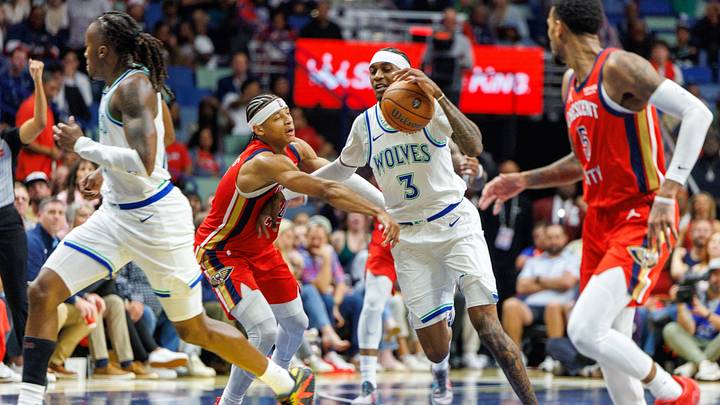
Minnesota's side of the game makes Brooklyn's problems easier to understand. Jaden McDaniels finished with 34 points, ten rebounds and six assists on 12-for-16 shooting, including four makes from four attempts beyond the arc. Ayo Dosunmu contributed 23 points and five assists. The two combined for 57 points, while LaMelo Ball added 17 and several other players contributed in double figures.
Without Anthony Edwards, Minnesota has had to find offense from more places. McDaniels had already scored 25 against Memphis in the previous game, so his performance against Brooklyn continued an encouraging stretch. He does not need to reproduce 34 points every night for his expanding offensive contribution to matter. When a normally defense-oriented wing can attack a closeout, make a secondary pass and punish a defense for leaving him open, the entire lineup becomes more difficult to contain.
GOATIFY
GOATIFY Basketball
Browse basketball apparel inspired by the league's biggest stars.

Anthony Edwards G.O.A.T. - Basketball Muscle Tank
A basketball fan design for everyday wear.
Shop Now ↗


Kobe Bryant – Young Kobe No. 8 Sticker
Add basketball personality to your favourite gear.
Shop Now ↗

Shaquille O’Neal GOAT - Shaq Basketball Coffee Mug
Add basketball personality to your coffee break.
Shop Now ↗The Timberwolves won the first quarter 41-28 and the third 41-30. Brooklyn did not lose because of one brief cold shooting stretch. It was repeatedly unable to stop Minnesota from building or extending its lead. The Wolves shot 58 percent overall, had 35 assists and finished with 88 field-goal attempts. Brooklyn generated only 76 attempts.
Even with the Nets making one more three-pointer than Minnesota, the Timberwolves made eleven more field goals overall and five more free throws. The point differential is understandable without invoking an abstract effort problem. Brooklyn conceded more shots, and those shots were converted at a higher rate. Addressing just one of those two issues could make the next game more competitive.
For coach Jordi Fernandez, that means finding lineups that get back on defense quickly, communicate through switches and avoid the unnecessary turnovers that put teammates in impossible positions. A developing offense can live with some missed shots and imperfect reads. It cannot consistently survive when a mistake at one end immediately becomes an uncontested opportunity at the other.
Brooklyn's next game against Milwaukee on November 25 is another chance to evaluate those habits. Minnesota, meanwhile, faces Oklahoma City on the same date, a stronger test of how its distributed scoring holds up against a high-level opponent. The meaningful question for the Wolves is whether McDaniels and Dosunmu can keep creating efficient opportunities when the opposing defense is more organized. For the Nets, the immediate priority is narrower: make their possessions count and force the opponent to work harder for its own.
Randle's return showed that Brooklyn has capable scorers, and Brown's debut as a starter offered another glimpse of the future. The loss showed the distance between those individual positives and a functional team. The next eight to ten weeks could provide useful developmental minutes for Brown, but progress should be measured through better decisions, more stable defensive possessions and competitive stretches rather than points alone. Minnesota demonstrated what the same evening can look like when multiple players contribute within a more coherent team structure.
GOATIFY
GOATIFY Basketball
Shop GOATIFY basketball shirts, hoodies and stickers.

Wilt Chamberlain G.O.A.T. - Basketball Muscle Tank
A basketball fan design for everyday wear.
Shop Now ↗
Kareem Abdul-Jabbar G.O.A.T. - Basketball - Hoodie
A basketball fan design for everyday wear.
Shop Now ↗
Fat Luka Doncic Los Angeles Lakers NBA Sweatshirt
A basketball fan design for everyday wear.
Shop Now ↗
Magic Johnson G.O.A.T. - Basketball Casual Top Tee
A basketball fan design for everyday wear.
Shop Now ↗
Yao Ming GOAT - Basketball Decal Sticker
Add basketball personality to your favourite gear.
Shop Now ↗
Nikola Jokic G.O.A.T. - Basketball Coffee Cup Mug
Add basketball personality to your coffee break.
Shop Now ↗

















