

Giddey Delivered 22 Assists. Denver Still Found 151 Points.
GOATIFYTwenty-two assists can be a complete offensive identity for one night. Josh Giddey delivered that many for Chicago on November 22, 2026, while adding 23 points and 14 rebounds. The Bulls also made 25 three-pointers, equalling a franchise record, and pulled a game they appeared to have lost into overtime. Yet the Denver Nuggets left the United Center with a 151–145 victory. It was not a case of a brilliant passer being ignored by his teammates. His teammates were making shots. The problem was that Chicago's best offensive performance did not resolve what was happening at the other end.
Denver had the luxury of two creators operating at a level that could survive the Bulls' perimeter storm. Jamal Murray scored 45, eight of them in overtime; Nikola Jokić piled up 37 points, 18 rebounds and 11 assists. Chicago's comeback to a 131–131 tie was real, but the Nuggets started the extra period with eight unanswered points and never surrendered control. This is the more revealing story behind the extraordinary box score: a team can produce spectacular passing and shooting numbers while still struggling to decide which opponent possessions it can actually stop.
The details explain the gap between a performance worth celebrating and one that wins. The Bulls built advantages through spacing, ball movement and timely fourth-quarter aggression. Denver countered with the dependable possessions of a big man who dictates defensive shape, a scoring guard who can punish a mismatch and an edge on the offensive glass. Neither side was perfect defensively. Only one side could consistently make the other pay for that imperfection.
Giddey's 22 assists made the Bulls' offense work — until stops mattered more
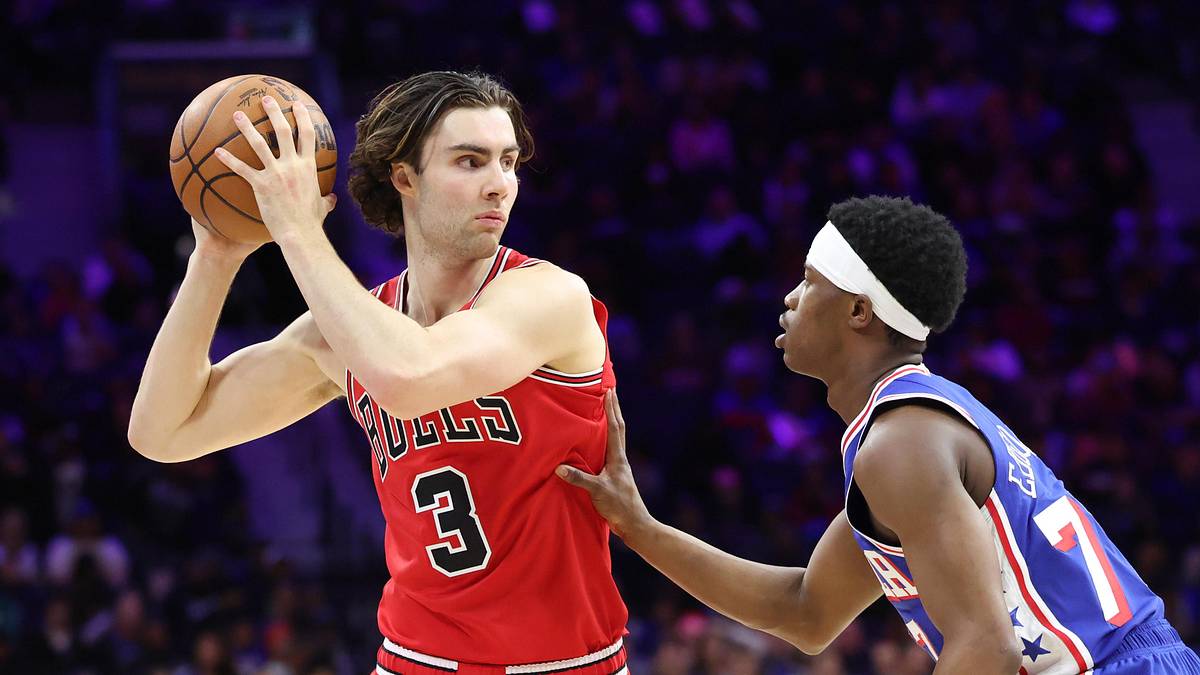
The tempting response to Giddey's 22-assist line is to ask whether it should automatically have produced a victory. It should not. An assist records an outcome after a teammate converts, not a defensive stop or a clean rebound. What made this night unusual was the depth of Giddey's contribution. He paired the career-high passing total with a 23-point, 14-rebound triple-double, put the ball in different teammates' shooting pockets and repeatedly changed the angle from which Chicago attacked. This was not a single hot hand being fed for forty minutes.
The ball movement mattered because Denver could not simply sit on the first scorer in a possession. Chicago finished with 39 assists as a team, and Giddey accounted for more than half of them. The Bulls' shooters kept finding open or semi-open chances before Denver could recover its shape. Buddy Hield made seven threes and scored 33, while Jalen Smith added 26 points, including six makes from beyond the arc. The distribution also reached Matas Buzelis, who scored 21. For an offense missing regular scoring options, those numbers reflected meaningful adaptation rather than a lucky opening sequence.
Giddey's late scoring provided the emotional high point. With Denver ahead in the final minute, he attacked inside and completed a three-point play to reduce the deficit. Chicago then disrupted Jokić's possession, pushing the ball quickly into space for Giddey's layup that tied the game at 131. That final action was a reminder of what a large guard can offer beyond conventional passing: he sees lanes early and can become the finisher when the defense assumes he will distribute. The Bulls had earned overtime through a genuine sequence of execution.
GOATIFY
GOATIFY Basketball
Explore GOATIFY basketball styles as Giddey's passing raises Chicago's offensive ceiling.

Michael Jordan – Repeat 3-Peat GOAT Basketball Tank
A basketball fan design for everyday wear.
Shop Now ↗


Chicago Bulls – Picasso Bulls Cubism Art Sticker
Add basketball personality to your favourite gear.
Shop Now ↗
Michael Jordan G.O.A.T. - Basketball Coffee Mug
Add basketball personality to your coffee break.
Shop Now ↗The previous outing had raised an uncomfortable question about trust and late-game responsibility, because Giddey had spent important fourth-quarter minutes on the bench. Against Denver he supplied an emphatic response. That does not mean every criticism of Chicago's attack was answered permanently. A productive guard can coordinate an entire offense and still need the rest of the roster to survive matchups, box out and protect the rim. If a player puts teammates in positions to score and those chances become 25 made threes, the passing system did much of what was demanded.
That is why the last five minutes should not erase the first forty-eight. Giddey gave Chicago a working structure, not a defensive guarantee. His decision-making created the conditions for the comeback; Denver's ability to generate easier second chances created the conditions for the defeat. Both can be true. The more useful lesson for the Bulls is to build on the passing without pretending that an even larger assist number is the solution to a 151-point concession.
Twenty-five threes could not cancel Denver's advantage near the rim
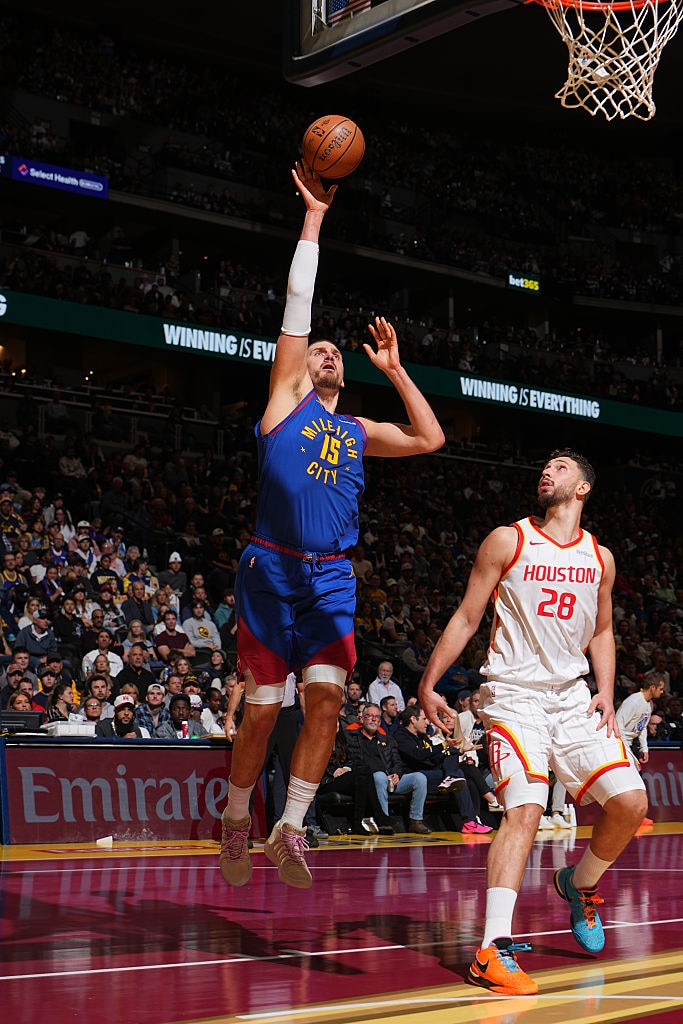
The headline number for Chicago's offense was 25 three-pointers in 55 attempts. A team can reasonably expect a strong result when it makes that many shots from deep. Chicago's 45.5 percent rate was excellent volume shooting, and it forced Denver to respond with points of its own. The problem is that three-point production and defensive reliability are not opposites on the same scale. A great shooting night does not automatically make a missed box-out harmless. Every extra possession Denver earned was another chance to force the Bulls to defend Jokić or Murray again.
Denver put 66 points in the paint against Chicago's 48 and collected 15 offensive rebounds to the Bulls' nine. The Nuggets were credited with 25 second-chance points. None of these figures describes a single disastrous defender; collectively they show that the visitors found ways to retain the ball and score closer to the basket. Aaron Gordon secured six offensive boards himself. Jokić added five at that end, using size and timing to extend sequences that Chicago wanted to finish with one contest. In a game that reached 296 combined points, a few additional high-quality attempts became highly consequential.
Defending Jokić poses a structural dilemma. If the nearest defender gives him space, his touch around the rim or across the lane is reliable enough to punish the concession. If a second defender helps, a cutter or shooter can appear on the weak side. If Chicago remains attached to Denver's perimeter players, Jokić has fewer bodies blocking his route to the rebound. There is no frictionless answer, but it is possible to minimize the damage with clearer rebounding assignments and earlier contact rather than waiting until the ball reaches the rim.
Chicago's frontcourt numbers underline the contrast. Smith shot wonderfully, going 10-for-14 from the floor with six triples, but he was also navigating the physical demands of protecting the paint. Buzelis produced important offense and defensive moments. Neither contribution should be treated as sufficient evidence that the interior contest was balanced. Denver could miss, recover the ball and demand another rotation. The Bulls often needed their perimeter excellence just to neutralize those repeated possessions.
GOATIFY
GOATIFY Basketball
See GOATIFY basketball gear while the Nuggets' interior advantage comes into focus.

Stephen Curry GOAT Shooting Threes Pullover Hoodie
A basketball fan design for everyday wear.
Shop Now ↗
Carmelo Anthony G.O.A.T. - Basketball - Sweatshirt
A basketball fan design for everyday wear.
Shop Now ↗
Russell Westbrook G.O.A.T. - Basketball Decal Sticker
Add basketball personality to your favourite gear.
Shop Now ↗
Nikola Jokic G.O.A.T. - Basketball Coffee Cup Mug
Add basketball personality to your coffee break.
Shop Now ↗
Stephen Curry G.O.A.T. - Steph Curry Greatest Tee
A basketball fan design for everyday wear.
Shop Now ↗
LaMelo Ball G.O.A.T. - Basketball Muscle Shirt Tank
A basketball fan design for everyday wear.
Shop Now ↗A one-night offensive explosion can conceal weaknesses that will recur the following week. Shooting variance is real: a team will not bank 25 threes every night. Second-chance points are not guaranteed either, yet they arise from assignments, positioning and effort that a coaching staff can address more consistently. Chicago's most sustainable improvement is unlikely to involve asking Giddey for 25 assists. It involves making one successful defensive stand actually end the possession.
Murray and Jokić turned overtime into a two-man decision tree
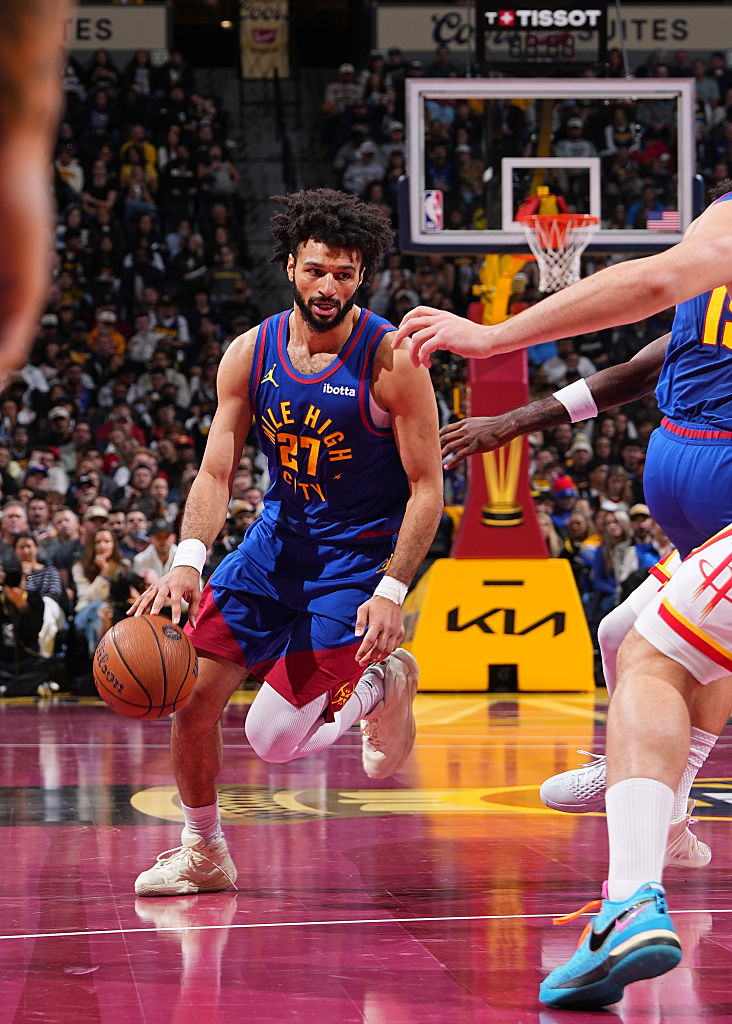
Chicago's comeback made overtime feel possible. Denver's first few possessions quickly changed that mood. Murray opened the extra period with a step-back three assisted by Jokić. After Chicago failed to score, Jokić finished inside and Cameron Johnson made another three. The eight-point burst shifted the scoreboard from 131–131 to 139–131 before the Bulls could establish themselves in the extra five minutes. That was not simply a random burst of outside shooting. It was Denver putting the ball in the hands of two players capable of choosing different answers to the same defensive coverage.
Murray was already the game's leading scorer with 45 points on 13-of-22 shooting, six made threes and 13-of-14 free throws. He scored eight of those points in overtime, and his ability to threaten a jumper off a screen complicated every choice Chicago made near the top of the floor. A defender who fights over the screen is pulled away from the rim. A defender who goes under invites a pull-up. A switch may leave a smaller player involved in the next post action against Jokić. These are ordinary basketball problems made extraordinary by the precision of the people operating them.
Jokić's 37 points, 18 rebounds and 11 assists were his 202nd career regular-season triple-double. The number will draw attention because it moves him nearer Russell Westbrook's benchmark, but the on-court value was in the timing of his reads. Across overtime, he scored or assisted on all six Denver made field goals according to the detailed game review. On one trip he could deliver the pass that created a clean perimeter look; on the next he was the interior scorer. A Chicago defender could make the correct first rotation and still be required to defend a second action.
Christian Braun also mattered more than a supporting name in the scoring column. His 21 points provided another credible finisher when the Nuggets moved the defense away from the two stars. Cameron Johnson's timely three was another example of a role player benefiting from the attention paid to Murray and Jokić. Denver's stars supplied the problem; their teammates supplied enough correct responses that Chicago could not solve it by loading up on one dangerous player.
This is how an overtime loss can feel decisive even after forty-eight minutes of parity. Denver scored 20 in the extra period; Chicago managed 14. The difference was not that the Bulls stopped competing. They had spent the last minute of regulation creating a miracle and continued to generate chances. But the Nuggets began overtime with a clearer advantage in the quality of each possession, and the scoreboard rewarded it before Chicago had time to reset.
GOATIFY
GOATIFY Basketball
Browse GOATIFY basketball designs for fans of Murray's late-game scoring.

Fat Jokic Denver Nuggets - Basketball Sweatshirt
A basketball fan design for everyday wear.
Shop Now ↗
Nikola Jokic G.O.A.T. - Basketball Decal Sticker
Add basketball personality to your favourite gear.
Shop Now ↗

Nikola Jokic G.O.A.T. - Basketball Casual Top Tee
A basketball fan design for everyday wear.
Shop Now ↗
Fat Jokic Denver Nuggets - Basketball Decal Sticker
Add basketball personality to your favourite gear.
Shop Now ↗
Chicago's next step is not more fireworks — it is fewer second chances allowed
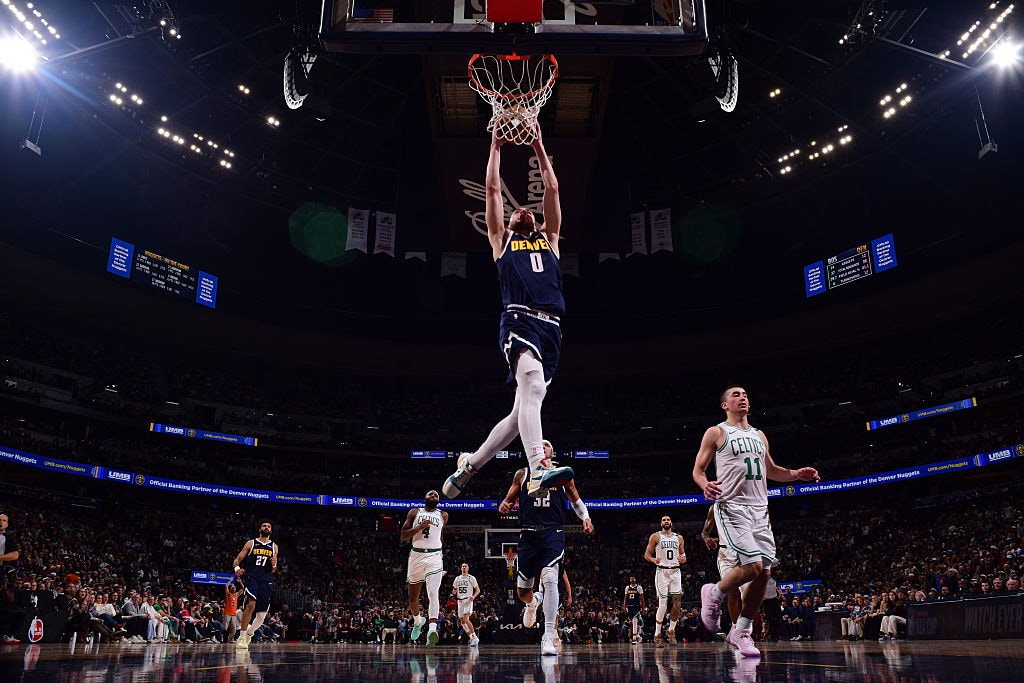
Buddy Hield's 33-point performance is the kind of contribution Chicago needed when established scorers were unavailable. His seven threes kept Denver from escaping before the fourth-quarter rally. Smith's 26 points and six threes expanded the floor in a way the Nuggets could not ignore. Buzelis's 21 gave the team additional size and scoring range. The offensive support was not imaginary or confined to garbage time. Chicago made 52 field goals in total and produced 39 assists. Those are figures that explain why the game became so difficult for Denver to put away.
But a 4–12 team cannot judge progress only by how close the ending feels. The Bulls' home record stood at 1–6 after the defeat. They were also short-handed, with Norman Powell, Caleb Wilson and Nic Claxton unavailable for this particular game. That context should moderate any sweeping judgment about their ceiling. Missing players can change rotations and the distribution of defensive responsibility. It cannot make a consistently poor rebounding possession disappear from the tape. The staff still needs workable answers using the people in uniform.
A useful film review would begin not with the last layup, but with the shots Denver missed and still recovered. Who was responsible for putting a body on Gordon? When Jokić pulled the center toward an elbow or the perimeter, which weak-side player was designated to close the lane? On a possession when a Chicago defender committed to Murray, did the next defender know whether to meet the roll or remain attached to the three-point shooter? The precise answers will vary, but the principles can be trained more reliably than a franchise-record shooting night can be repeated.
Chicago's own late-game execution offers reasons for optimism. The final regulation sequence required pressure on the ball, an immediate transition decision and a confident finish. Giddey, Smith and Buzelis supplied those actions under enormous pressure. The team should preserve that aggressive mentality while demanding better possession endings earlier in the game. Winning a spectacular five-minute comeback only to start overtime eight points down is a harsh illustration of how thin the margin becomes when basic defensive work is uneven.
The immediate calendar does not offer much reflection time. The Bulls were due to host Cleveland the following night, while Denver's next scheduled opponent was Dallas. For Chicago, the correct question after this 151–145 defeat is not how to repeat 25 three-pointers. It is how to turn an excellent passing structure into enough reliable two-way possessions that a future 15- or 18-three game can be won. Giddey has shown what the offense can be. Now the rest of the system has to make that vision worth a victory.
Denver earned its third straight win because its two best creators could make the Bulls defend different actions on the decisive trips. Murray's 45 and Jokić's triple-double were spectacular; the offensive rebounds and interior points gave those numbers room to matter. Chicago's 25 threes, Giddey's 22 assists and a fearless late rally deserved attention, too. They were simply on the wrong side of the possessions that decided the extra period.
An unforgettable box score is a record of what happened, not a guarantee of what happens next. The Bulls can carry Giddey's creativity, Hield's shooting and Smith's confidence forward. If they can pair those strengths with cleaner defensive rebounding and a more dependable answer at the rim, this loss can be a useful turning point. Until then, 145 points may still be insufficient.
GOATIFY
GOATIFY Basketball
Shop GOATIFY basketball shirts, hoodies and stickers.


Derrick Rose G.O.A.T. - Basketball Casual Top Tee
A basketball fan design for everyday wear.
Shop Now ↗
Michael Jordan – GOAT Cigar Celebration Decal Sticker
Add basketball personality to your favourite gear.
Shop Now ↗


Ja Morant Gun Basketball NBA Memphis Grizzlies Mug
Add basketball personality to your coffee break.
Shop Now ↗

















