

Norris Starts Third. McLaren's Vegas Straight-Line Problem Isn't Solved.
GOATIFYLando Norris has earned a start near the front of the Las Vegas Grand Prix, but the real worry for McLaren is what happens once the cars stop running alone. He will line up third after qualifying fourth, promoted by Kimi Antonelli's five-place power-unit penalty. Behind the promising grid slot lies an uncomfortable mismatch: McLaren's 2026 car can carry speed through the corners, yet its rivals appear able to claw that advantage back down the Strip's long straights.
Norris sounded satisfied with his qualifying lap, not with the prospect of spending an entire race in traffic. Team principal Andrea Stella has supplied a second complication. A new floor on Norris's car performed as intended, but an unexpected plastic bag became caught on part of that floor and reduced downforce during qualifying. Oscar Piastri, meanwhile, will start 17th after his own engine penalty. For a team trying to close a points deficit to Red Bull, an apparently respectable Saturday has created an unusually demanding Sunday.
Third on the Grid, Yet Norris Says Passing Could Be His Problem
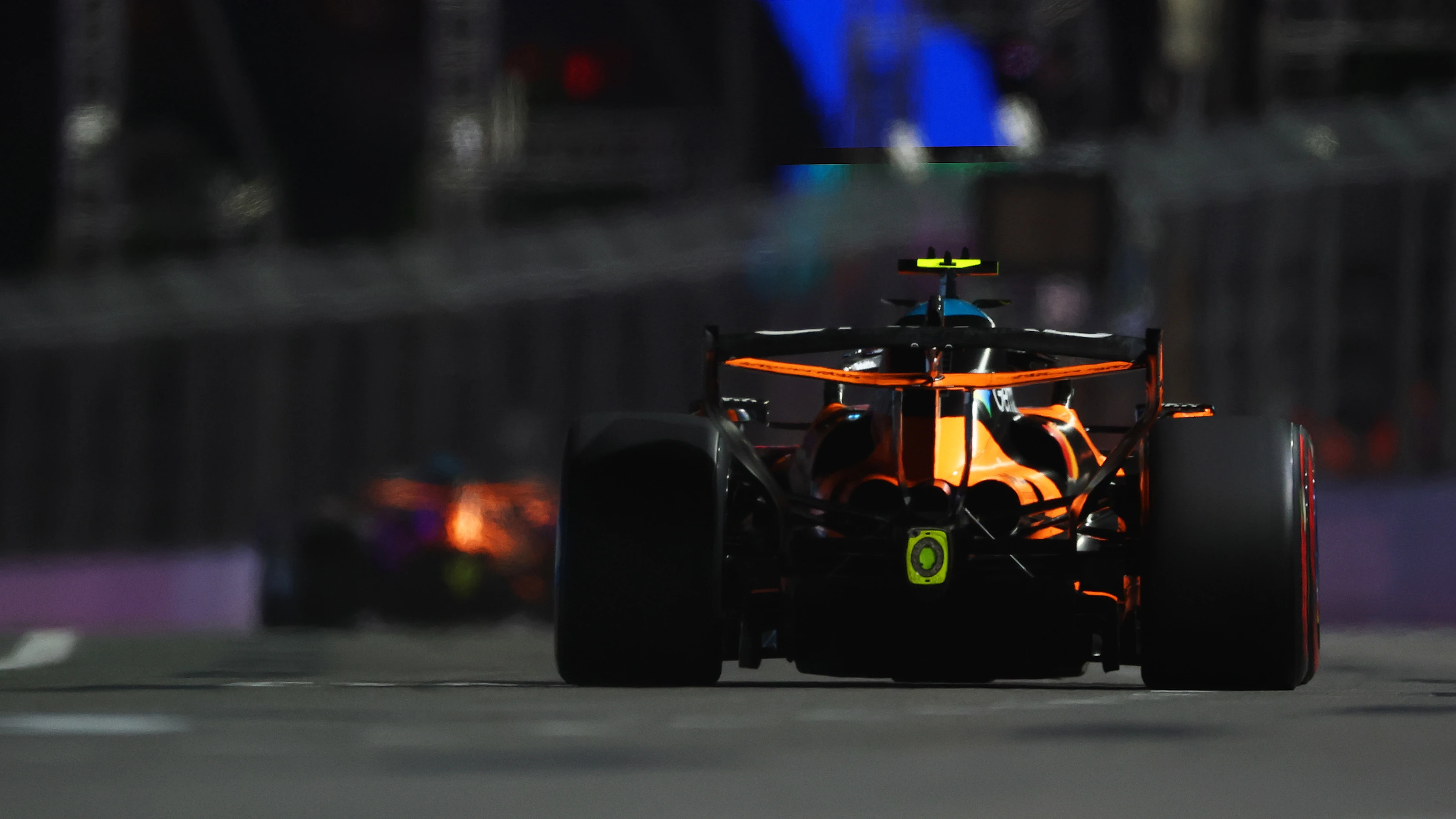
Third on the starting grid looks like the right place to launch an attack on the leaders. For Lando Norris, it might instead be the place where every weakness of the McLaren is put on display. His qualifying time was 1:34.244, a mere 0.020 seconds behind George Russell, and Norris finished within a tenth of Max Verstappen. Those are the sorts of gaps that normally make an ambitious podium forecast reasonable. Yet a qualifying deficit measured in hundredths is not the same thing as an advantage in a side-by-side drag race.
The distinction matters unusually much at Las Vegas. The circuit pairs slower corners with long periods of acceleration, and a slipstream can make the difference between a merely good lap and an excellent one. In qualifying, the car ahead can become a temporary asset: follow it at a carefully judged distance and the reduction in aerodynamic drag can improve speed. During the race, the same air flow and traffic create a much less predictable contest. A driver may be quick through the corners but unable to finish a move before the next braking zone if the other car has the stronger straight-line package.
Norris qualified fourth on raw pace. Andrea Kimi Antonelli was fastest in the session, but his five-place penalty for a power-unit change shuffled the grid. Verstappen therefore starts from pole, Russell from second, Norris from third and Isack Hadjar alongside the McLaren on the second row. The promotion is valuable, but it is administrative rather than proof that the car became faster overnight. McLaren still has to race the cars that were ahead of it on the timing screens.
There are two fundamentally different tasks for Norris. In the opening phase, he needs to protect the racing line against Hadjar and anyone able to gain momentum behind him. After the field settles, he needs to remain close enough to exploit traffic or tyre differences without using up his own tyres trying to close a gap the car cannot bridge down a straight. That becomes even more delicate in Las Vegas's cool evening conditions, when tyre warm-up can reward a driver who creates the right opportunity early but punish one who makes an impatient attempt.
Talk of an uncompetitive McLaren would be overstatement. A top-four qualifying lap on a circuit the team did not expect to suit its car is evidence of genuine ability through corners and over one lap. The concern is narrower and more dangerous: the parts of a lap that make overtakes successful are precisely where Norris believes his machine is giving up time. A quick car can spend long stretches staring at another rear wing. If the race develops into a train of similarly matched drivers, Norris could have the pace to remain in contention without the straight-line margin to dictate the result.
GOATIFY
GOATIFY Formula 1
Norris has track position but must fight for every metre on the Strip. Explore GOATIFY F1 designs for fans of racing tactics and close battles.


The cleanest outcome for McLaren would involve a strong start, a manageable tyre balance and opportunities created by rival strategy. The difficult version has Norris defending early, spending energy in dirty air and needing a very large corner-speed advantage to regain anything he loses on the straight. Nothing in qualifying settles which version arrives. It simply explains why the driver starting third sounds more cautious than the grid position might suggest.
The New McLaren Floor Worked. A Plastic Bag Complicated Q3.
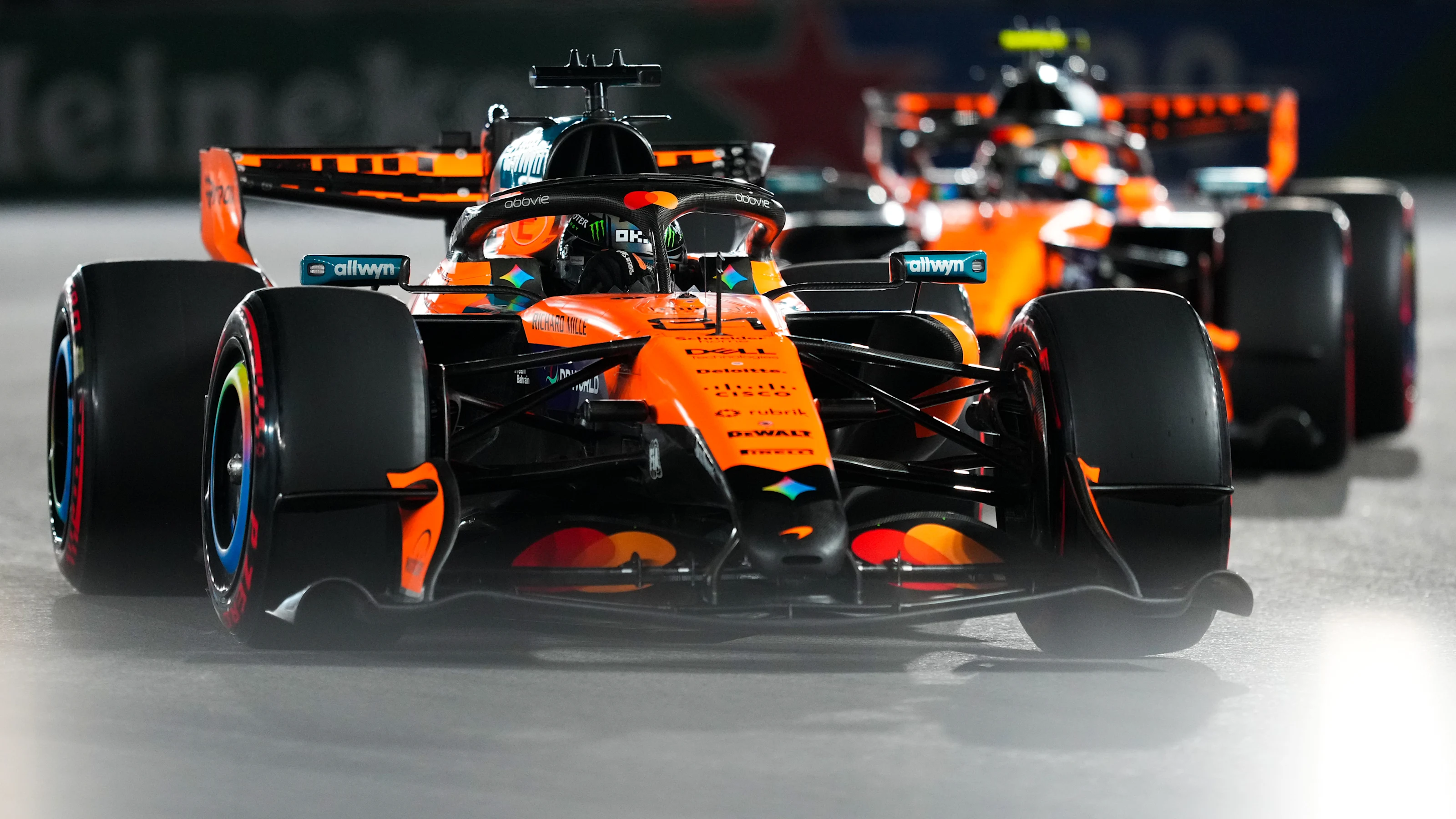
McLaren's qualifying result contains an engineering success that a glance at the grid could easily miss. The team introduced an updated floor for Las Vegas and fitted it to Norris's car only. Team principal Andrea Stella said the change produced the expected improvement, particularly in low-speed corners where the MCL40 had not always been comfortable this season. At a circuit that relentlessly exposes weaknesses on the straights, a better-performing floor helped Norris carry enough speed through the slower sections to remain near the front.
That detail makes the straight-line problem more significant, not less. McLaren was not simply waiting for an upgrade that failed to arrive. It brought one, saw the anticipated benefits in part of the lap and still had to acknowledge the speed it was surrendering elsewhere. A Formula 1 car is always a set of compromises between drag, downforce, tyre behaviour and power deployment. Adding grip through corners can make a driver more competitive over the entire lap, yet leave a deficit when another car accelerates away in a straight line. The goal is to improve the combined performance without handing the opposition a convenient escape route.
Stella also disclosed an extraordinary interruption to Norris's qualifying effort: a plastic bag became caught on a spat on the right side of the floor and produced a significant downforce loss. His assessment was that Norris might have reached the front row without the obstruction. The important distinction is between an aerodynamic disruption and an established mechanical failure. The team described a foreign object affecting the car's aerodynamic performance; that is not evidence by itself that the new floor was structurally broken or needed replacement.
It is tempting to turn the bag into the whole story because it makes for a memorable explanation of lost lap time. That would miss what McLaren learned independently of the incident. The team had already seen a similar relative weakness on high-speed tracks such as Monza and Baku, and Las Vegas provides another test of that pattern. Norris can be quick around slower corners, and the update may have raised his baseline, while rival machinery still makes superior use of the longest sections of track.
The upgrade also raises a useful internal comparison. Piastri did not have the new floor, so the two McLarens entered qualifying with different development specifications. They also ran different laps, faced different traffic and did not extract identical slipstreams, which prevents a fair one-number verdict on how much the floor was worth. Comparing their qualifying positions alone would be poor engineering. The stronger evidence comes from the team's assessment of the car's behaviour in the corners and its own measurement of the change.
Looking toward the race, McLaren has two tasks rather than one. It needs a car that can exploit the grip gained from the updated floor without burning too much tyre life, and it needs to avoid allowing the straight-line deficit to neutralize that grip whenever the cars are close. The bag may have cost a remarkable Saturday opportunity, but the broader performance tradeoff will matter on every racing lap. A strong result would not prove the straight-line deficit has vanished, just as a difficult result would not prove the floor was worthless.
GOATIFY
GOATIFY Formula 1
From tyre strategy to aerodynamic upgrades, the little details decide Grand Prix weekends. Discover GOATIFY Formula 1 fan apparel.


Piastri Starts 17th With a New Engine and Two Different Problems
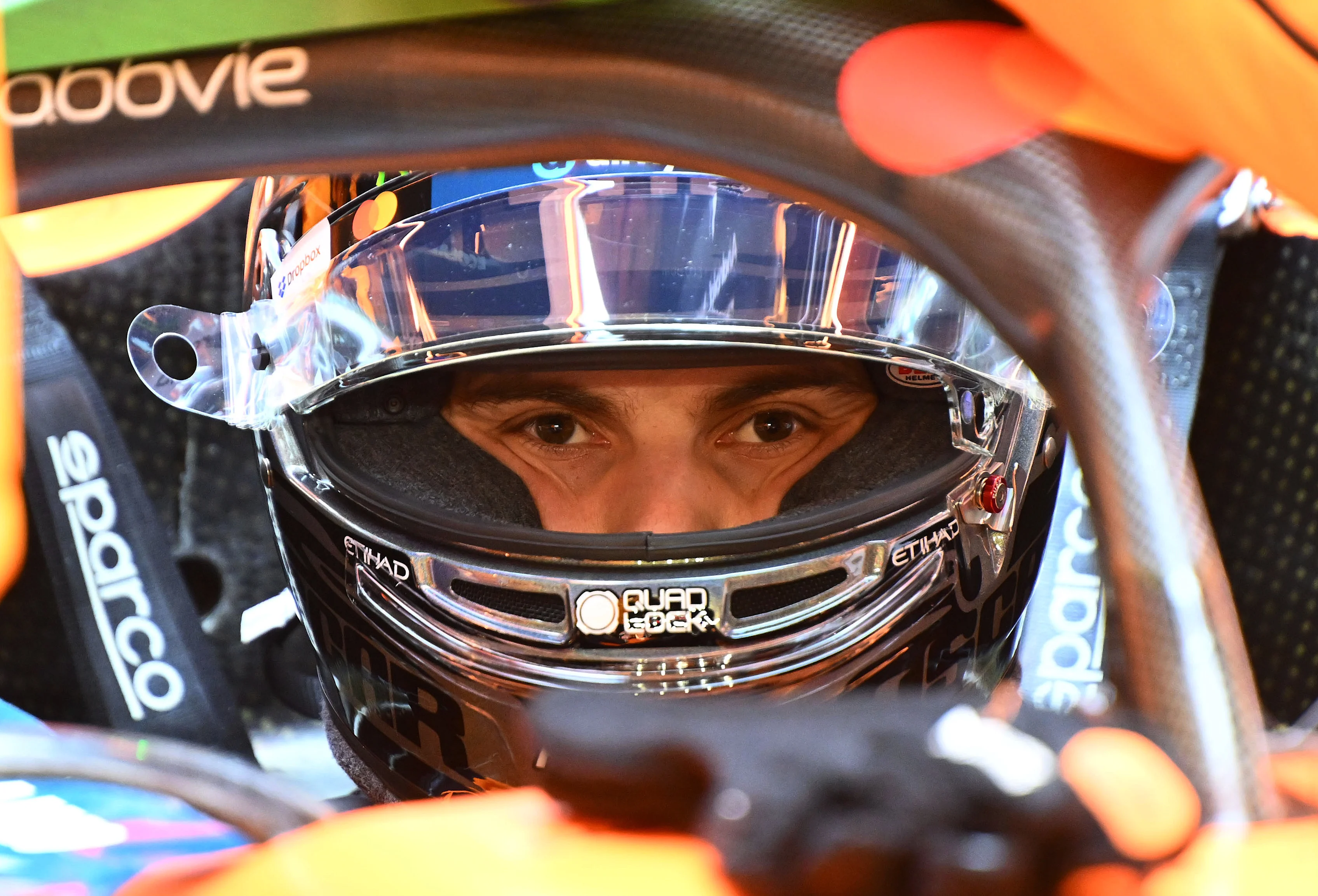
Oscar Piastri faces the mirror image of Norris's race. While one McLaren starts near the front with doubts about defending a position, the other begins 17th and needs to overtake a long line of rivals just to reach the points. Piastri was seventh fastest in qualifying, recording a 1:34.899, before his ten-place grid penalty for exceeding the permitted allocation of internal combustion engines took effect. The result on the starting grid is worse than the quality of the lap alone would suggest.
The distinction is important for evaluating Piastri's weekend. He was not 17th quickest. The Australian improved from a difficult practice session, reached the final qualifying segment and found encouraging pace, even while acknowledging that the last part of his qualifying was not clean. His race-starting position is a consequence of power-unit allocation as well as performance. It adds a substantial strategic handicap to an already tight field rather than reflecting a straightforward loss of speed by the driver.
McLaren also used its cars to help with track position during qualifying. Piastri ran ahead of Norris in the decisive phase and Norris benefited from the tow. The Australian could not replicate the most favourable slipstream for his own final effort. Around Las Vegas, where a small difference in distance behind another car can affect straight-line speed dramatically, the team order and gaps between cars can transform what would otherwise look like tiny differences in lap execution. None of that eliminates Piastri's frustration, but it gives context for why the two McLarens separated on the timing sheet.
From 17th, Piastri has a different set of priorities. He must survive the first corners, avoid losing the possibility of a long first stint through contact, and pick moments when a rival's tyres or energy deployment leave a genuine opening. The longest straights should theoretically offer places to pass, yet their usefulness depends on the relative speed of the cars involved. The McLaren's known shortfall is a greater obstacle to overtaking than it might appear when comparing single-lap qualifying times.
Overtaking everyone immediately is not a credible plan. A driver starting in the lower half of the field often needs several mechanisms to work in sequence: a sound launch, effective tyre temperature, clean pit-stop timing and traffic that breaks favourably rather than trapping him in a slower group. Piastri may also need to preserve enough tyre life so that a recovery drive does not stall after a burst of early passes. The exact balance depends on race conditions, not on an assumed advantage that qualifying cannot prove.
The team's constructors target makes Piastri's job more than a personal recovery mission. He is a second route to points at a time when McLaren is pursuing Red Bull. A modest finish inside the top ten could matter even if Norris gets most of the attention, while a race without points from the second car would put pressure on Norris to deliver a disproportionately strong result. Piastri's penalty is already served in grid terms. The remaining question is how many of those lost positions his car and strategy can actually reclaim.
The Red Bull Fight Is Bigger Than One Vegas Night
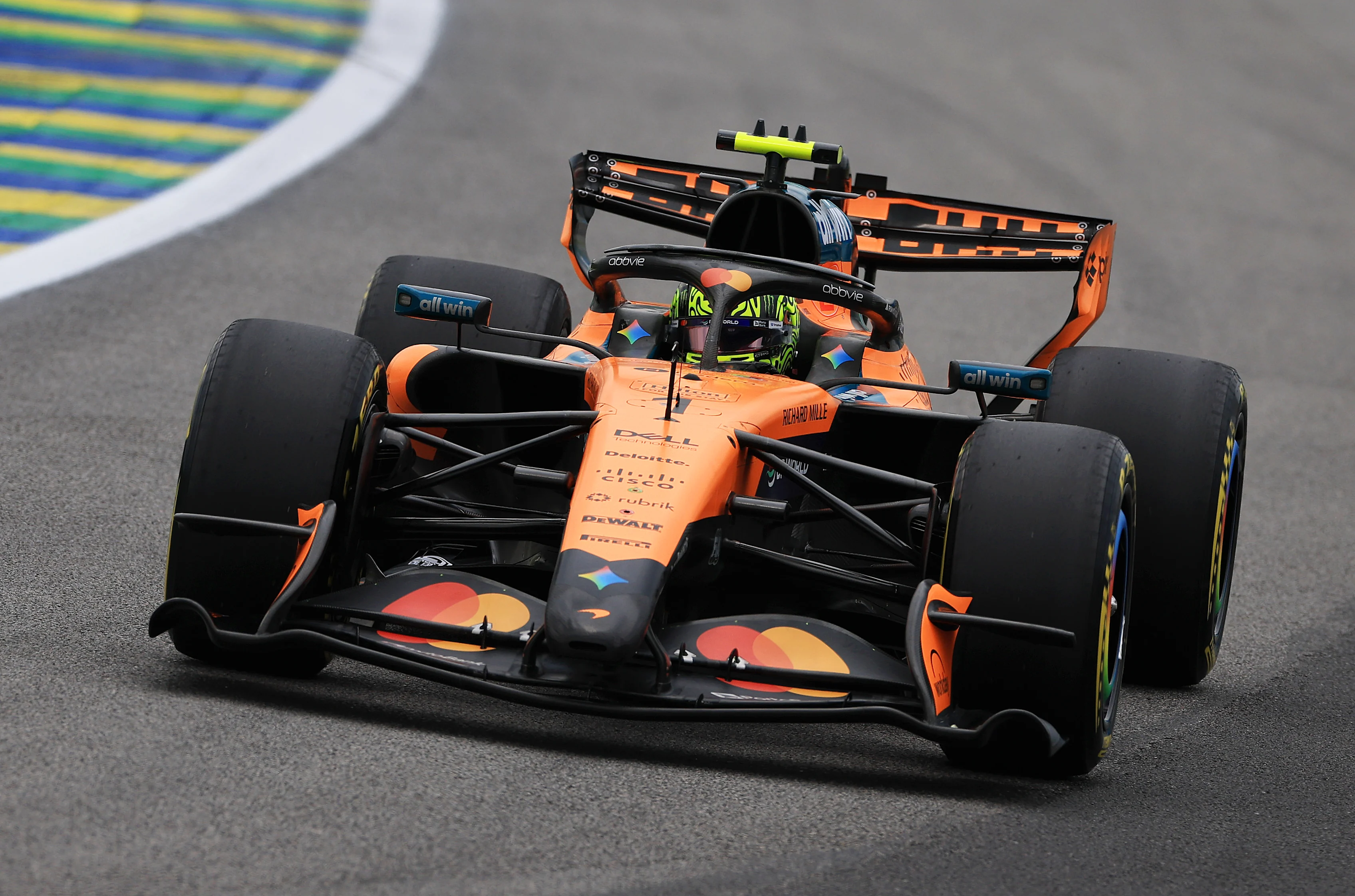
McLaren's final-season objectives explain why an imperfect qualifying result can still carry real importance. Mercedes has already clinched both world championships in 2026, and the attention behind the title winners has shifted to remaining positions. Ahead of Las Vegas, the official standings after São Paulo put Red Bull third on 415 points and McLaren fourth on 398. Seventeen points separate them. With three Grands Prix left including Vegas, neither team can afford to treat a solid finish as irrelevant.
GOATIFY
GOATIFY Formula 1
A charge from P17 can be the toughest drive of the night. Browse GOATIFY F1 shirts and gifts for fans of hard-earned comeback races.


There is evidence that the McLaren has become more competitive in recent weeks. Norris won in São Paulo earlier in November, and the revised package brought to Las Vegas was intended to build on improvements rather than simply rescue a lost campaign. Yet the tracks are not interchangeable. A weekend that rewards strong execution in Brazil does not establish that the same car will be equally effective when much of the battle takes place down lengthy straights in Nevada. That is why the floor's cornering gain and the persistent speed deficit can both be true.
Red Bull's position is threatening for a straightforward reason. Verstappen starts from pole and Isack Hadjar begins fourth, directly alongside Norris. The two rival teams therefore have front-running cars in positions to take meaningful points from one another. If Norris finishes behind both Red Bulls while Piastri cannot make the points, McLaren will fall further from its target. If Norris can split the Red Bulls and Piastri climbs into the top ten, the gap could move in the opposite direction. These are scenarios, not predictions of the finishing order.
A race can produce a completely different hierarchy from qualifying. Long-run degradation, cold track temperatures, the timing of stops and the difficulty of following another car can reward teams whose one-lap pace was less impressive. Las Vegas adds the possibility of a particularly large tow and the need to manage energy over extended full-throttle sections. There may be opportunities for Norris to gain places even without the best top speed, but those opportunities depend on a rival making a mistake, a tyre advantage or a clever sequence of decisions.
The second McLaren may ultimately determine the most useful team result. Piastri needs to recover from 17th; Hadjar starts fourth. A team that regularly scores with both cars has an enormous advantage in a close constructors contest, particularly when the headline driver is fighting established front-runners. If the front-row battle between Verstappen and Russell becomes heated, Norris must be ready to capitalize. Yet chasing one extra place with a risky move can be less valuable than bringing home an assured haul, especially with another car starting deep in traffic.
There is also a longer-term lesson hiding in this weekend. McLaren can learn whether its 2026 development path is solving the weaknesses that matter in racing, not merely gaining a few tenths in isolated corners. The new floor offers promising evidence; the team's own straight-line assessment is a warning that more progress is needed. Regardless of the eventual Vegas classification, McLaren must separate the success of an individual component from the completeness of the overall package. The former helps explain Norris's starting position. The latter will help decide how many points the team can take away.
There is no contradiction in Norris believing he drove a strong lap and still fearing the race. His grid position rewards McLaren's improved corner performance, its use of the tow and Antonelli's penalty. It does not erase the straight-line deficit, and it offers no easy solution for Piastri's long drive from 17th.
Vegas could still be kind to McLaren if tyre behaviour, traffic and strategy bring the cars together at the right moments. But those are opportunities, not guarantees. The sharper test is whether Norris can defend a podium position without surrendering too much speed on the straights, and whether Piastri can turn overtaking chances into points. The new floor may be a meaningful development. McLaren now needs the race to prove that development can survive more than a single qualifying lap.
GOATIFY
GOATIFY Formula 1
Shop GOATIFY Formula 1 shirts, hoodies and racing stickers.


















