

White Sox Bet $52.5M on May. The Risk Isn't Just His 4.70 ERA.
GOATIFYChicago’s front office is no longer shopping as though 2026 was a one-off feel-good season. The White Sox reportedly reached a three-year, $52.5 million agreement with right-hander Dustin May on November 17, a material investment for a club that just went from a run of 100-loss seasons to October baseball. The reported deal was pending a physical, and the team had not formally announced it when the news broke. That distinction matters: the baseball argument can be evaluated now, but the transaction should not be treated as fully finalized.
May brings one of the stranger profiles on the starting-pitching market. He is 29, averages almost 97 mph with his fastball, and just set personal highs for starts and innings. He also posted a 4.70 ERA in 2026, has a complicated medical history, and finished the year as a flexible starter-reliever for the World Series champion Brewers rather than a locked-in October ace. Chicago is buying the distance between what his stuff suggests and what his results have delivered.
The more revealing number belongs to the team, not the pitcher: Chicago starters covered only 674 2/3 innings during the 2026 regular season, the lowest total in the majors. That approach helped the White Sox survive the summer and win a playoff series, but it exposed a difficult question about sustaining a contender. May is a bet that the next White Sox rotation can be less improvised without sacrificing the versatility that made the team dangerous.
Chicago Went to October Without a Conventional Rotation
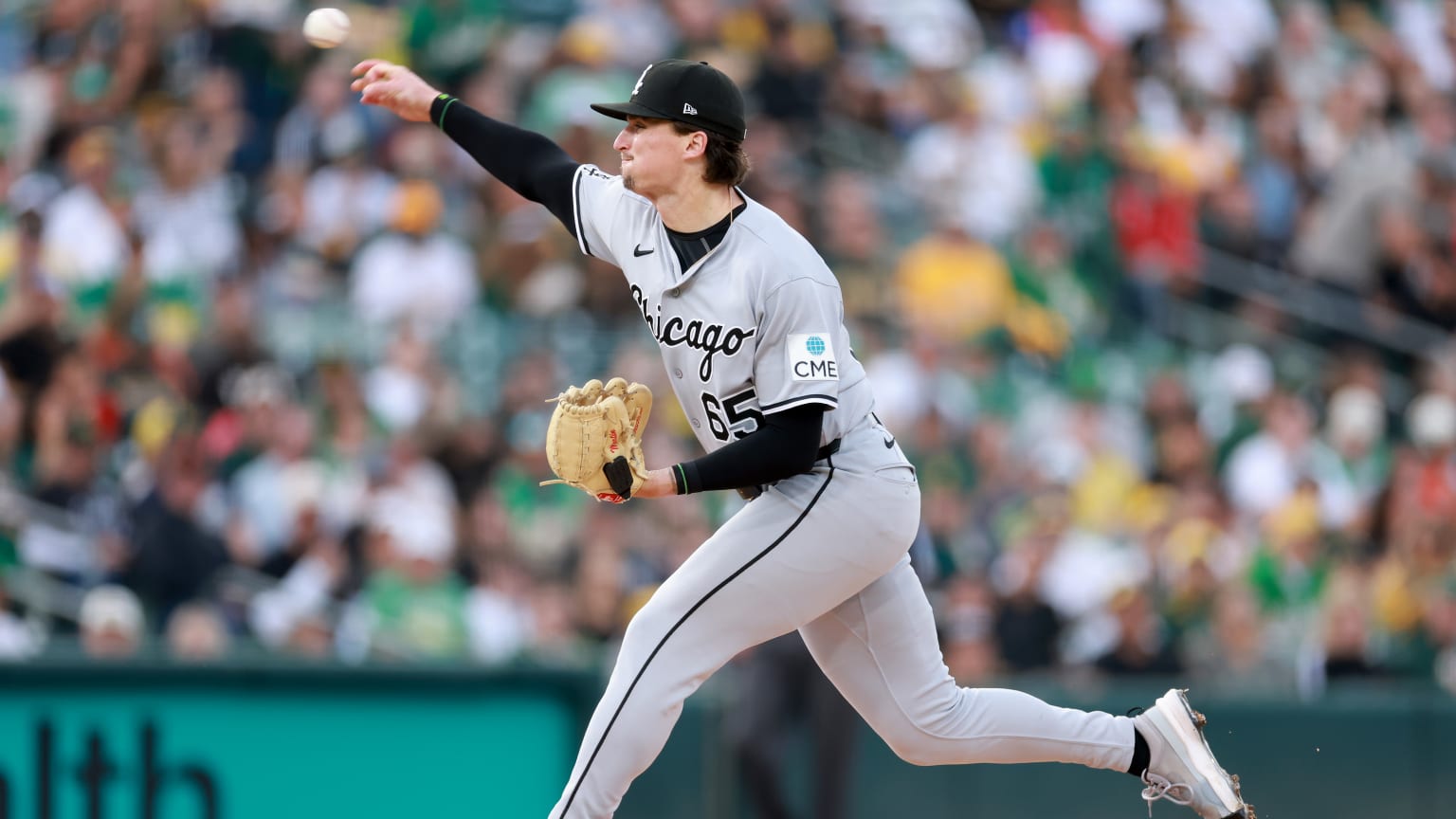
The White Sox won 84 games in 2026 and sneaked into the American League playoffs as the sixth seed. That would have sounded optimistic before the season, given how badly the franchise had struggled. Chicago then swept Houston in the Wild Card Series and briefly held a 2-0 advantage over Cleveland in the Division Series. Those achievements were real. So were the structural weaknesses visible under the celebration.
The team reached October without the predictable rhythm normally associated with a postseason rotation. Sean Burke shouldered much of the conventional starting responsibility while openers, bulk pitchers and the bullpen absorbed substantial stretches. Only twice in seven postseason games did Chicago begin with a traditional starter, according to contemporary reporting. A tactic can be effective in a short matchup and still be exceptionally demanding as a full-season operating system.
The 674 2/3 innings from starters is the clearest evidence of the workload imbalance. It is not an indictment of every pitcher who contributed; roles were deliberately fluid and different arms supplied outs in different ways. But every early hook creates consequences for the next game. A bullpen that has to cover the fourth through ninth innings repeatedly loses the freedom to choose its strongest matchups. A reliever who should be saved for a leverage moment may be needed merely to get through the sixth.
That is the first reason May’s reported contract makes sense even before assessing his ceiling. A pitcher who can take the ball every fifth day and deliver five or six competitive innings changes the scheduling burden across the roster. He can protect higher-leverage relievers, reduce emergency roster movement and help a young staff avoid alternating between short starts and all-hands nights. Chicago is not paying only for strikeouts; it is attempting to purchase a more manageable weekly pitching calendar.
General manager Chris Getz has discussed rotation help as a priority, and the club has several plausible candidates rather than a settled group of five. Burke has earned substantial consideration. Davis Martin, Anthony Kay and other veterans have roles to compete for. Grant Taylor is expected to shift from relief work toward starting. Prospects such as Noah Schultz offer upside but should not be treated as automatic 180-inning answers before they establish their major-league workloads.
GOATIFY
GOATIFY Baseball
The White Sox are building for a full season of baseball after a surprise October run.


White Baseball GOAT Sticker
A white baseball GOAT decal for your bottle, laptop or game-day gear.
Shop Now ↗

White Baseball GOAT Sweatshirt
Rep baseball’s greatest with a white GOAT graphic sweatshirt.
Shop Now ↗
White Baseball GOAT Dad Hat
A white baseball GOAT design for ballpark days and everyday fan style.
Shop Now ↗
Chicago also has to resist the temptation to rewrite the lesson of 2026 too aggressively. Bullpen flexibility was part of its success, not just a symptom of an incomplete rotation. The right adjustment is not to abandon the opener whenever it might help. It is to make that a tactical choice rather than the default response to missing conventional starters. If May supplies regular length, the White Sox can keep their creative options without being trapped by them.
May’s 4.70 ERA Doesn't Tell the Whole Pitching Story
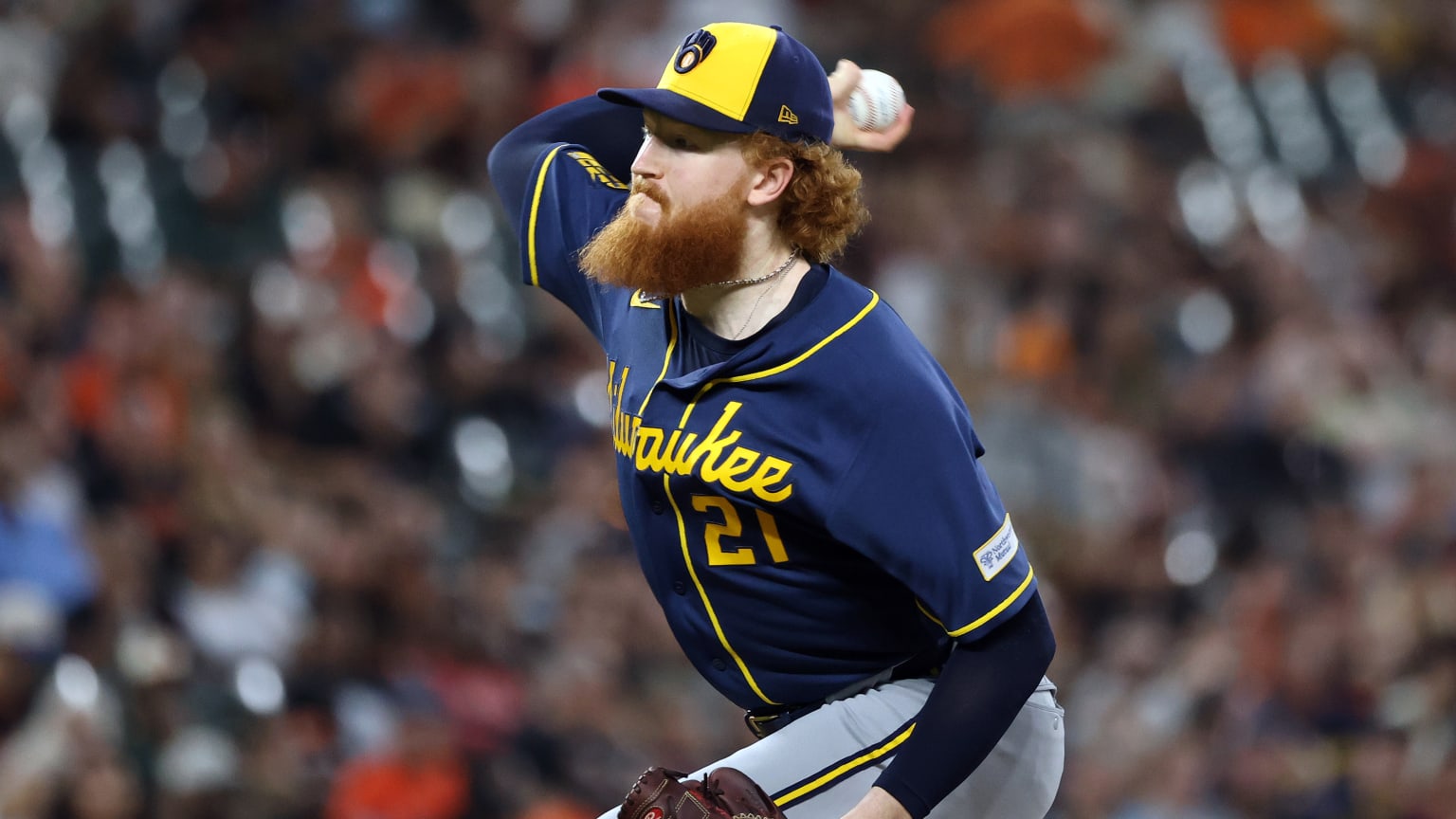
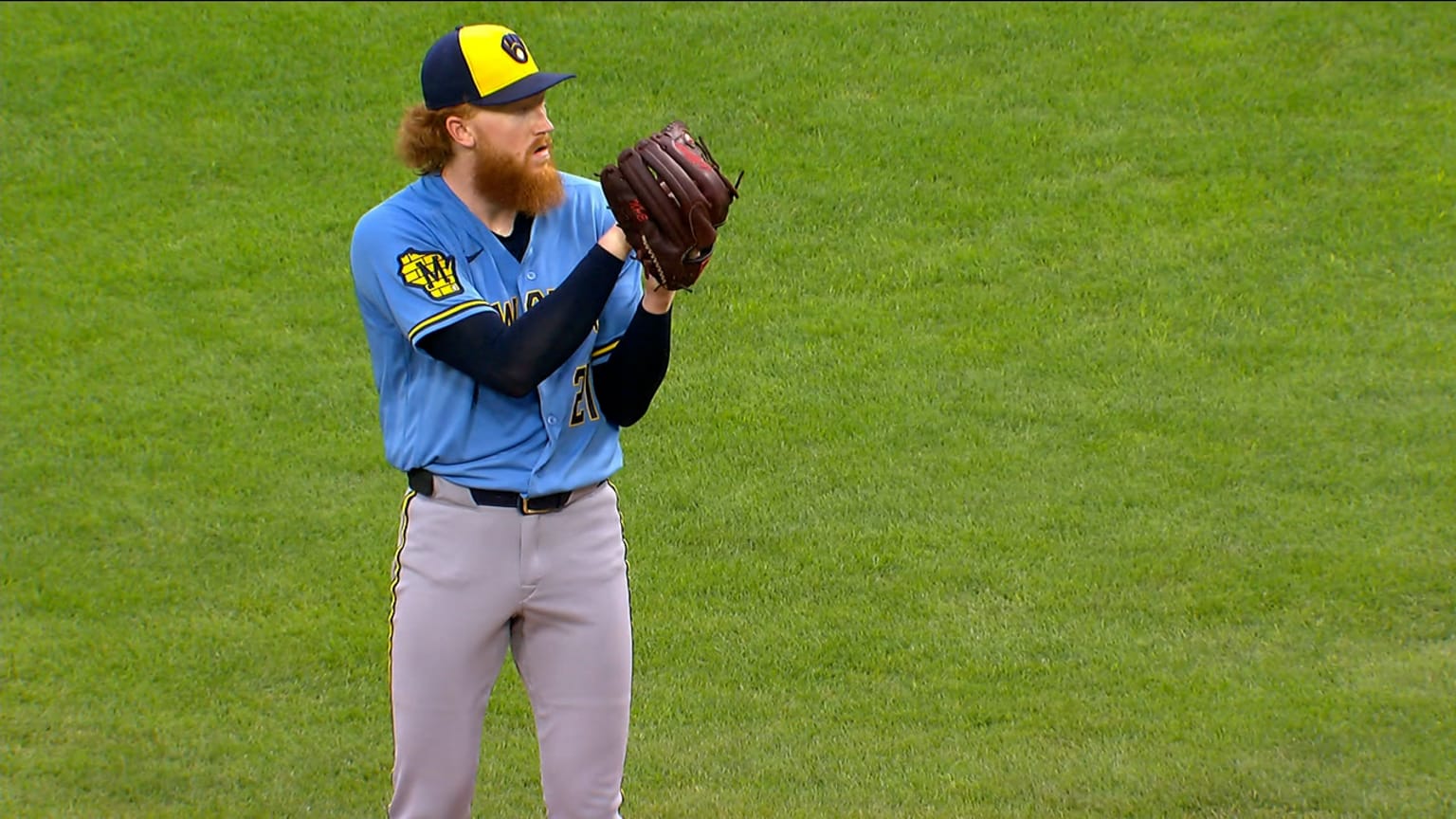
Dustin May’s 2026 statistical line offers two honest narratives. The unflattering one is that he finished 7-9 with a 4.70 ERA after 31 starts and 145 2/3 innings split between St. Louis and Milwaukee. Chicago is committing substantial money to someone whose recent run prevention was closer to a back-end starter than a frontline force. May did not suddenly become an ace after a midseason trade, either: his ten Brewers regular-season starts produced a 5.65 ERA.
The more encouraging story lives underneath those totals. May averaged 96.9 mph with his fastball, placing him near the top of the qualifying velocity distribution. His 3.63 fielding-independent pitching mark was materially better than his ERA, while his 4.50 expected ERA sat in between. Those numbers are not a promise of a breakout. They are evidence that the diagnosis is more complicated than simply declaring him an ineffective starter.
FIP uses strikeouts, walks and home runs to approximate outcomes a pitcher controls more directly. It can flag a gap between results and a pitcher’s component performance, but it does not erase everything missing from the formula. Contact management, sequencing, defense, parks and the specific quality of a pitcher’s pitches still matter. A club cannot deposit 3.63 into the standings. It has to decide which improvements are realistically available without compromising what already works.
May’s arsenal is part of the appeal. Hard sinkers and four-seamers put hitters under time pressure. Breaking pitches with substantial movement can create uncomfortable looks, especially when their speed and shape complement the fastball. The White Sox must work out which versions of those pitches were effective against different handedness groups, which combinations produced damaging contact, and whether changes in location rather than wholesale pitch design are most likely to help.
There is also an important distinction between stuff and command. A pitcher can make elite-looking pitches in isolation and still fall behind often enough to let hitters ignore his nastiest offerings. When that happens, a high-octane fastball becomes more predictable, the pitch count grows and five innings can feel like seven. Improving first-pitch strike quality, reducing avoidable walks and controlling the damage in fastball counts may be more useful than searching for another few tenths of velocity.
Milwaukee’s 2026 usage is a useful historical reference rather than an argument that he needs to be a reliever. May worked as both a starter and a bullpen option during the Brewers’ championship postseason run, recording a 5.73 ERA in five appearances, two of them starts. He contributed to a winning team without monopolizing its most important innings. Chicago’s problem is different: it needs routine starts in April and August as much as October flexibility.
One plausible good outcome is a mid-rotation contributor with stretches of higher-end performance when the breaking stuff lands and the fastball is located. A plausible disappointment is a pitcher whose radar-gun appeal repeatedly outruns the scoreboard. Both outcomes are compatible with the data today. The White Sox should be paying for the former possibility while planning a roster that can survive the latter.
The Real $52.5 Million Risk Is Whether Those Innings Repeat
It is tempting to frame May as a familiar high-upside reclamation project, but his recent workload deserves more attention than that label allows. He threw a then-career-high 132 1/3 innings across the Dodgers and Red Sox in 2025, then climbed to 145 2/3 innings in 2026. Those are two consecutive meaningful seasons after a stretch in which injuries repeatedly interrupted his progress. That is tangible evidence of improved availability, though not a medical guarantee.
GOATIFY
GOATIFY Baseball
For fans who love pitching, May's fastball is one part of the 2027 Chicago story.


Gold Baseball GOAT Sweatshirt
Rep baseball’s greatest with a gold GOAT graphic sweatshirt.
Shop Now ↗His earlier history cannot be waved away. May underwent significant elbow treatment and missed the entire 2024 season while recovering from another Tommy John procedure and a serious esophageal injury. In the years before the rebound, he struggled to accumulate even 50 innings in a season. The club’s medical staff will have considerably more information than the public, but no retrospective injury timeline can produce a certain projection for the next three years.
The financial commitment works out to an average of $17.5 million per season across the reported three-year term. This is not the price of a typical minor-league depth signing. It means Chicago has a real expectation that May will occupy a significant major-league role, even if the club does not need him to pitch like a Cy Young contender. The cost is also an opportunity cost: a guaranteed rotation contract consumes resources that could otherwise improve the outfield, the bullpen or another starting spot.
Consider two hypothetical seasons. In the first, May makes roughly thirty starts and delivers 155 to 165 innings of slightly-above-average pitching. Even without a spectacular ERA, that workload could transform how Will Venable deploys his staff by eliminating dozens of emergency middle innings. In the second, May throws well for stretches but misses extended time, leaving Chicago to reproduce last season’s bullpen juggling act. The difference between those scenarios is much larger than a few decimal points of ERA.
His 2026 performance does not resolve the durability question on its own. Pitching deep into games is different from merely being listed as the starter. If May averages fewer than five innings per outing, the White Sox still require frequent relief volume. Club officials should measure his value through starts completed, innings per start, recovery between turns, and the number of games in which the team reaches the late innings with its intended bullpen hierarchy intact.
The reported physical requirement also deserves precise language. The agreement is not evidence that every medical uncertainty has vanished. Nor should the existence of a physical be treated as a signal of an undisclosed problem; this is a routine stage of major-league contracting. Until the club announces the transaction, the sensible assessment remains conditional on its completion, not speculation about a medical outcome.
There is a baseball upside to taking the longer view. If May establishes one repeatable, healthy delivery and a dependable workload in the first season, Chicago still has two further years of control to capture a more polished version of the pitcher. At age 29, his window is not closed. The gamble is that a franchise with improving infrastructure can make progress accumulate rather than reset after every interruption.
Burke, Martin and Taylor Make This a 2027 Roster Decision
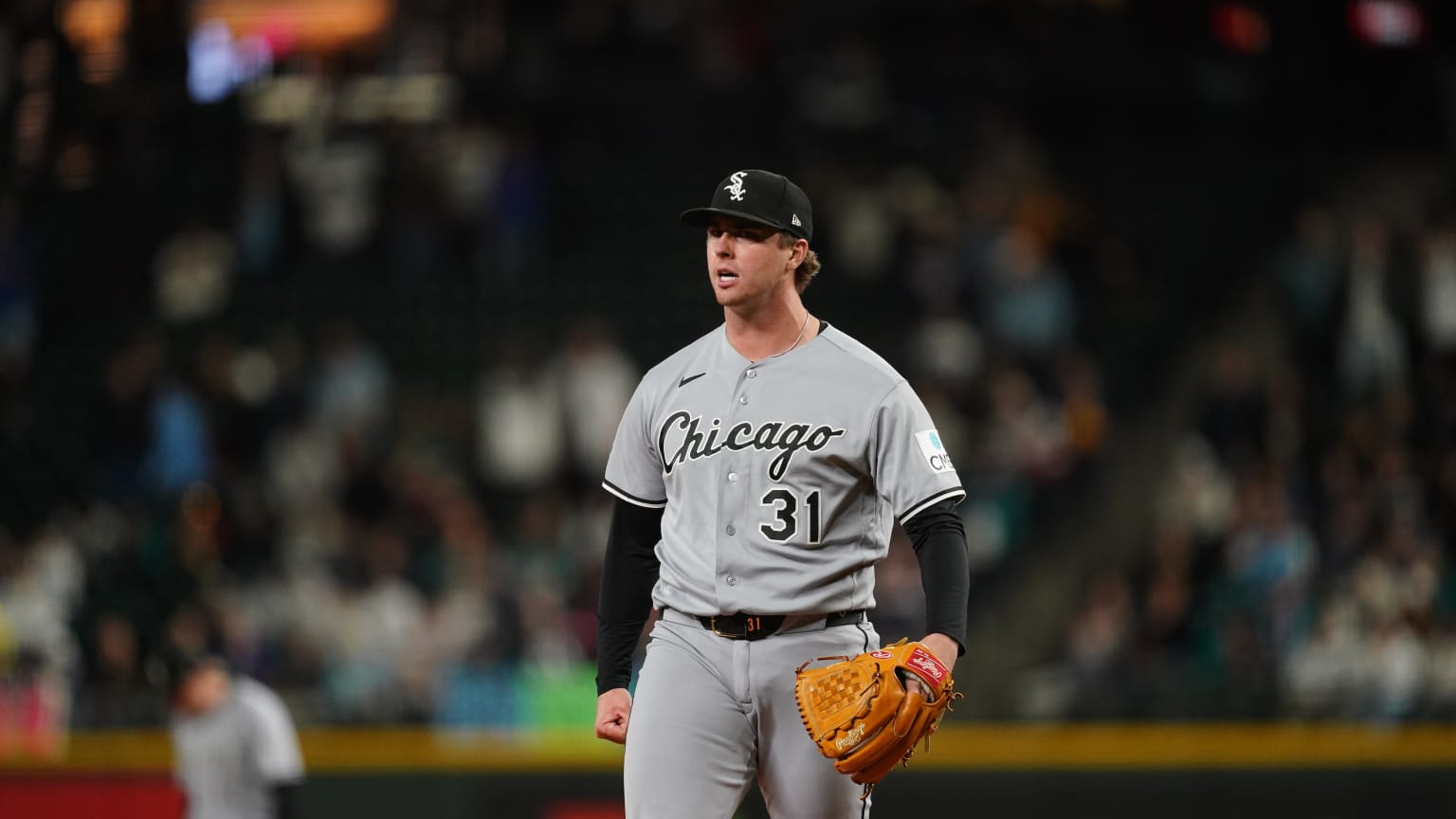
May is not being asked to rescue a rotation made up entirely of anonymous placeholders. Chicago has young arms, experienced alternatives and a better competitive baseline than it carried into 2026. The reason to buy an established starter is to make those pieces fit together in a way that does not require a bullpen emergency plan every third day. One additional dependable rotation slot can alter the assignment for several other pitchers.
Sean Burke has a strong claim to be part of the top group after serving as a conventional starter when Chicago’s postseason pitching plan became unusually fluid. Pairing Burke with May would offer two right-handed pitchers capable of shouldering weekly starts, though their roles and order need to be earned in spring training rather than declared from November headlines. Davis Martin is another contender, and Anthony Kay adds a different-handed option.
GOATIFY
GOATIFY Baseball
Baseball is a long season, and availability can be as valuable as a spectacular pitch.


Gold Baseball GOAT Sticker
A gold baseball GOAT decal for your bottle, laptop or game-day gear.
Shop Now ↗White Baseball GOAT Dad Hat
A white baseball GOAT design for ballpark days and everyday fan style.
Shop Now ↗
Grant Taylor is a particularly important variable. His power arsenal was useful in relief, but Chicago intends to give him a chance to stretch out as a starter in 2027. That transition involves more than moving the same pitch mix into the first inning. A starter must face hitters repeatedly, control workload across an entire game, recover for the next turn and keep usable secondary offerings when the fastball is not perfectly sharp. A stable May can create breathing room while Taylor develops those demands.
Veteran Luis Castillo is another name in the picture, but his late-2026 performance and shoulder-related absence make automatic projections unwise. Contemporary reporting described a difficult finish after his move from Seattle. His presence is a reason to preserve depth, not to assume every established salary guarantees a productive Opening Day role. The same principle applies to prospects: Noah Schultz and David Sandlin are options, not guaranteed solutions before training camp establishes readiness.
That leaves Getz with a choice about how aggressively to keep shopping. If the May agreement becomes official, the front office could still add another veteran pitcher and make competition the spring objective. Alternatively it could prioritize complementary outfield or bullpen work, trusting May to reduce the pressure on existing arms. Those are resource-allocation decisions that should be judged as a group. A single attractive signing does not close every gap from the previous season.
The postseason comparison makes the stakes vivid. In 2026, Chicago could change opponents’ looks with a sequence of relievers and survive tight games with clever matchups. In 2027, opponents will have a better scouting book on the club, and the roster will carry the expectation of another playoff push. The White Sox need the freedom to pick the best matchup strategy for a particular series, rather than discovering in September that the pitching staff is exhausted by routine baseball.
Success should therefore have several measures. Did May reduce the number of bullpen-heavy games? Did the rotation cover materially more innings than 674 2/3? Did the staff avoid overexposing high-leverage arms before October? Did Taylor’s transition progress without being rushed? Did Chicago earn another meaningful chance at the division? Those questions are a more serious assessment than whether the newest pitcher immediately matches the most optimistic radar-gun projections.
If all the moving pieces click, May becomes the stabilizer who lets the White Sox use flexibility as a weapon. If they do not, the front office will have paid starter money without solving the fundamental innings problem. Either way, the contract says something important about Chicago’s posture: a surprising playoff berth is no longer enough. The organization is constructing a team it expects to win with, rather than simply a team that could surprise again.
Chicago’s reported agreement with Dustin May makes more sense as a rotation-building decision than as a headline about one pitcher’s 4.70 ERA. The White Sox already demonstrated they can win an October series with a resourceful staff. The next challenge is surviving a full season with enough healthy, usable starting innings to preserve those tactical advantages for the games that matter most.
May’s high-end velocity, encouraging peripheral numbers and consecutive workload gains give the club reasons to believe in a step forward. His uneven 2026 results, difficult medical history and lack of a sustained frontline-starter track record keep that from being a sure thing. The deal remains subject to the reported physical and formal confirmation.
For a team that squeezed 84 wins out of 2026 while leaning so hard on unconventional pitching, the bet is ultimately straightforward: a more predictable fifth-day starter could be worth more to the White Sox than a highlight-reel arm alone. Whether $52.5 million buys that predictability will define the signing far more than the first radar-gun reading in spring training.
GOATIFY
GOATIFY Baseball
Explore GOATIFY baseball shirts, hoodies, hats and stickers for MLB fans.

Gold Baseball GOAT Dad Hat
A gold baseball GOAT design for ballpark days and everyday fan style.
Shop Now ↗
White Baseball GOAT Sticker
A white baseball GOAT decal for your bottle, laptop or game-day gear.
Shop Now ↗White Baseball GOAT Sweatshirt
Rep baseball’s greatest with a white GOAT graphic sweatshirt.
Shop Now ↗


















