

The 10 Worst San Francisco Giants Trades, Ranked
GOATIFYSan Francisco's baseball history is full of great trades, but the painful ones have a special talent for lasting decades. A player who looked expendable becomes an All-Star somewhere else. A prized veteran arrives for a pennant chase, leaves months later, and the prospect he cost grows into a cornerstone. Sometimes the failure was foreseeable. Sometimes it was only obvious after a young player found the right setting.
This is a ranking of the 10 worst trades made by the San Francisco Giants, from the franchise's 1958 arrival in California onward. The earlier New York Giants belong to the same continuous franchise, but are outside this particular San Francisco-era list. Each deal is judged on the value surrendered, production returned, years of control lost, circumstances at the time and whether a credible alternative existed. A failed bet is not automatically a foolish bet, and a future star is not proof a front office could have predicted every development.
We start with the defensible gambles and end with the deals where the mismatch in long-term value became impossible to ignore.
Nos. 10–9: The rotation gamble and the discarded power bat

10. Matt Duffy, Lucius Fox and Michael Santos to Tampa Bay for Matt Moore (2016). San Francisco sought a controllable left-handed starter for a playoff chase and traded third baseman Matt Duffy plus prospects Lucius Fox and Michael Santos. The idea had logic: reliable starting innings are expensive, and the 2016 Giants needed more pitching certainty. Moore even delivered memorable performances, including a near-no-hitter against the Dodgers and valuable postseason innings. That is why this deal belongs at the back of the ranking, not beside the outright disasters.
But the cost was not a spare part. Duffy had already shown he could handle everyday third-base work in San Francisco. When a club packages an established contributor and two young players, the incoming starter must do more than offer a few electric highlights. Moore's later inconsistency prevented this from becoming the sustained rotation solution San Francisco hoped to buy. Fox and Santos did not turn into the kind of superstars who alone define a franchise-changing loss, which is another reason to keep the verdict measured.
The lesson is about price relative to certainty. A team trying to win in October can justifiably pay for pitching; it still needs to understand whether it is buying dependable production or a volatile arm with an attractive ceiling. In hindsight San Francisco paid a substantial package for too little durable stability, even if the original baseball question was real.
9. Jack Clark to St. Louis for David Green, Dave LaPoint, Gary Rajsich and José Uribe (1985). Clark had supplied the Giants with middle-of-the-order power for years, but his final San Francisco season was limited by a knee problem. The trade sent him to St. Louis for a four-player return. That depth looked appealing for a team needing more than one fix; replacing an established slugger with several usable players is a common rebuilding calculation.
What happened made the arithmetic ugly. Clark became a central bat for the Cardinals' 1985 National League pennant winners and drove another formidable St. Louis attack in 1987. San Francisco's return never reproduced that offensive impact. Uribe contributed genuine value at shortstop, so calling this a four-player haul of absolutely nothing would be inaccurate. Yet none compensated for the loss of a hitter capable of changing a postseason series.
There is a caveat: an injury-affected 1984 made Clark's future less secure than the hindsight version suggests. The trade still illustrates a recurring Giants mistake on this list: dividing one elite skill into multiple modest assets and finding that the total is worth less than the original star.
GOATIFY
GOATIFY Baseball
The right veteran can fill a hole; the wrong trade can create another. Explore GOATIFY baseball favorites for fans who remember every roster gamble.


Gold Baseball GOAT Dad Hat
A gold baseball GOAT design for ballpark days and everyday fan style.
Shop Now ↗


White Baseball GOAT Sticker
A white baseball GOAT decal for your bottle, laptop or game-day gear.
Shop Now ↗Nos. 8–7: Two short-term fixes with painful long-term receipts

8. Luis Castillo and Kendry Flores to Miami for Casey McGehee (2014). Having lost Pablo Sandoval, the defending champions needed a third baseman and acquired McGehee, who had just enjoyed a comeback year in Miami. The announced price was two minor-league right-handers, Castillo and Flores. On paper it was a practical solution: move prospect pitching depth for a veteran who had put the ball in play and driven in runs.
In San Francisco the answer vanished almost as quickly as it appeared. McGehee struggled in 2015 and was designated for assignment, finishing with only 49 Giants games. Castillo's path was far more complicated than a simple direct trade to stardom: Miami subsequently moved him, and his major-league breakout came later with Cincinnati. He eventually became an All-Star starter. That success increases the long-view opportunity cost, but nobody should pretend every stop in Castillo's developmental chain was inevitable when San Francisco traded him.
The failure here is not that the Giants should have predicted a future award precisely. It is that they spent two pitching prospects to solve a lineup problem and barely received half a season of usable production. A modest veteran acquisition can be expensive when the veteran stops contributing before the prospect has even reached his prime.
7. Adam Duvall and Keury Mella to Cincinnati for Mike Leake (2015). This deadline trade followed the familiar script: the Giants wanted a starter for the stretch run, while the Reds were collecting younger talent. Leake was a legitimate big-league pitcher, and San Francisco did not trade for a mere reputation. But the club received nine starts from him in 2015, and he went 2–5 with a 4.07 ERA before leaving for St. Louis in free agency.
Duvall supplied the alternate future almost immediately. He hit 33 home runs with 103 RBIs for Cincinnati in 2016 and earned an All-Star selection. He was not a sure thing when the Giants dealt him; power in the Pacific Coast League comes with questions, and his major-league résumé was still small. Even granting that uncertainty, this is precisely the kind of exchange that can distort a team's competitive window. The acquiring club gets a brief rental. The selling club gets years of production.
What separates No. 7 from No. 8 is the directness of the contrast. Leake was a temporary solution who did not produce a postseason payoff in San Francisco, while Duvall promptly became a credible everyday power source. A win-now club has to take risks; it also has to be prepared to explain why the chosen rental was worth the upside sacrificed.
Nos. 6–5: A future MVP and an All-Star outfielder escape
6. Orlando Cepeda to St. Louis for Ray Sadecki (1966). The Giants were managing a genuine roster dilemma, not mindlessly discarding a star. Cepeda and Willie McCovey were powerful first-base options, and Cepeda had dealt with knee trouble. Pitching help made sense for a talented team with championship ambitions. San Francisco sent Cepeda to the Cardinals and received left-hander Ray Sadecki, a decision that looked easier when judged as an immediate fit than as a transfer of exceptional hitting talent.
The next full season became a devastating counterargument. Cepeda won the 1967 National League Most Valuable Player award and helped St. Louis win the World Series. Sadecki, meanwhile, never delivered anything approaching that level of value for San Francisco. He had useful periods in his career, so this was not literally star-for-nobody, but the gap at the very top was enormous.
The most responsible criticism avoids pretending the Giants had no reasons to move Cepeda. Injuries, positional overlap and the desire for pitching were real constraints. The process failure was misjudging how much a player with an MVP ceiling should command in return. If the only available pitching package could not reasonably match that ceiling, waiting or restructuring the roster might have been preferable.
GOATIFY
GOATIFY Baseball
Even a short-term rental has a long-term price. Browse GOATIFY baseball shirts and fan gear inspired by life at the ballpark.

White Baseball GOAT Dad Hat
A white baseball GOAT design for ballpark days and everyday fan style.
Shop Now ↗


White Baseball GOAT Sweatshirt
Rep baseball’s greatest with a white GOAT graphic sweatshirt.
Shop Now ↗
Gold Baseball GOAT Sticker
A gold baseball GOAT decal for your bottle, laptop or game-day gear.
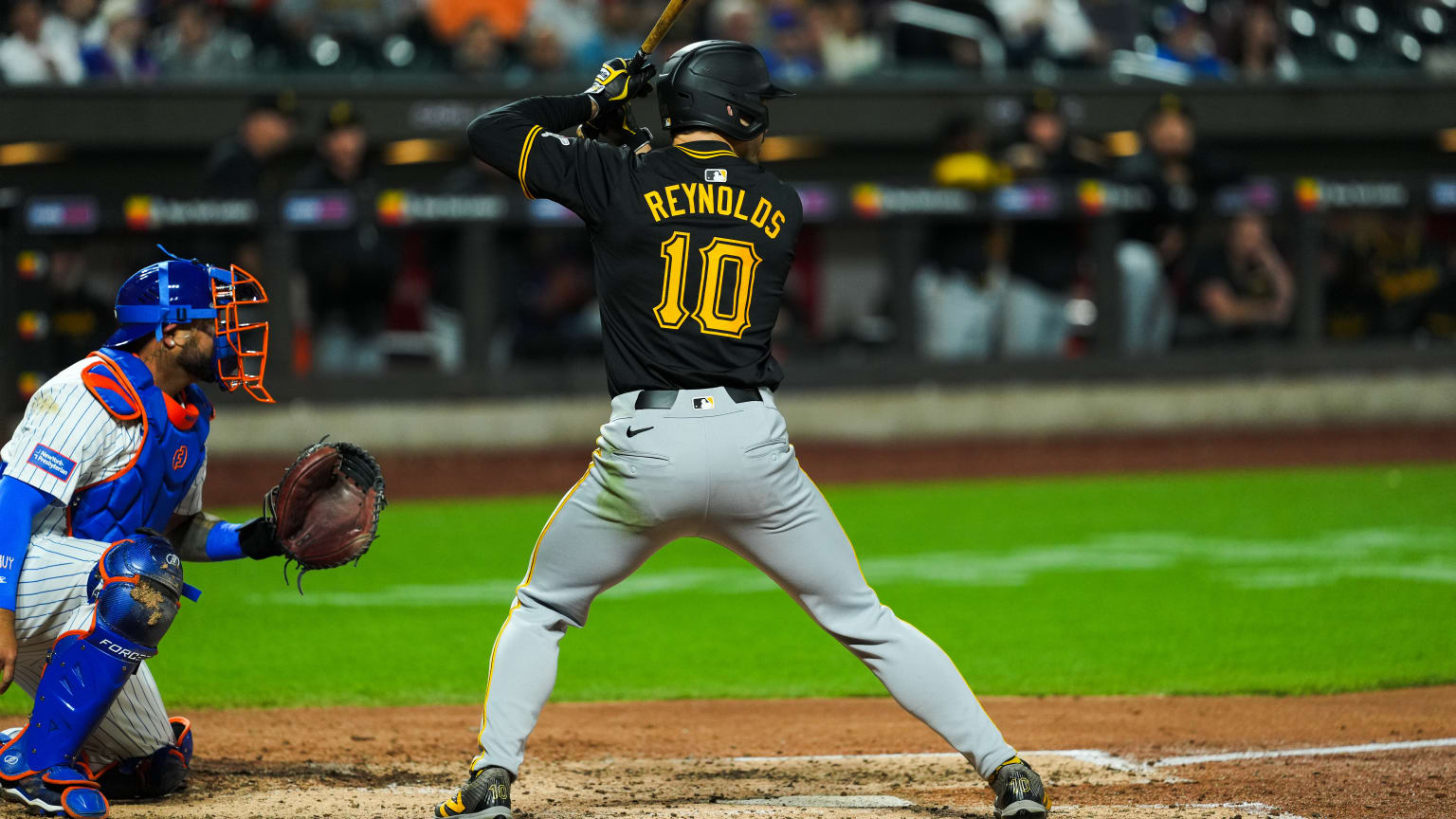
Shop Now ↗5. Bryan Reynolds and Kyle Crick, plus international bonus money, to Pittsburgh for Andrew McCutchen (2018). McCutchen was a former MVP and five-time All-Star when San Francisco acquired him. The club desperately needed offense after a difficult 2017. In that context, bringing in a proven name was not irrational; he contributed during his brief Giants stint and remained a respected player.
The exchange became costly because the club was not buying a long contract. McCutchen played 130 games for San Francisco in 2018, then was dealt to the Yankees before September. Pittsburgh received Crick, prospect outfielder Reynolds and international signing-bonus space. Reynolds developed into a long-term switch-hitting fixture and an All-Star for the Pirates. The two sides effectively exchanged future seasons of everyday outfield value for an expensive attempt to extend a fading Giants window.
There is a useful distinction between McCutchen's talent and the trade's outcome. He was a good major-league hitter, not a bust who forgot how to play. The mistake was the context: spending a young hitter with years of control on a veteran whose contract offered no long-term answer. A club should measure a deal by what it can realistically win during the acquired player's time, not by how famous the player was on announcement day.
Nos. 4–3: A two-month rental and a future Cy Young winner

4. Zack Wheeler to the Mets for Carlos Beltrán (2011). San Francisco was defending a World Series title and badly needed another impact hitter. Beltrán was a celebrated switch-hitter and an obvious potential lineup upgrade, so the logic of the acquisition is easy to reconstruct. The Giants surrendered their highly regarded pitching prospect Zack Wheeler, and New York sent Beltrán with cash to help cover his remaining salary.
The problem was how quickly the leverage evaporated. Beltrán's offensive ability remained evident, but San Francisco missed the postseason in 2011 and he left in free agency. Wheeler needed developmental time and fought through injury interruptions in subsequent years, yet ultimately matured into a top-level starter. That was the upside the Giants gave away in exchange for a short rental with no playoff appearance to justify it.
It is unfair to argue that every prospect who eventually becomes a star should have been untouchable. Some deadlines are worth paying for, especially when a roster can realistically win another championship. What this deal shows is the danger of pursuing the name over the expected marginal wins. A two-month player has to help an extraordinary amount to repay a pitcher with several seasons of club control.
3. Gaylord Perry and Frank Duffy to Cleveland for Sam McDowell (1971). This deal featured heavyweight pitching talent on both sides. McDowell had been a formidable strikeout artist, and the Giants had reasonable grounds to hope a change could unlock more of the same. But Perry was already an established star with a deep Giants résumé, and adding Duffy only strengthened the package going out.
Perry made the trade look disastrous almost immediately. In 1972, his first season with Cleveland, he won the American League Cy Young Award. He later captured the National League Cy Young Award in 1978 with San Diego and ultimately entered the Hall of Fame. McDowell's Giants tenure did not remotely match Perry's subsequent career. Comparing the post-trade paths is not a close judgment.
The surprising part is how different this error is from a failed prospect trade. San Francisco was not guessing whether a minor leaguer might someday master major-league hitters. It already possessed a proven ace and exchanged him for another established arm whose effectiveness was less durable. The outcome reinforces an old roster-building lesson: when the player you trade away already performs at an elite level, a tempting reputation on the other side is not enough. You have to win the projection, not merely the press conference.
GOATIFY
GOATIFY Baseball
A former MVP can improve a lineup without justifying the prospect cost. Find game-day baseball apparel and accessories at GOATIFY.


White Baseball GOAT Sticker
A white baseball GOAT decal for your bottle, laptop or game-day gear.
Shop Now ↗White Baseball GOAT Sweatshirt
Rep baseball’s greatest with a white GOAT graphic sweatshirt.
Shop Now ↗Nos. 2–1: The MVP who got away and the Nathan–Liriano disaster

2. George Foster to Cincinnati for Frank Duffy and Vern Geishert (1971). Foster was still a developing outfielder when San Francisco traded him, which is essential to understanding the decision fairly. The Giants did not send away an established Most Valuable Player. They sent away a younger player whose future had not yet crystallized and received infielder Frank Duffy plus pitcher Vern Geishert in return. At that moment it looked like an attempt to adjust roster depth, not a headline-grabbing blockbuster.
Cincinnati discovered what the Giants would never enjoy. Foster grew into a cornerstone of the Big Red Machine, then produced his historic 1977 season: 52 home runs, 149 RBIs and the National League MVP award. He was a central power threat on championship-level Reds teams. The Giants' return had no comparable offensive ceiling or organizational importance.
This is not proof that Foster would have put up exactly the same numbers had he stayed in San Francisco. Playing time, coaches, roster construction and park conditions influence careers. The robust criticism is narrower and stronger: San Francisco surrendered a young hitter with immense latent ability for a package that never came close to the value Foster eventually created. Even allowing for development uncertainty, the exchange ranks among the franchise's most painful lost opportunities.
1. Joe Nathan, Francisco Liriano and Boof Bonser to Minnesota for A.J. Pierzynski (2003). The Giants were trying to address a real position. Pierzynski was an established catcher, and an experienced everyday backstop can stabilize a contending roster. But the trade required three pitchers: Nathan, Liriano and Bonser. It was not a single speculative minor leaguer swapped for a proven starter; it was a portfolio of pitching upside surrendered to solve one immediate need.
The return was brutally lopsided. Pierzynski spent one disappointing season in San Francisco before leaving. Nathan became one of the American League's defining closers in Minnesota, earning six All-Star selections and accumulating years of high-leverage relief value. Liriano brought his own stretches of excellent starting pitching, including an electric early peak, despite injuries and inconsistency. Bonser contributed as a major-league starter and provided further depth on the other side of the ledger.
It is the combination that puts this deal above the Foster mistake. San Francisco lost multiple pitchers with legitimate major-league value while receiving almost nothing lasting from the designated solution. Nathan alone would make the comparison painful. Liriano turned an uncomfortable trade into a cautionary tale about paying for certainty at one position by liquidating too much affordable pitching.
The strongest indictment is not that a front office should never trade prospects for a catcher. It is that three valuable arms were the wrong price for the particular upgrade the Giants actually secured. Good roster construction treats pitching depth as an asset, not spare change, especially when the incoming player's control horizon is short.
The worst Giants trades share a pattern, but not a single cause. Cepeda and Perry were established talent traded for a positional or pitching fit. Foster, Wheeler, Reynolds and Castillo were bets on prospects whose future value proved much higher than the return. Leake, McCutchen and Beltrán illustrate how narrow the payoff can be for an expensive rental. The Pierzynski exchange remains the clearest example of several years of pitching value sacrificed for one disappointing season.
There is one more important boundary: this is the San Francisco era, beginning in 1958. The franchise's New York history is real and continuous, but a comparison limited to the Bay Area should not quietly mix in earlier deals just to fill a list. Nor should every trade that surprised fans qualify as bad. Moving Matt Williams to Cleveland for Jeff Kent, for example, helped San Francisco rather than harming it.
The question that matters when a trade is announced is not who won the introduction ceremony. It is what the organization has bought, how long it gets to keep it, and which future options it has permanently surrendered.
GOATIFY
GOATIFY Baseball
Explore GOATIFY baseball shirts, hoodies, hats and stickers for fans who know their franchise history.

Gold Baseball GOAT Sweatshirt
Rep baseball’s greatest with a gold GOAT graphic sweatshirt.
Shop Now ↗
White Baseball GOAT Dad Hat
A white baseball GOAT design for ballpark days and everyday fan style.
Shop Now ↗


















