

Canelo Arrives in Riyadh With Usyk — But Fight Week Has Two Tests Left
GOATIFYCanelo Alvarez has made it to Riyadh. That is more consequential than an ordinary fight-week arrival. The 36-year-old Mexican star landed ahead of his October 31 challenge to WBC super-middleweight champion Christian Mbilli, with heavyweight champion Oleksandr Usyk accompanying him after their time at a training base in Spain. The scene of a champion walking into his hotel, welcomed by supporters and Mexican music, gave the promotion the first tangible evidence that its troubled final week is moving forward.
Yet arriving is not the same as staging a ten-fight event. Recent attacks on Saudi infrastructure have complicated travel and forced other sporting fixtures to reconsider their plans. Canelo is in the country and says he is ready; the harder questions concern the remaining fighters, officials, broadcasters and the competitive challenge posed by an unbeaten champion. The bout is still scheduled for Saturday, but the stakes extend well beyond whether the headline attraction can make his ring walk.
Canelo's arrival turns a promise into a fight-week reality
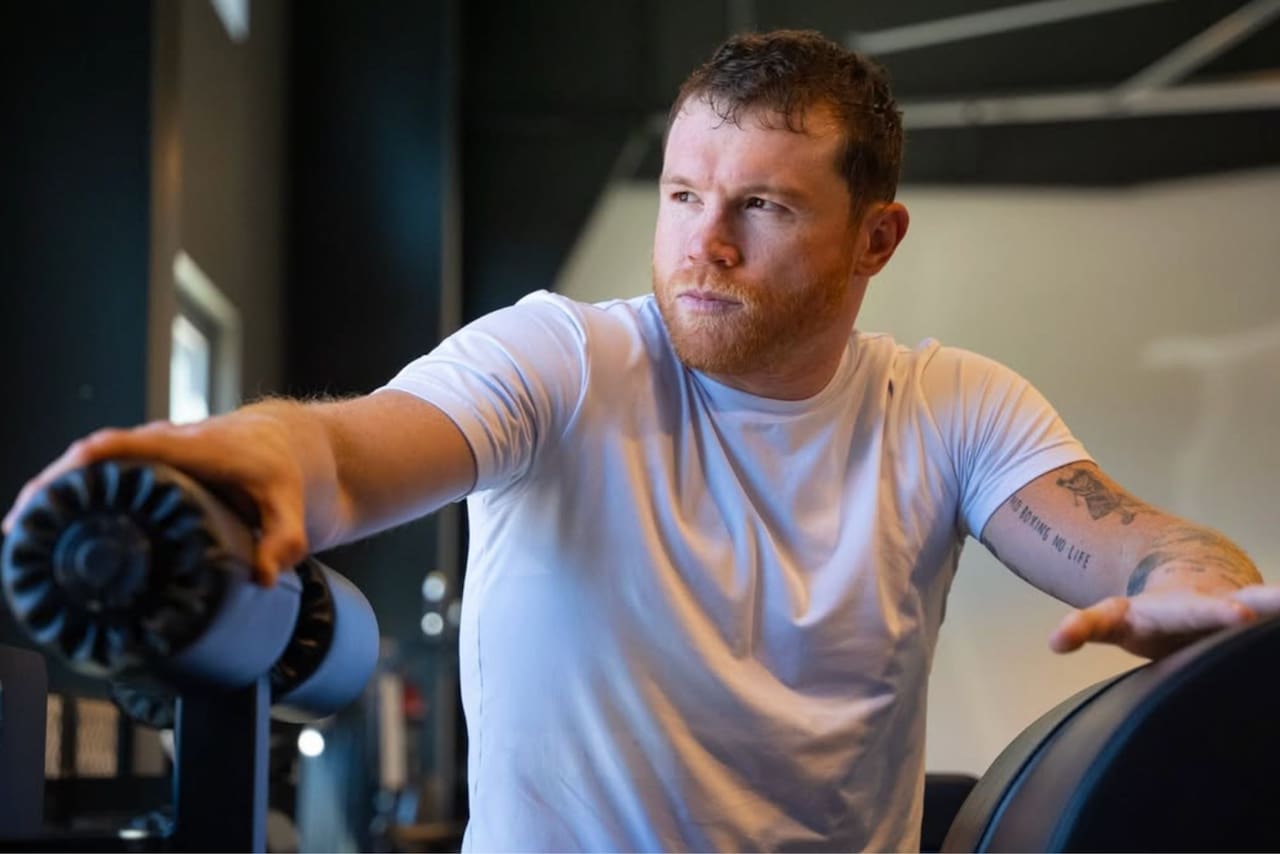
The latest change is simple and visible: Alvarez is physically in the host city. Promoter Turki Alalshikh shared footage of his arrival, and the Mexican fighter received a welcome from supporters at his hotel. His appearance came before the advertised sequence of public fight-week events, which includes promotional arrivals, workouts, a press conference and Friday's weigh-in. None of those appearances wins a round, but they matter to a show whose location has faced scrutiny for weeks.
Earlier in October, the promoter said Alvarez had assured him he would still travel to Saudi Arabia despite the security situation. At that point the commitment was a statement about intentions. The arrival turns it into a completed journey, although it does not settle what happens to every other person required to stage the event. A boxing card needs two healthy opponents, an approved venue, officials and an operational broadcast, not just a marquee name in a hotel lobby.
For Alvarez the personal meaning is clear. He has not boxed since a unanimous-decision defeat to Terence Crawford in September 2025 ended his latest reign at 168 pounds. His record stands at 63 wins, three defeats and two draws, with 39 knockouts. At 36, he is pursuing a championship rather than an easy exhibition, and he is returning from a longer competitive break than his usual rhythm allowed.
His first Riyadh appearance, a decision victory over William Scull in May 2025, established that he could win there. Saturday would ask a different question: can he reclaim a major title against a champion whose strengths are built around sustained pressure? The ceremonial welcome has already happened. The actual comeback remains to be earned over twelve scheduled rounds.
The early arrival is therefore best understood as one problem solved, not the whole promotion saved. It reassures fans that Alvarez intends to fight, and it gives his team several days to settle into the venue and schedule. It also puts the focus back where a sporting contest ultimately belongs: on preparation, execution and the opponent waiting across the ring.

Usyk's Spain camp gave Canelo a different kind of final preparation

Alvarez did not prepare for this return by following his familiar routine unchanged. His team, led by Eddy Reynoso, based much of the final camp in Spain, using facilities associated with heavyweight champion Oleksandr Usyk. The two fighters spent time together, and Usyk then travelled to Riyadh alongside the Mexican. Their partnership has become one of the most visible details of the buildup.
The attraction is not that a super-middleweight can suddenly fight like a heavyweight. Usyk's reputation rests on conditioning, movement, distance management and the ability to maintain technical discipline through demanding rounds. Those are qualities any boxer can study, even if the mechanics and physical demands differ sharply across divisions. Alvarez has said he valued the camp's mentality and the opportunity to learn from people who have prepared successfully for the sport's biggest nights.
Spain also offered a practical scheduling advantage. Training in a European time zone put Alvarez closer to Riyadh's clock than a camp based in North America would have. His earlier Saudi experience involved an unusual local start time designed around international broadcasting. Adjusting sleep, recovery, meals and training hours can be as important as an extra hard session when a fight is held thousands of miles from a boxer's normal base.
The Crawford defeat supplies the psychological backdrop. Alvarez has acknowledged that his focus was not where he wanted it during that fight week. That admission does not prove one factor caused the loss, and the opponent's performance deserves full credit. But it helps explain why a changed environment, a longer reset and a more deliberate final schedule appealed to a veteran who has spent two decades in professional boxing.
Whether the collaboration changes the result is unknowable until the fight. Mbilli will not give Alvarez credit for running beside Usyk or arriving early. The meaningful evidence will be whether Canelo can maintain his defensive shape, punch selection and concentration while an aggressive champion tries to make every round uncomfortable. Camp stories are interesting; sustained performance is the test.
Mbilli is the champion, not a supporting character in Canelo's comeback
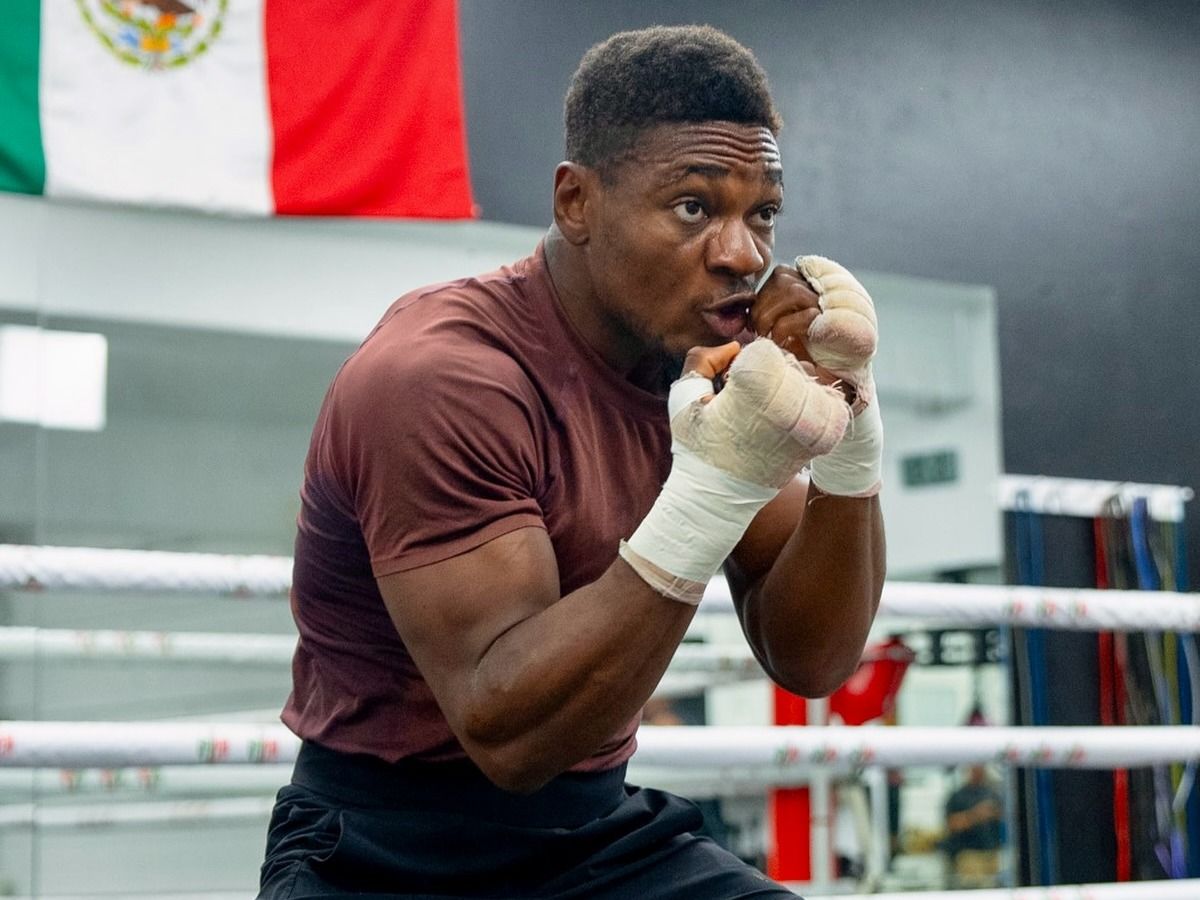
The promotional spotlight belongs to Alvarez, but the belt belongs to Christian Mbilli. The Cameroon-born fighter based in Canada enters the matchup with 29 wins, no losses and one draw, including 24 knockouts. He became the full WBC super-middleweight champion after Crawford retired and the championship picture was reorganized. Saturday is his opportunity to establish himself as more than the man holding a title while a famous challenger returns.
Mbilli's reputation comes from volume and forward pressure. He is comfortable making opponents work repeatedly, forcing exchanges and turning quiet stretches into physically demanding rounds. Against a counterpuncher such as Alvarez, that style carries both opportunity and danger. The more often Mbilli closes distance, the more chances he creates to score; the more predictable those entries become, the more opportunities Alvarez may have to punish them.
The champion's most recent appearance also deserves context. His draw with Lester Martinez on the September 2025 Alvarez-Crawford card showed that a strong opponent could disrupt his winning run without beating him. It did not erase his record or the legitimacy of his belt. It did underline that high-level pressure boxing is not invulnerable, particularly when an opponent can interrupt the rhythm and respond with accurate counters.
Alvarez has built much of his best work on defensive positioning, body punching and finding hard, clean shots while rivals are moving toward him. The obvious route is to make Mbilli pay for entries, then prevent the challenger-turned-champion from setting a relentless pace. But age, a lengthy layoff and the physical intensity of Mbilli's attacks introduce uncertainty. Canelo cannot rely on his reputation to slow a fighter who believes this is his defining chance.
Mbilli has said he must beat Alvarez to prove he is the division's leading man. That is not merely a promotional slogan: a win over a four-division champion would reshape his career overnight. For Alvarez, a victory would reclaim the WBC belt and provide an answer after the Crawford defeat. For both men, the first several rounds should reveal whether the contest follows the veteran's measured rhythm or the champion's insistence on constant work.

Riyadh's wider travel problem remains the unfinished fight-week story

The most important uncertainty now sits outside the ropes. Missile and drone attacks have affected Saudi Arabia in recent weeks, including strikes on Riyadh's international airport. Saudi authorities announced a partial reopening of the airport, but warnings and disrupted airline schedules continued. A functioning terminal is not the same thing as normal flight availability for every fighter, trainer, official or production employee travelling from abroad.
That distinction matters on a card advertised as Mexico versus the World. Several championship fights are scheduled below the main event, including Lindolfo Delgado against Arthur Biyarslanov for a vacant junior-welterweight title. Trainer Robert Garcia publicly described difficulty obtaining travel information for Delgado as fight week approached. The concern is logistical rather than competitive: an athlete can be fully prepared to box and still be unable to reach the venue on schedule.
Reports have also suggested the international broadcast could use a remote commentary arrangement rather than a full ringside team. Such planning would be an adaptation, not proof that the fight is cancelled, and an unconfirmed production plan should not be presented as final. Likewise, the WBC's leadership has indicated an intention to attend because referees, judges and other officials will be working the event. The presence of those officials is an essential operational requirement, not a ceremonial detail.
Saudi organizers have maintained that the October 31 show remains on the calendar even while other sporting events have been delayed. That is the confirmed position at the time of writing. It would be misleading to describe the entire promotion as secure simply because Alvarez arrived, just as it would be misleading to predict cancellation without an official decision. The appropriate question is whether every critical participant can travel, clear the necessary procedures and work safely.
The next public checkpoints are the scheduled media events, medical and regulatory steps, and Friday's weigh-in. Each completed step will reduce uncertainty, but none can remove the need to monitor the situation through fight night. Boxing's appeal is built on controlled risk between two consenting athletes in a ring. The people arranging the event must separately manage the risks that have nothing to do with punches.
Alvarez's arrival alongside Usyk is a genuine development: the sport's biggest attraction has reached Riyadh, and his title challenge against Mbilli is still scheduled for October 31. The Spain camp and the veteran's renewed focus provide an intriguing sporting subplot, but they do not change the fact that an unbeaten, high-output champion stands between Canelo and the WBC belt.
The week now has two parallel tests. One is inside the ring, where Mbilli's pressure will expose whether Alvarez's reset has worked. The other is outside it, where travel, staffing and security arrangements must hold together long enough for the contest to happen. Only the first can be settled by a left hook.

















