

DeChambeau Joins Europe's Tour. The PGA Return Is Still a Fight.
GOATIFYBryson DeChambeau has found a place to play in 2027. That is the biggest practical development in the November 17 announcement that the two-time U.S. Open champion has joined the DP World Tour as a full member. After LIV Golf's collapse, the uncertainty around one of golf's biggest draws was no longer just a talking point about competing tours. It was a question of where an elite player would earn starts, ranking opportunities and a legitimate route toward the PGA Tour.
The answer is Europe, but the consequences reach beyond one American's itinerary. DeChambeau enters the DP World Tour through its top exemption category, while other familiar former LIV names have struck more limited arrangements. Rory McIlroy has just secured a record-equalling eighth Race to Dubai title, Tyrrell Hatton won the season finale, and Jon Rahm already has a path back into the European circuit. That produces an unusually deep and politically delicate field for 2027.
The temptation is to call this a reunion and move on. It is really three separate stories: DeChambeau's new membership, the protection of existing tour members and the still-unsettled rules governing any future PGA Tour return. Those distinctions will determine whether this news becomes competitive renewal or simply another year of golf's governance argument.
Category One Gives DeChambeau a Real Schedule — Not a PGA Tour Pass
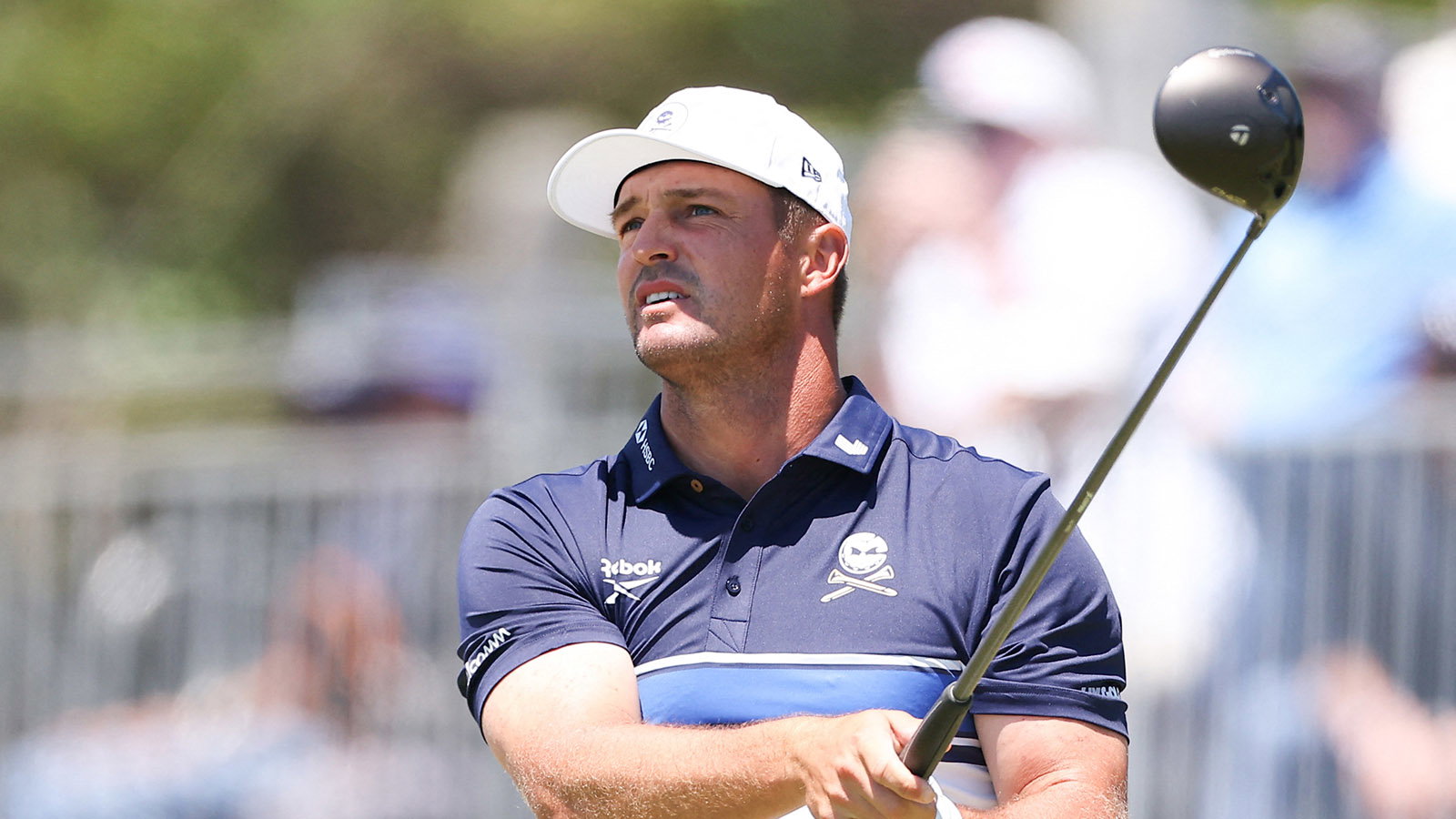
The most important detail in the announcement is not the word 'Europe'. It is Category One. DeChambeau is joining as a fully exempt DP World Tour member through a category that recognizes recent major champions and Race to Dubai winners. His 2024 U.S. Open victory qualifies him for that status. The circuit says his addition brings the number of major winners with exempt 2027 membership to 22. That is a meaningful difference from a courtesy invitation to play a handful of tournaments.
An exemption is access to a genuine competitive calendar. It means DeChambeau can plan around the tour's rules, enter events where his category grants eligibility, pursue points over a season and test himself against players whose careers depend on those results. A content-creator exhibition or isolated sponsor's invitation can generate enormous attention, but neither substitutes for a year in which performances accumulate toward a season-long ranking. That ranking may eventually be just as important as any single trophy.
None of that makes him a PGA Tour member again. The American circuit has its own eligibility and reinstatement process for those who departed for LIV. A European membership category cannot override American disciplinary or membership decisions. Even if he performs brilliantly from January onward, he would not automatically be entitled to walk into any event on the PGA Tour calendar. The tours cooperate in important ways, but their competitive entry systems are not interchangeable.
That distinction matters because DeChambeau is no ordinary player without an obvious television audience. He owns two U.S. Open titles, draws intense crowds and has built a huge online following by turning instruction, extreme experiments and big-hitting challenges into entertainment. His ability to reach people outside the usual tournament audience gives the DP World Tour commercial upside before he hits his first qualifying tee shot of the season. Yet the value of the agreement depends on him actually competing rather than treating membership as a headline.
GOATIFY
GOATIFY Golf
Golf's biggest names are returning to regular competition. Explore GOATIFY Golf fan gear.


There is also no need to exaggerate what has been promised. Category One grants a robust status within the DP World Tour framework; it does not publish his entire 2027 schedule, guarantee a certain number of wins or settle which international majors he will enter. Those outcomes depend on future entry lists and performance. The confirmed news is sufficiently significant without inventing an automatic global pardon or a guaranteed American comeback.
McIlroy, Rahm and Hatton Make This More Than an Administrative Return
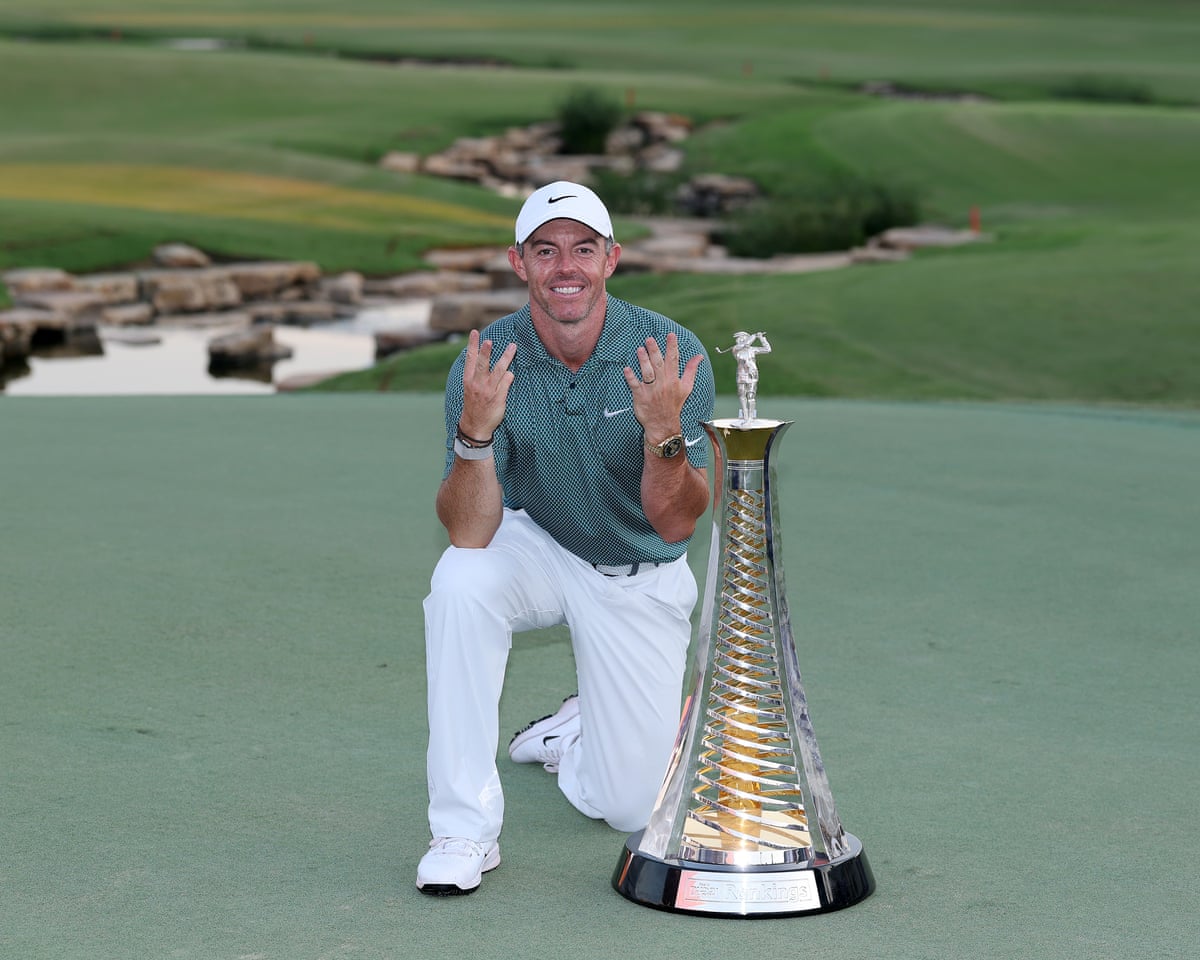
If DeChambeau were joining a lightweight schedule against anonymous competition, the news would be interesting mostly as a travel story. The actual landscape is far more compelling. McIlroy has just won his eighth Race to Dubai crown, equalling the career record, while Hatton captured the season-ending DP World Tour Championship. Rahm returned from LIV's uncertainty to compete on the circuit and finished high in the 2026 standings. The established stars are not waiting quietly for a former rival to arrive.
McIlroy and DeChambeau are an obvious television pairing because their relationship already carries years of major-championship tension and contrasting public personalities. But rivalry should not become a substitute for analysis. On a difficult European setup, DeChambeau's exceptional power can shrink holes that demand a long second shot. McIlroy has the experience, driving ability and approach-game adaptability to punish a player who turns that power into avoidable mistakes. Their results will ultimately be decided by putting, approach precision, course management and week-to-week form, not simply who wins the pre-tournament publicity contest.
Rahm changes the picture in another way. He is a multiple-major winner with a proven record of winning against deep international fields, and his own re-entry has shown that the post-LIV challenge is not purely theoretical. Players who once operated mostly in separate leagues could find themselves competing more frequently for the same season-long objective. That creates stronger fields but also redistributes ranking points, entry opportunities and prize-money chances across a much broader pool of contenders.
Hatton's 2026 finale victory is a reminder that the DP World Tour never stopped producing serious sporting pressure during the division. The same applies to Eugenio Chacarra, who moved on from LIV before its eventual demise and finished second in the 2026 Race to Dubai. Those players already know what it takes to accumulate results across this circuit, including travel, variable course styles and the requirement to be competitive far more than four times a year. A major champion arriving with star billing has to learn and satisfy exactly the same recurring demands.
For the tour, the best-case scenario is not a promotional series in which every spotlight follows one newcomer. It is a season where established European contenders, recent ex-LIV golfers and emerging prospects all matter on Sundays. Strong fields make victories more credible. More credible victories create more interest in the Race to Dubai itself. DeChambeau can amplify that loop, but he cannot supply it alone; McIlroy, Rahm, Hatton and the wider membership are the reason the loop might last.
GOATIFY
GOATIFY Golf
From McIlroy to DeChambeau, celebrate the Race to Dubai with GOATIFY Golf apparel.
Nine Limited Invitations Are Not the Same Deal

Perhaps the most easily missed part of the 2027 transition is that 'former LIV player' does not describe a single level of access. The DP World Tour announced several different approaches to bringing competitors back into its events. DeChambeau's recent-major status gives him a top membership category. Other former LIV players have been offered a limited number of tournament invitations, and those arrangements do not simply replicate a Category One exemption.
Dustin Johnson, Cameron Smith and Bubba Watson are among the familiar names associated with limited opportunities rather than the unrestricted status granted to DeChambeau. Reports on the arrangements indicate that the invitation programme excludes Rolex Series tournaments, a material restriction because those events are premium fixtures with significant ranking and commercial weight. The invitation system therefore creates visibility without promising access to every marquee event. A player offered a few starts has a very different road to regular competition than one who can plan an entire season as an exempt member.
That distinction is important to players who stayed on the DP World Tour while professional golf split apart. They continued to travel, meet eligibility obligations and compete for their own places in fields. If recognizable names could arrive through an unrestricted back door, those members would reasonably question the value of having remained loyal. The tour also has to consider sponsors and broadcasters who see commercial value in recognizable former LIV champions. Neither concern automatically cancels the other.
Chief executive Guy Kinnings has acknowledged differing views while presenting the resulting policy as a pragmatic response to a uniquely changed landscape. That is a governance problem as much as a sporting one. An inclusive field may attract attention that helps every event, but protecting ordinary members' access is part of maintaining a functioning competitive tour. Treating all invitations as identical would obscure the actual compromise.
It is also misleading to frame the whole process as an indiscriminate reset of past decisions. Players have different achievements, rankings, contractual histories and category qualifications. A recent U.S. Open victory is an objectively defined exemption criterion; a discretionary invitation is a separate mechanism. That does not make every boundary perfectly fair, and debate will continue, but the presence of different tiers demonstrates that the tour has not simply erased its eligibility framework.
The real measure will emerge when fields are published. How many events do the limited-invitation players enter? Are those starts concentrated in quieter weeks? How often do they finish well enough to create further eligibility? These are measurable questions. Until actual entry lists and performances are available, a claim that every ex-LIV star has been fully reinstated would be false.
Nedbank Is the First Test. The PGA Route Has Conditions.

DeChambeau has already pointed to the Nedbank Golf Challenge in South Africa in December as a competition he intends to play. That gives fans a near-term event to watch before the broader 2027 season begins. It is important, however, not to confuse an announced appearance with a completed result or treat one tournament as proof that the long-term return is settled. How he adapts to a competitive field, the course demands and pressure of scoring over successive rounds will be more informative than the announcement itself.
GOATIFY
GOATIFY Golf
Different paths, same fairways. Browse GOATIFY Golf tees, hoodies, caps and stickers.
The December appearance matters psychologically. For several years, many of golf's strongest personalities met mostly at the majors, where a small number of rounds carried an enormous share of the rivalry's stakes. A full international schedule can build ordinary competition back into the narrative. A player can lose in February, adjust in March and make a run in May without every meeting being promoted as a once-in-a-year confrontation. Such repetition is what makes a proper tour compelling.
The longer-term American question is still conditional. Some strong performers on the DP World Tour can earn entry rights through season standings, and coverage of the new structure points to possible 2028 access based on 2027 Race to Dubai results. That is a pathway, not a free pass. There are separate membership rules, a finite number of opportunities and plenty of players trying to qualify. DeChambeau's name alone cannot earn ranking points. Nor does a major title automatically override every restriction associated with a previous tour departure.
Rahm's recent autumn golf provides a useful parallel. He returned to European competition, addressed his own eligibility issues and produced meaningful results on the course. That did not immediately resolve every question about his American future. A player can be firmly back in international tournament golf while still outside the PGA Tour's regular system. Holding those two ideas together is more accurate than forcing the situation into either 'golf has reunited' or 'nothing has changed'. Both outcomes overstate what has actually happened.
For DeChambeau, the clearest checklist in 2027 will be simple: enter a consistent programme of meaningful events, stay healthy enough to sustain the travel, finish competitively against strong fields and accumulate a Race to Dubai position that creates concrete options. He does not need to win every week to make the move worthwhile. He does need to be present often enough that full membership becomes more than a line in a tour press release.
His audience-building skills could offer the circuit something unusual: serious sporting stakes told through a format that also appeals to younger online viewers. That commercial opportunity should not be confused with certainty about his future. The content may attract first-time spectators, but the scorecards, standings and published eligibility rules are what will decide whether the arrangement creates a durable route back across the Atlantic.
DeChambeau's move is a substantial piece of the post-LIV puzzle because it supplies an actual competitive home to a two-time U.S. Open champion with a major audience. Europe gains a draw, existing stars gain another serious challenger and fans gain the prospect of matchups that do not have to wait for the next major.
But the membership announcement solves only the first problem. Category One status and restricted invitations are different things. A strong Race to Dubai campaign and a PGA Tour reinstatement are different things. Even the attractive December Nedbank appearance is a starting point rather than a conclusion. The most revealing story of 2027 will be whether DeChambeau turns access into regular performances, and whether the tour can accommodate new attention without making the loyal field feel disposable. If that balance holds, the change will mean more than one famous name moving onto a new membership list.
GOATIFY
GOATIFY Golf
Discover GOATIFY Golf apparel and accessories for the next chapter in the game.


















