

Hamilton Loses Vegas FP1 to Beganovic. Ferrari Cannot Waste the Hour.
GOATIFYLewis Hamilton will begin the Las Vegas Grand Prix weekend outside his Ferrari rather than behind its steering wheel. Dino Beganovic, the Scuderia's Swedish junior, has been assigned the SF-26 for Thursday's first free-practice session. It is an unusually eye-catching substitution for a seven-time world champion, at a race whose cold surface, hard walls and distinctive timetable make every preparation lap valuable. But the reason is administrative, not disciplinary: Ferrari must complete its required rookie practice mileage before the season finishes.
Hamilton is due back in the car for the remaining sessions. Nobody has announced that his race seat is under threat, and Beganovic's appearance does not signal an unexpected team selection. The more interesting issue is what Ferrari gains and gives up by making the switch at this particular circuit. The team is defending second place in the constructors' standings, trying to understand a car that stumbled in Brazil and simultaneously preparing for a different technical challenge in 2027.
There is a second story inside that trade-off. Beganovic gets his first Formula 1 street-circuit experience after previous Ferrari practice outings in Spain, Austria and Brazil. For a junior trying to become more than a Friday name on the timing screens, a disciplined hour in Las Vegas may matter more than an impressive single lap. For Hamilton, the test is whether an abbreviated preparation schedule can still produce a stronger weekend than the one he endured at Interlagos.
Why Ferrari's switch is a rule, not a judgment on Hamilton
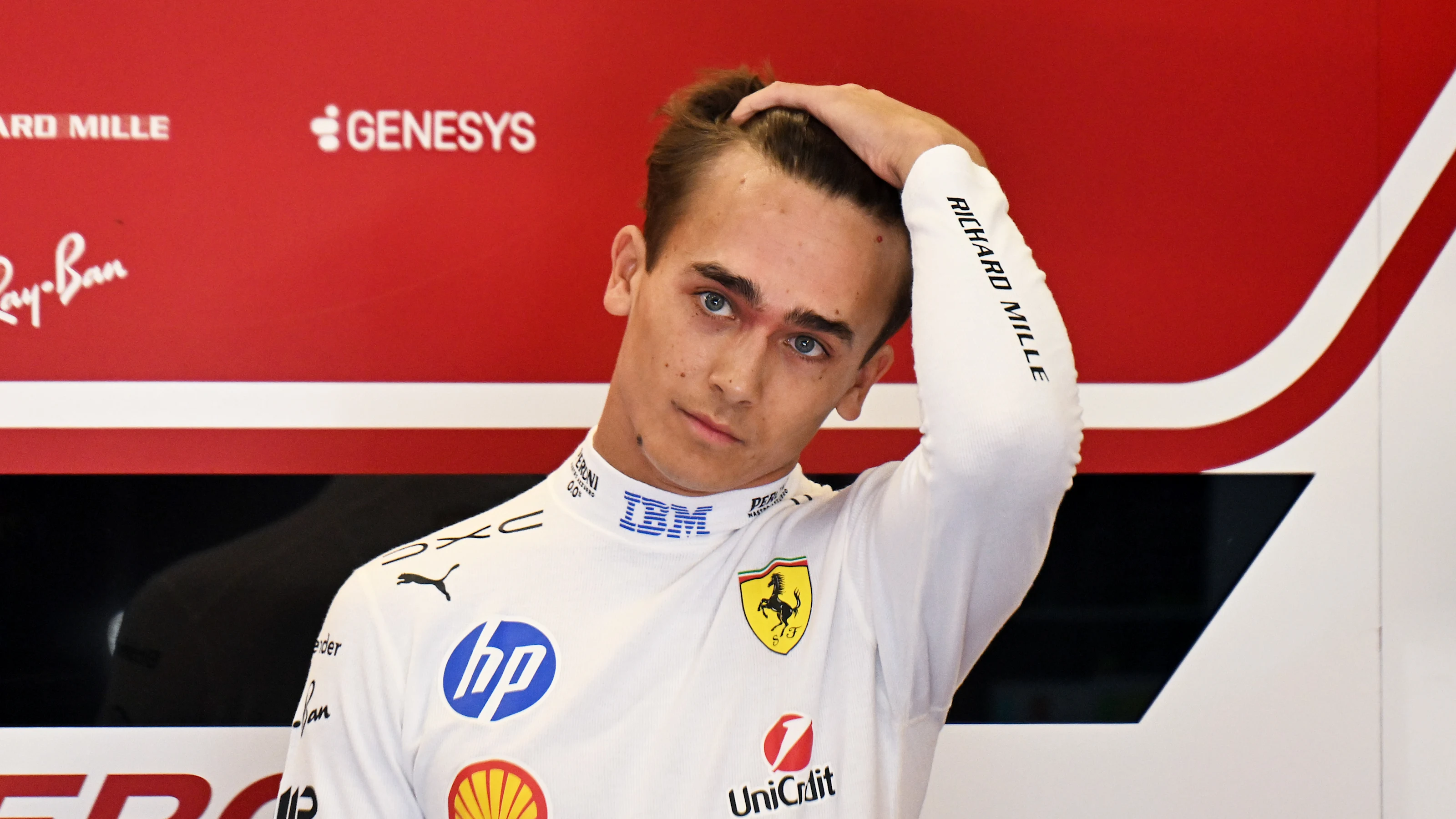
The story begins with a rule that has quietly changed the importance of Friday practice for Formula 1's biggest names. During 2026, each team must provide four first-practice opportunities to rookie drivers across the season, with two outings allocated to each regular race car. A rookie, for this purpose, cannot have started more than two grands prix. Ferrari cannot satisfy the requirement simply by giving its academy driver unlimited laps in Charles Leclerc's machine; Hamilton's car needs its assigned appearances too. Las Vegas is the chosen moment to complete that work.
That distinction matters because the headline can sound much more dramatic than the decision itself. Hamilton is not being removed from the race, replaced for the weekend or punished for his recent performances. He is sitting out one scheduled practice session. Beganovic will drive the SF-26 for FP1, before the seven-time champion resumes the normal programme. The driver switch is confirmed in Ferrari's pre-event communication, rather than inferred from paddock speculation about contracts or team politics. When the cars line up for qualifying and the grand prix, the established Ferrari pairing remains the plan.
Ferrari has already had to balance this regulation against competitive preparation. Beganovic previously took practice time in Spain and Austria, then drove Leclerc's car at the Brazilian Grand Prix. Brazil was particularly useful experience for the academy driver because it required him to work within a compressed, high-pressure weekend alongside a front-running team. The Las Vegas assignment follows immediately, making it a second consecutive Formula 1 event in which Beganovic must adapt to an unfamiliar circuit, complete Ferrari's run plan and report accurately on a car he does not race every fortnight.
GOATIFY
GOATIFY Formula 1
Ferrari's rookie rule is a reminder that the next generation drives the sport; browse GOATIFY F1 shirts, hoodies and racing accessories.


The four-outing requirement creates a genuine strategic puzzle, not merely a public-relations appearance. Every lap a rookie completes is a lap the regular driver cannot use to experiment with braking points, tyre preparation, aerodynamic balance or setup direction. Teams have to choose sessions where that opportunity cost is manageable and where the young driver can still learn something meaningful. Ferrari's decision to use Las Vegas shows it believes its remaining programme can accommodate a swap, but it does not make the lost preparation worthless. Especially at a track with limited run-off, a veteran's firsthand feel for the car has value that cannot be completely recreated from data.
There is also a reason to avoid treating the rookie as a temporary obstacle. A capable third driver can collect useful baseline information, identify whether a change has made the car more predictable and give engineers another trained set of eyes on the same problem. Beganovic's job is to operate at the standard of a Ferrari test driver, not to race Hamilton's personal benchmark on a leaderboard where fuel, tyre age and run programmes differ. A clean session with repeatable observations would help both drivers, even if the Swede finishes well down the timing order.
Hamilton knows the other half of the bargain. He has already had an FP1 handed to another driver this year and then gone on to win the Spanish Grand Prix. That result does not prove missing practice is an advantage, or that it will be harmless in Vegas. It does show why one absent hour should not automatically be converted into a crisis narrative. Ferrari has a regulatory obligation, a development responsibility and a competitive weekend to execute. Its success will be judged by how seamlessly those three duties fit together.
Beganovic faces his first street track with nowhere to hide
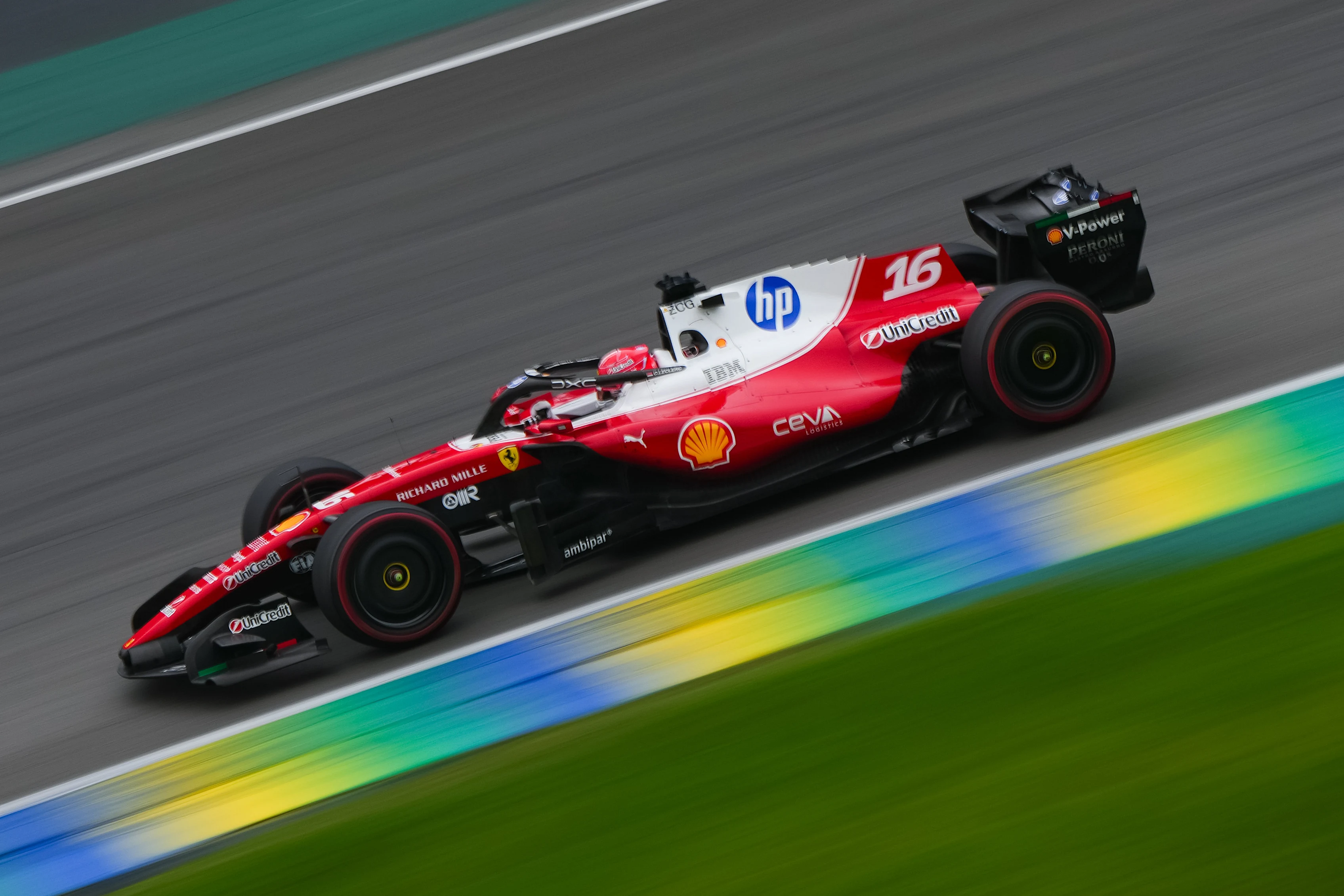
For Dino Beganovic, the Las Vegas appointment is not simply a fourth line on an academy driver's résumé. The Ferrari junior has spent 2026 trying to translate his Formula 2 performances into a convincing Formula 1 case. He sits fifth in the F2 championship as this event approaches, and he has already sampled the SF-26 at conventional venues such as Barcelona and Austria before his Brazil appearance. What he has not yet experienced in a contemporary Formula 1 practice session is a Las Vegas-style temporary street circuit under the lights, where the barriers feel close and the grip level evolves from one lap to the next.
Street racing punishes impatience. There is less room to turn a small error into an untidy but harmless trip across a runoff area. The track can become substantially faster as rubber builds up and surface temperatures change. Long straights encourage aggressive braking, while the corners demand confidence that the front tyres will respond immediately. A rookie needs to learn the sequence without trying to manufacture a miracle lap. For Ferrari, one minor mistake that damages the car could erase far more useful preparation than the entire rookie session was meant to provide.
The best programme for Beganovic begins with disciplined systems work. Engineers can ask him to check brake migration settings, establish a predictable balance through the slower sections and confirm how the car behaves at different fuel loads. They can compare steering inputs, tyre temperatures, braking traces and speed through corners with simulations and earlier team data. Even if he is assigned a limited number of push laps, consistency allows Ferrari to separate real handling characteristics from the natural variability of a driver learning a venue. That is useful information before Hamilton climbs back into the cockpit.
GOATIFY
GOATIFY Formula 1
From street-circuit pressure to the grand prix paddock, explore GOATIFY Formula 1 fan gear.


Beganovic's Brazilian outing illustrates why the stopwatch alone will be an incomplete grade. He finished the opening practice session in 21st and was roughly two seconds slower than Hamilton, but teammates can be on different programmes and levels of experience, particularly when one is making only a short guest appearance. A large gap in a single session does not establish a definitive ceiling on his speed. Equally, it would be premature to call an attractive lap proof that Ferrari should promote him. The relevant questions are whether he avoided unnecessary disruption, followed the technical plan and delivered feedback engineers could actually use.
Ferrari's driver-development decision also sits within a wider paddock trend. Haas has nominated Ryo Hirakawa for its own Las Vegas FP1 assignment in Oliver Bearman's car, another sign that the mandatory rookie opportunities are arriving late in the calendar. Two young or reserve drivers sharing the first-practice timetable does not make this an informal contest for a 2027 seat. It creates separate opportunities for teams to evaluate work habits, precision and adaptability under real grand prix conditions.
For Beganovic personally, the most persuasive argument is straightforward: treat the hour like a job interview in which reliability matters as much as pace. Know when to push, know when to abort a lap and communicate exactly what the front end and rear tyres are doing. A controlled appearance on an unforgiving circuit could make his existing preparation more credible to Ferrari's engineers. An ambitious spin into the barriers, by contrast, would make headlines for all the wrong reasons. The tension between demonstrating speed and protecting the team's weekend is the rookie's real Las Vegas examination.
The lost Hamilton hour matters because Ferrari still has P2 to defend
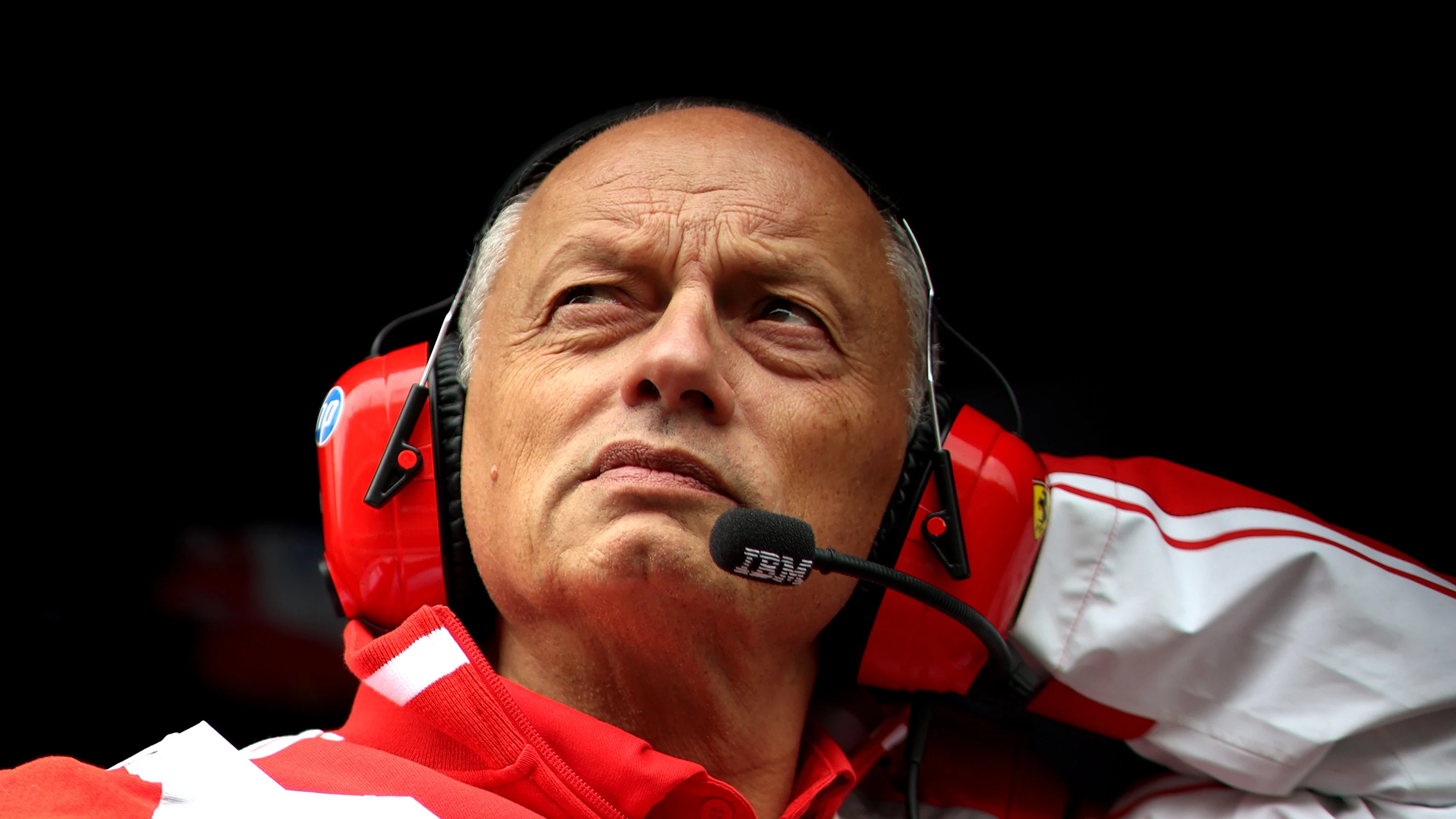
Ferrari arrives in Las Vegas with a title no longer available and a position that still matters. Mercedes has already secured the 2026 constructors' championship, ending any mathematical reason for Ferrari to chase first place. But the Scuderia enters the final three-race stretch 95 points clear of Red Bull in the battle for second. That is a sizeable cushion, not a guarantee, and the points carried away from Las Vegas, Qatar and Abu Dhabi still determine how the season is judged inside the factory. Hamilton has argued that the team should protect that position rather than abandon the present to concentrate exclusively on its 2027 project.
The distinction between developing next year's car and rescuing this year's performance is important. Engineers cannot completely ignore the SF-26 while there are trophies, podiums and championship positions still in play. Nor should they waste the final weeks pretending a full-season development campaign can be restarted from scratch. The useful middle ground is operational execution: sharpen the understanding of existing tyres, identify workable ride-height and suspension choices, and make sure the two drivers can extract the performance already in the package. An abbreviated practice window raises the pressure to make those decisions quickly.
Brazil exposed why Ferrari cannot simply trust its pre-event calculations to solve everything. Fred Vasseur has discussed the difficulty of finding the correct tyre operating window after a weekend in which the Ferrari struggled for grip in conditions that did not reward its setup. It is tempting to turn every poor showing into an argument for wholesale technical change, yet the underlying challenge is often narrower. When the tyres are just outside their preferred temperature range, the car's apparent balance can change dramatically. A team can spend laps chasing what feels like an aerodynamic weakness when the real problem begins with how the tyre is prepared.
GOATIFY
GOATIFY Formula 1
Ferrari's championship fight deserves race-day style; discover GOATIFY F1 favourites inspired by the grid.


Las Vegas presents a different version of that same problem. The city circuit's long straights, significant braking zones and cool evening running make tyre warm-up and pressure management especially sensitive. Drivers need front-end response when they arrive at slow corners after a high-speed section, without destroying the tyres over a longer race stint. If Ferrari begins Friday with a setup that works only after several warm-up laps, Hamilton could face an awkward qualifying preparation challenge. Losing FP1 does not create that technical weakness, but it reduces his direct track time to diagnose it before the session that matters most.
There is, however, a useful alternative perspective. A fresh driver may identify a trait that the regular pairing has learned to compensate for. Beganovic can follow a defined testing plan while Leclerc handles the usual programme in the second Ferrari. Engineers can compare the car's responses across the two data sets, then brief Hamilton with a more focused list of questions for FP2. If the team already has a strong simulator correlation and clear baseline, a lost hour is manageable. If its understanding of the tyres is already shaky, even plentiful running might not produce a sensible answer without better analysis.
For Hamilton the biggest challenge is not resentment over a mandatory swap; it is getting his first proper laps to count. He must quickly evaluate the car's behaviour at low speed, identify whether the rear is stable under braking and decide which setup compromise helps both one-lap pace and the race. Leclerc's feedback will matter, but it cannot replace Hamilton's own preferences. Ferrari has to unite the two programmes rather than treat them as parallel experiments. A team defending second place needs every available point, even in a season whose headline championship has been settled elsewhere.
What Ferrari must learn before Vegas qualifying becomes urgent
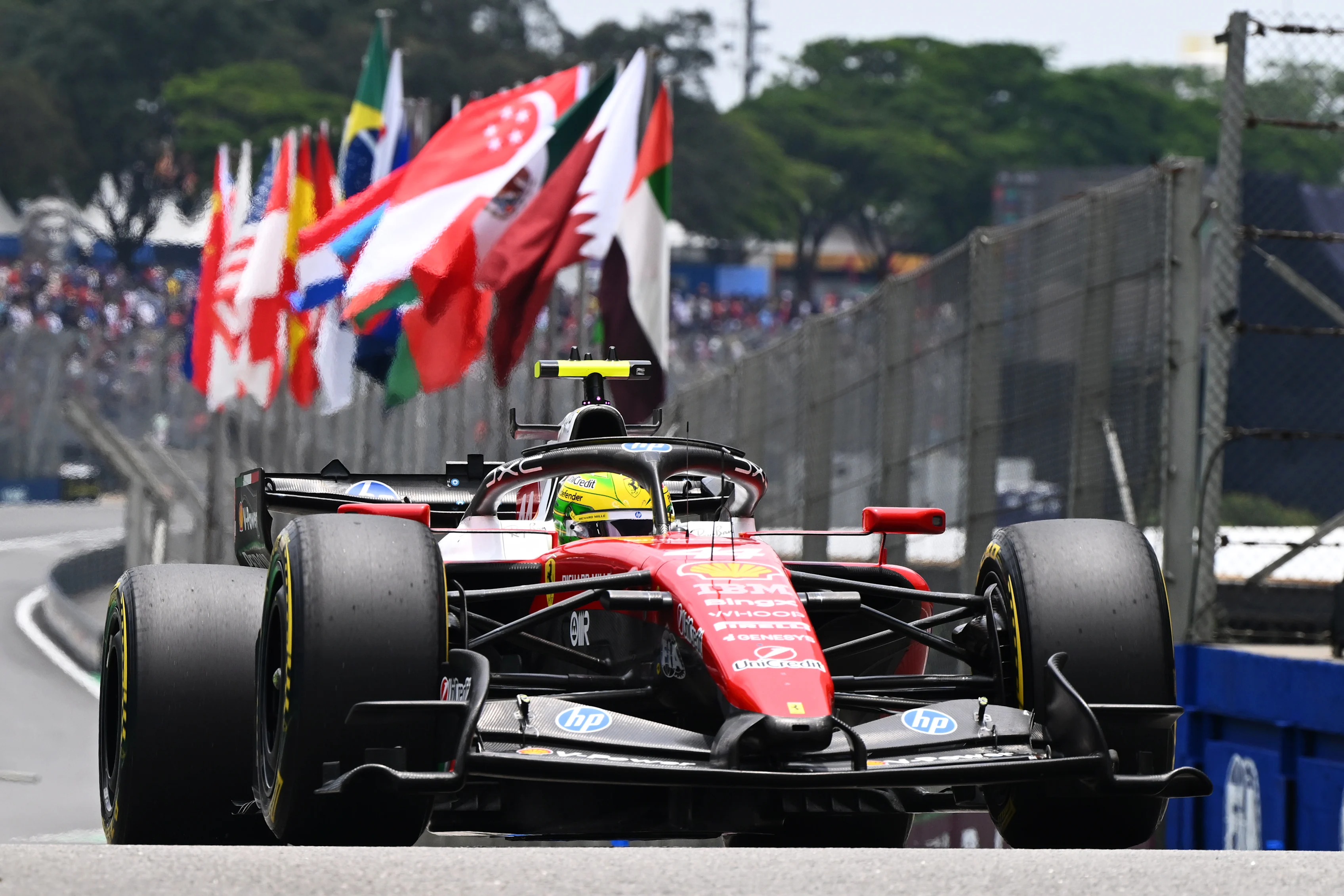
The first objective in Vegas should be a boring one: finish the session with an intact car and information the race drivers can trust. Ferrari is not obliged to use Beganovic as a demonstration driver who sets a headline lap. Its engineers can specify a small number of meaningful setup comparisons, collect tyre and brake data, and avoid wasting time on changes that cannot be evaluated properly in a single practice hour. That is not unambitious. When a circuit rewards precision and punishes errors, completing a disciplined testing plan can be the most competitive choice available.
Las Vegas also forces teams to distinguish between the car's behaviour on the first lap and after the track improves. A temporary street layout can begin a weekend with less rubber than permanent circuits see during a conventional practice session. The surface changes through the programme as cars run, while the ambient conditions and tyre temperatures can shift once darkness settles. A fast early lap from one driver and a slower later lap from another may reveal more about traffic and tyre preparation than about raw performance. Ferrari must resist making sweeping conclusions from a timing screen without checking when and how each lap was set.
GOATIFY
GOATIFY Formula 1
Get ready for a weekend of precision, tyres and speed with GOATIFY Formula 1 fan apparel.


Engineers should be especially interested in three areas. First is the front axle: whether the tyres respond immediately when the car slows for a tighter corner, and whether additional preparation is needed before a push lap. Second is rear stability at the end of the straights: if a driver cannot trust the car while decelerating, confidence disappears before turn-in. Third is energy deployment and straight-line efficiency, since overloading the setup toward cornering grip can make a long straight painfully expensive. Each adjustment carries a trade-off. A setting that produces an impressive first sector may become a liability in a race stint.
There is a human element to this plan as well. Beganovic must communicate what he feels without assuming the same handling preference suits Hamilton. Leclerc, working in the other car, can test a contrasting direction or gather longer-run data if the team chooses. Once Hamilton returns, Ferrari needs to translate two drivers' observations into an actionable baseline instead of handing its lead race driver a dozen contradictory suggestions. Good preparation is less about the sheer quantity of data than its clarity. The ideal FP2 begins with a car that is already close enough for Hamilton to work on detail.
Ferrari should be careful about another familiar temptation: using the end of the season as a blanket excuse for lower standards. Hamilton has publicly framed the remaining races as a responsibility to the staff who built and operate the car, because second in the constructors' standings still reflects their work. Even if aerodynamic development is shifting toward 2027, operational decisions this week are immediately testable. The team can execute pit-lane procedures cleanly, make sensible tyre calls and improve how it responds to track evolution. Those are habits that will remain useful next year regardless of the new car's speed.
The final measure will arrive after practice. If Hamilton goes into qualifying comfortable on his tyres, Ferrari can treat the rookie session as a successful exchange: it met a regulation, gathered technical information and developed a junior without compromising the main weekend. If the car struggles and the team finds itself short of preparation time, questions about the timing of the swap will inevitably follow. Neither outcome can be known in advance. But the standard for this weekend is clear. Beganovic needs a tidy hour; Hamilton needs immediate understanding; Ferrari needs to prove that an orderly process can produce genuine pace when the margin for improvisation is small.
Ferrari has not dropped Lewis Hamilton from the Las Vegas Grand Prix. It has assigned one mandatory practice hour to Dino Beganovic, and Hamilton remains the race driver for the rest of the weekend. Those facts are straightforward; the consequences are less so. The young Swede needs clean laps and dependable feedback on a circuit where the margins are small. Hamilton needs the team to convert that information into a usable setup before the competitive sessions begin.
With Mercedes already crowned constructors' champion, Ferrari's remaining task is to make second place count while building a credible platform for 2027. The Vegas FP1 switch is a small but revealing demonstration of how those obligations compete for track time. If Beganovic delivers a tidy session and Hamilton finds the pace when he returns, it becomes routine work well executed. If Ferrari struggles to switch on its tyres or repeats Brazil's mistakes, the missing hour will be scrutinized far more closely than the regulation that required it.
GOATIFY
GOATIFY Formula 1
Shop GOATIFY Formula 1 shirts, hoodies and racing stickers.


















