

McIlroy Wants an Eighth Title. Chacarra Holds Dubai's Nine-Man Race.
GOATIFYThe DP World Tour's season-long championship has reached Dubai with a leader who controls the outcome, a former world No. 1 chasing a historic record and seven other players still able to turn the final event into an upset. Eugenio Chacarra arrives at the DP World Tour Championship with 4,243.79 Race to Dubai points. Rory McIlroy is second with 3,709.86; Patrick Reed follows on 3,528.62. The difference between first and second is only 533.93 points, but the points available at Jumeirah Golf Estates mean a finish that looks strong on the leaderboard could still fall short in the season race.
The Earth Course offers 2,000 points to the tournament winner, 1,335 to the runner-up and 752 to third. Those numbers create two overlapping competitions: the immediate battle to win the November 12–15 tournament and the broader fight for the Harry Vardon Trophy. Three men—Chacarra, McIlroy and Reed—can claim the season crown without winning the event. The other six need victory in Dubai and a particular combination of rivals finishing far enough behind.
For McIlroy, an eighth European No. 1 crown would equal Colin Montgomerie's all-time record. For Chacarra, a first would complete an ambitious year in which he has led the rankings through a much heavier schedule. For Jon Rahm, who surged into contention with victory in Abu Dhabi, the only path is narrow but real. This is what the standings reveal before the final result is settled—and why the order at the top matters more than the total number of players still mathematically alive.
Chacarra holds the lead, but controlling the trophy still means surviving Dubai
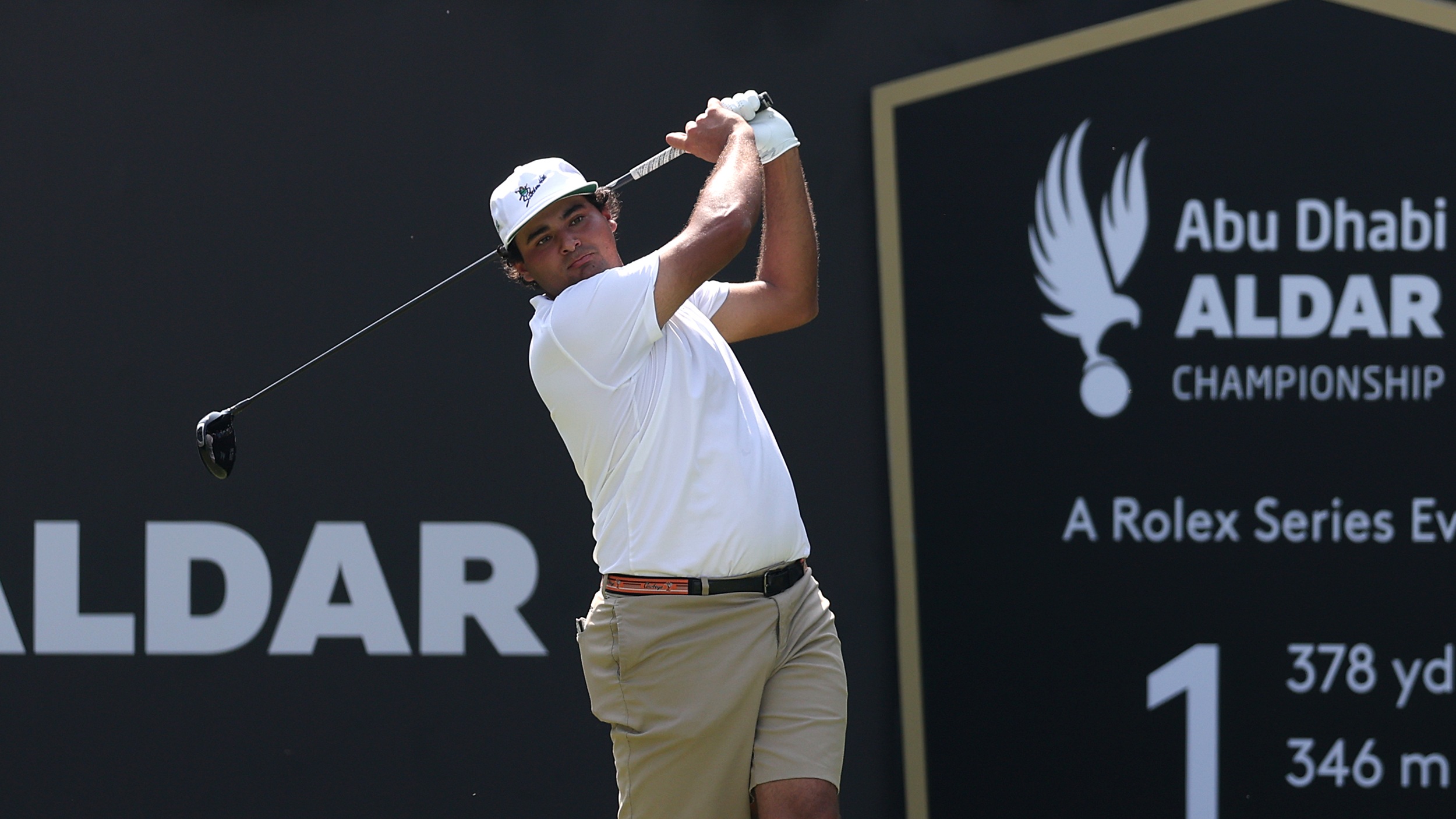
The points table makes Chacarra the obvious favorite, but not because the lead is unassailable. He holds 4,243.79 points after 30 counting appearances, compared with McIlroy's 3,709.86 from 12 and Reed's 3,528.62 from 21. There is a 533.93-point cushion to McIlroy, a 715.17-point cushion to Reed and considerably more daylight to the other six contenders. Yet the winner's 2,000-point allocation is large enough to overturn those gaps instantly. A final-round birdie in Dubai may change a tournament position and a season ranking at the same moment.
Chacarra has the simplest possible guarantee: win the DP World Tour Championship and the Race to Dubai is his. His 4,243.79 starting total plus 2,000 winner's points would leave him on 6,243.79, beyond the reach of everybody else. He would become the third Spaniard to take the European season crown, after Seve Ballesteros and Jon Rahm. It is an unusual position for an emerging star: the primary task is not to chase somebody else's score but to protect the leverage he has spent months building.
That calculation does not mean he must lift the tournament trophy. He can retain the season title even if Dubai goes poorly, provided the players chasing him do not score heavily enough. The published permutations extend as far as a last-place finish: Chacarra can still emerge as European No. 1 if McIlroy ends in a two-way tie for fourth or lower, Reed in a two-way tie for third or lower, and none of the six lower-ranked contenders wins the event. It sounds unlikely to require so little from the leader, but the arithmetic illustrates the value of arriving with a substantial banked points total.
The nuance is that this security can disappear quickly if McIlroy begins climbing. A clear runner-up finish pays 1,335 points, more than twice the difference separating first and second in the season ranking. Chacarra's position is therefore stronger than any individual shot of his might suggest, and more fragile than the phrase 'points leader' implies. The relevant question each afternoon is not just how low he is under par; it is where McIlroy and Reed are, which players are tied and how much of the points pot those ties will divide.
GOATIFY
GOATIFY Golf
Chacarra's rise has the golf world watching the season finale. Explore GOATIFY Golf designs for the next great Sunday on the course.


The contrast in schedules adds another layer to the final. Chacarra's 30 events indicate a season constructed through regular appearances and sustained accumulation; McIlroy's 12 show how a smaller series of high-value results can still bring a superstar close. Neither method makes the other illegitimate. But after months in which points were earned by different routes, everyone must now submit to the same four rounds on the Earth Course. Chacarra will not have the benefit of extra starts once the final tournament begins.
That is where the psychology of leading differs from the mathematics. A player six shots back on the course might have no realistic shot at winning the tournament but still hold the points he needs. Conversely, a late surge from a pursuer could force Chacarra to respond when simply making pars had seemed sufficient. He has a path that depends entirely on his own golf, and several alternative paths that depend on everyone else. Keeping both ideas in view is the best way to understand why he enters Dubai as leader rather than champion-elect.
McIlroy's record chase and Reed's route turn second place into a major battleground
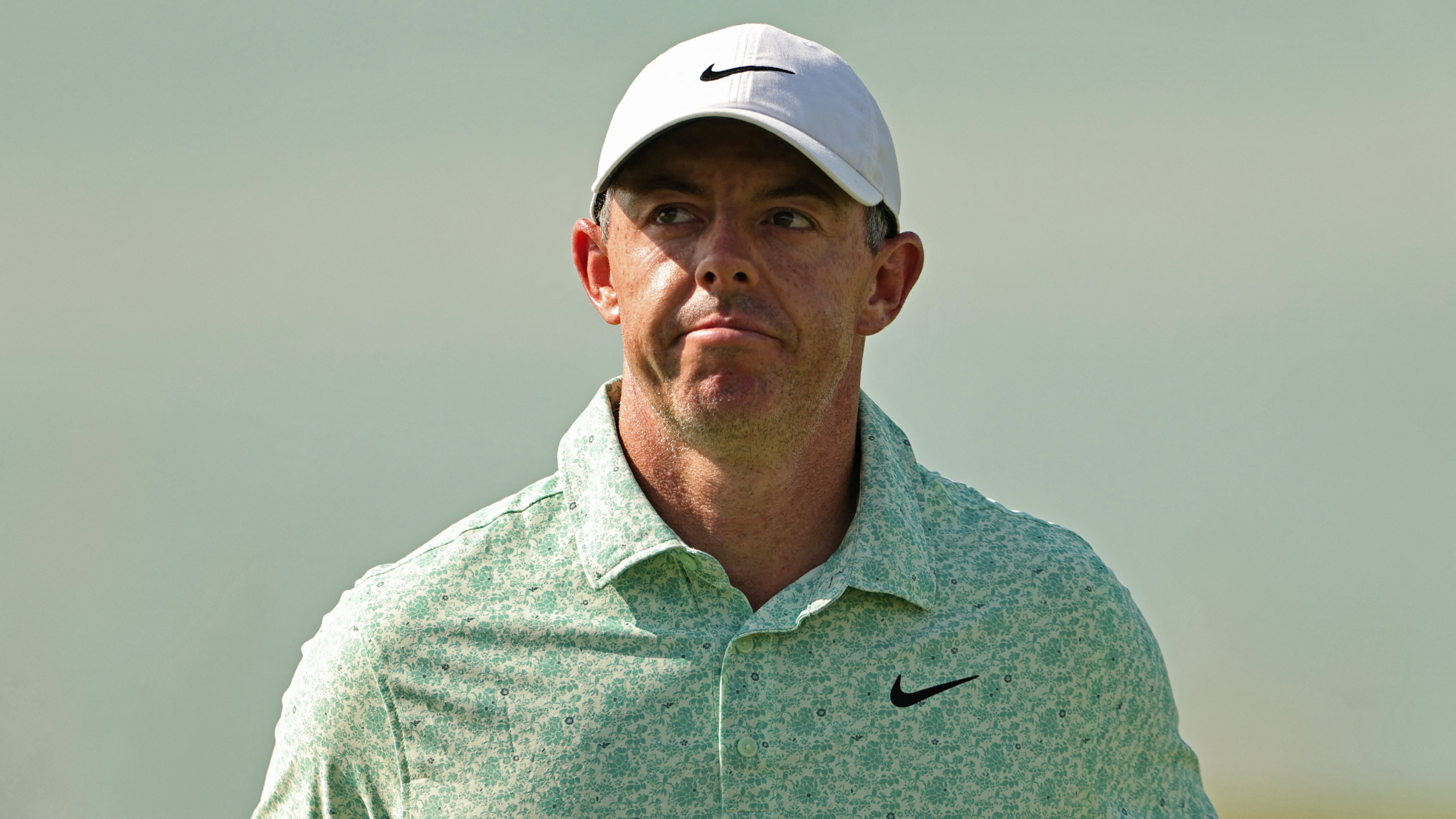
McIlroy's name brings the most recognizable historical stakes to the season finale. He is hunting a fifth consecutive Race to Dubai title and an eighth overall, a number that would draw him level with Colin Montgomerie on the European Tour's all-time list. That history can make the week look like a straightforward referendum on whether McIlroy wins the event, but the ranking formula is subtler. He does not have to finish first in Dubai to take the season trophy; he must finish sufficiently far ahead of the men presently above and immediately below him.
The cleanest scenario is victory. With 2,000 points added to his starting 3,709.86, McIlroy would climb to 5,709.86. Even if Chacarra took an outright second-place finish worth 1,335, the leader would reach only 5,578.79. A McIlroy tournament win therefore also settles the season contest. It would be his fourth DP World Tour Championship victory as well as the eighth Race to Dubai crown, a result that would connect a modern title streak to an older record of European dominance.
There is another credible route that does not require McIlroy to be the best player on the Earth Course. An outright second-place finish is enough if both Chacarra and Reed finish third or lower. The word 'outright' matters because tied positions change how the points are distributed. In practical terms, McIlroy could watch somebody outside the leading trio win the tournament, yet still end the week as European No. 1 by taking the highest finish among the three principal title rivals.
At the outer limit, McIlroy can even finish fourth and still win the season ranking, but that is an extremely specific contingency rather than a sensible target. It would require Chacarra to fall to a two-way tie for 46th or worse, Reed to be in a three-way tie for second or worse and none of the other six contenders to win. That far-fetched pathway is useful chiefly because it demonstrates how wide the permutations have become. The sensible sporting plan remains to put the season leader under immediate pressure by challenging for the event victory.
GOATIFY
GOATIFY Golf
McIlroy and Reed are fighting for the Harry Vardon Trophy. Browse GOATIFY golf shirts, hoodies and accessories as the Dubai showdown unfolds.
The timing makes the chase more compelling. McIlroy came into Dubai off third place in Abu Dhabi, where Jon Rahm won after a dramatic final-round duel with Tyrrell Hatton. At Yas Links, McIlroy threatened early with a strong start and an eagle at the second, but Rahm's closing strength prevented him from collecting the victory he had wanted. The result nevertheless lifted McIlroy to second in the standings, leaving a manageable gap and a last opportunity to convert an excellent season into another trophy.
Reed is a separate threat, not just a footnote to the McIlroy story. The American begins on 3,528.62, 181.24 points behind McIlroy but only 715.17 behind Chacarra. A tournament win would bring him to 5,528.62. That is not automatically sufficient because a clear Chacarra runner-up finish would still reach 5,578.79. Reed needs Chacarra in a two-way tie for second or worse to turn his own victory into the Race to Dubai crown; in other words, a tie that reduces the leader's points award could be decisive.
Reed also has a runner-up pathway. A two-way tie for second can be enough if McIlroy finishes third or worse, Chacarra ends in a three-way tie for seventh or lower and nobody ranked fourth through ninth wins. It is a delicate scenario involving multiple leaderboards rather than a single player. Yet Reed is the only American among the three who could prevail without winning the tournament, and a season title would put him in rare company as the second American Race to Dubai winner.
The most important takeaway is that the chase from second and third is not symmetric. McIlroy can guarantee the season crown through his own tournament victory. Reed can win Dubai and still need to glance at Chacarra's placing. Both must weigh their on-course risk against the points being earned elsewhere. That combination of individual shot-making and external results is why the season race should remain interesting even if a surprise winner breaks clear at the top of the tournament leaderboard.
Rahm's Abu Dhabi surge keeps six outsiders alive—but victory alone will not be enough
The final six players still mathematically alive are Casey Jarvis, Aaron Rai, Jon Rahm, Jayden Schaper, Ryan Fox and Daniel Hillier. All six share one requirement: they must win the DP World Tour Championship. Their fate then depends on Chacarra, McIlroy and Reed not collecting too many points. Some of those combinations are plausible after one errant weekend from a favorite; others would need a spectacular reversal across the entire field. That distinction matters because describing all nine as equal title contenders would badly exaggerate the uncertainty.
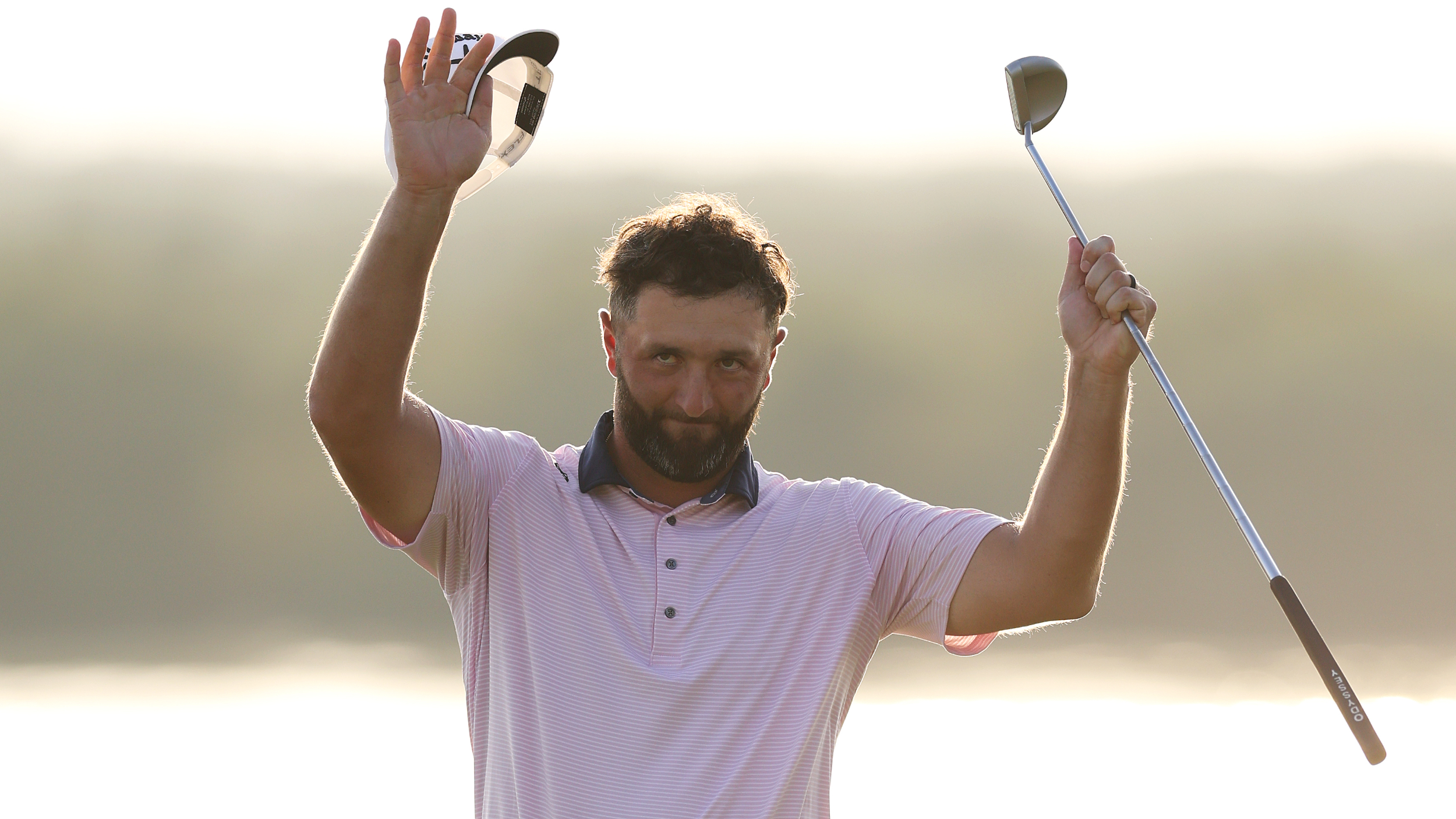
Rahm is the most compelling outsider because he arrives with fresh evidence of winning form. He won the Abu Dhabi Aldar Championship on November 8 at 23 under par, two strokes clear of Tyrrell Hatton and four ahead of McIlroy. His closing 67 brought a sixth Rolex Series title and an 11th DP World Tour victory. It also sent him from well outside the relevant season-title conversation into sixth place with 2,525.45 points. In one week, a dormant mathematical possibility became a story that people could reasonably watch.
The Spaniard has proved himself at Dubai's Earth Course before, including three victories at the DP World Tour Championship. Still, course history cannot repair the arithmetic. A fourth tournament triumph would take his season total to 4,525.45, just 281.66 points above Chacarra's current figure before Chacarra earns anything at this event. For Rahm to win the season title, Chacarra needs to finish ninth or worse, while McIlroy and Reed both finish no better than third. Those are significant dependencies for a golfer who has just demonstrated that he can beat an elite field.
GOATIFY
GOATIFY Golf
From Rahm's late charge to the longshot contenders, celebrate the sport's unforgettable finishes with GOATIFY Golf gear.
The other contenders require even greater cooperation. Jarvis begins fourth on 2,892.98 points. A win would raise him to 4,892.98; he also needs Chacarra no higher than fourth, with McIlroy and Reed third or lower. Rai, fifth on 2,560.15, must win and hope Chacarra ends eighth or lower while McIlroy and Reed finish third or worse. Rahm's scenario sits between those two and the much more distant long shots, because his result in Abu Dhabi changed the points position but not the basic requirement to win again.
Schaper starts seventh with 2,445.79 points, Fox eighth with 2,427.52 and Hillier ninth with 2,351.25. Their 2,000-point winning bonuses would lift them into striking distance only if the top three largely stall. Schaper needs Chacarra 13th or worse, McIlroy fourth or worse and Reed third or worse. Fox needs Chacarra 14th or lower under similar McIlroy and Reed conditions. Hillier needs the biggest upset: a victory of his own, Chacarra 31st or lower, McIlroy no better than fourth and Reed no higher than third.
These are not merely fantasy calculations. The winner's allocation is so much larger than the third-place 752 points that the single tournament victory can radically reorder a season. But the exact finish positions also reveal why the nine-man headline is misleading without context. Chacarra has control; McIlroy has a strong self-contained path; Reed has a genuine route that depends on a particular points split; the other six need multiple events to go their way even while winning one. The same championship can thus feature a close three-way race and six much longer odds.
The 50-player finale also introduces rivals who cannot win the Race to Dubai but can determine who does. A player in the middle of the field might take fourth place from one of the leading trio, reducing that contender's points. A tie for second may change who holds enough after the event, and somebody with nothing to gain in the season ranking can win the tournament and leave McIlroy or Chacarra holding the Harry Vardon Trophy. The leaderboard is connected: the fortunes of nine season contenders depend on dozens of other golfers' results.
Rahm's arrival has therefore supplied the last twist, rather than the whole plot. His Abu Dhabi recovery from a disappointing previous appearance demonstrates how quickly elite form can return, but an encore would still need help from Chacarra and McIlroy. For the neutral spectator, the ideal finish would be a contest close enough that the final groups must consider both the tournament and the season ranking. For every player involved, the challenge is simpler and harder: make the best possible decision on each shot without being distracted by a scoreboard they cannot control.
The decisive advantage belongs to Eugenio Chacarra: he has a 533.93-point lead over Rory McIlroy and can settle the entire issue by winning on the Earth Course. McIlroy has the bigger historical reward, with a fifth straight season crown and eighth overall within reach, and he has a second-place route if the other two front-runners fall back. Patrick Reed cannot afford to think only about beating McIlroy; Chacarra's finishing position—and possibly whether that position is shared—can change the answer.
For Rahm and the remaining outsiders, the tournament trophy is only the first condition. That is what gives this finale its tension. The championship winner and the Race to Dubai winner may not be the same golfer, and tied positions can change the outcome. As four rounds unfold in Dubai, the useful question is not simply who leads on the course. It is who is earning enough points to turn a season of work into the Harry Vardon Trophy.
GOATIFY
GOATIFY Golf
Shop GOATIFY golf shirts, hoodies and stickers.


















