Brown Kept Bridges Starting. The Fourth Quarter Told a Different Story.
GOATIFYThe most revealing part of Mikal Bridges' week was not Mike Brown's public vote of confidence. It was the part of the Cleveland game Bridges watched instead of playing. New York's coach still calls him a starter, but the former All-Defensive wing played only 17 minutes in Wednesday's 115-107 loss to the Cavaliers, scored two points on three attempts, and sat out the entire fourth quarter. For a defending champion that acquired Bridges to solve difficult playoff matchups, the contrast between his name on the lineup card and his place in crunch time is becoming impossible to ignore.
Eleven games are not enough to erase a long career of reliable two-way work. They are, however, enough to reveal a rotation problem. Bridges has opened 2026-27 averaging 5.9 points while shooting 32.9% overall and 26.5% from deep, and reserve guards Landry Shamet and Miles McBride are making themselves harder to remove when a game tightens. Brown's challenge is no longer simply to wait for a veteran's shot to return. It is to support Bridges without treating the opening lineup, the closing five and a player's long-term value as the same decision.
Seventeen minutes made the starter label feel provisional
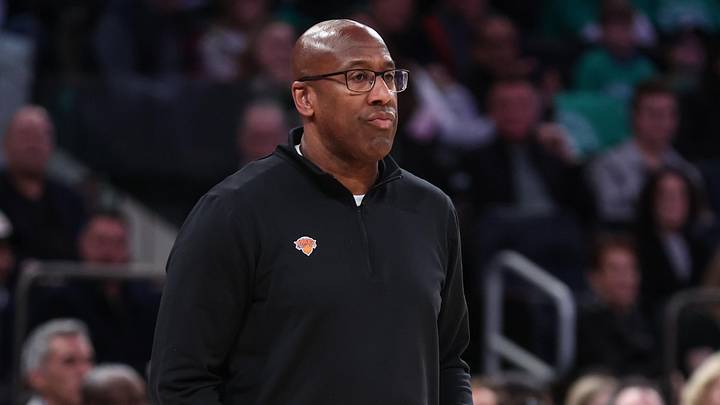
The raw Cleveland box score makes the problem easy to see. Bridges played 17 minutes, collected two rebounds and one assist, and barely figured as a scoring option in a game the Knicks lost by eight. A player need not score 20 to justify a place alongside Jalen Brunson and Karl-Anthony Towns; the usual case for Bridges is defensive versatility, intelligent movement without the ball and the ability to punish a defense for loading up on New York's main creators. But three shot attempts across 17 minutes leave little evidence that opponents had to account for his offense that night.
The trouble has stretched beyond one performance. Through 11 games Bridges' 5.9-point average is far below the double-digit production he has supplied over most of his career. His 32.9% field-goal accuracy and 26.5% three-point clip are especially difficult for a contender whose guards need to keep driving lanes open. This is not a player who has forgotten how to shoot. He entered the season with a career body of work around 48% overall and 37% from long range, plus the ability to defend multiple positions. The question is why those strengths are not translating into enough positive possessions right now.
Cleveland was not the first time Brown decided he had better fourth-quarter options. Against Chicago on October 28, Bridges finished with three points in just 13 minutes as a reserve-heavy group helped rescue a comeback. Two such nights are a pattern worth studying, even if they are not a sufficient sample to conclude that his starting role should disappear immediately. In both cases Brown used the freedom every coach has: begin with the trusted combination, then finish with the group providing the best answers to that night's opponent.
GOATIFY
GOATIFY Basketball
Why Brown is keeping Bridges' name in the starting five: discover GOATIFY's Basketball collection while the rotation debate grows.


LeBron James – Cleveland Cavaliers GOAT Decal Sticker
Add basketball personality to your favourite gear.
Shop Now ↗
Michael Jordan - GOAT Chicago Bulls Basketball Tank
A basketball fan design for everyday wear.
Shop Now ↗
Kobe Bryant G.O.A.T. - Settle the Debate Hoodie
A basketball fan design for everyday wear.
Shop Now ↗
Paul George G.O.A.T. - Basketball Casual Top Tee
A basketball fan design for everyday wear.
Shop Now ↗
Fat Luka Doncic Los Angeles Lakers NBA Mug
Add basketball personality to your coffee break.
Shop Now ↗Brown has defended Bridges' established track record and said he will not make a rushed starting-lineup decision so early in the schedule. That stance has basketball logic. A mid-November demotion could damage confidence while teaching very little about how Bridges fits beside New York's best players in April and May. Yet a coach also tells his players what matters through his substitutions. Right now the minutes say the role is conditional, even if the pregame introductions do not.
That distinction is the first sensible way out of the debate. Starting is a role of trust and continuity; finishing is an assignment earned by the matchup, defensive execution and offensive rhythm. The Knicks can keep the first promise while making the second nonnegotiable, then judge Bridges over a meaningful stretch rather than treating every quiet night as an emergency or every strong practice as proof the slump has ended.
Shamet and McBride are turning patience into a competition
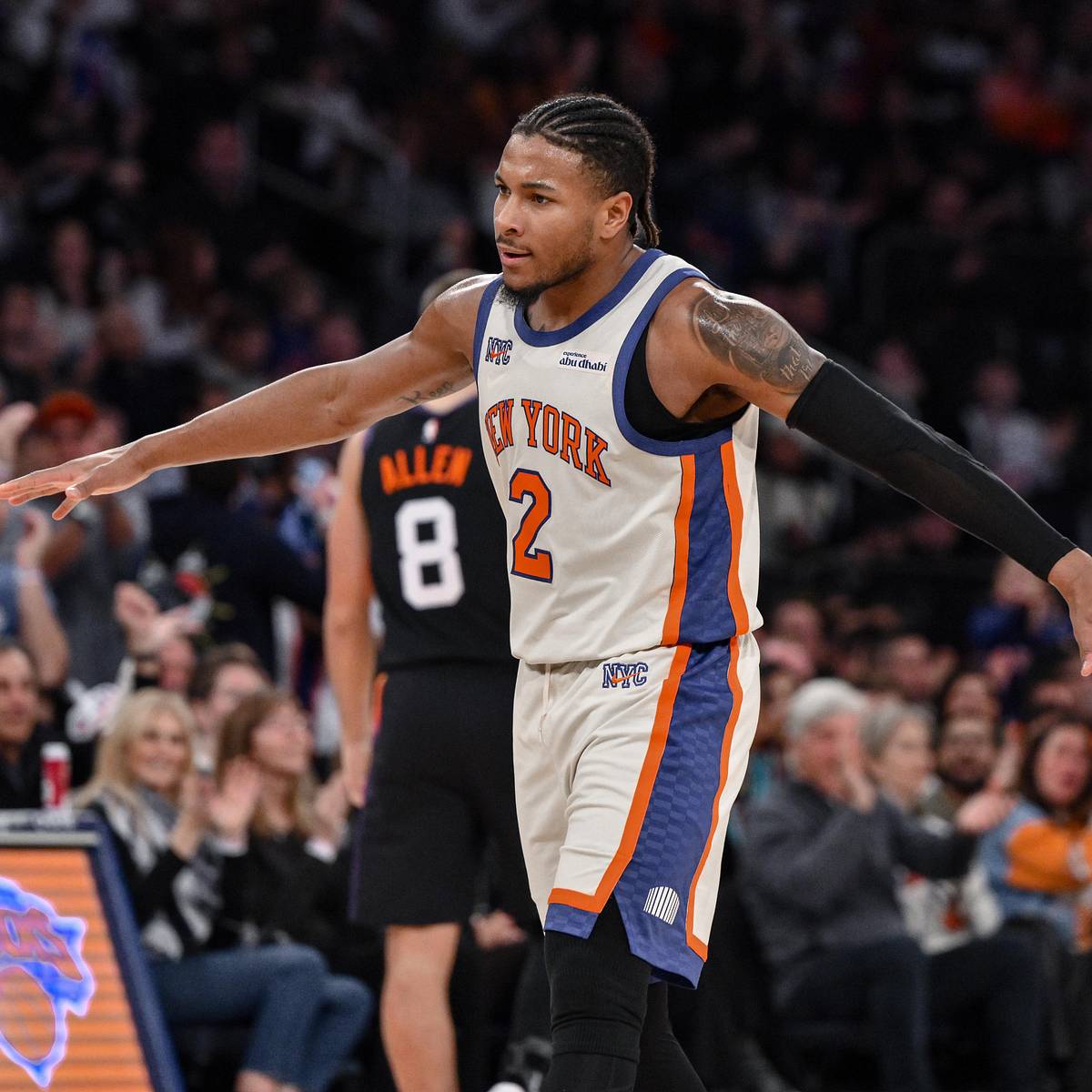
Bench minutes are not created in a vacuum. Every extra late shift for Landry Shamet or Miles McBride must come from somebody who would otherwise be on the floor, and lately Bridges has been the most visible casualty. The two reserves combined for 31 points in the Cleveland loss. Brown's explanation after that game centered on what both players have delivered at either end, not on a desire to make an example of Bridges. In a close contest, a coach is likely to reward the players who are getting stops, making quick decisions and forcing defenders to respect their shot.
Shamet has supplied the cleanest shooting case. Reporting around the Knicks' rotation puts him at approximately 9.6 points a game on 46% shooting, including 42% from three, numbers that create immediate spacing value. He is not simply a stationary spot-up option: his willingness to move, relocate and let the ball go quickly can keep New York's offense from settling into a series of difficult individual possessions. McBride brings a different blend of pressure, point-of-attack defense and the ability to hit important perimeter shots. He is useful not because he has the status of a star but because his minutes come with a clear job description.
The temptation is to translate those advantages into a neat starting-lineup replacement. That would overstate the evidence. One reported combination with Shamet beside Brunson, Josh Hart, OG Anunoby and Karl-Anthony Towns posted a hugely positive early net rating, but the relevant sample was only 15 minutes. By contrast the established starting five had been negative across a much larger, though still small, opening-season sample. A few possessions against different opponents can swing those numbers dramatically. The signal is that Shamet deserves serious consideration, not that a 15-minute lineup statistic has solved an entire championship defense.
GOATIFY
GOATIFY Basketball
Shamet and McBride are giving New York new fourth-quarter options. Explore basketball apparel and fan designs from GOATIFY.


Michael Jordan - GOAT Chicago Bulls Basketball Hoodie
A basketball fan design for everyday wear.
Shop Now ↗
LeBron James – Retro LeGOAT Crewneck Gift Sweatshirt
A basketball fan design for everyday wear.
Shop Now ↗

Carmelo Anthony G.O.A.T. - Basketball Muscle Tank
A basketball fan design for everyday wear.
Shop Now ↗
There is another risk in treating the substitute as a direct one-for-one upgrade. Bridges' length helps New York switch across wing matchups, and his cutting creates a different offensive shape from Shamet's perimeter movement. McBride can harass smaller ballhandlers without being the same size-versatile defender. Brown might want one option to start the first quarter and another to close against a team using three guards. He can also stagger Bridges away from some of the Knicks' highest-usage creators, giving him more possessions in which his own scoring can reappear.
One more variable complicates the individual verdict: New York's pace. Josh Hart has pointed to a slow, late-clock attack, with the Knicks averaging roughly 95 possessions and ranking 23rd in fast-break scoring entering Friday. If the ball routinely arrives with little time left, Bridges may receive fewer clean cuts, transition chances and catch-and-shoot opportunities. That context does not excuse a 26.5% three-point start; open jumpers still need to fall. It does, however, give Brown a tactical adjustment to test alongside minute changes: push earlier, move the ball sooner and judge whether Bridges becomes more involved.
Those are practical tweaks before a dramatic announcement. Give Bridges defined cutting and transition opportunities, keep a sharp leash on stagnant possessions, and reward whichever guard is best defending the relevant matchup. If Shamet continues to space the floor and McBride continues to pressure the ball, New York should not conceal their production to preserve one veteran's minute total. The goal is not to declare a winner in November. It is to build a rotation with more than one trustworthy answer when the postseason demands adjustments.
A championship investment does not guarantee championship minutes
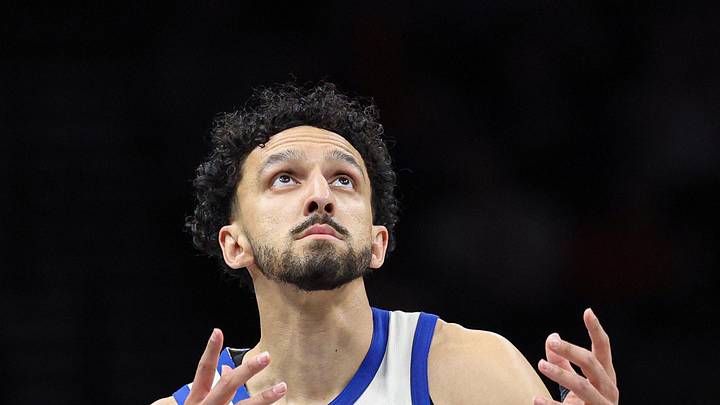
It is impossible to separate Bridges' role from the price New York paid to bring him across the city. The Knicks surrendered substantial draft capital to Brooklyn, and their financial commitment to Bridges has been reported at $150 million. They made that investment because a long, versatile wing who can defend elite opponents, survive heavy minutes and contribute without dominating the ball is rare. His durability and his prior All-Defensive selection are not imaginary credentials, nor is his part in the club's championship run. One poor 11-game stretch should not rewrite those achievements.
At the same time, investment is not a tactical scheme. A player's salary does not make a poorly spaced possession easier for Brunson, and the cost of a trade cannot turn an open miss into a make. The right question for Brown is how to recover the version of Bridges who helps the lineup rather than how to justify a decision already made by the front office. That recovery might begin with a smaller set of assignments, not a demand that he immediately return to his old scoring average while also taking the hardest perimeter defensive jobs every night.
GOATIFY
GOATIFY Basketball
New York's title defense demands a deeper bench and flexible matchups. Find GOATIFY basketball gear for the next big game.

Kobe Bryant – Mamba Championship Decal
Add basketball personality to your favourite gear.
Shop Now ↗
New York Knicks – 2026 NBA Champions Sweatshirt
A basketball fan design for everyday wear.
Shop Now ↗
Fat Shaq Basketball - Big Shaq Dominance Hoodie
A basketball fan design for everyday wear.
Shop Now ↗


Michael Jordan G.O.A.T. - Basketball Coffee Mug
Add basketball personality to your coffee break.
Shop Now ↗The human dimension matters too. Bridges and Brunson have a relationship going back to their Villanova days, and Brunson has publicly defended his teammate's professionalism. That kind of backing can sustain a veteran through an ugly stretch, particularly inside a room where championship expectations make every loss feel bigger. Chemistry is a real asset, but it has to coexist with credibility. Shamet and McBride need to know that excellent performances will keep earning them opportunities; Bridges needs to know the coaching staff's support is genuine even when a fourth-quarter matchup sends him to the bench.
Trade speculation is the easy shortcut, especially with New York's frontcourt depth and roster balance under discussion. It is not a conclusion supported by the present evidence. The team has just over a dozen games' worth of new-season information, and selling low on a versatile veteran could create a harder problem than the one it solves. A useful decision window is the next several weeks: track the quality of Bridges' open attempts, his aggressiveness on cuts, his defensive assignments, the combinations in which he is most effective and whether the bench guards sustain their two-way value once scouting adjusts.
Bridges himself has acknowledged that his play must improve rather than shifting responsibility to a coach or system. That is more meaningful than promising a dramatic turnaround on a particular date. If the missed shots normalize, Brown may end up with more viable perimeter options than he can comfortably play. If the same low involvement and fourth-quarter benchings persist into a larger sample, a starting change becomes a basketball adjustment rather than a panic move. The Knicks do not need to choose a final answer today. They do need to keep collecting the right evidence.
Brown's public patience and his late-game substitutions are not contradictory. Together, they show a coach trying to protect an established contributor while making immediate choices to win. Bridges has earned the benefit of a larger sample from his career, his defense and his role in New York's title. Shamet and McBride have earned the benefit of actual minutes when they are helping the current team more. Neither claim cancels the other.
What matters next is not the symbolism of the opening tip but whether Bridges gets back to making opponents guard him, whether the Knicks' best five are recognizable by the fourth quarter, and whether Brown is willing to change the order if the evidence stays the same. Until then, the safest description of his job is also the most accurate: Bridges remains a starter, but closing games is something he has to win back.
GOATIFY
GOATIFY Basketball
Shop GOATIFY basketball shirts, hoodies and stickers.

Michael Jordan – Bulls GOAT Championship Decal Sticker
Add basketball personality to your favourite gear.
Shop Now ↗
LeBron Photobomb – NBA Basketball Pullover Hoodie
A basketball fan design for everyday wear.
Shop Now ↗

Giannis Antetokounmpo G.O.A.T. - Basketball - Sweatshirt
A basketball fan design for everyday wear.
Shop Now ↗
Basketball Stephen Curry GOAT Champion Muscle Tank
A basketball fan design for everyday wear.
Shop Now ↗