

Sixers Erase 29-Point Hole — LeBron's Philly Era Just Got Loud
GOATIFYPhiladelphia spent the first half of its home opener looking like a collection of famous names that had never shared a playbook. By the final buzzer, the 76ers looked like a team that might be impossible to bury. A 29-point deficit against Cleveland disappeared, the home crowd went from boos to celebration, and the new LeBron James era acquired its first unforgettable Philadelphia moment.
The Sixers beat the Cavaliers 114-106 on Thursday, October 22, after trailing 69-45 at halftime. They outscored Cleveland 69-37 in the second half and completed the franchise's biggest comeback of the NBA play-by-play era. Tyrese Maxey supplied 32 points; Joel Embiid scored 24; Jaylen Brown contributed 21; and James posted 17 points, 10 rebounds and five assists in his first regular-season home appearance for Philadelphia.
The comeback was dramatic, but the more useful question is what it reveals. Philadelphia has enough talent to recover from a disastrous start. It also has enough offensive confusion and turnover risk to create one. Those two realities can coexist. After beating the defending champion Knicks on opening night and an Eastern Conference contender two nights later, the Sixers have offered a compelling early argument for their ceiling — without proving they can reach it consistently.
A 29-point hole exposed the risk behind Philadelphia's star power
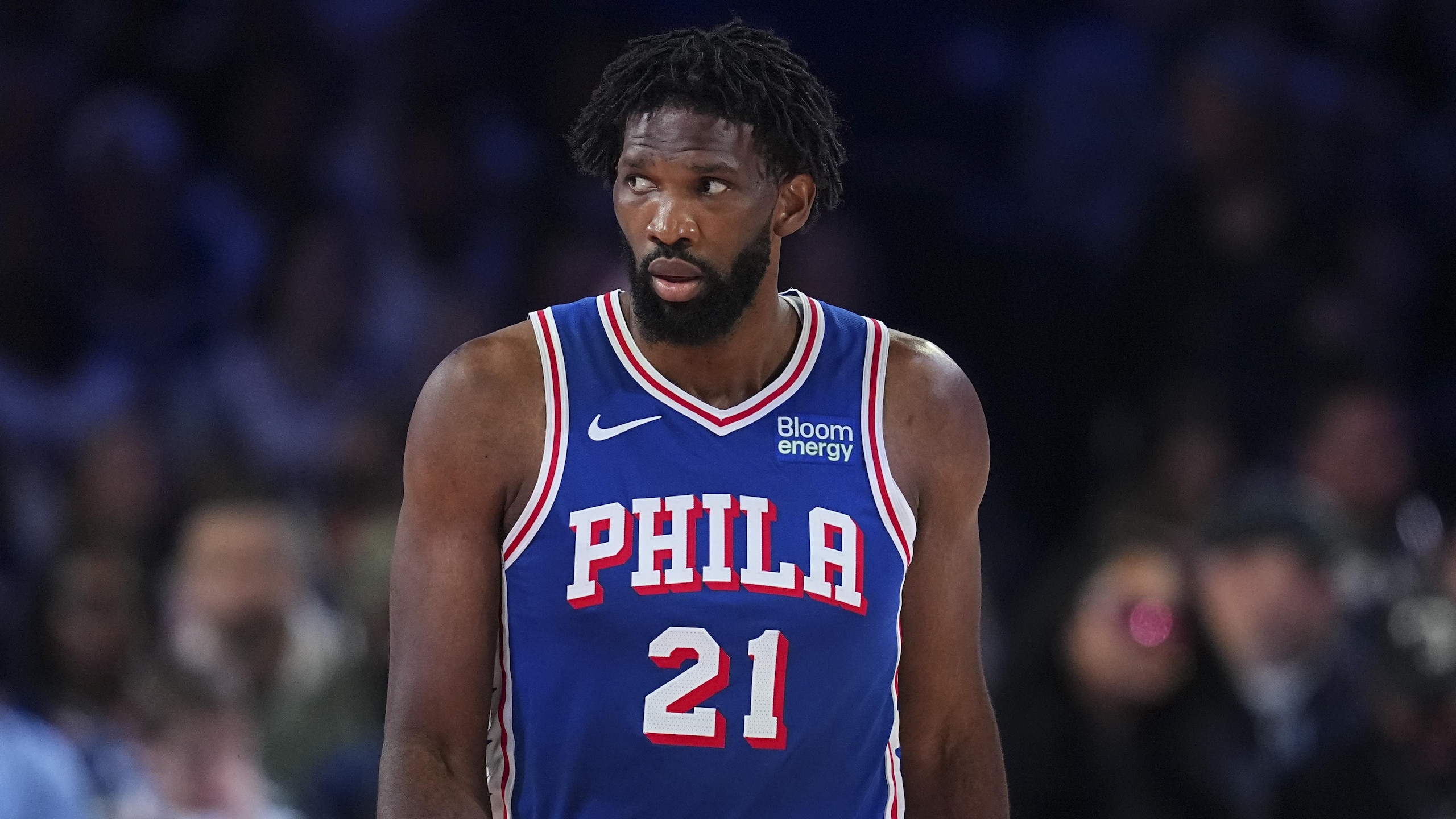
The opening twelve minutes were a warning about how quickly a talented roster can look ordinary when its possessions have no rhythm. Cleveland led 35-18 after one quarter. Donovan Mitchell attacked confidently, the Cavaliers turned Philadelphia's mistakes into opportunities, and the Sixers spent too many trips trying to manufacture an answer rather than executing a repeatable plan. A seventeen-point first-quarter gap became a 69-45 halftime deficit.
The deficit briefly grew to 29 in the second quarter. Mitchell had 22 points by the break and finished with 32 and 10 rebounds. Cleveland's advantage was not built on one spectacular shooting sequence alone. It also came from Philadelphia's poor decision-making: rushed entries, loose passes, and stretches when its five offensive threats seemed to occupy the same spaces. The home team committed 15 turnovers before halftime, according to the postgame reporting. A roster with several accomplished creators can still waste possessions when none knows exactly when to initiate, cut or clear out.
The home crowd responded with boos. That reaction mattered because the Sixers' new season arrived with unusually large expectations. James joined a roster already featuring Embiid and Maxey, while Brown added another established scorer. Their collective résumés make ordinary growing pains look unacceptable, especially on a night that had been marketed as a celebration of Philadelphia's new era.
Still, the first half should not be mistaken for proof that the experiment is doomed. A newly assembled team can struggle to coordinate its best players even when the individual talent is undeniable. The deeper concern is how Cleveland created the same kind of problems repeatedly: it pressured the ball, benefited from hurried reads and kept Philadelphia from dictating the pace. If opponents can reliably recreate those conditions, the Sixers will have to spend too many nights recovering rather than controlling games.
That is the uncomfortable truth behind a thrilling final score. A team capable of overturning 29 points is also a team that allowed a 29-point deficit in the first place. Both halves belong in any serious assessment of its championship ambitions.
Maxey changed the tempo before Embiid changed the score
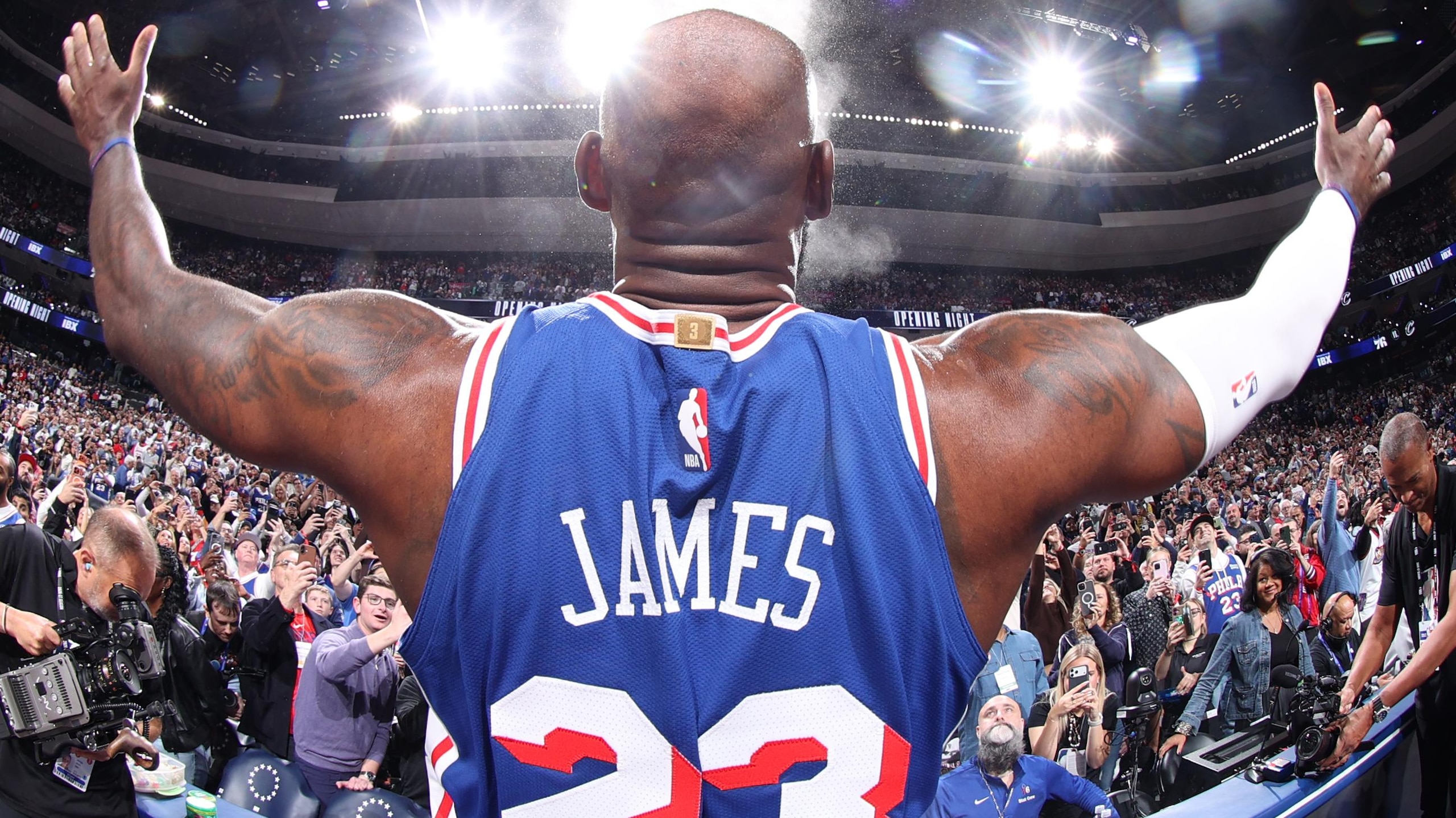
Philadelphia's response was not simply to ask its stars to take harder shots. It began by making Cleveland uncomfortable. The Sixers pushed up defensively, increased their urgency in transition and stopped treating every possession like a half-court negotiation among superstars. That shift changed the pace before it changed the score.
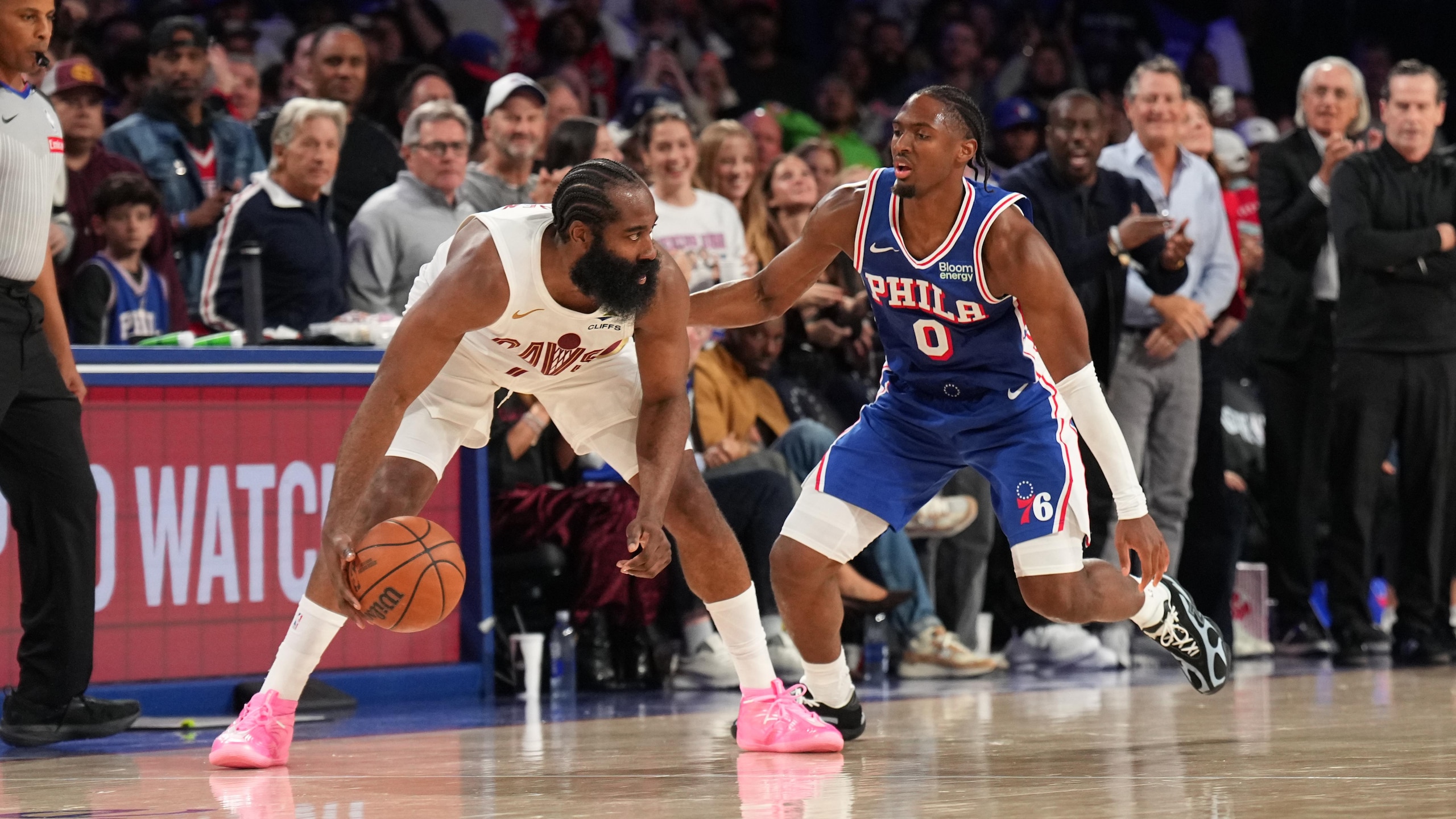
Maxey was central to the transformation. His 32 points led Philadelphia, but his value was broader than the scoring column. He brought pressure to the ball, attacked gaps quickly and gave teammates an outlet when Cleveland's defense began to scramble. His fourth-quarter confrontation with former teammate James Harden captured the edge of the contest, yet the basketball significance was more straightforward: Maxey played with the energy needed to make the Cavaliers work on every possession.
The Sixers won the third quarter 37-21, turning a 24-point halftime deficit into a manageable 90-82 margin entering the fourth. The comeback did not happen in one impossible burst. It happened because Philadelphia stacked defensive stops, took better care of the ball and converted those stops into chances before Cleveland could reset. The Cavaliers, so composed in the first half, were suddenly reacting instead of dictating.
Embiid supplied the next gear. With Philadelphia still chasing in the fourth, he attacked the middle of the floor and scored seven consecutive points to move the Sixers ahead. He finished with 24 points and seven rebounds. That sequence mattered because it came from a different source than Maxey's pace. Philadelphia could pressure Cleveland with a fast guard, then slow the game down and demand an answer to Embiid near the basket.
The distinction is important for the season ahead. A comeback powered only by difficult jumpers is hard to reproduce. One built on improved defensive effort, fewer wasted possessions and complementary scoring options has a more plausible foundation. Maxey and Embiid showed how two very different strengths can reinforce one another when the team's decision-making becomes clearer.
Cleveland still had chances. Mitchell's 32 points and Evan Mobley's 18 underlined that the visitors were not devoid of offensive answers. But the Cavaliers lost the initiative, and Philadelphia finally played like the side with more ways to score.

LeBron and Jaylen Brown gave the Sixers two different kinds of insurance
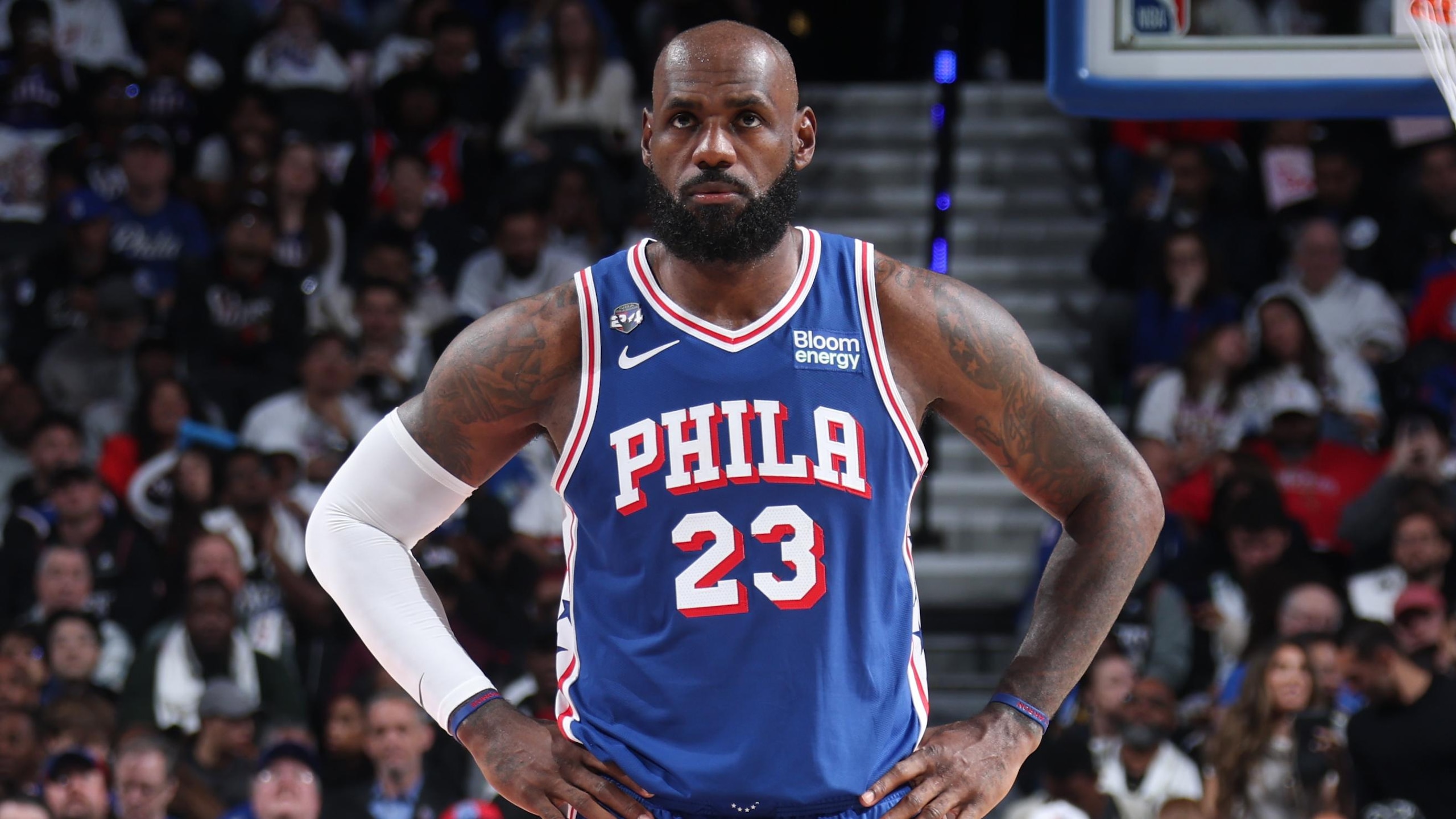
LeBron James did not need to lead Philadelphia in scoring to become central to the story. He finished with 17 points, 10 rebounds, five assists and three steals in his first home game wearing a Sixers uniform. Those numbers describe a player who can influence the game without monopolizing the offense. At 41, that may be the most valuable version of James for a roster already rich in shot creators.
His first-half experience was hardly the ceremonial introduction the city had imagined. Philadelphia's fans booed their own team as the deficit ballooned. Afterward, James acknowledged that the reaction was deserved and said the atmosphere became extraordinary when the comeback arrived. The significance was not that the crowd immediately embraced a new superstar. It was that the team earned the applause after being forced to confront its worst basketball of the night.
Brown provided a more direct late-game solution. After an uneven start, he scored 10 of his 21 points in the fourth quarter, giving the Sixers a reliable wing option when the game became a sequence of difficult half-court possessions. He scored six straight points during a decisive 15-0 run, with Maxey adding a basket as Philadelphia moved ahead 104-95. Brown also grabbed eight rebounds and added four assists.
That stretch showed why Philadelphia's collection of stars can be more than a marketing exercise. Embiid can draw attention near the rim; Maxey can bend a defense with speed; James can organize a possession or exploit a mismatch; Brown can take over a scoring sequence without waiting for an elaborate setup. The danger is redundancy. The opportunity is that no single player has to solve every difficult possession.
For coach Nick Nurse, the next challenge is converting those overlapping abilities into a sustainable rotation. James and Embiid should not have to carry maximal workloads every time the game becomes close. Brown's scoring and Maxey's energy can buy rest, preserve options and prevent a star-heavy team from becoming predictable. The Cavaliers game offered a glimpse of that flexibility, not a finished system.
There is also an emotional advantage. When a veteran as decorated as James accepts a secondary scoring role on a particular night, it makes the team's larger message easier to sell: the best shot matters more than the biggest name. Philadelphia will need that mindset when the initial excitement wears off.

Two wins are a statement; the next month will be the examination
The 76ers are 2-0, and the identity of the opponents makes that record more interesting than an ordinary undefeated opening week. Philadelphia beat the defending champion New York Knicks in the season opener, then erased a historic deficit against a Cleveland team that expects to contend in the East. Neither result guarantees playoff success. Together, they suggest the roster can survive adversity against high-level opposition before its offensive habits are fully established.
The next test arrives almost immediately. Philadelphia hosts Milwaukee on Saturday and Detroit on Sunday, creating a back-to-back in which rest, rotation decisions and defensive consistency become harder to disguise. The team cannot reasonably expect to concede 35 first-quarter points and rescue every night with a second-half surge. The defensive pressure that worked against Cleveland must appear earlier and with less desperation.
Three-point shooting is another unresolved problem. Philadelphia made only seven threes against Cleveland, and the early possessions frequently looked cramped. That is not automatically a fatal weakness when a team can score at the rim and get to the foul line, but poor spacing becomes more expensive against opponents that protect the paint and force slower decisions. Maxey's speed, Embiid's interior presence and James's passing will be more effective if the supporting players make defenses respect the perimeter.
There is a lesson for Cleveland as well. The Cavaliers controlled the first half with Mitchell's shot-making and strong defensive pressure, but they could not preserve their advantage once Philadelphia adjusted. A 29-point lead should be enough to survive an opponent's best run. Cleveland must review why its ball security, offensive organization and defensive response deteriorated so sharply after halftime. The final score does not erase the quality of its opening two quarters, but it does expose the cost of failing to adapt.
Philadelphia's immediate opportunity is to learn without treating the comeback as permission to repeat the mistakes. Nurse has film showing both the offense at its least coherent and the team at its most connected. The useful work is in understanding the difference and making the better version less dependent on an emergency.
That is what will determine whether Thursday becomes the first chapter of a special season or simply a brilliant October memory. The star names create expectations. Consistent habits will decide whether the Sixers can meet them.
Philadelphia's 114-106 win will be remembered for the size of the deficit and the roar that followed the turnaround. Maxey's 32 points, Embiid's decisive fourth-quarter scoring, Brown's late shot-making and James's all-around home debut each deserve a share of the credit. None tells the complete story alone.
The real discovery was that this group has several routes back into a game when the first plan fails. That is a promising trait for a contender. The warning is equally clear: a 29-point hole is not a strategy. With Milwaukee and Detroit coming to Philadelphia this weekend, the Sixers get an immediate chance to prove that the second-half version of themselves can show up before the scoreboard becomes an emergency.



















