Thomas Frank Has the Palace Job. Now the January Promise Has to Mean Something.
GOATIFYCrystal Palace have stopped interviewing and started counting the days. Thomas Frank was confirmed as their new manager on Monday, November 16, signing through June 2029 after Pierre Sage's dismissal. That matters because the question has changed. Four days earlier, Frank was a candidate who might accept a difficult appointment. Now he owns a relegation fight, an overloaded calendar and a defence that has conceded 24 goals in ten Premier League matches.
Chairman Steve Parish has reportedly promised funds for January reinforcements. That promise may be the most consequential detail of the entire appointment. Palace's summer recruitment left a major hole at centre-back after Maxence Lacroix departed, and a proposed move for Joel Ordóñez collapsed following a medical. Frank cannot buy a replacement this week, so he must make the existing team less vulnerable before the transfer window opens.
The table shows seven points from ten league matches and last place. Those are not numbers a new coach can rebrand. Palace have the talent to create chances, including Adam Wharton's passing, Jean-Philippe Mateta's presence and Ismaïla Sarr's pace, but they need a structure that does not surrender good attacking positions every time possession turns over. The new appointment is significant news. Whether it becomes a successful rescue is an entirely separate story.
The January Promise Is a Test of Palace's Recruitment, Not Just Frank's Reputation
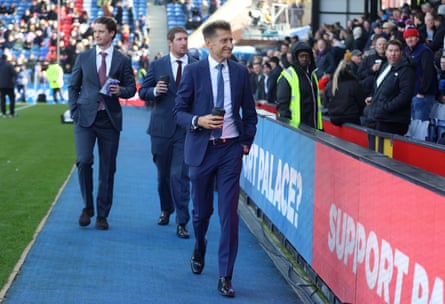
Palace presented Frank as the coach capable of rebuilding a functional Premier League side. His contract runs to June 2029, which gives the appointment a longer horizon than an emergency caretaker hire. The immediate challenge, though, is brutally short-term. Seven points after ten games puts the team bottom of the table. A coach can improve communication and positioning in a few training sessions; he cannot create a specialist centre-back or magically restore the defensive partnerships that left the club in the transfer market.
The departure of Marc Guéhi to Manchester City in January and Maxence Lacroix to Chelsea in the summer changed the spine of the team. It is possible to replace two defenders on paper and still fail to replace their complementary skills. Recovery speed, how early a defender engages the ball, aerial control, communication with the goalkeeper and confidence stepping out to intercept all affect the team around them. When those qualities are missing, the whole system gets dragged deeper or stretched between lines. The disagreement over summer replacement options was one of the major tensions surrounding Sage's short stay.
One attempted fix tells the story. Palace had a deal for Joel Ordóñez but abandoned it after a medical revealed a fractured foot. The club then had to proceed without that planned addition. Reports of a January budget are important because they suggest the hierarchy recognizes the squad issue, but a budget is not a signed player. A good recruitment process must decide the precise type of defender Frank needs, establish fitness and availability, and avoid chasing a headline name who cannot play in the chosen structure. Getting the profile wrong again would waste precious weeks.
GOATIFY
GOATIFY Soccer
Steve Parish's reported January transfer backing makes recruitment a central part of Frank's rescue; browse GOATIFY football fan apparel while following Palace's next window.

Kylian Mbappe – El Dictator Vintage Football Sticker
Add football personality to your favourite gear.
Shop Now ↗


Stop The Glazers From Ruining Manchester Mug
Add football personality to your coffee break.
Shop Now ↗
Anal Arsenal Parody Football London Fans Sweatshirt
A football fan design for everyday wear.
Shop Now ↗Parish also has to reconcile two managerial appointments in a single season with the need for stability. The decision to dismiss Sage came after a poor start; the decision to appoint Frank does not erase what happened between the two. If Palace want a more front-foot defensive line, recruitment needs pace behind it. If they prefer a compact block, they need players comfortable defending crosses and second balls. Simply telling the next manager to make do with every mismatch and then holding him responsible for the same weaknesses would be repeating an expensive cycle.
Even the reported financial backing requires nuance. The club has not announced a guaranteed list of January signings, specific fees or completed agreements. It would be misleading to turn an assurance into a completed transfer strategy. Frank should be judged on how quickly he identifies the controllable problems now. The board should be judged on whether the eventual deals genuinely address them. Those are separate responsibilities, and both are necessary if the three-year contract is to become more than a document signed during a crisis.
A useful early indicator will be whether Palace become more difficult to create clean chances against before anyone arrives. If the defensive numbers improve through coaching, January additions can build on a functioning base rather than carry the entire rescue themselves. If nothing changes and the explanation is always that the next window will fix it, the pressure merely moves from the dugout to the boardroom.
Twenty-Four Goals Conceded: Frank's First Defensive Job Starts Without a Transfer
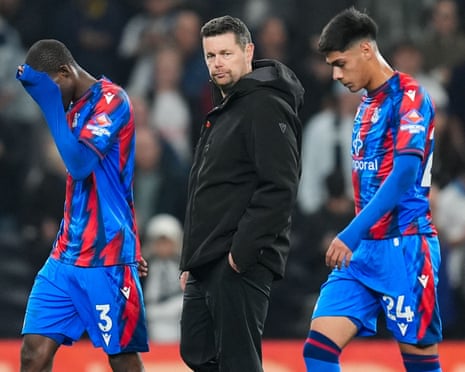
Palace's 24 goals allowed are the league's worst total through ten matches. The number is already striking, but goals conceded are the end of a chain rather than a complete explanation. A defender might lose a duel because the nearest midfielder failed to delay the counterattack. A goalkeeper may face an apparently impossible finish because the full-back was caught between the ball and the runner. A new manager who focuses only on individual mistakes will miss the connections that keep producing those moments.
Frank's first practical decision concerns distance between the lines. When Palace attack, somebody must remain in a position to stop the first forward pass after possession is lost. That can be a holding midfielder, a full-back instructed not to overlap or a centre-back stepping into midfield when the timing is right. The personnel will change, but the principle is stable: a team cannot send everybody ahead of the ball and expect to defend a transition from a standing start. The more aggressive the press, the more carefully the rest of the structure must prepare for the press being beaten.
Set pieces deserve equal attention. When a struggling side concedes regularly from dead-ball situations, the problem is often less glamorous than the starting formation. Blocking assignments, who attacks the first delivery, who tracks the second ball and whether the defenders hold their line can all be rehearsed. Those are adjustments that may produce a benefit before a transfer is possible. Palace cannot afford to wait for January to decide who has responsibility when a corner clears the first defender and drops near the penalty spot.
GOATIFY
GOATIFY Soccer
Palace must repair their defence before any new signing arrives. Explore GOATIFY soccer and Premier League-inspired fan gear.

Kylian Mbappe France Euro 2024 Ninja Turtle Hoodie
A football fan design for everyday wear.
Shop Now ↗
GLINEOS OUT Manchester United Fans Protest Sticker
Add football personality to your favourite gear.
Shop Now ↗
Bottlers FC Tottenham Hotspur Parody , Spursy Sweatshirt
A football fan design for everyday wear.
Shop Now ↗


Cristiano Ronaldo – GOAT Soccer Muscle Shirt Tank
A football fan design for everyday wear.
Shop Now ↗Dean Henderson's role should be part of the solution rather than the entire solution. A keeper can communicate, narrow angles and organize defenders, but constant last-ditch saves are a warning sign, not a sustainable defensive system. One simple metric to watch in Frank's opening games is the frequency of clear attempts conceded from the centre of the box. Another is whether opposing teams can carry the ball from halfway into an immediate shooting position after Palace lose it. Cutting out two high-quality chances may be more valuable than adding ten harmless shots of their own.
Frank became respected at Brentford partly because his teams could adapt the shape of their defence to the opponent. That does not mean Palace should change formations for the sake of looking adaptable. Consistency is valuable to defenders still learning each other's strengths. The coach can introduce clear pressing triggers, define when the team should retreat, and decide how much freedom Wharton has to leave his station. If the players understand those decisions, the back line may stop facing impossible choices even if the starting names remain unchanged.
Perhaps the most important short-term standard is ordinary competence. Palace do not need to dominate every minute at Coventry. They need to stop making routine possession losses look like emergencies, limit needless free kicks near their box and keep enough players behind the ball when attacks break down. A new manager bounce is a phrase for television; a team conceding fewer dangerous chances because its instructions are clearer would be a real change that survives beyond the first result.
Wharton, Mateta and Sarr Must Turn Palace's Possession Into Something Useful

The temptation in a relegation battle is to treat defending and attacking as unrelated departments. Palace cannot do that. If the first attacking pass is rushed, defenders are forced to sprint back before the team has even crossed halfway. If every forward move ends in a low-percentage cross, the opposition can collect the ball and counter into the space left behind. The best way to protect a vulnerable back line may sometimes be to keep possession in safer areas and make the next chance worth the risk required to create it.
Adam Wharton gives Frank a starting point. His strength is not merely making a completed pass that enters a statistical column; it is receiving under pressure and recognizing a lane before a defender closes it. Used well, he can connect a deeper midfield structure to the forward line without requiring Palace to throw multiple extra players into the same channel. Used badly, he may find himself caught too high when an attack fails or sitting so deep that his passing makes little progress. His positioning will reveal a lot about how Frank intends to balance security with invention.
Jean-Philippe Mateta supplies a very different set of problems for defenders. His physical presence can help Palace advance the ball even when the midfield is under pressure, but asking a striker to win every long pass with no nearby support creates another turnover machine. Frank can use Mateta as a reference point and then position a runner or midfielder close enough to collect the second ball. It is not necessary to invent a complicated new tactical language: the gap between the target and the supporting players often decides whether a direct pass is an attacking weapon or a surrender of possession.
GOATIFY
GOATIFY Soccer
Wharton, Mateta and Sarr need clear roles in the new Palace attack. Browse GOATIFY football shirts and gifts for fans following the tactical reset.


Deflated Tottenham Hotspur Parody , Spursy Hoodie
A football fan design for everyday wear.
Shop Now ↗

Trashford Marcus Rashford Manchester United Sweatshirt
A football fan design for everyday wear.
Shop Now ↗
Erling Haaland Thor Avenger Manchester City Sticker
Add football personality to your favourite gear.
Shop Now ↗
OUTEOS INEOS OUT Manchester United Protest Mug
Add football personality to your coffee break.
Shop Now ↗Ismaïla Sarr can change the pace of a match when given space to run. The danger is interpreting pace as a reason to send the ball into the channel at every opportunity. A winger becomes more difficult to defend when the defender is unsure whether the next movement will be a sprint behind, a short combination or a switch of play. Frank needs to give Sarr a reliable relationship with the nearest full-back and midfielder so those options remain available. If the entire left or right side advances together, however, the transition problem returns.
There are decisions beyond tactics, too. Reports have raised questions about Mateta's contract and Sarr's future, but uncertainty is not the same as a confirmed departure. The new manager's job is to engage the players actually at the club rather than operate as though a transfer rumour has already happened. A squad fighting to escape the bottom needs clear roles and honest communication about minutes and responsibilities. Palace could build an effective attack around these names; it would be careless to assume every piece will remain indefinitely or that one newcomer will automatically replace an unsettled player.
The way to judge attacking improvement is not possession percentage in isolation. Look for better-quality entries into the penalty area, a second player arriving near Mateta and options for Wharton when opponents mark his first passing target. Then check what happens when the move fails. If Palace create an extra chance while exposing the goalkeeper to three counterattacks, it is not sustainable progress. Frank's better teams have understood that an attack should leave the defence in a survivable shape. Palace need that principle almost as urgently as they need goals.
Coventry, Real Sociedad, Hull: The First Three Games Can Expose the Plan
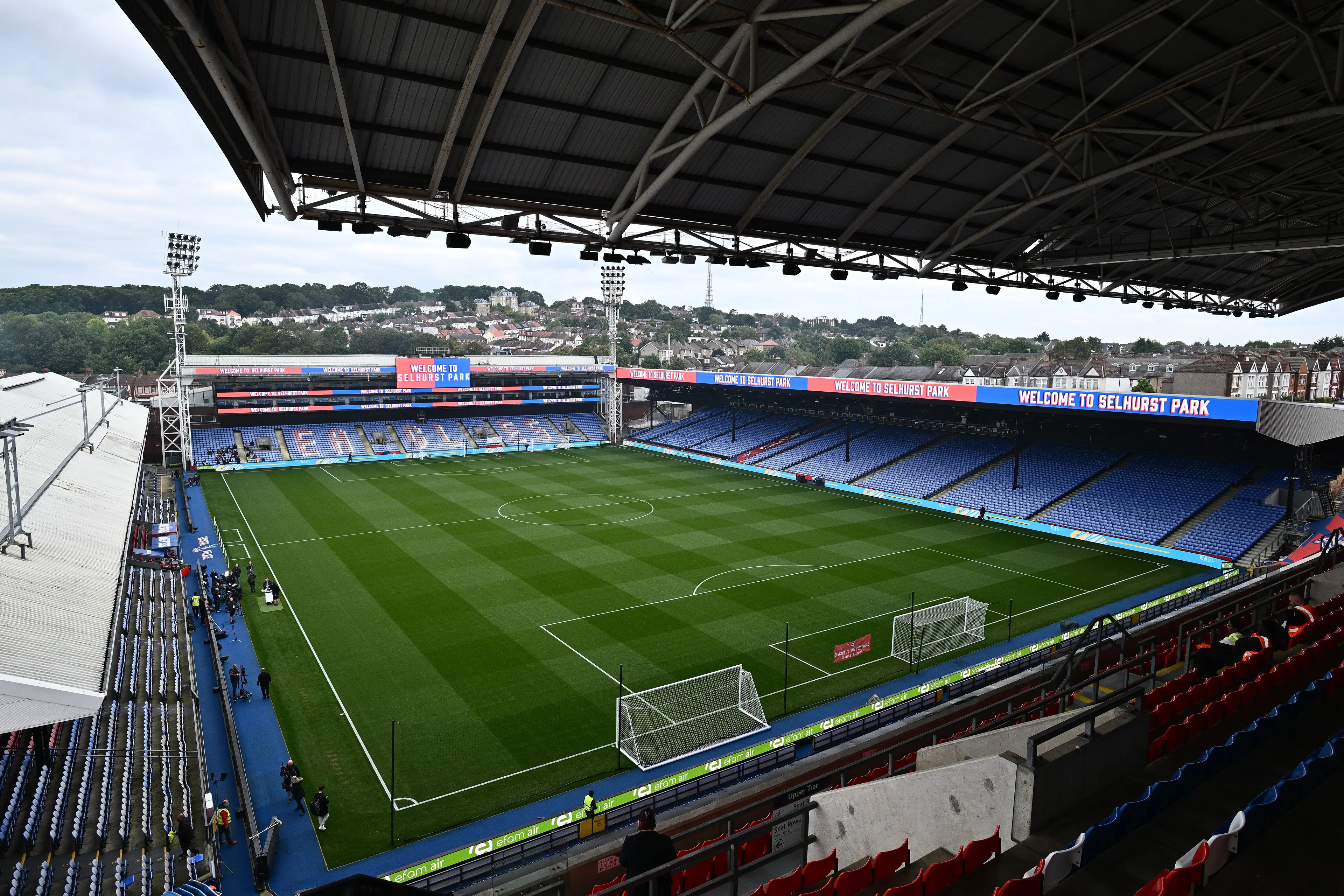
Frank's first league assignment is a trip to Coventry on Saturday, November 21. It is an awkward introduction because both the new manager and his opponent will know how much pressure rests on the game. Palace then host Real Sociedad in the Europa League on November 26 before returning to Premier League action at home against Hull on November 29. That sequence offers a sensible, if imperfect, first sample: an away league test, an international midweek fixture and a home league match against another opponent for whom the points matter.
Any claim that Frank has already fixed the team would be premature before a ball has been kicked under his management. There may be little time for extended tactical training between those matches. Instead of demanding an instant complete reinvention, look for choices a coach can actually implement: a clearer relationship between the central midfielders, fewer unprotected overlaps, consistent set-piece assignments and substitutions that protect a lead rather than leave the team stretched. A win would improve the table. Evidence that the team has understood its new shape would be just as important.
The Europa League date complicates matters. The strongest lineup for Coventry may not also be the smartest lineup for Real Sociedad, and rotation brings the question of which partnerships need continuity most. In a side that has conceded 24 league goals, constantly changing the centre of defence could magnify confusion. But asking the same group to cover every fixture risks fatigue and another kind of defensive deterioration. Frank has to identify the positions where fresh legs can enter without dismantling the team's structure. That is one of the practical differences between managing a single crucial Saturday and surviving an entire winter calendar.
GOATIFY
GOATIFY Soccer
Coventry, Real Sociedad and Hull are the first fixtures of Frank's Palace era. Explore GOATIFY football gifts for the weeks ahead.

Kylian Mbappe Ninja Turtles football/ soccer Tee
A football fan design for everyday wear.
Shop Now ↗
Kylian Mbappe Orange Ninja Turtle Michelangelo Sweatshirt
A football fan design for everyday wear.
Shop Now ↗
Kylian Mbappe Ninja Turtles football/ soccer Mug
Add football personality to your coffee break.
Shop Now ↗
Kylian Mbappe Ninja Turtles Real Madrid Soccer Hat
A football fan design for everyday wear.
Shop Now ↗

Kylian Mbappe Purple Ninja Turtle Donatello Sticker
Add football personality to your favourite gear.
Shop Now ↗His career offers reasons both for optimism and for caution. Frank took Brentford from the Championship into the Premier League and kept the club competitive through clear organization, coherent recruitment and a willingness to adapt to opponents. His Tottenham stint was much less successful and ended in February after a difficult eight months. Neither period alone determines what will happen at Palace. The relevant question is which conditions allow his best methods to work: players suited to their assignments, a board that recruits coherently and enough time to build familiarity without excusing poor results.
At Brentford, different opponents could require different pressing heights or methods of advancing the ball, but the team retained recognizable principles. Palace need the principles before they need tactical variety. It may be wise to defend compactly away from home, be more aggressive when a match allows it and give Wharton a consistent passing reference in both shapes. The risk is that an anxious side receives too many instructions at once. A manager can have an excellent long-term idea and still lose players through information overload in his first training week.
By the time the Hull game is over, the league table will not tell the whole story. Palace could play better and still leave points behind against stubborn opponents. They could win through one set piece while showing the same vulnerability that damaged the previous regime. The better audit considers chances conceded from open play, how often the team is caught out of position after losing the ball and whether Mateta and Sarr receive useful service. Those signs will show whether Frank is installing a coherent approach, not merely riding a short burst of emotion.
The board's January support remains the second half of the test. Improvement now should guide recruitment: is another fast central defender essential, does midfield cover need reinforcements, or are attacking decisions wasting too many possessions? The answer should follow observation rather than a preselected list of expensive names. Palace have committed until 2029, yet the immediate deadlines are November 21, November 26 and November 29. Frank has to make the current group believable before the next arrivals can make it better.
Monday's announcement settles the management question. It does not settle Palace's defensive structure, January recruitment or the future of the players asked to turn possession into points. The contract through 2029 represents faith in Frank's ability to build a team, but his first real opportunity is much closer: Coventry, Real Sociedad and Hull will show whether the instructions have become clearer.
Palace need fewer dangerous concessions, more connected attacking moves and a January plan tied to specific needs rather than the glamour of spending. If those three things start to align, Frank's return can become a credible survival story. If the same holes remain while everyone waits for another transfer window, the club will have replaced the manager without solving the problem.
GOATIFY
GOATIFY Soccer
Shop GOATIFY soccer and football shirts, hoodies and stickers.


Kylian Mbappe Purple Ninja Turtle Donatello Mug
Add football personality to your coffee break.
Shop Now ↗
Jude Bellingham – Future World Cup Champion Hoodie
A football fan design for everyday wear.
Shop Now ↗
Anal Arsenal Parody Football Decal London Fans Sticker
Add football personality to your favourite gear.
Shop Now ↗
Kylian Mbappe Ninja Turtle Soccer Euro 2024 Sweatshirt
A football fan design for everyday wear.
Shop Now ↗
Christian Pulisic – USMNT GOAT Muscle Shirt Tank
A football fan design for everyday wear.
Shop Now ↗