Verstappen Finally Conquered Singapore — Antonelli Still Has the Championship in His Hands
GOATIFYMax Verstappen has finally added Singapore to his Formula 1 victory list. On Sunday, October 11, the Red Bull driver led the 62-lap race from pole to the flag, beating Charles Leclerc by 7.335 seconds and taking the 73rd Grand Prix win of his career on his 250th race start. He had already won the Sprint and qualified fastest. At a circuit that once seemed to resist him, this was the complete weekend.
Yet the most consequential number in Singapore may not have belonged to the winner. Kimi Antonelli finished third for Mercedes while teammate George Russell recovered only to ninth, stretching Antonelli's drivers' championship advantage to 102 points. Verstappen's back-to-back wins are evidence that Red Bull has found a much stronger late-season car; Antonelli's points cushion says the 2026 title is still firmly within his control.
The race turned on a brave first-corner defence, an unusually effective tyre strategy, a Ferrari gamble that unraveled, and a late fight for the final podium place. Those details explain why Verstappen looked untouchable even as the championship story moved in a different direction.
Leclerc Had One Corner to Change the Race
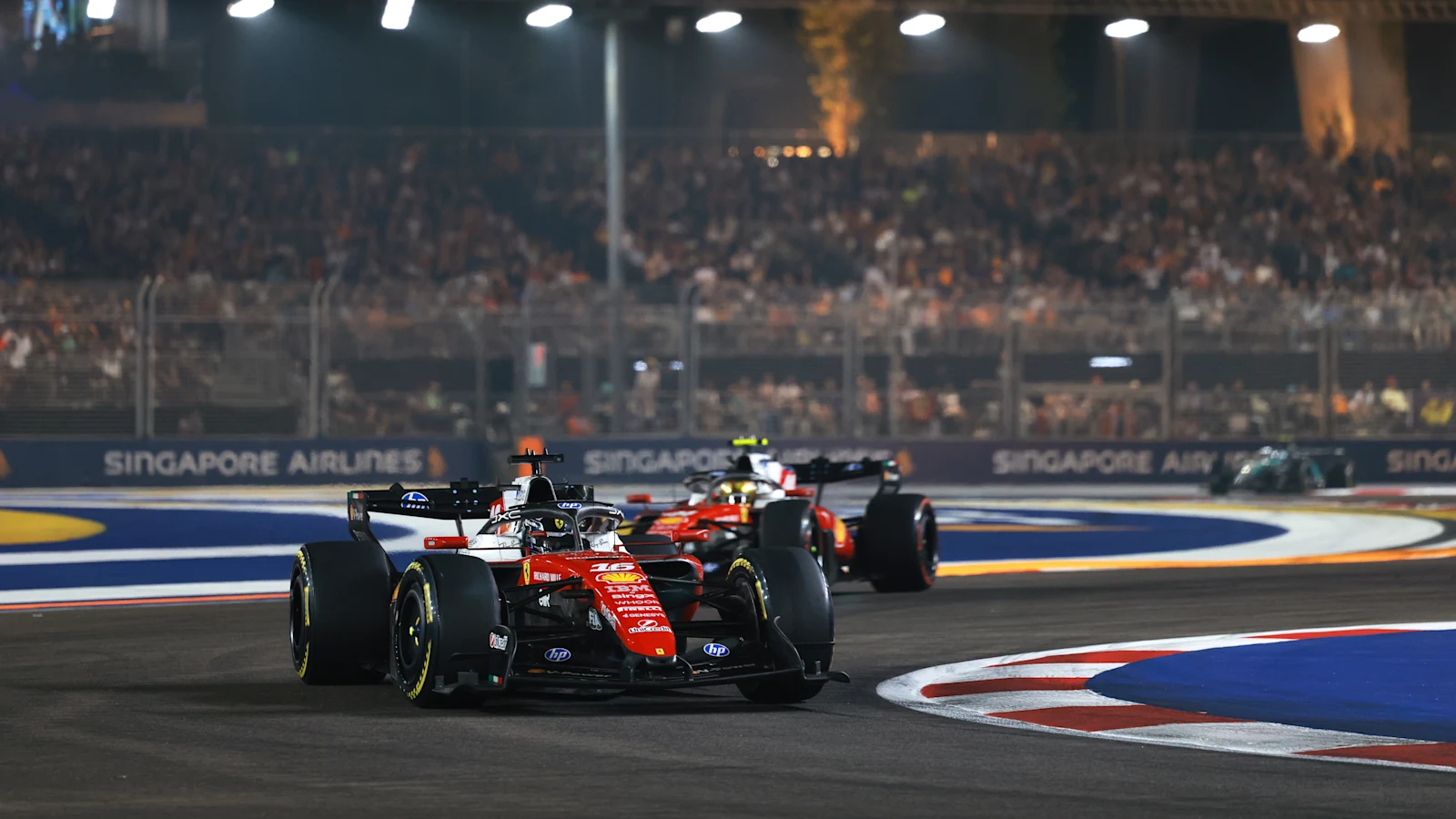
For a few seconds after the lights went out, Charles Leclerc had the chance to turn Singapore into a very different race. The Ferrari launched strongly from second on the grid and closed alongside the pole-sitting Red Bull on the run to Turn 1. Verstappen defended the inside approach decisively, kept the better line through the opening complex and emerged still in front. At Marina Bay, where following another car through a sequence of slow corners can be punishing, that was far more than a routine opening-lap move.
Leclerc stayed close enough to threaten in the early stint. He was only around six-tenths behind in the opening phase, and Ferrari had genuine pace rather than merely a good qualifying position. Yet a small gap is not the same thing as a usable overtaking opportunity. The lead car can choose how hard to push at the beginning of a stint; the following driver must balance battery deployment, tyre temperatures and the risk of overheating while staying within striking distance. Verstappen gradually turned the gap into a cushion rather than inviting Leclerc to dictate his pace.
By roughly lap 15, the advantage had grown beyond two seconds. That mattered because Ferrari's strongest route back into contention was to force a strategic decision: either push hard enough to trigger an early Red Bull stop or find a way to pit first and exploit fresher tyres. Leclerc eventually stopped on lap 25, but the race had already begun to tilt away from a direct fight for first. Verstappen could respond from a position of strength rather than urgency.
The eventual seven-second margin may make the afternoon look comfortable from start to finish. It was comfortable because the defending champion won the important contest before the gap appeared on the timing screen. Leclerc's opening challenge showed Ferrari could threaten the Red Bull over one lap and at the launch. Verstappen's response showed that clean air, measured tyre use and a well-timed first corner were still the more valuable combination. On a street circuit, the order at the end of lap one can shape the entire strategy tree.
Red Bull Turned Tyre Life Into a Winning Margin
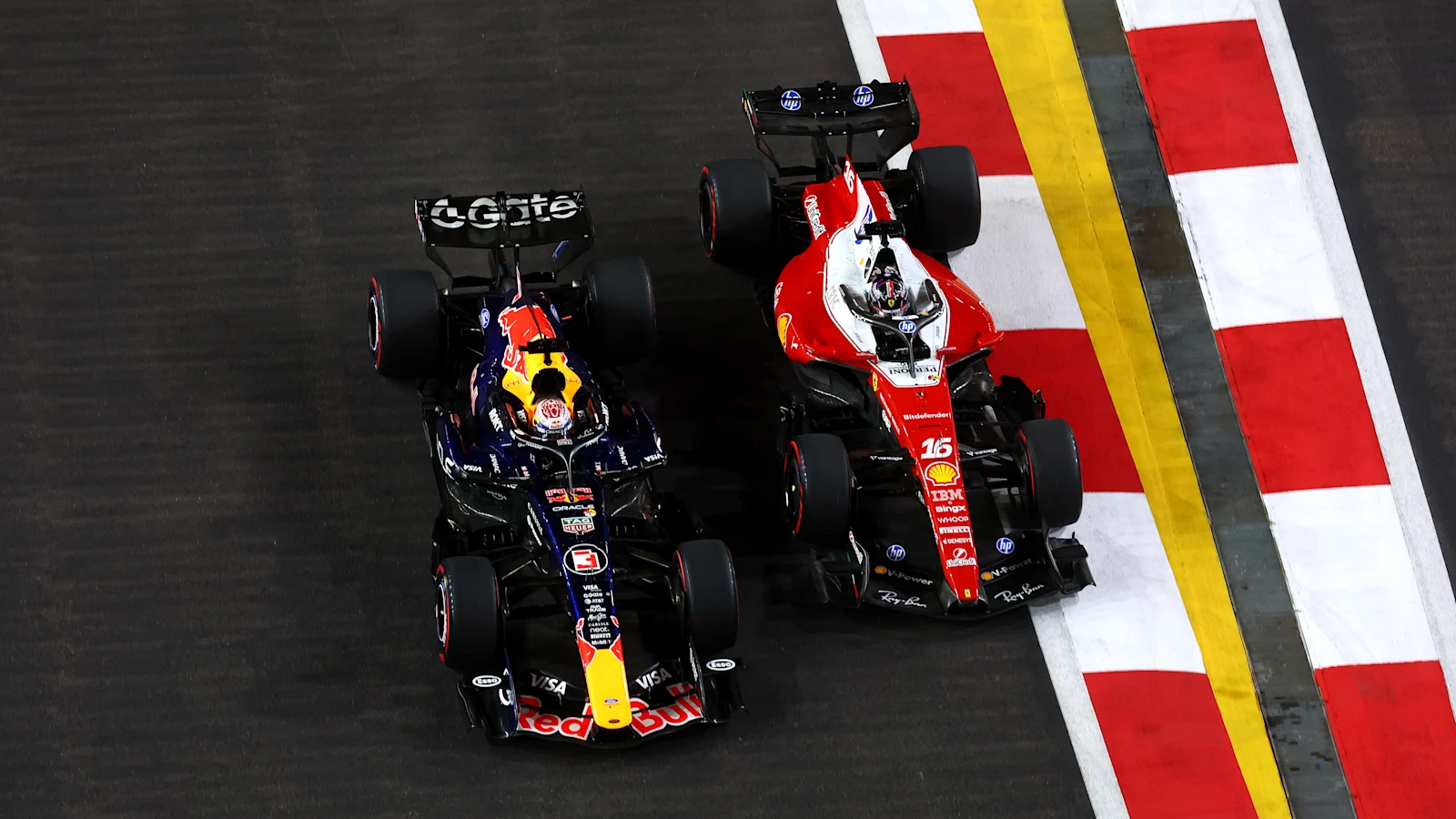
Verstappen's victory was not built on a single spectacular lap. It was built on knowing when the Red Bull needed to be fast and when it needed to protect its tyres. The pole-sitter started on the soft compound, as did a sizeable portion of the field, and initially faced the question that defines many Singapore races: how long can a driver stay quick without asking too much of the rubber in the heat?
The answer was long enough to take control of the pit-stop sequence. With Leclerc stopping on lap 25, Verstappen extended his opening stint to lap 33 before switching to mediums. His accumulated lead was large enough that the stop did not cost him first place. That is a significant strategic advantage: instead of relying on a perfect undercut or fighting back through traffic, Red Bull could protect track position while using the fresh tyres to manage the closing stint.
It also illustrates why Red Bull's recent improvement is more convincing than one strong qualifying performance. Verstappen had won the previous Grand Prix, held in Malaysia under the Bahrain event name, and then added the Singapore Sprint, pole and main race victory. The circuits demanded different things from the car. Success across both weekends suggests a broader step in usable performance, although it would be premature to conclude that every track remaining on the calendar will suit the package equally well.
There was still an unusual operational problem. Late in the race, the team struggled to hear Verstappen over the radio and resorted to simplified communication, including responses through microphone sounds and the pit board. In a tightly contested fight, losing normal two-way information could complicate a late Safety Car decision. Here the lead was sufficiently secure that the driver and pit wall could keep the plan simple. The radio fault became an odd footnote rather than a defining weakness.
The result was Verstappen's 73rd career Grand Prix win and his first at Singapore after multiple previous podiums. He achieved it on his 250th start, a milestone that made the occasion memorable but did not explain the performance. What explained the performance was a car that preserved tyre life, a driver who controlled the pace without overreaching, and a team able to turn an early advantage into a clean pit-stop margin. That is a more durable sign of competitive recovery than a single fast lap.

Ferrari's Gamble and Russell's Recovery Changed the Order
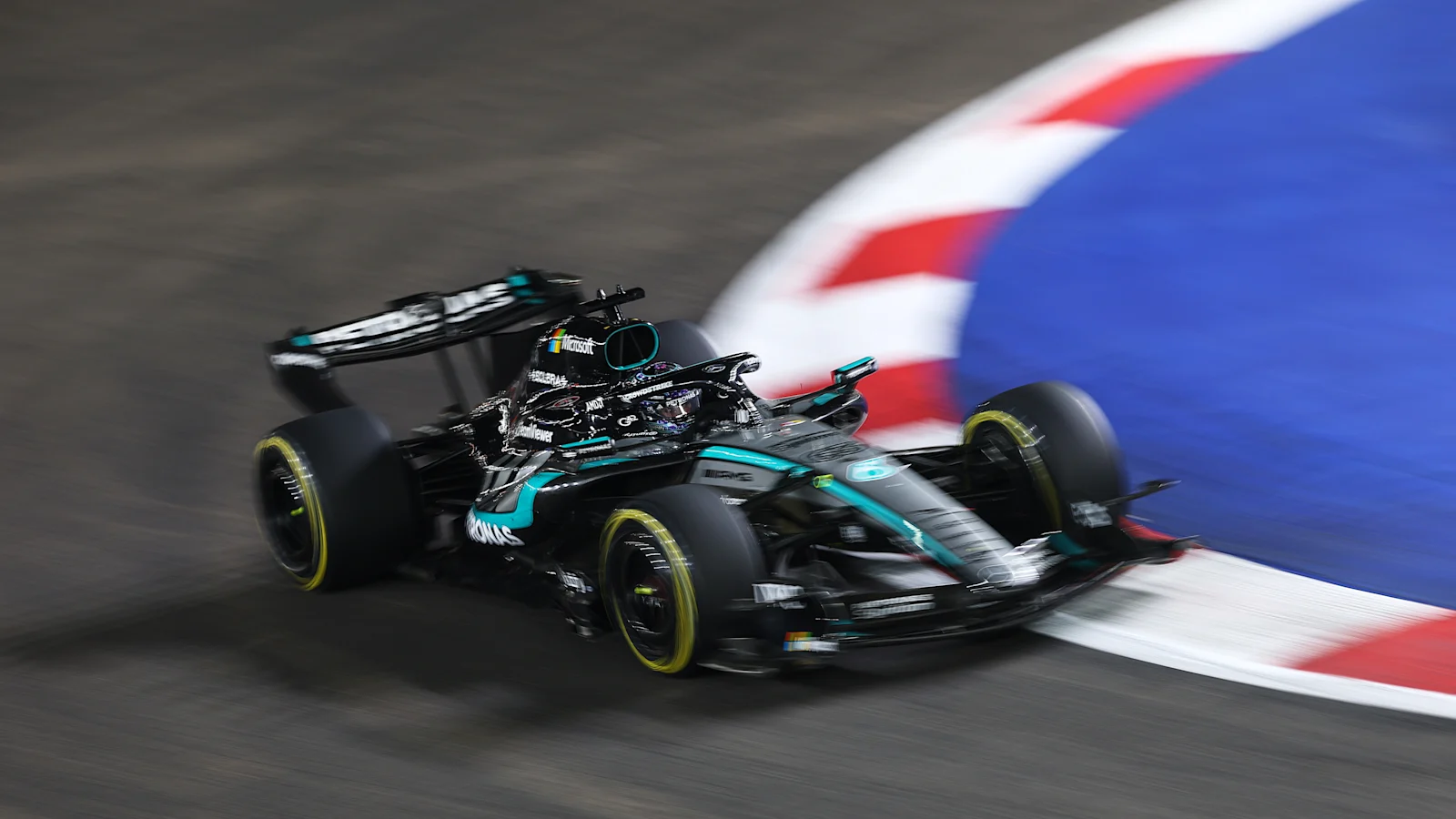
Behind Verstappen, Singapore exposed how quickly an apparently strong grid position can lose its value. Lewis Hamilton started third for Ferrari and initially held a podium place, but his tyre choices pulled him into a different race from the leaders. Starting on mediums, he lacked the early pace of the cars ahead. Ferrari brought him in on lap 19 for softs, an aggressive move that created immediate speed but also left a very long distance to the chequered flag.
The early stop put Hamilton on a collision course with his own teammate's strategy. Leclerc stopped several laps later and rejoined narrowly ahead. Hamilton was quicker at moments and wanted clear track, yet Ferrari kept the order intact while evaluating whether the seven-time champion would need another stop. On a circuit where overtaking is difficult, that choice was understandable in the short term. The problem was that the clock was also running on Hamilton's tyre life.
The Virtual Safety Car triggered by Lance Stroll's retirement was a critical fork in the race. Leclerc took the chance to stop again; Hamilton remained on track. The older soft tyres left Hamilton vulnerable once the field settled back into green-flag running. Leclerc eventually reclaimed second, and the battle behind him became a sequence of faster cars arriving on fresher rubber. Antonelli, Lando Norris and Oscar Piastri all found their way past the Ferrari in the closing laps. Hamilton fell from a potential podium to sixth and apologized to his team afterward.
Ferrari's afternoon was not a disaster: Leclerc still finished second and showed genuine pace against Red Bull early on. But it was a reminder that the best immediate track position is not always the best route to the finish. A tyre strategy that looks aggressive after twenty laps can become defensive after fifty, especially when a Virtual Safety Car creates a cheaper opportunity to reset. The team will have to distinguish between a wrong initial gamble and the later decision not to abandon it.
George Russell's day offered the reverse story. A power-unit penalty left the Mercedes driver starting 19th, forcing him to make up positions through a field where clean overtakes were scarce. He recovered to ninth, but a stop timed near the end of a Virtual Safety Car denied him the full benefit of the caution period. That recovery earned points without protecting his championship position. Singapore rewarded drivers who arrived with track position and tyre flexibility; Russell had to fight for both from the beginning.

Antonelli's 102-Point Cushion Is the Bigger Result
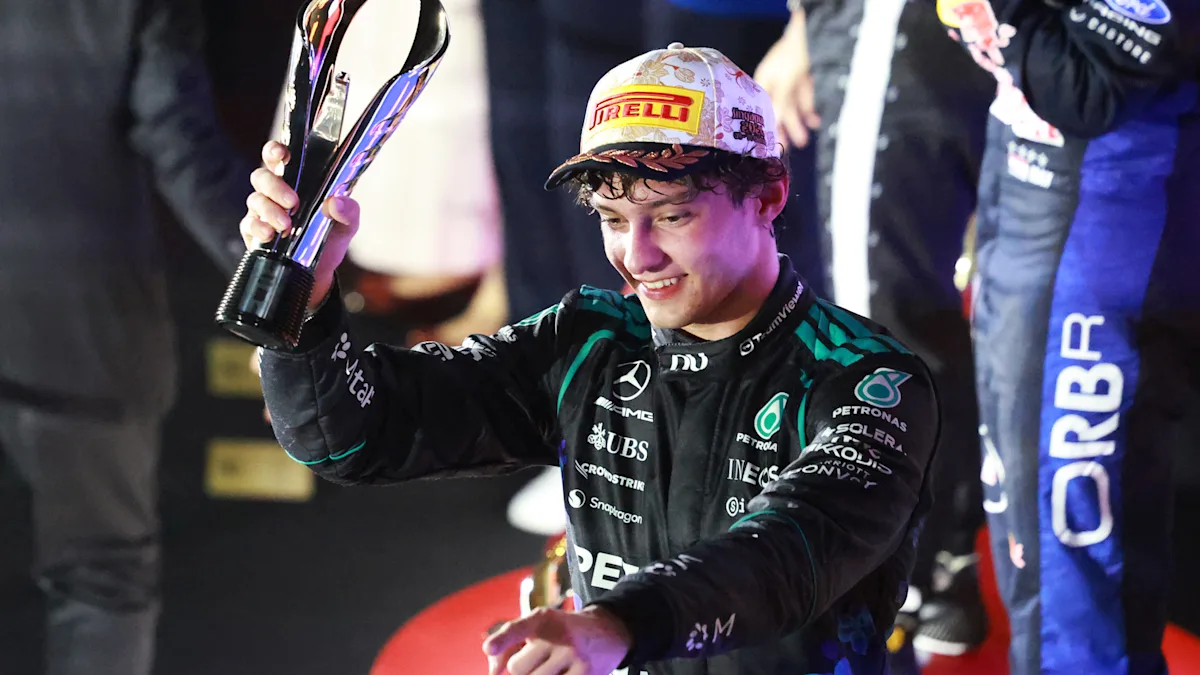
Kimi Antonelli did not need the fastest car in Singapore. The Mercedes driver started fourth, navigated brake concerns and track-limit warnings, and still finished third. His opportunity arrived when Hamilton's worn tyres lost pace and the cars behind the Ferrari began to fight. Antonelli took the available podium place without turning a difficult afternoon into a costly mistake.
The 15 points were particularly valuable because teammate George Russell finished ninth after starting near the back. Antonelli's lead increased to 102 points, opening a possible championship-clinching scenario at the United States Grand Prix in Austin on October 23–25. The precise calculation will depend on how Russell and the other contenders finish. The broader advantage is unmistakable: Antonelli can afford several races in which rivals outperform him, while they cannot afford many more missed opportunities.
Verstappen's two consecutive wins are proof of Red Bull's improved speed, but they do not erase the deficit accumulated earlier in the season. A race rewards the strongest package on a particular Sunday. A championship rewards consistency over months. Red Bull may now be capable of winning at a wider range of circuits, yet Antonelli has built enough of a cushion that he can prioritize strong finishes over risky attempts to match every Verstappen lap.
Mercedes still has areas to improve. Russell's engine penalty compromised his race before it began, while Antonelli had to manage technical discomfort and avoid further track-limit trouble. Ferrari showed competitive speed through Leclerc, and both McLarens finished ahead of Hamilton. The remaining rounds may therefore have multiple race winners, which could split points among Antonelli's pursuers. Singapore offered the clearest possible contrast: Verstappen controlled the Grand Prix, while Antonelli left with a stronger grip on the season.
Singapore delivered two messages that can both be true. Verstappen and Red Bull have rediscovered enough pace to win on very different circuits, and the four-time champion finally has a Marina Bay trophy after years of near misses. But a late resurgence is not the same as a realistic route back to the title when the leader has more than 100 points in hand.
Antonelli left with third place, 15 more race points and an opportunity to make the championship mathematically secure at the United States Grand Prix on October 23–25. Ferrari must revisit how it balanced Hamilton's worn tyres against Leclerc's track position, while Mercedes will want a cleaner weekend for Russell. Verstappen's performance makes the remaining races harder to predict. The title mathematics, for now, make Antonelli the driver everyone else must catch.