

Hill Wants Ferrari to Back Hamilton. What Happens to Leclerc?
GOATIFYFerrari has a familiar Formula 1 problem with an unusually combustible solution: two drivers capable of winning, one team that cannot afford to lose races while they argue, and a former world champion urging it to pick a favorite. Damon Hill believes the Scuderia should put Lewis Hamilton first in its 2027 championship plans, even if that leaves Charles Leclerc feeling that years of loyalty count for surprisingly little.
The proposal, revisited in a November 15 report after Hill discussed it following the São Paulo Grand Prix, is not a Ferrari announcement. It is a pointed outside opinion about what Maranello should do next. Hamilton's revived form and the fallout from the teammates' Mexico City confrontation explain the timing. The harder question is whether favoring the seven-time champion would actually deliver more points—or merely turn a difficult pairing into a divided team.
Hill's Hamilton Gamble: An Eighth Title Is a Tempting Story, Not a Strategy
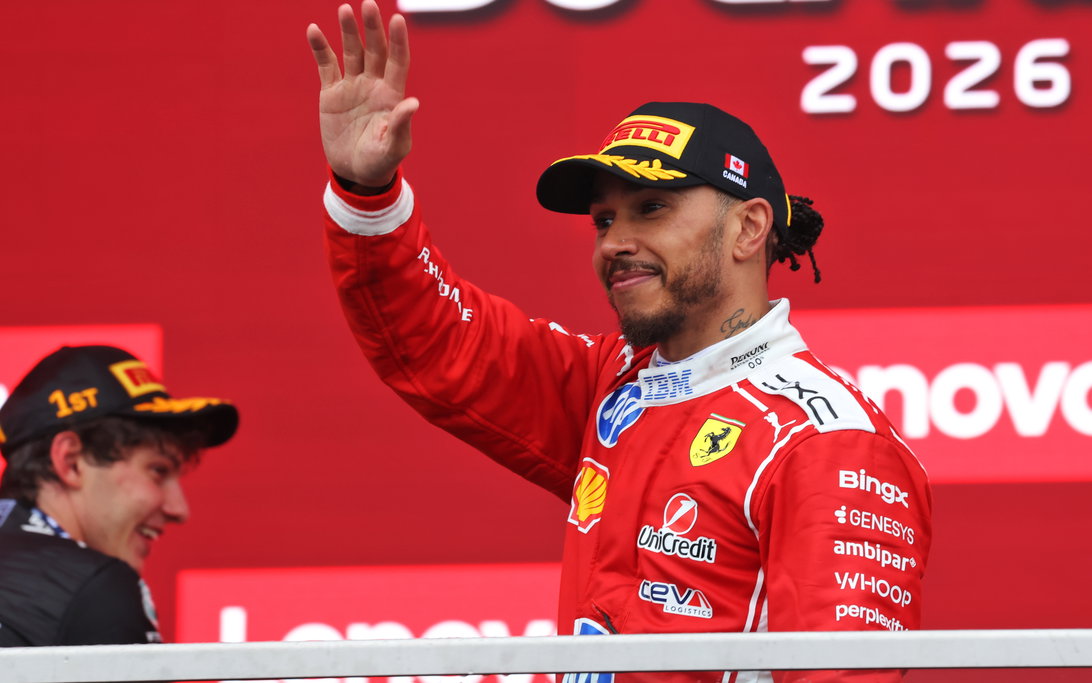
Hill's position starts with Ferrari's extraordinary investment in Hamilton. Signing a seven-time champion was never intended to be an exercise in nostalgia. It brought a globally recognizable driver, vast race-winning experience and the possibility of a story that would be almost impossible to match commercially: Hamilton claiming an eighth world title in red. Hill argues that a team which has already made that commitment should consider organizing its next title campaign around the man it hired to finish the job.
That argument has become easier to make in 2026 than it was after Hamilton's frustrating first Ferrari season. The new-generation car has suited him better, and he has added a Spanish Grand Prix victory to a collection of stronger performances. In the November 10 discussion that sparked the latest round of debate, Hamilton was fourth in the championship, with Leclerc fifth and 12 points behind. The gap is real but narrow; it is evidence of a close contest, not proof that one driver is in a different class.
Hill has a more human point, too. Hamilton arrived carrying the memory of the 2021 title fight and the frustration of seasons in machinery that did not consistently give him a chance. His return to race-winning form deserves to be taken seriously rather than dismissed as a brief second wind. Ferrari will want to know whether that performance is repeatable, how Hamilton works with the technical group and whether his feedback can help unlock the next car.
But there is a major difference between making Hamilton a focal point of engineering conversations and promising him the preferred position before the lights go out. Formula 1 teams do not win constructors' championships through compelling narratives. They win by regularly scoring with both cars, protecting the team result when necessary and using the faster driver at the right moment. Hamilton's fame cannot replace qualifying speed, tyre management or mathematical championship position.
Former F1 driver Anthony Davidson offered the essential counterargument during the same discussion: privileged status should be earned on the track. A driver who is consistently quicker makes the decision easy; a driver who is ahead by a dozen points does not. Hill is right that Ferrari needs a plan before its next title opportunity arrives. Davidson is right that the plan should still survive contact with actual lap times. Those are two different propositions, and Ferrari would be unwise to pretend they are the same.
GOATIFY
GOATIFY Formula 1
Hill's Hamilton-first argument makes the 2027 Ferrari debate unusually sharp. Explore GOATIFY Formula 1 apparel for fans who follow every driver showdown.


Mexico Was the Warning: Ferrari Can Lose a Race Without Either Driver Losing the Argument

The flashpoint was the opening lap of the 2026 Mexico City Grand Prix. Ferrari had the kind of track position that normally gives a team a straightforward mission: protect the cars, convert a strong start into a major points haul and make rivals do the chasing. Instead Hamilton and Leclerc disputed the same piece of road. They emerged from the sequence with the team's prospective result compromised, and Max Verstappen went on to win.
Hamilton said afterwards that Leclerc's approach had been too aggressive for a teammate. Leclerc had his own racing interests and was not obliged to agree with that assessment. The frustration was intensified by timing. A fight between two Ferrari cars when both are already struggling for tenth is one thing; a fight at the front when the squad has an unusually valuable chance is quite another. The possible cost is not only a bent wing or a penalty. It can be a missed victory that never returns.
Ferrari team principal Frédéric Vasseur subsequently brought the drivers together. By the São Paulo weekend, both sides were describing the issue as addressed, and Vasseur said the pair had left his room on good terms. That matters. One fierce radio exchange should not be treated as permanent evidence of a broken relationship, and neither driver benefits from allowing a single incident to dictate the next season's hierarchy.
Yet the incident exposed a real ambiguity about racing each other. Does the driver ahead have priority through the opening corners? Can the chasing Ferrari attack immediately if there is a risk both cars will lose ground? What happens when one driver is fighting for a championship and the other is not? Without shared expectations, each side can regard an aggressive move as perfectly legitimate and the other's response as irresponsible. The team then discovers its policy in public, after the damage is done.
The relevant lesson is broader than choosing Hamilton or Leclerc. Ferrari needs rules that explain how its drivers protect the team at the start of races, how it handles disputed radio instructions and when it will impose a hold-position call. Those rules should be explained before the heat of competition turns every request into a personal verdict. The strongest driver pairing in the paddock becomes a liability if its two members repeatedly turn a first-and-second running order into an open invitation for someone else to win.
That does not mean banning close competition. Ferrari can benefit from drivers pushing each other in qualifying and improving the car's performance. It means distinguishing between a fair battle that costs neither car and a low-percentage gamble that puts a championship weekend at risk. Mexico showed why the difference needs to be defined before another launch into Turn 1.
Leclerc Has Earned More Than a Supporting Role at the Team He Helped Rebuild

Leclerc's countercase should not have to begin with the length of his service. Yes, he joined Ferrari in 2019, developed through years of false starts and committed his future to the team again in 2026. Loyalty matters to supporters, and a driver who has remained through difficult cycles has earned trust inside the garage. But the stronger argument is his speed: the Monegasque has qualified and raced at an elite level for years and has nine Grand Prix victories to his name as of this discussion.
GOATIFY
GOATIFY Formula 1
Ferrari's Mexico conflict highlighted how quickly a strategy can unravel. Browse GOATIFY Formula 1 fan designs as the team heads toward the next rule-book debate.


Ferrari recruited Hamilton to create an exceptionally strong pairing, not because Leclerc had forgotten how to drive. On a circuit where Charles is quicker, making him hold back simply to preserve a pre-decided hierarchy would waste performance. It could also compromise the constructors' battle: forcing the faster Ferrari to sit behind a slower one risks exposing both to rivals, especially on tracks where overtaking opportunities are scarce or tyre degradation punishes following closely.
The 12-point separation between Hamilton and Leclerc when Hill's argument was aired is a useful reminder about sample size. Championship points reflect pace, certainly, but also reliability, incident timing, penalties, strategy and the different luck that accumulates across a season. A modest margin across many races merits study. It is not a sensible basis for an irrevocable 2027 order that Ferrari has not even seen competing on track.
Davidson's insistence that priority must be earned also leaves room for Hamilton to earn it. If the veteran starts 2027 consistently qualifying ahead, converting opportunities and building a meaningful advantage, Ferrari can rationally adjust its strategy in his favor. If Leclerc is the faster, more consistent driver, the same calculation should work in reverse. A performance-based approach is not anti-Hamilton. It is the only policy that respects the results of both drivers and keeps every possible route to victory open.
There is a motivational element that makes premature designation especially dangerous. Tell a top-level driver he is destined to finish second in November, and the team starts the following spring with half its competitive partnership operating under a ceiling. That can weaken cooperation on setup development and increase the temptation to interpret neutral decisions as evidence of favoritism. Ferrari's engineers, mechanics and strategists need two drivers who believe the team will reward good performances fairly.
Leclerc should not receive indefinite protection because he is a long-serving Ferrari driver. Hamilton should not receive automatic preference because he has seven titles. Neither principle survives a season in which the other car is obviously faster. The merit of Ferrari's pairing is that either driver might be the one capable of taking the title. Choosing that person in advance could eliminate the very advantage the team paid to create.
Vasseur's 2027 Playbook: Equal Tools Early, Decisive Orders When the Numbers Demand Them
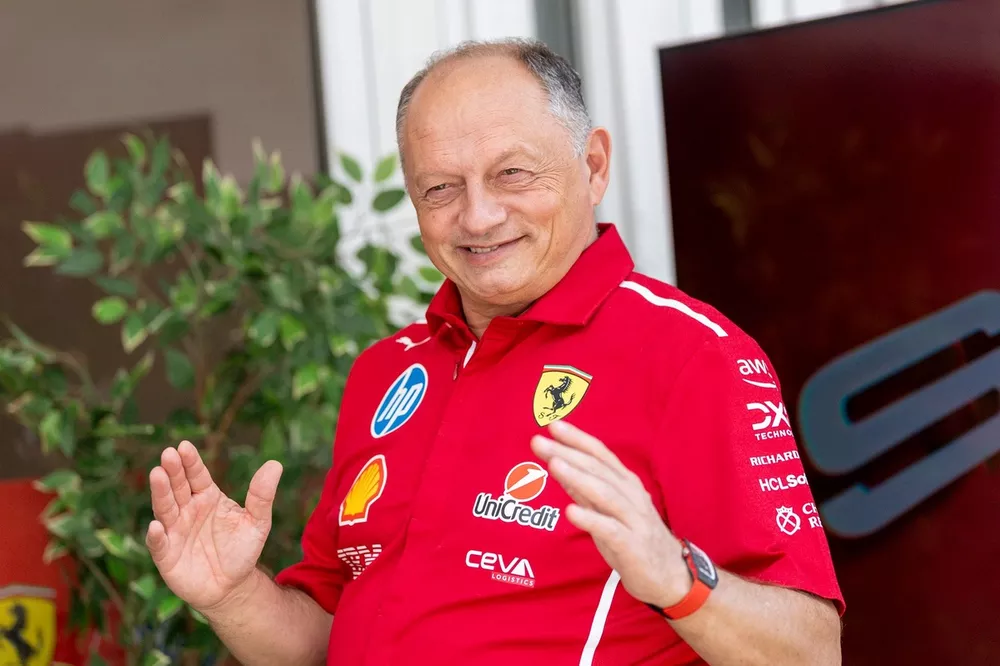
Ferrari's debate takes place against a championship reality, not in a vacuum. Mercedes secured the 2026 constructors' crown at São Paulo, while Kimi Antonelli had already sealed the drivers' championship in Mexico City. Ferrari therefore has a sharper immediate question than whose name looks best beside the number one: why was another team able to turn the season into both trophies while Maranello's two-car challenge fell short?
The response begins in the factory. The 2027 Ferrari has to produce usable pace across different circuit types, make tyres work across a race stint and give both drivers the confidence to exploit its performance. A hierarchy cannot repair a weak aerodynamic concept or turn a poor pit call into a good one. Teams sometimes talk about their star driver as if he is the solution to all those problems; in reality the fastest driver still depends on hundreds of people getting their jobs right.
GOATIFY
GOATIFY Formula 1
Vasseur needs a plan balancing team points with both drivers' title chances. Discover the GOATIFY F1 collection for fans who like the strategy as much as the racing.


Vasseur could establish a sensible starting policy without publicly naming a favorite. Both drivers get equivalent equipment and a genuine chance to build a points advantage. There are clear racing boundaries on the opening laps and a commitment not to destroy strong team results in marginal contests. When one driver develops a mathematically meaningful title opportunity and the other does not, Ferrari directs strategy to maximize that opportunity. Such a framework preserves competition while acknowledging that the objective is a championship, not an internal popularity contest.
Timing is the difficult part. A team order delivered too early can throw away points from the stronger car or destroy trust. An order delivered too late can leave the eventual title contender short of the points surrendered in needless early-season fights. Ferrari can set decision points based on the championship gap, number of races remaining and relative pace, then explain that the policy applies identically to either driver. Neither a rigid equal-status promise nor a permanent crown for Hamilton answers all these scenarios.
Mexico provides a useful test case. A championship-oriented rule could tell the drivers not to make high-risk contact while running first and second on lap one; it need not declare who must always finish ahead. Later in the season, if one car is much quicker and the other can safely move aside, a swap might help the title campaign without reducing overall points. The team's job is to make those distinctions consistently and transparently, particularly when a radio order frustrates a driver who believes he has earned his position.
The external opponents make the calculation urgent. Mercedes enters the next cycle with the credibility of a 2026 double, McLaren remains dangerous and Red Bull cannot be ignored. Any Ferrari policy that sacrifices significant performance to keep internal politics quiet would be a gift to those rivals. Equally, allowing unrestricted collisions because both drivers are famous is not a philosophy; it is an absence of leadership.
Hill's preferred outcome is easy to understand: Hamilton takes a Ferrari title at the end of a remarkable career arc. The sporting route to that outcome is harder. Vasseur must create a team capable of winning first, then identify which of its two drivers is best placed to finish the job. That order matters far more than the order in which their names appear on a team briefing.
Damon Hill's recommendation forces Ferrari to confront a question it cannot dodge forever: when a championship is at stake, who gets the first strategic call? But the answer in mid-November 2026 cannot responsibly be written into next season's results sheet.
Hamilton has earned serious consideration through his comeback; Leclerc has earned the right to fight through his speed and commitment. Ferrari should start with equal opportunity, enforce rules that protect the team's points and be prepared to back a genuine title contender once the competitive evidence is clear. The 2027 car, not a famous name or a sentimental storyline, must decide whether the argument ever becomes a winning one.
GOATIFY
GOATIFY Formula 1
Shop GOATIFY Formula 1 shirts, hoodies and racing stickers.


















