

Hollywood Brown Has Zero Catches — and the Eagles May Have No Trade Leverage
GOATIFYMarquise “Hollywood” Brown joined Philadelphia to give its passing game another gear. Six weeks into the 2026 NFL season, the Eagles are instead trying to work out whether they can get anything back for a veteran who has yet to catch a pass for them. With Philadelphia at 2-4 and the trade deadline approaching, a fresh report says receiver-needy teams believe Brown could become available.
That is a striking reversal for a former first-round pick who produced 587 receiving yards and five touchdowns for Kansas City last season. The question is no longer simply whether Brown still has speed. It is why he has fallen so far down the Eagles’ depth chart, what another team could reasonably expect from him, and whether Philadelphia has any leverage left in negotiations.
From veteran addition to a healthy scratch
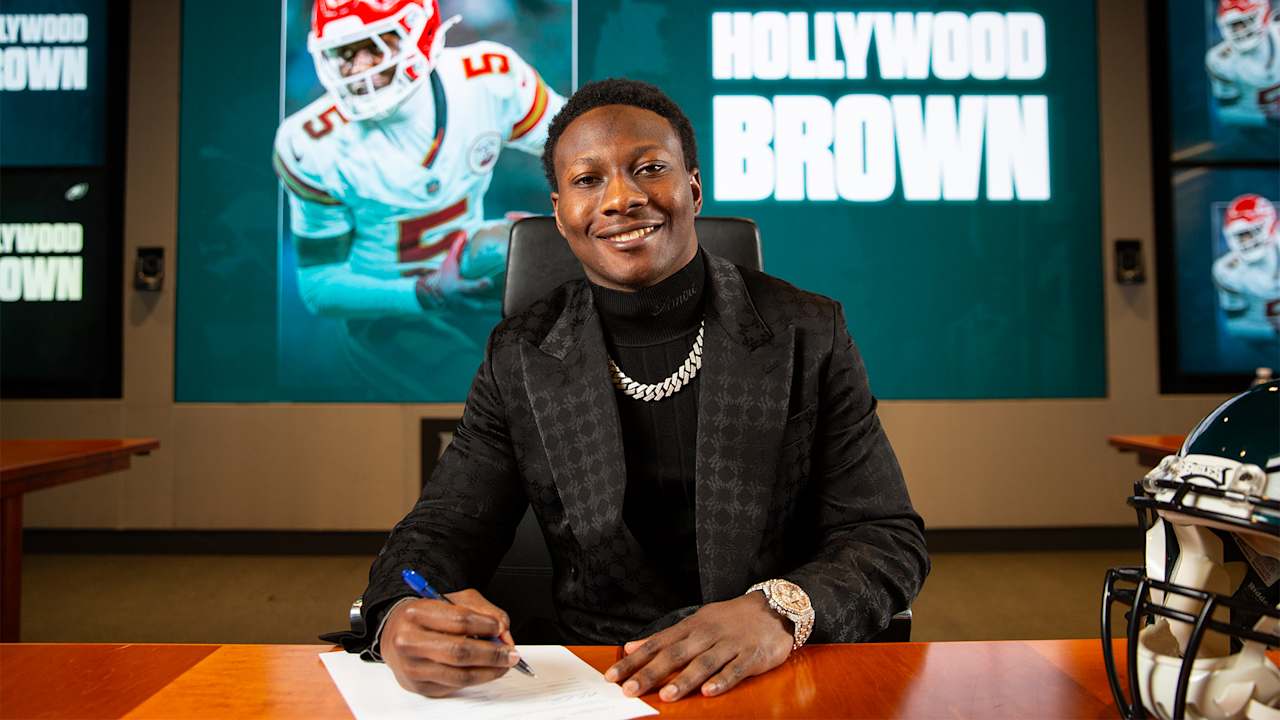
The latest trade conversation begins with a limited claim, not a completed transaction. NFL reporter Jordan Schultz indicated on October 20 that teams seeking receiver help believe Brown could be moved in the coming weeks. That does not establish that the Eagles have formally placed him on the block, named an asking price or received an offer. But the report fits what has happened on the field: a player signed to contribute as a complementary threat has barely participated.
Brown dressed for Philadelphia’s opening game without logging an offensive snap. In Week 2 he played only 17 snaps, largely in designed packages rather than as a consistent downfield option. An ankle issue then kept him out for three games. When he returned to health for the October 18 meeting with Carolina, he was still inactive. That final detail is important. An injury absence can obscure a player’s standing; a healthy scratch exposes the coaching staff’s current pecking order.
The veteran has no receptions for the Eagles and just two rushes for 12 yards. Those numbers are not evidence that he has forgotten how to run routes or separate from coverage. They are evidence that Philadelphia has not found—or chosen—a meaningful role for him. His 2025 Chiefs production, 49 catches for 587 yards and five touchdowns, suggests there was at least a plausible complementary player available when the Eagles signed him. The absence of opportunities in 2026 makes the gap between that résumé and his present value unusually wide.
Philadelphia’s four-game losing streak has made every roster choice more conspicuous. With the club at 2-4, a veteran who cannot crack the game-day receiver group becomes an obvious trade candidate. Yet being available is different from being desirable: interested teams will ask why a struggling offense still prefers other receivers to a former 1,000-yard performer.

Wicks, Lemon and Cooper explain the depth-chart squeeze

Philadelphia did not merely sign Brown and forget about him. The receiver room changed around him. DeVonta Smith remains the established lead option, while Dontayvion Wicks has earned a prominent outside role and first-round rookie Makai Lemon represents a significant long-term investment. Darius Cooper has also won trust in packages where the Eagles might otherwise have tried to manufacture touches for Brown. Elijah Moore has been active ahead of him, and Britain Covey contributes on special teams.
That competition matters because receivers do not earn playing time on a single attribute. Coaches have to decide who runs the most reliable route at the correct depth, who blocks on the perimeter, who knows the protection adjustment, who can align in several spots and who helps on special teams. Brown’s acceleration can still be useful, but an offense already committed to Smith, Wicks and Lemon has fewer opportunities to build a separate package around a veteran specialist.
The October 18 inactive decision was especially revealing. Smith and Wicks were available, and Moore dressed while Brown watched. The Eagles were not forced to pick a healthy player at random; they made a football choice. Brown’s lack of targets earlier in the season also limits the argument that he simply needs more passes thrown his way. Before a receiver can build chemistry through targets, he must first be on the field for enough meaningful snaps.
For the front office, this is an uncomfortable roster-building outcome. Brown signed as experienced insurance while A.J. Brown's future was uncertain, before the latter's move to New England, but Philadelphia has increasingly invested its snaps in players with a longer runway. That is rational if the team believes those players offer more complete value. It also means the Eagles are selling from a position of surplus only in the narrowest sense: they have a receiver they do not use, not a productive receiver they can afford to lose.
Why another team could still see a useful receiver
A player’s trade value is not identical to his value in one team’s scheme. Brown is only 29 and has a genuine NFL track record. Baltimore selected him 25th overall in 2019, and he reached 91 receptions and 1,008 receiving yards in 2021. He later played for Arizona and Kansas City, overcoming injuries that interrupted the upward trajectory of his early career. His 2025 season with the Chiefs showed he could still contribute to a rotation against professional coverage.
For a receiver-needy contender, that history is worth investigating. A club that wants a field-stretching option or motion player might see a low-cost chance to add speed without asking Brown to be its primary target. The best destination would have a defined job from day one: a limited package of vertical routes, crossers, screens and situational plays that uses his quickness while reducing the demand to master an entire new offense immediately.
But buyers will also examine the other side of the résumé. Brown has dealt with injuries across several seasons, and he has not demonstrated sustained 2026 game production. Teams would need confidence in his current health, practice performance and willingness to embrace a smaller role. The fact that he was a healthy inactive in Philadelphia does not automatically mean he is ineffective elsewhere, but it does remove much of the leverage his previous statistics might otherwise create.
Timing further complicates a move. Midseason receiver acquisitions rarely arrive with a full offseason to learn terminology and quarterback preferences. Even an explosive player must build timing with a new passer, understand sight adjustments and contribute without becoming predictable. That argues against treating Brown as an instant rescue for an injured receiving corps. The more realistic sales pitch is experienced depth with a chance to outperform a modest acquisition cost—not a guaranteed return to his 2021 peak.
The Eagles' real decision: small return or clean break
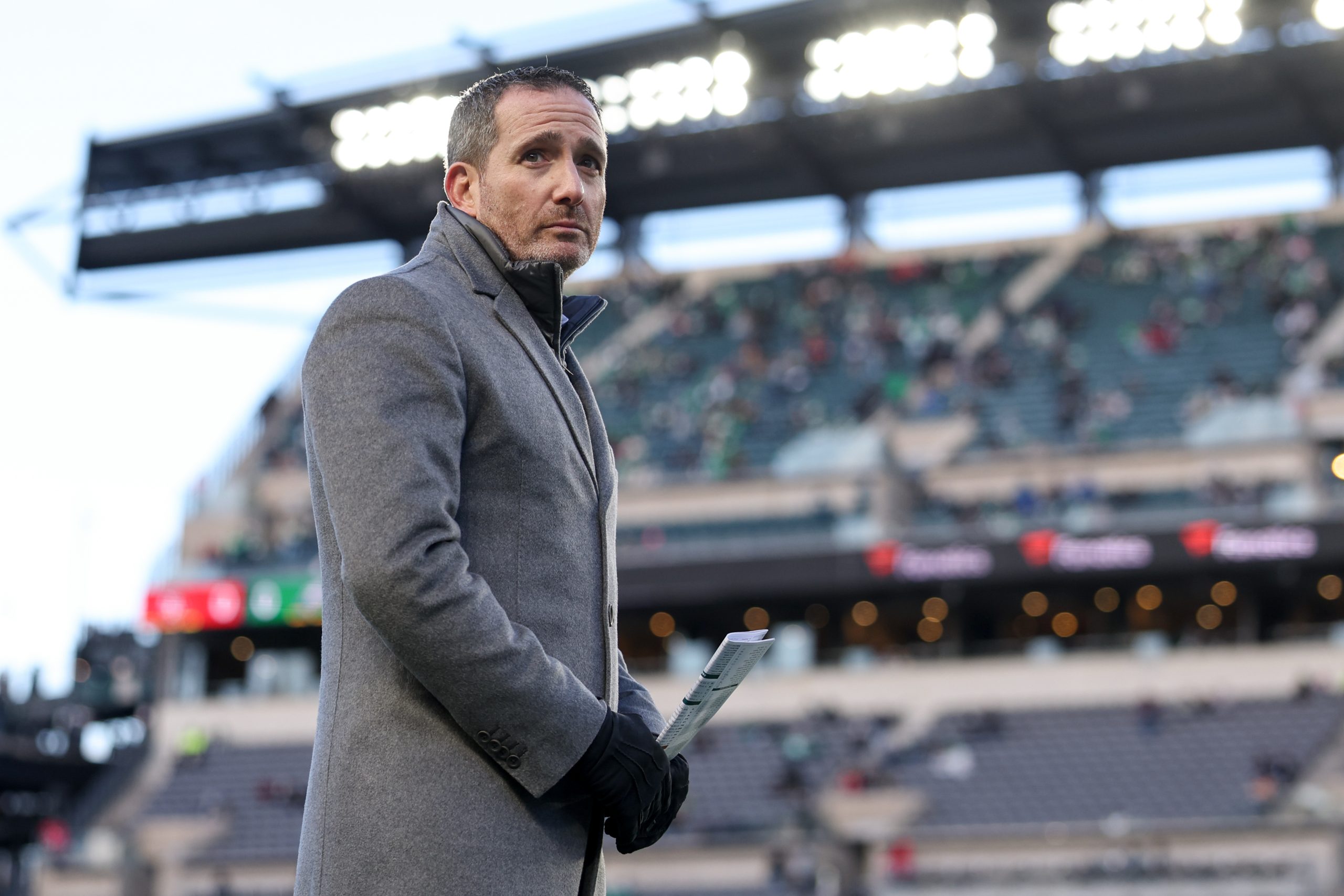
General manager Howie Roseman has a straightforward choice in theory: find a team willing to send a late draft pick for Brown, or keep a player who may be useful if injuries continue to hit the position. In practice, neither option offers much certainty. Philadelphia is not getting production from the receiver today, but releasing or trading him removes an experienced contingency option from a team already navigating significant injuries elsewhere on offense.
A trade partner would be buying Brown’s potential fit and past production, not his current box-score output. That makes a premium draft return improbable. A conditional late-round selection could make sense if another club values his speed, while a deal with a minimal return might still help both sides by creating a clearer path to snaps. The Eagles would have to weigh that against the value of having a veteran available for the remaining schedule.
There is also a larger organizational question. Philadelphia has already traded established contributors while younger players take on greater responsibility. Moving Brown would not, by itself, prove the Eagles are surrendering the season; teams trade marginal veterans for many reasons. But with the club 2-4 and its quarterback situation unsettled, another departure would reinforce the sense that Roseman is prioritizing flexibility and future roster decisions over preserving every offseason acquisition.
The next game adds urgency to the discussion. Philadelphia is preparing for a Monday-night meeting with Dallas on October 26, an NFC East matchup that can alter the mood around the franchise. A receiver trade before then would attract attention, but the more consequential question is whether the Eagles can create reliable offense with the players they are already choosing. Brown’s future has become a test of that evaluation: if he cannot earn snaps now, retaining him simply to preserve depth may not solve anything.

Brown’s situation is a reminder that a useful NFL résumé does not guarantee a role on the next roster. The Eagles signed a former 1,000-yard receiver and have given him almost no opportunity to prove his worth. That makes a trade plausible, but it also makes an attractive return difficult to secure.
Until an actual deal is announced, the October 20 reporting remains a market signal rather than a transaction. Brown could still find a better fit elsewhere, and Philadelphia could still decide his experience is worth keeping. What seems hardest to defend is the status quo: a 2-4 team carrying a healthy veteran whose most obvious value is to someone else's offense.
Shop GOATIFY NFL and American football shirts, hoodies and stickers.

















