

Sánchez and Ustero Were Down 5–2 — Milan Became Their Fifth Title
GOATIFYAri Sánchez and Andrea Ustero were three games from surrendering the opening set of the Milan P1 final. Paula Josemaría and Bea González had built a 5–2 lead, found the sharper early exchanges and appeared ready to seize a trophy that had eluded them since Valladolid. Then the match turned. Sánchez and Ustero clawed their way back into the set, won the tie-break and carried that momentum through a 7–6, 6–3 victory on Sunday, October 18.
The score tells only part of the story. This was the fifth title of 2026 for Sánchez and Ustero, their third triumph in four tournaments and a fourth consecutive final. It also strengthened their position in the FIP Race while increasing the pressure on the pair above them, Gemma Triay and Delfi Brea. The comeback mattered because it showed that Sánchez and Ustero can win without controlling a final from the first ball.
Down 5–2, Sánchez and Ustero Found a Way Back Into the First Set
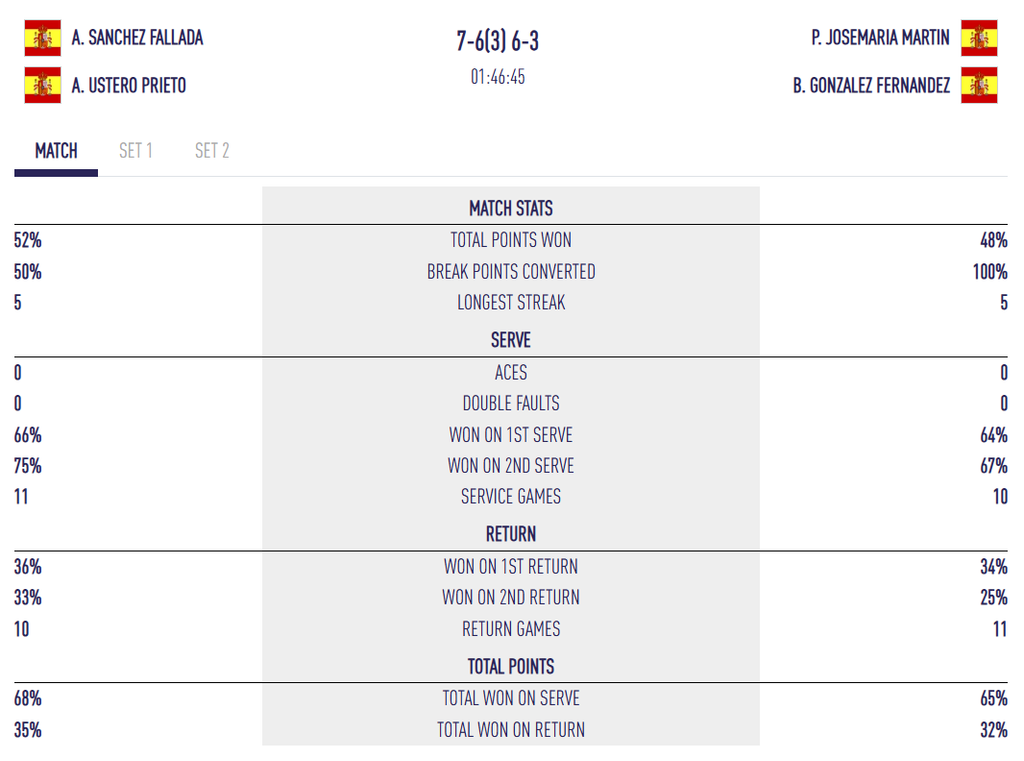
Josemaría and González made the stronger entrance to the Allianz Cloud final. They were more assertive in the opening exchanges and forced Sánchez and Ustero to work for the patterns that normally allow the third seeds to dictate play. Sánchez was not yet imposing herself on her usual diagonal, while Ustero's attacking contribution was less decisive than it had been in Saturday's semifinal. The second seeds converted that early control into a 5–2 lead.
At that score, a 7–6 opening set for Sánchez and Ustero would have seemed improbable. Yet padel leads can unravel quickly when the receiving pair starts winning longer exchanges and the leaders become less comfortable taking risks. The eventual champions earned a break back, reduced the scoreboard pressure and made the first set competitive again. Their opponents, who had looked settled for much of the opening stretch, began to make errors at moments when a single clean hold might have closed the set.
The comeback was not a spectacular one-point escape. It was a sequence of better decisions. Sánchez gradually found more control in rallies, making it harder for the other pair to finish points on their preferred terms. Ustero began to contribute more of the acceleration that makes her so dangerous when she has time to set her feet. Those changes turned a match that appeared to be moving in one direction into a tie-break, where experience and composure mattered as much as shot-making.
Sánchez and Ustero took the tie-break. It was the decisive passage of the final, not because the second set was irrelevant but because the emotional cost for Josemaría and González was so high. They had created the position they wanted, only to lose the set. A 5–2 advantage had become a one-set deficit, and the challengers who were struggling to establish themselves suddenly had both the scoreboard and the momentum.

Ustero's Offense Returned as Sánchez Took Control of the Exchanges
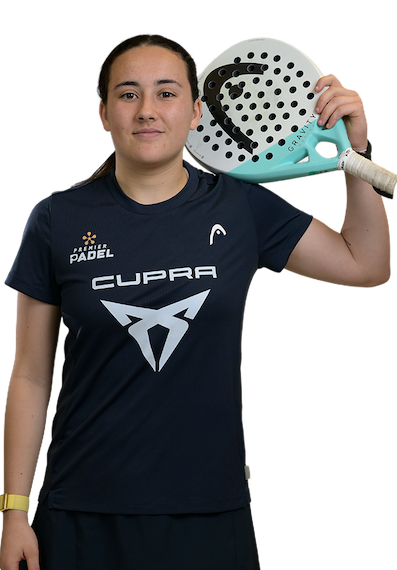
The first-set escape gave Sánchez and Ustero a platform, but it still required a disciplined second set to finish the job. They responded by opening a 3–0 lead. The margin was significant: rather than asking themselves to repeat another rescue, they could now protect a break and force Josemaría and González to take the initiative under pressure. The eventual champions closed the match 6–3, sealing the title on their second match point.
There is a clear tactical logic to the partnership. Sánchez supplies structure, placement and a reliable sense of when to speed up or extend a rally. Ustero offers explosive attacking power that can transform a defensive position into an opportunity to finish. Neither role works in isolation. A big smash becomes less valuable if the preceding balls have not created space, and control alone is not enough if the opposing pair can repeatedly reset points. Their best sequences combine those skills.
In Milan, that combination became more visible as the final developed. Sánchez was increasingly able to choose the pace of exchanges and prevent the second seeds from dictating every important rally. Ustero recovered the offensive rhythm that had been missing early on. That balance helped them maintain the advantage after the initial break in the second set, rather than handing back the initiative through a rushed series of attacks.
It would be too simple to reduce the result to the losers' errors. Josemaría and González had earned a strong opening position and demonstrated their quality throughout the week. The shift came partly because Sánchez and Ustero improved the pressure they applied. As their returns and rally management became more reliable, the other side had fewer comfortable opportunities to finish. The contrast between the first seven games and the final stretch is why the match is better understood as a comeback built through adjustments than as a random collapse.
Four Straight Finals and Five Titles Have Changed the Women's Padel Race

Milan did not create the momentum around Sánchez and Ustero; it confirmed how sustained that momentum has become. They won the Paris Major in September, followed it with the Rotterdam P2 title, reached the Düsseldorf P2 final and then won again in Milan. That is four finals in four tournaments and three trophies across that stretch. Add their earlier successes in Riyadh and Valencia, and the pair now own five titles in 2026.
The sequence matters more than any single trophy because the opponents and conditions have changed. Paris was a Major with the greatest points available on the regular tour. Rotterdam was a different indoor challenge, and Düsseldorf showed that the pair could reach the final even when they did not leave with the trophy. Milan added another P1 win after they were forced to recover from a major deficit in the championship match. Winning in several different ways is a stronger sign of an elite partnership than dominating only when the first set follows a perfect script.
Their route through Milan was demanding. In the semifinal, Sánchez and Ustero beat world No. 1 pair Gemma Triay and Delfi Brea 6–1, 6–4. It was another direct victory over the leaders, and it meant the eventual champions had to beat both a top-ranked pairing and their closest rivals for the second position to take the title. This was not a run built on a favorable draw; the decisive matches put them against the very pairs they are trying to catch or stay ahead of.
The latest title consolidated second place in the FIP Race and, according to the post-final standings reported on October 18, reduced their deficit to Triay and Brea to 1,980 points. That number is not a guarantee that they will become No. 1. There are still tournaments to play, points to defend and the Barcelona Finals ahead. But it changes the conversation from whether Sánchez and Ustero belong among the challengers to whether the leaders can respond to a pair that keeps collecting major results.

Josemaría and González Lost More Than a Final When Their Lead Slipped
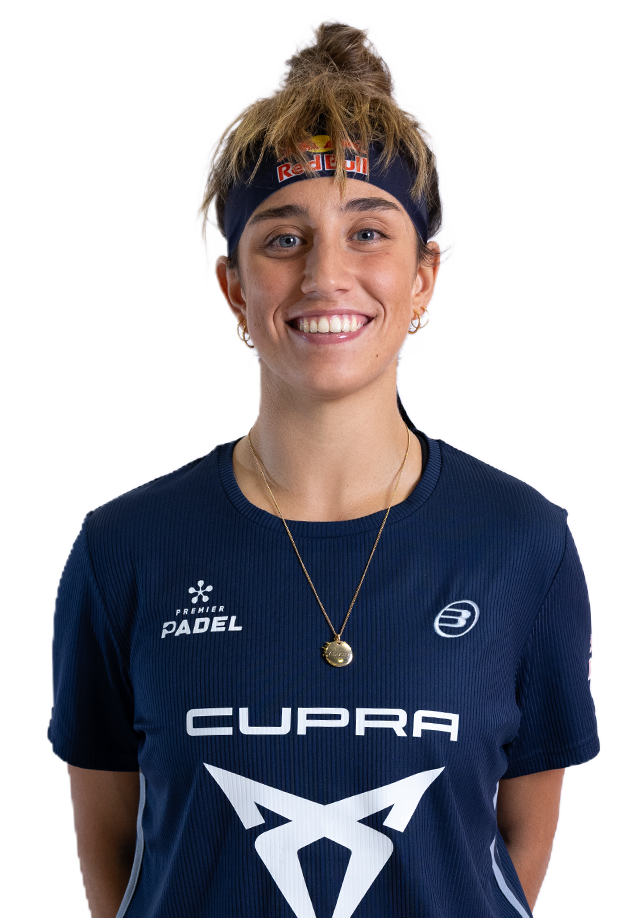
For Josemaría and González, the hardest part of the Milan defeat may be how close they came to taking control. They had already beaten Claudia Fernández and Martina Calvo 6–2, 7–6 in the semifinal and reached the final with evidence that their partnership could still challenge the strongest pairs. Against Sánchez and Ustero, the 5–2 opening-set lead offered a genuine chance to reverse their recent run of disappointments. Losing that advantage was costly both psychologically and in the points race.
Josemaría and González have produced outstanding padel during 2026, including a successful run earlier in the season. Their last title came in Valladolid, and recent weeks have been less rewarding. They exited before the final in Rotterdam and Düsseldorf, then reached Sunday's championship match only to lose to the same pair that beat them in Rotterdam. The pattern does not mean their season has fallen apart. It does mean they have struggled to sustain the level needed against the most consistent contenders across an entire final.
The ranking consequence is especially important. Milan awarded 1,000 points to the champions, and the match was a direct contest between two pairings chasing second place in the FIP Race. Sánchez and Ustero strengthened their lead in that fight; Josemaría and González missed an opportunity to narrow it. With the late-season schedule still to come, the runners-up need not just deep runs but wins in the matches that directly influence the positions around them.
There is another personal dimension. Sánchez and Josemaría were long-time partners and won the Milan title together in 2025. This year they faced one another on opposite sides of the net, each with a new partner. The final was therefore more than a simple rematch of Rotterdam: it was a test of which of two reconfigured elite pairings had developed the greater resilience at a crucial point of the season. Sunday's answer favored Sánchez and Ustero, but the remaining events will provide more opportunities for the rivalry to change direction.
Milan's 7–6, 6–3 result will sit beside the other trophies on Sánchez and Ustero's 2026 résumé, but the path to it deserves equal attention. They were 5–2 down in the first set, recovered their shape, won the tie-break and then converted that escape into a controlled second set. It was a win made from resilience as much as firepower.
Five titles, four consecutive finals and a shrinking deficit in the FIP Race make them a serious threat at the top of women's padel. For Josemaría and González, the task is to turn stretches of excellent play into complete victories against their direct rivals. The Milan final clarified both sides of that equation without settling the season. With more ranking points available and Barcelona still ahead, the next chapters remain open.
Shop GOATIFY padel products from the Padel-filtered collection scope.
















