Houston and Toronto Own 65.8% of the JuJu Lottery — If She Enters
GOATIFYThe 2027 WNBA Draft Lottery now has a date, and the biggest number is not a player's scoring average. Houston and Toronto have each been allocated 329 of the 1,000 lottery combinations, giving the two franchises a combined 65.8% chance of securing the first pick when the order is revealed on November 15. One is preparing to revive a famous basketball name; the other is trying to accelerate the next stage of its expansion project.
The prize everyone is discussing is USC guard JuJu Watkins. Yet the most important caveat is easy to lose amid the excitement: Watkins has not committed to entering the 2027 draft. She is returning from a major knee injury and can still choose to remain in college. The lottery guarantees a selection order, not the availability of any particular player.
That uncertainty makes this a more interesting race than a simple countdown to a presumed superstar. Washington controls Chicago's lottery pick, Los Angeles holds two chances through its own selection and Phoenix's, and every team must plan for both a Watkins-led class and a draft in which the headline prospect stays at USC.
Houston and Toronto Split the Best Odds — Not the Same Stakes

Houston and Toronto Split the Best Odds — Not the Same Stakes

The official odds table makes Houston and Toronto co-favorites for the first overall pick. Each has 329 combinations out of 1,000, or 32.9%. Add them together and almost two-thirds of the available outcomes point to one of those two organizations. It is a remarkable alignment for franchises entering 2027 from very different positions: Houston is inheriting a struggling roster from Connecticut, while Toronto is finishing the first season of its existence.
Houston's entry is the result of the Sun franchise relocating and reviving the Comets name in 2027. Connecticut finished with an 11–33 record in 2026 and a 22–66 cumulative mark over two seasons. The old Comets won four straight WNBA championships at the league's beginning, but that history does not provide the incoming organization with an automatic competitive shortcut. A high lottery pick could give Houston a young cornerstone around which to build a new identity, rather than relying solely on nostalgia and free-agent recruitment.
Toronto also finished 11–33, but its calculation is based on one season because the Tempo entered the league in 2026. That is a key wrinkle in the expanded lottery. Established non-playoff teams are evaluated on their 2025 and 2026 records, while Toronto and Portland are evaluated only on their inaugural season. The rules recognize that the new teams did not exist in 2025, but they also create a distinctive comparison between a one-year expansion record and a two-year rebuilding record.
The equal top odds do not mean the two teams have identical safety nets. Houston holds the tiebreaker after losing its season series with Toronto 1–2 and is guaranteed no worse than the third selection; Toronto cannot fall below fourth. That difference matters if neither wins one of the two lottery drawings. For a front office trying to plan its next two or three seasons, the floor can be almost as important as the jackpot.
The first two picks are determined by drawing numbered-ball combinations. The remaining lottery entries then fall into order according to the applicable records and tiebreaks. Houston and Toronto therefore begin as the obvious favorites, but the format leaves room for another franchise to jump them. Their combined 65.8% is substantial; the remaining 34.2% is still large enough to change the entire story.

Toronto's First Year Could Turn Into a Franchise-Defining Pick

Toronto's First Year Could Turn Into a Franchise-Defining Pick

An 11–33 debut is not the beginning Toronto wanted on the court, but the lottery offers an unusual chance to change the pace of the project. Expansion teams normally face a long process of building depth, discovering which veterans can grow with the organization and deciding where to spend future cap space. A premium rookie can compress that timeline, especially when the prospect has the ability to create shots rather than merely finish possessions set up by others.
The Tempo already has a visible identity: a new Canadian market, a distinct uniform, and the opportunity to develop a fan base without having to compete with an established local WNBA franchise. What it does not yet have is a settled long-term hierarchy of star talent. The No. 1 pick could give Toronto a player to organize its offense and marketing around for years, but a lottery win would not solve every issue. Coaching fit, defensive personnel, veteran leadership and the pace of development would remain essential.
The comparison with Portland is instructive. The Fire went 17–27 in their first season and enter the same lottery with 52 combinations, or 5.2%. That is a far smaller shot at No. 1 than Toronto's, yet Portland's additional victories may also suggest it has a stronger immediate competitive base. Lottery position rewards a difficult season, not necessarily the healthiest basketball project. A franchise has to turn the opportunity into sustainable roster construction.
For Toronto, the decision becomes even more complicated if Watkins remains at USC. A top pick would still be extremely valuable, but the front office would need to assess other potential stars and perhaps consider how a trade could accelerate the roster. A guard-heavy class could force a choice between drafting for the highest ceiling and filling an immediate positional need. A team this young should usually resist sacrificing long-term talent merely to balance next season's depth chart.
Toronto's situation captures the opportunity and the danger of the lottery in one picture. The team can dream about a generational creator arriving after a difficult inaugural season. It cannot build a coherent strategy on a player's hypothetical declaration or a draw that has not happened. The best outcome would be a high selection plus the patience to develop the right player, rather than treating one teenager as an instant cure for every problem.

The Sparks Have Two Tickets — Washington Owns Chicago's
The Sparks Have Two Tickets — Washington Owns Chicago's

The next-biggest single stake belongs to Washington, not to the team whose record created it. The Mystics hold Chicago's first-round selection and have 161 lottery combinations, giving that entry a 16.1% chance of becoming the top pick. Chicago's 26–62 two-year record is doing the work, while Washington stands to collect the benefit. It is a vivid reminder that the consequences of trading future draft capital can last long after the original deal is evaluated.
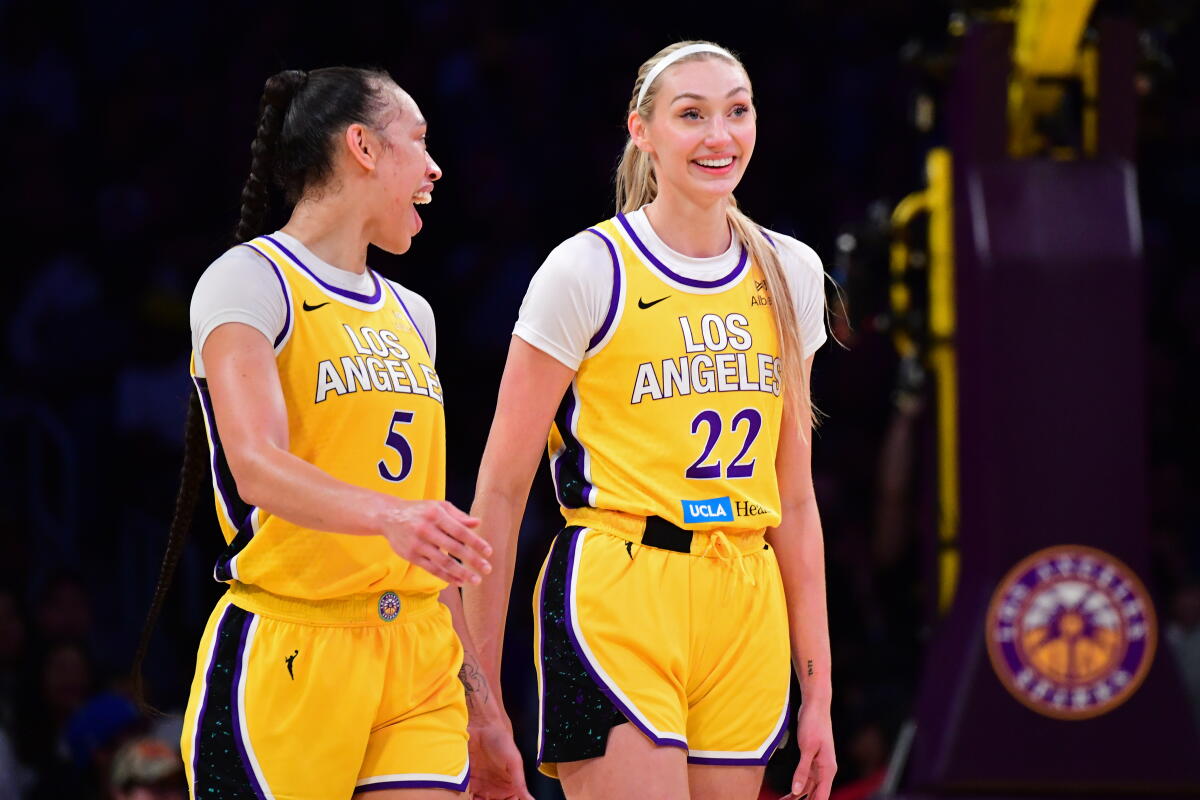
Seattle follows with 93 combinations, or 9.3%, after a 31–57 two-year record. Portland has 52, or 5.2%. Los Angeles is listed twice because it controls its own pick and Phoenix's first-rounder. The Sparks' 37–51 record accounts for 24 combinations, while Phoenix's 43–45 mark supplies another 12. Together, those entries give Los Angeles 36 of 1,000 combinations, a 3.6% chance of getting No. 1. That is a long shot, but it also means the Sparks have two first-round selections available to strengthen a roster already featuring established young talent.
Two tickets should not be confused with two independent 3.6% chances. The 3.6% is their combined allocation for the first pick, not the probability attached to each selection. The value of owning both choices is broader: even if neither wins the lottery, Los Angeles could leave the first round with two prospects or use one of the selections as a trade asset. The team has more ways to improve than its relatively small jackpot percentage suggests.
Washington's situation is almost the opposite. It has a much stronger route to the top selection through one inherited pick, but that opportunity exists because another club transferred valuable future control. If Chicago's choice becomes No. 1, the Mystics will be celebrated for a transaction made before the current lottery order was known. If the pick slides, it still carries value, but the narrative will be less dramatic. The same trade can look brilliant or merely useful depending on the bounce of numbered balls.
The wider lesson is that a lottery is a probability distribution, not a promise. Houston and Toronto are favored, Washington is a legitimate spoiler, Seattle and Portland have smaller paths, and Los Angeles has an unusual two-pick portfolio. Front offices can control scouting, trades and development. They cannot control which combination appears on November 15. That uncertainty is exactly why giving away a future first-rounder can be so expensive.
JuJu Watkins Is the Headline — Not a Guaranteed Draft Entry
JuJu Watkins Is the Headline — Not a Guaranteed Draft Entry

Watkins is the obvious magnet for attention because her healthy college résumé is extraordinary. Before suffering a torn ACL in the 2025 NCAA Tournament, the USC guard averaged 23.9 points, 6.8 rebounds and 3.4 assists in her sophomore season. Her size, scoring instincts and ability to create offense under pressure make her a plausible franchise-changing prospect. A team landing the first pick would be entitled to dream about adding that kind of player.
But the 2027 draft is not a contract Watkins has signed. She missed the entire 2025–26 season while recovering and is preparing to return for USC's 2026–27 campaign. College eligibility rules and her personal development timeline leave room for another season in Los Angeles. The correct description today is that Watkins is widely projected as a leading candidate if she declares, not that she has committed to being available in April.
That distinction should shape every mock draft and front-office conversation. If Watkins returns to the level she showed before the injury and chooses the WNBA, the top pick may carry an unusually clear star-upside argument. If her college comeback is gradual, if she wants another year of competition, or if another prospect takes a leap, the board could look different. None of those outcomes is a verdict on her talent; they are normal uncertainties surrounding a player coming back from a serious injury.
Notre Dame's Hannah Hidalgo and Texas forward Madison Booker are among the other prominent prospects who could enter the conversation. They offer different skill sets, which means the order after the first selection should not be treated as automatic. Teams will have to compare positional needs with ceiling, defensive translation, playmaking responsibility and the readiness to contribute. The WNBA's expanding number of franchises makes the supply of elite young talent more consequential than ever.
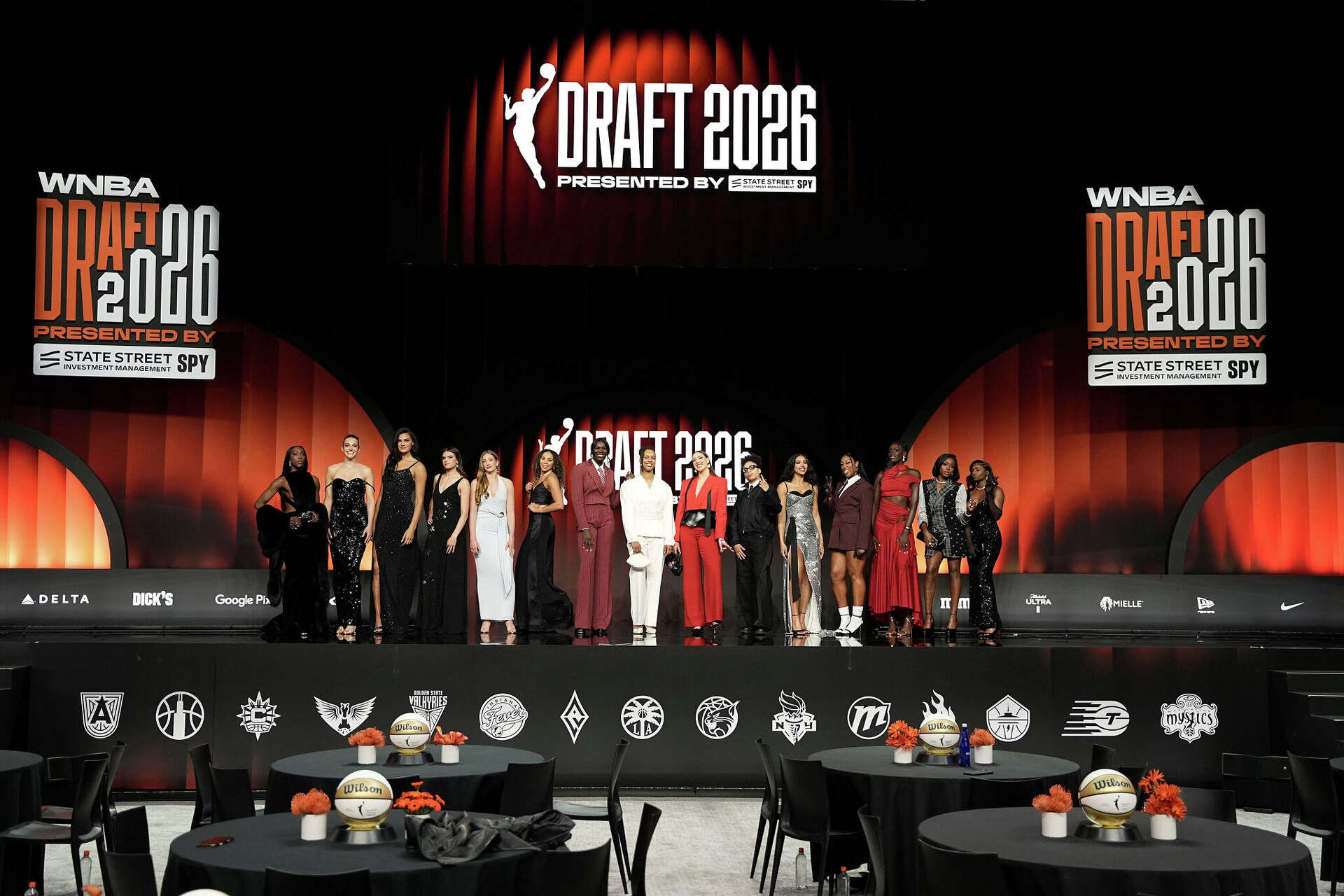
The lottery show is scheduled for November 15 at 7:30 p.m. Eastern on ESPN, after the UConn–Louisville college game, with the 2027 WNBA Draft set for April 12. Only the order will be revealed in November. The actual pool will depend on eligibility and player decisions closer to the draft. Houston, Toronto and the rest would be wise to prepare two complete scouting plans: one with Watkins available, and one without her.
That is why this story is bigger than the familiar phrase 'JuJu sweepstakes.' A lottery winner earns first choice, not ownership of a college star's future. The distinction protects the player from premature assumptions and forces the teams to do the work that a lucky draw cannot replace.

November 15 will settle who gets first access to the 2027 talent pool. It will not settle the question of who is actually in that pool. Houston and Toronto have the strongest mathematical position, Washington has a valuable pick acquired from another team, and Los Angeles has two different routes to a surprise. Those are real advantages, but none is a guarantee of landing the player most fans already associate with the draft.
The smartest front offices will use the lottery result to sharpen their plans, not replace them. If Watkins declares, the team at No. 1 may face a franchise-shaping opportunity. If she stays in college, the same pick will demand a different evaluation of guards, wings, fit and timing. For six franchises holding seven lottery entries, the next few weeks are about preparing for both outcomes rather than treating a hypothetical selection as a completed deal.
Shop GOATIFY WNBA products from the WNBA-filtered basketball collection.