

Alvarez and Crow-Armstrong Win Hank Aaron Awards. Two Very Different Seasons.
GOATIFYTwo hitters, two very different ways to overwhelm a defense, and the same place in baseball's awards spotlight. Yordan Alvarez of the Houston Astros and Pete Crow-Armstrong of the Chicago Cubs were named the American League and National League Hank Aaron Award winners on Wednesday, November 11. Neither had previously received the honor. Alvarez reached the top through patience, power and a level of consistency few pitchers could disrupt. Crow-Armstrong made an enormous midseason adjustment and finished with a rare combination of home runs and stolen bases.
The award recognizes the most outstanding offensive player in each league, rather than the most valuable player in every part of the game. That distinction matters here. Alvarez was the strongest pure hitter on a rate basis, leading qualified batters in average, on-base percentage and slugging percentage. Crow-Armstrong paired 45 home runs with 41 steals, and his spectacular center-field defense added to his broader reputation without being the reason for this particular trophy. Both built convincing offensive cases, but the statistics that explain them look almost like descriptions of different sports.
The announcement in Las Vegas replaced two familiar winners: Aaron Judge and Shohei Ohtani had held the respective league awards a year earlier. The new honorees also entered Thursday's MVP announcements as leading contenders, although those votes are a separate judgment and had not yet been announced when the Aaron Awards were revealed. What is already settled is that the 2026 season changed the offensive pecking order in both leagues.
Alvarez turned patience into the most complete hitting season
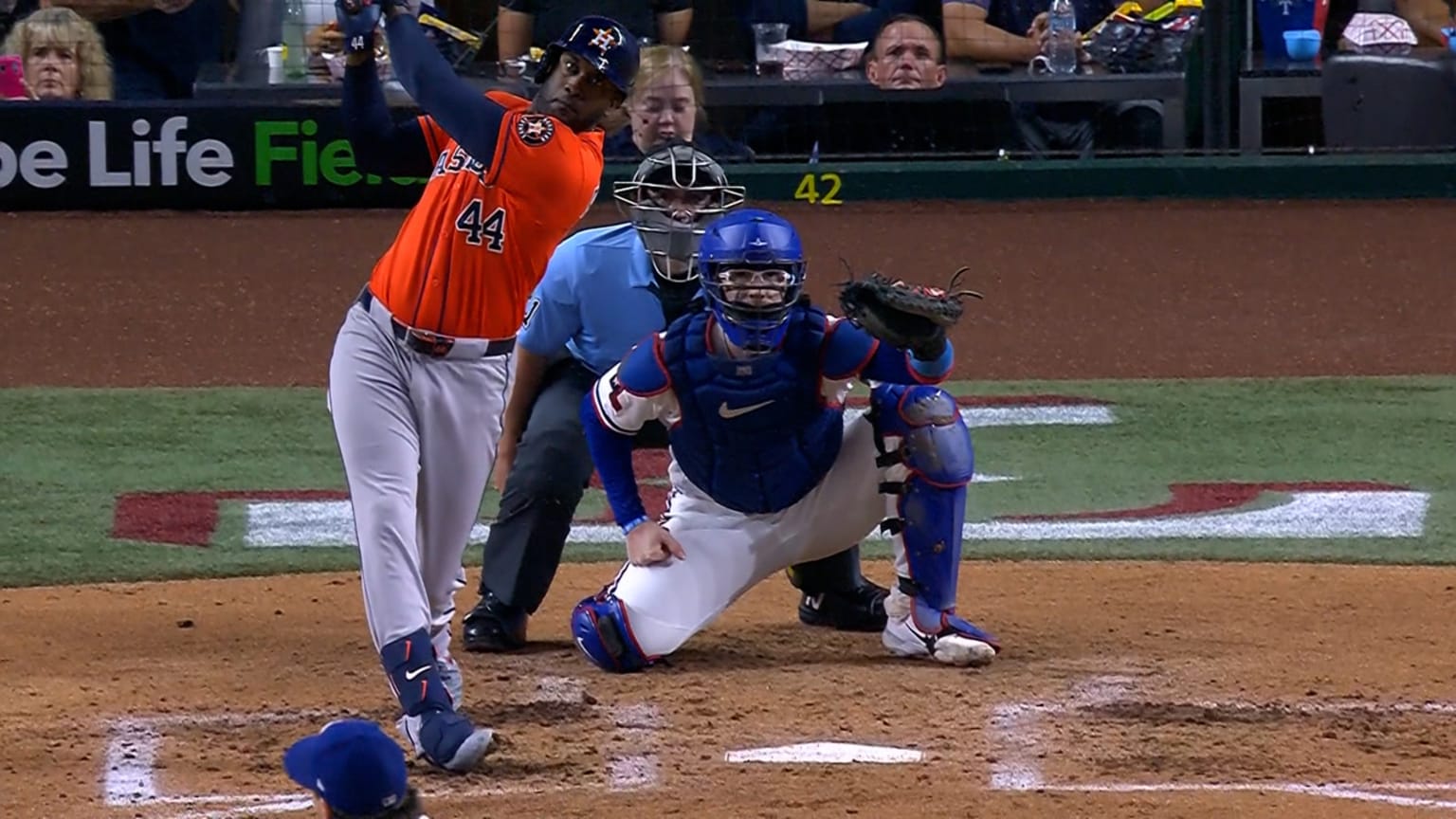
Alvarez's headline numbers are difficult to separate because each strengthens the others. He hit .316 with a .432 on-base percentage and .601 slugging percentage, good for a 1.033 OPS. His 42 home runs supplied the power expected from an elite designated hitter, but the 109 walks explain why pitchers so rarely found an easy way out. He was the only qualified major league hitter with an OPS above 1.000 and led qualified batters in batting average, on-base percentage, slugging percentage and walks. A 181 weighted runs created plus means his offensive production was approximately 81 percent better than the league average after the metric's adjustments.
The difference between a spectacular peak and a great season is how a hitter handles the weeks when the swing does not cooperate. Alvarez barely experienced a downturn. In August, his .872 OPS, two home runs and 12 RBIs might have looked ordinary beside his own best months. Even then, his 133 wRC+ indicated offense roughly one-third better than the adjusted league standard. May was similarly subdued by his standards, yet it still produced eight home runs in 28 games. In every other month, his OPS cleared 1.000. Pitching staffs did not discover a lasting adjustment; they mostly found different ways for Alvarez to hurt them.
His approach worked because it forced a costly choice. Challenge him inside the zone and risk a ball struck hard enough to change the scoreboard. Work around him and accept a baserunner for Houston's next hitter. Those 109 walks were not a side note to the home run total. They kept innings moving even when he was not driving the ball out of the park, and they helped explain a .432 on-base percentage that gave the Astros a reliable source of traffic at the heart of the order.
GOATIFY
GOATIFY Baseball
Alvarez's disciplined power made the Astros' 2026 season memorable. Explore GOATIFY Baseball designs for fans following the game's best hitters.


White Baseball GOAT Dad Hat
A white baseball GOAT design for ballpark days and everyday fan style.
Shop Now ↗


White Baseball GOAT Sticker
A white baseball GOAT decal for your bottle, laptop or game-day gear.
Shop Now ↗Alvarez's season also became a story about availability. He had appeared in only 48 games in 2025, an injury-disrupted year that made a normal workload far from guaranteed. In 2026 he played 158, more than in any earlier season of his career. That volume turned the established quality of his swing into career highs that had previously remained out of reach, including his first 40-homer season. Houston needed that production while other parts of its lineup dealt with interruptions. The Astros nevertheless returned to October for their tenth postseason berth in twelve years.
For much of the summer, the possibility of a Triple Crown remained real. Alvarez controlled the batting average race and stayed close enough in home runs and RBIs to make the chase compelling. Baltimore's Pete Alonso finished more strongly in the latter two categories, denying Alvarez a sweep of the traditional hitting titles. The outcome should not obscure how comprehensive Alvarez's offense was. The batting title was his, as were the major league leads in several statistics that measure reaching base and generating power more directly than RBI totals.
There is an Astros history angle behind the award too. Alvarez became just the second Houston player to receive a Hank Aaron Award, joining Jose Altuve, who won in 2017. He was the franchise's third batting champion after Altuve and Yuli Gurriel. The combination of at least 40 homers, 100 RBIs, 100 walks and 100 runs put him in a small club of Houston stars that includes Jeff Bagwell, Lance Berkman and Alex Bregman. Those comparisons show why the season will stand out even among a franchise's successful recent years.
The award was accompanied by a larger haul of recognition: Alvarez also received the American League Comeback Player of the Year honor, the outstanding designated hitter award named for Edgar Martinez and a place on the All-MLB First Team. None of those votes can retroactively make a hit more valuable. Together, however, they describe something unusual: a power bat that recovered its durability, retained elite strike-zone judgment and almost never gave opponents a soft month.
Crow-Armstrong's season changed when he stopped chasing
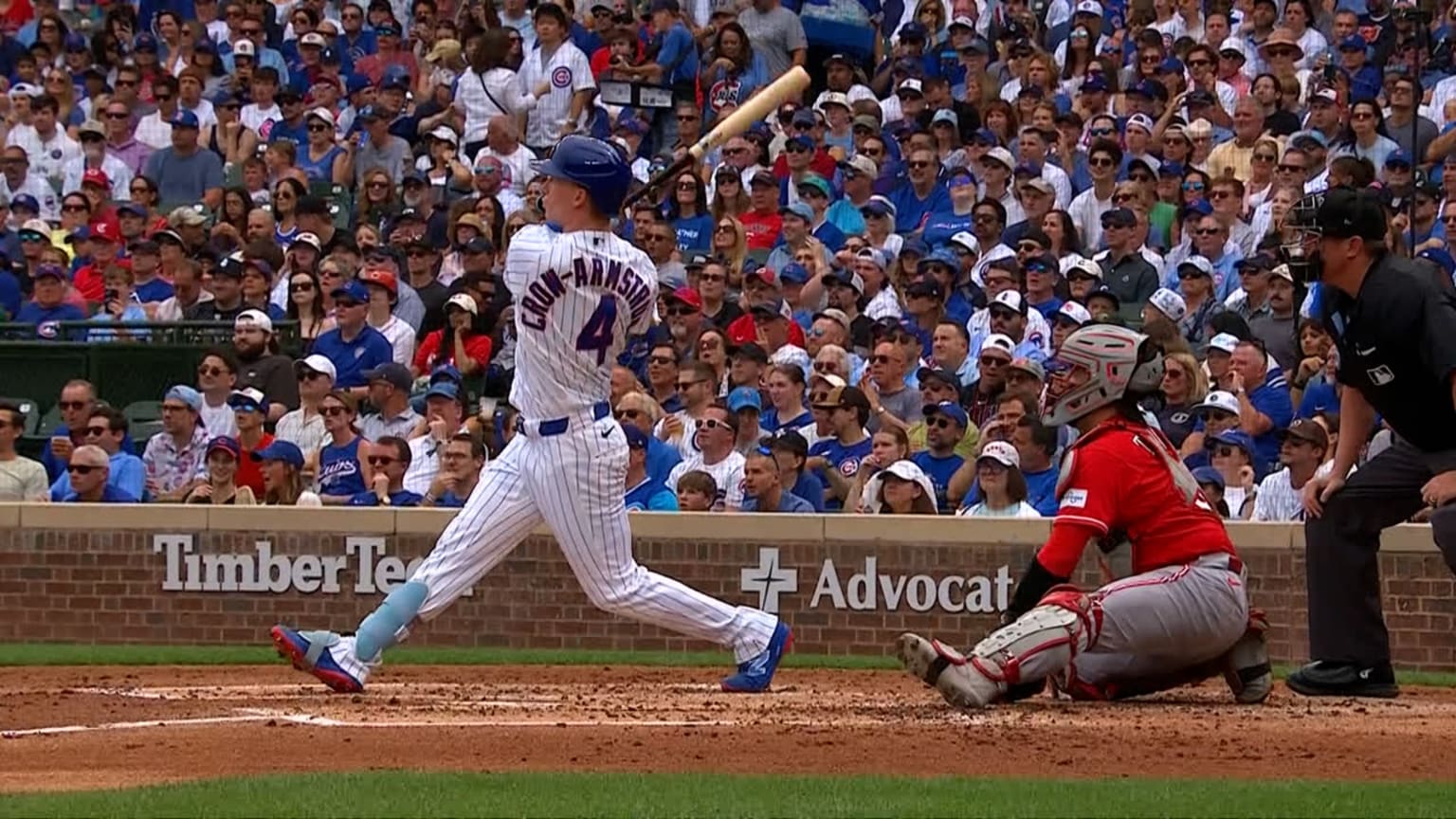
The National League winner's path had a dramatic bend that Alvarez's did not. At the end of April, Crow-Armstrong owned a .669 OPS. He had made his first All-Star team in 2025, but his difficult second half that year and slow start in 2026 left a reasonable question: could the Cubs center fielder turn dazzling athletic tools into a consistently dangerous bat? It was not enough simply to swing harder. Opponents could attack his impatience and wait for the next chase.
The answer came through a more selective approach. Crow-Armstrong began taking pitches he previously might have offered at, improving the quality of the counts in which he swung. He also found more authority pulling the ball. The results from May 1 through the end of the season were extraordinary: 42 home runs, 100 runs scored, a 1.004 OPS and a 171 wRC+, all the best totals in the majors over that span in the categories cited by MLB. The first month was not erased, but the scale of what followed made it a footnote rather than a definition.
GOATIFY
GOATIFY Baseball
Crow-Armstrong's 40-40 breakout brought a new kind of excitement to Chicago. Browse GOATIFY Baseball apparel and accessories inspired by the sport.


White Baseball GOAT Sweatshirt
Rep baseball’s greatest with a white GOAT graphic sweatshirt.
Shop Now ↗

Gold Baseball GOAT Sticker
A gold baseball GOAT decal for your bottle, laptop or game-day gear.
Shop Now ↗
His walk rate illustrates the change more clearly than a highlight reel. It reached 11.4 percent in 2026, an increase of 6.9 percentage points from 2025 and the largest year-over-year improvement among hitters who qualified in both seasons. More walks meant longer at-bats, more opportunities to reach base and fewer outs surrendered on pitches outside his best hitting area. A player already dangerous once he reached first base became harder to retire before he could run.
Crow-Armstrong finished at .280/.372/.570 with 45 homers, 107 RBIs, 119 runs and a .942 OPS, playing in all 162 Cubs games. His 45 home runs tied Kyle Schwarber for the major league lead and were the most in a season by a Cubs player aged 24 or younger, overtaking Ernie Banks' 44 in 1955. That is a franchise milestone of a different order from merely improving on a personal best. It placed a speed-first center fielder among the sport's most productive sluggers.
Then add 41 stolen bases. A 40-homer, 40-steal season has occurred only seven times in major league history, with names on the list including Barry Bonds, Alex Rodriguez, Alfonso Soriano, Ronald Acuna Jr. and Shohei Ohtani. Crow-Armstrong joined that company while playing a premium defensive position every day. He also became the first Cubs player to record two consecutive 30-homer, 30-steal campaigns. His offensive profile stopped being a promising mixture of tools and became one of the most difficult combinations in baseball to match.
Several moments showed how many routes he had to an impact. In June he hit for the cycle against Colorado, collecting a home run, triple, double and single in that order. The Cubs eventually won on a walk-off, turning a rare individual accomplishment into a team celebration. In late August he hit both a leadoff home run and a walk-off homer in one game. Those episodes were memorable, but the reason he earned this award was the volume between them: production over six months, not only a handful of extraordinary nights.
His defense is relevant as context, even if this is an offensive award. Crow-Armstrong also earned the National League Platinum Glove and led the league with 26 Fielding Run Value in center field. His 10.6 FanGraphs wins above replacement made him a major MVP candidate because the bat, legs and glove all contributed. But the Hank Aaron case can stand on its own. A player who looked below average at the plate in April finished as a 45-homer hitter with elite speed and a new understanding of the strike zone.
One trophy, two definitions of offensive dominance
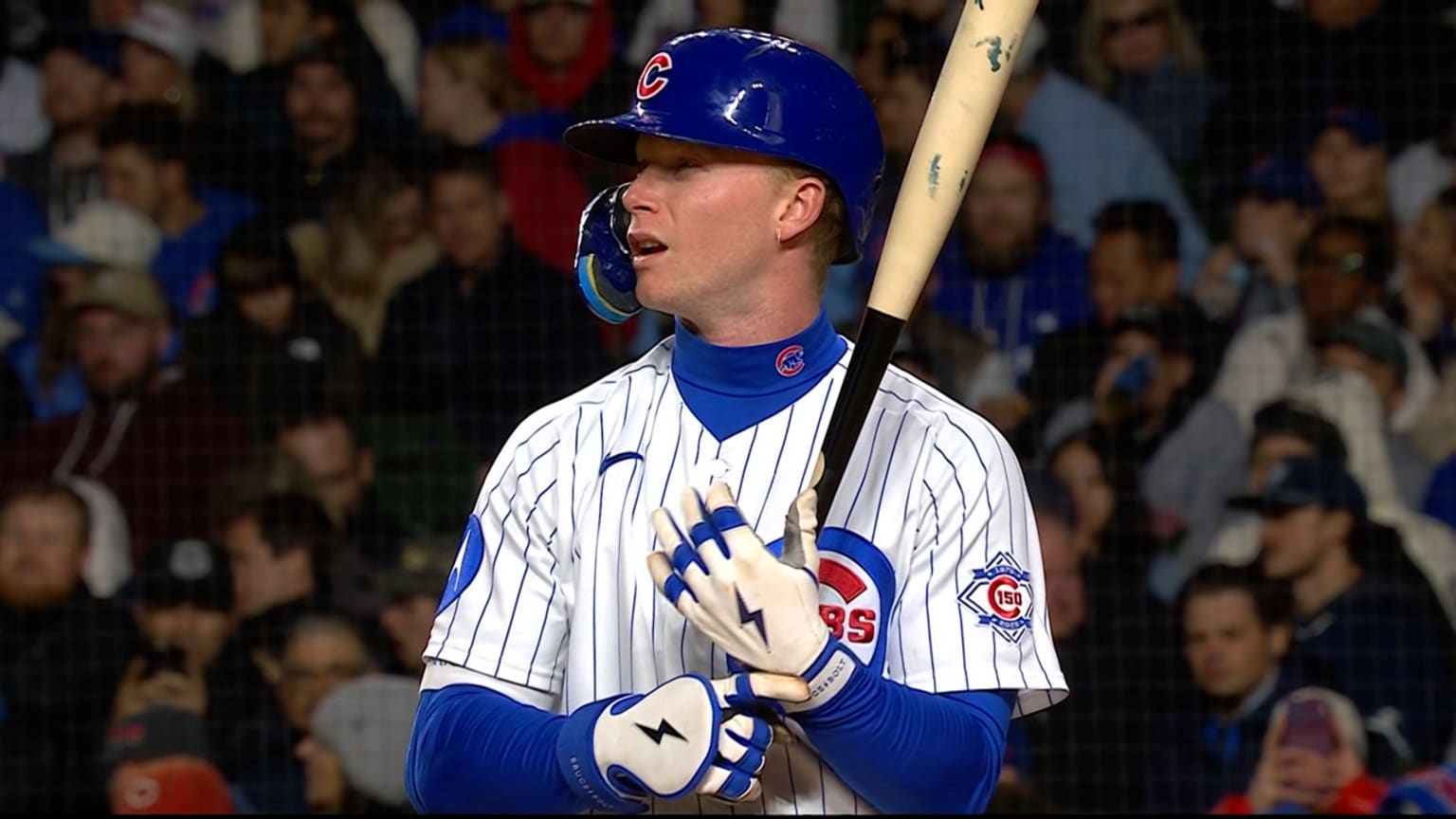
The contrast makes this awards pairing especially instructive. Alvarez did not need stolen bases or range in center field to build a historically strong offensive season. He controlled the plate appearance: hitting safely at an exceptional rate, avoiding unnecessary outs and taking his walks when pitchers refused to challenge him. Crow-Armstrong created offense in a more kinetic way, threatening a long ball from the top of the order and putting immediate pressure on the defense once he reached base. Both profiles raised run-scoring expectations, just through different mechanisms.
GOATIFY
GOATIFY Baseball
From Astros slugging to Cubs speed, 2026 showed many ways to build a baseball legend. Explore the GOATIFY Baseball collection.


Gold Baseball GOAT Dad Hat
A gold baseball GOAT design for ballpark days and everyday fan style.
Shop Now ↗White Baseball GOAT Sweatshirt
Rep baseball’s greatest with a white GOAT graphic sweatshirt.
Shop Now ↗That is why the Hank Aaron Award fits this comparison better than a single leaderboard. Alvarez's 1.033 OPS led qualified hitters and placed him ahead of Crow-Armstrong's .942. Crow-Armstrong, in turn, led the majors with 45 home runs alongside Schwarber and supplied 41 steals Alvarez was not attempting to match. Raw totals, rates, baserunning opportunity and the difficulty of a player's role all tell parts of the story. The award's offensive focus still leaves room for voters to recognize different but similarly exceptional seasons.
The Hank Aaron Award has been presented since 1999, a quarter-century after Aaron surpassed Babe Ruth's career home run record. Its recipients are selected through a combination of fan votes and ballots from a panel of former winners and Hall of Famers. Ten finalists from each league were considered in 2026. By naming Alvarez and Crow-Armstrong, voters elevated two first-time winners over a field of accomplished stars, and broke the recent pattern of Judge and Ohtani holding the awards.
The franchise lists add perspective. Alvarez followed Altuve as Houston's second winner, while Crow-Armstrong became the Cubs' fourth after Sammy Sosa, Aramis Ramirez and Kris Bryant. The young Chicago star was also the third-youngest player in history to complete a 40-40 season, according to the league's awards release. Neither player needed to copy an earlier franchise icon to earn a place beside them. The routes they took into those records are part of what makes the achievement interesting.
The next conversation involves MVP voting, and it should be kept separate. The MVP Award considers overall value and is decided through another ballot. Crow-Armstrong's defense and baserunning strengthen his case there; Alvarez's offensive consistency and the Astros' reliance on his bat are central to his. As of the Hank Aaron announcement, the league MVP results were still due Thursday, November 12. Whatever those later outcomes, the offensive honors were already official.
Perhaps the most useful lesson is about adjustments. Alvarez's return from an injury-shortened season showed what happens when an elite hitter is available almost every night. Crow-Armstrong's transformation after April showed what happens when a high-upside player changes which pitches deserve his swing. The awards did not say one kind of greatness is preferable. They recognized that patience and sustained precision can be as devastating as a sudden surge of power attached to 40-steal speed.
Baseball's 2026 offensive story now has two central images: Alvarez standing calmly in the box while a pitcher decides whether to risk a strike, and Crow-Armstrong exploding out of that same box with an extra base seemingly available in every direction. One finished with the sport's highest qualified OPS and a batting title. The other produced a 45-homer, 41-steal season that hardly seemed imaginable after April.
Both are first-time Hank Aaron Award winners. The honor measures a season already played, not the MVP results yet to come, and it rewards two demanding skills: creating offense and sustaining it against a league constantly trying to adjust. Houston and Chicago found different answers to that challenge. Their stars ended up sharing baseball's biggest recognition for hitting.
GOATIFY
GOATIFY Baseball
Shop GOATIFY baseball shirts, hoodies and stickers.


Gold Baseball GOAT Sweatshirt
Rep baseball’s greatest with a gold GOAT graphic sweatshirt.
Shop Now ↗White Baseball GOAT Sticker
A white baseball GOAT decal for your bottle, laptop or game-day gear.
Shop Now ↗White Baseball GOAT Dad Hat
A white baseball GOAT design for ballpark days and everyday fan style.
Shop Now ↗


















