Draymond Says Luka May Never Win MVP — The Numbers Tell a Different Story
GOATIFYDraymond Green has made an unusually final prediction about a player who has not yet turned 28: Luka Dončić, he believes, is running out of time to win the NBA's Most Valuable Player award. The Golden State Warriors veteran argued this week that the Los Angeles Lakers star has become so reliably brilliant that voters may no longer treat his production as extraordinary. In Green's telling, 2026-27 might be Dončić's last realistic opportunity.
That is a striking claim about a six-time All-NBA First Team selection who led the league in scoring last season. It also raises a better question than whether Green's prediction will prove correct: what actually separates an MVP-caliber season from an MVP-winning one? Dončić already has the scoring, passing and offensive command. The missing pieces have been availability, team position and the comparison with equally dominant rivals. A rebuilt Lakers team offers him a chance to change that equation, but the path is considerably more demanding than simply scoring 34 points per night.
Green's voter-fatigue warning is really two different arguments

Green's assessment came on his podcast after the Lakers and Warriors opened their seasons against each other. He said this was the last possible season in which Dončić could win the award, arguing that another huge scoring average would be greeted as something routine rather than remarkable. He made the same point about Jayson Tatum: once a star establishes a certain statistical baseline, the public starts expecting it.
The most provocative part of the argument is not the prediction itself. It is the idea that consistency can become a disadvantage. A first-time breakout candidate may generate excitement by reaching 30 points per game, while a player who has done it repeatedly must produce something even more spectacular to make the same impression. Green invoked LeBron James as an example of an all-time great whose four MVP awards do not fully capture his sustained dominance.
There is a genuine discussion to be had about narrative fatigue, especially when an established winner has already accumulated multiple trophies. But Green is blending two different situations. James had won four MVPs by the end of the 2012-13 season. Dončić has never won one. The electorate may become tired of crowning the same player repeatedly, yet the incentive to recognize a spectacular first-time winner can run in the opposite direction.
Green also did not claim Dončić had suddenly become less talented. His warning was about the way the award is perceived and voted upon, not an argument that Luka's skill set is slipping. That distinction matters because a headline prediction can sound like a judgment on the player when it is actually a theory about how voters respond to familiar excellence.
There is no single numerical formula that decides MVP. Voters weigh team success, individual production, games played, two-way impact and the quality of a player's competition. Some seasons have an obvious favorite; others hinge on how voters interpret the same evidence. The practical question for Dončić is whether he can build a case strong enough that voters do not have to choose between his box-score brilliance and a rival's superior team record.

Luka's 33.5-point season shows the talent — and the obstacle
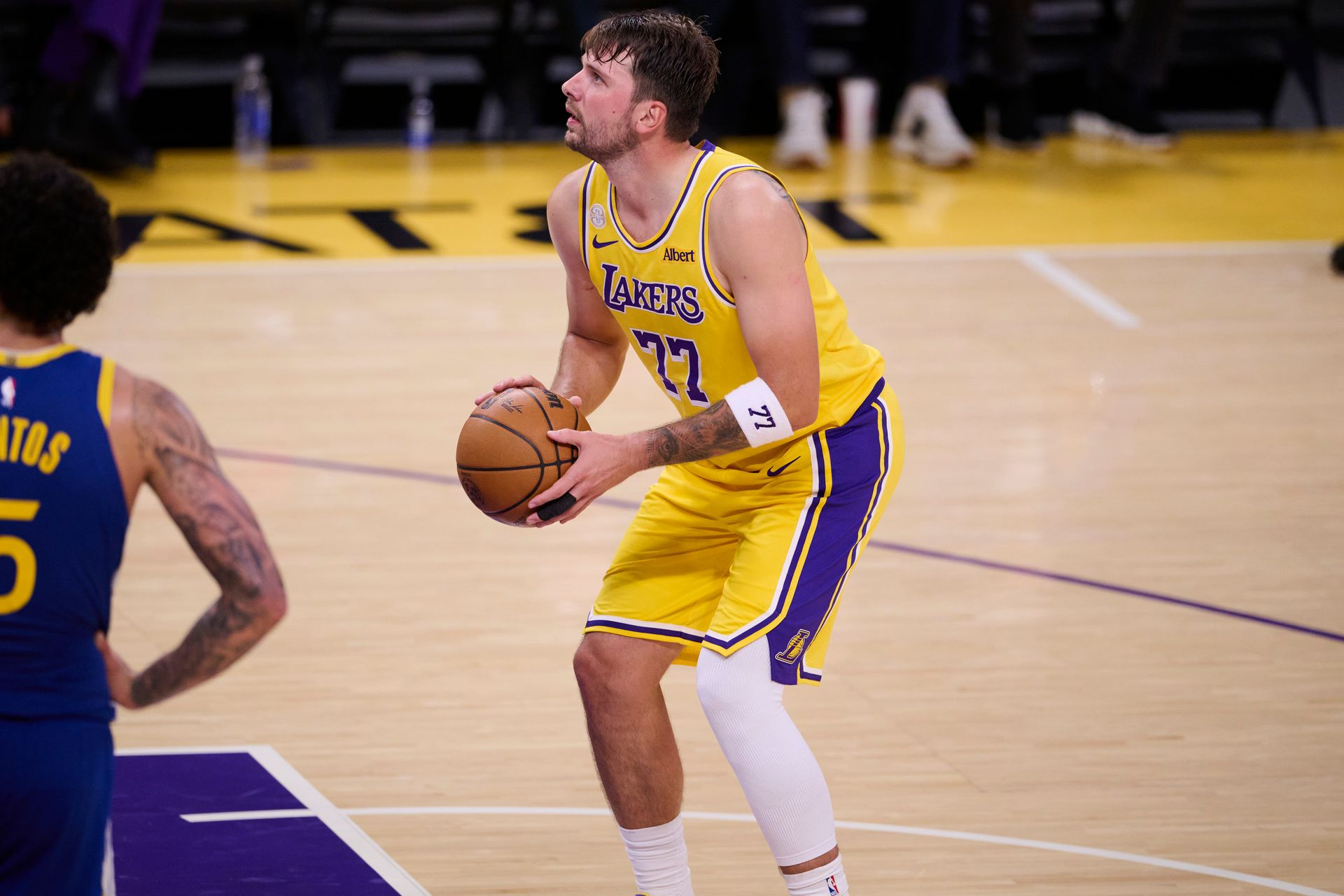
Dončić's 2025-26 campaign is the clearest evidence that he does not need a dramatic statistical reinvention. In 64 games for Los Angeles, he averaged an NBA-leading 33.5 points, with 8.3 assists and 7.7 rebounds. He made 4.0 three-pointers per game, shot 47.6 percent from the floor and earned his sixth All-NBA First Team selection. Those are the numbers of a legitimate MVP contender, not someone waiting to discover another level.
Yet he finished fourth in the award voting. His offensive burden was enormous, but 64 appearances meant he missed 18 regular-season games. His subsequent hamstring injury kept him out of the Lakers' playoff run, when Los Angeles advanced past Houston before losing to Oklahoma City. The postseason does not determine the regular-season MVP, but the broader availability story illustrates why being the league's most dazzling creator and assembling the strongest full-season candidacy are not always the same thing.
Green's observation about Dončić's résumé has a kernel of truth: the star has reached 70 regular-season appearances only twice. A voter evaluating two similarly dominant players can reasonably treat an additional 10 or 15 games of elite performance as meaningful. Those games are not empty counting statistics; they represent opportunities to turn difficult nights into wins and keep a team's seeding stable.
Team results have mattered as well. During Dončić's first six full seasons in Dallas, the Mavericks managed only one top-four finish in the Western Conference. He was capable of controlling entire playoff series, but the MVP discussion is anchored in what happens from October through April. A player who finishes with 33 points per game on a middle-of-the-pack seed often faces a harder argument than a 30-point scorer steering a conference leader.
That should not be interpreted as a demand for Dončić to play every game or sacrifice his health. A smart Lakers medical plan could protect him for the postseason and still support an MVP run. The key is reducing avoidable absences while improving the team's ability to win when he is on the floor. In practical terms, 72 excellent appearances on a top-tier Western Conference team would create a much different voting conversation from 64 brilliant games followed by an injury interruption.
His age also weakens the notion of a closing window. Dončić is 27, already owns six first-team All-NBA selections and remains the centerpiece of a franchise with championship ambitions. The award is not guaranteed to arrive, but the statistical foundation for a future winning season is plainly intact.

Shai and Jokić make the strongest case against inevitability

The strongest rebuttal to Green's theory is sitting in the recent MVP results. Shai Gilgeous-Alexander has won the award in consecutive seasons, 2024-25 and 2025-26, even though his excellence was already well established before the second victory. Oklahoma City continued to win at an elite level, and his efficient scoring, late-game execution and team leadership remained central to the case. Familiarity did not prevent voters from choosing him again.
Nikola Jokić offers an even longer test. The Denver center won three MVPs across four seasons — in 2021, 2022 and 2024 — and finished second in several other years, including 2025-26. By then, his passing, rebounding and scoring versatility were anything but a surprise. Voters still treated his performances as historically significant. The award did not become unavailable simply because the basketball world knew what his next triple-double might look like.
There is an important qualification: Gilgeous-Alexander and Jokić were not competing in a vacuum. Their teams, health, statistical profiles and rivals changed from year to year. Voter fatigue can influence a close race without deciding every race. The lesson is that an established superstar can overcome it by building the strongest overall case, especially when the team around him turns individual creation into elite regular-season results.
Joel Embiid's 2022-23 win is another useful precedent. He had already been an MVP runner-up twice, and voters were thoroughly familiar with his scoring and physical dominance. His first trophy arrived not because his previous excellence was forgotten, but because that season's combination of production, impact and competition persuaded enough voters. Dončić can plausibly follow a similar trajectory.
The broader picture makes Green's certainty difficult to defend. MVP races are contingent: an injury to one contender, a breakthrough by another, or a team's unexpected rise can shift the balance dramatically. No one can credibly declare in October that a healthy 27-year-old superstar has one final chance. The more productive way to read Green's comment is as a warning that Dončić must give voters a reason to separate his next season from the impressive seasons they already know.

A new Lakers roster could turn the MVP argument into wins
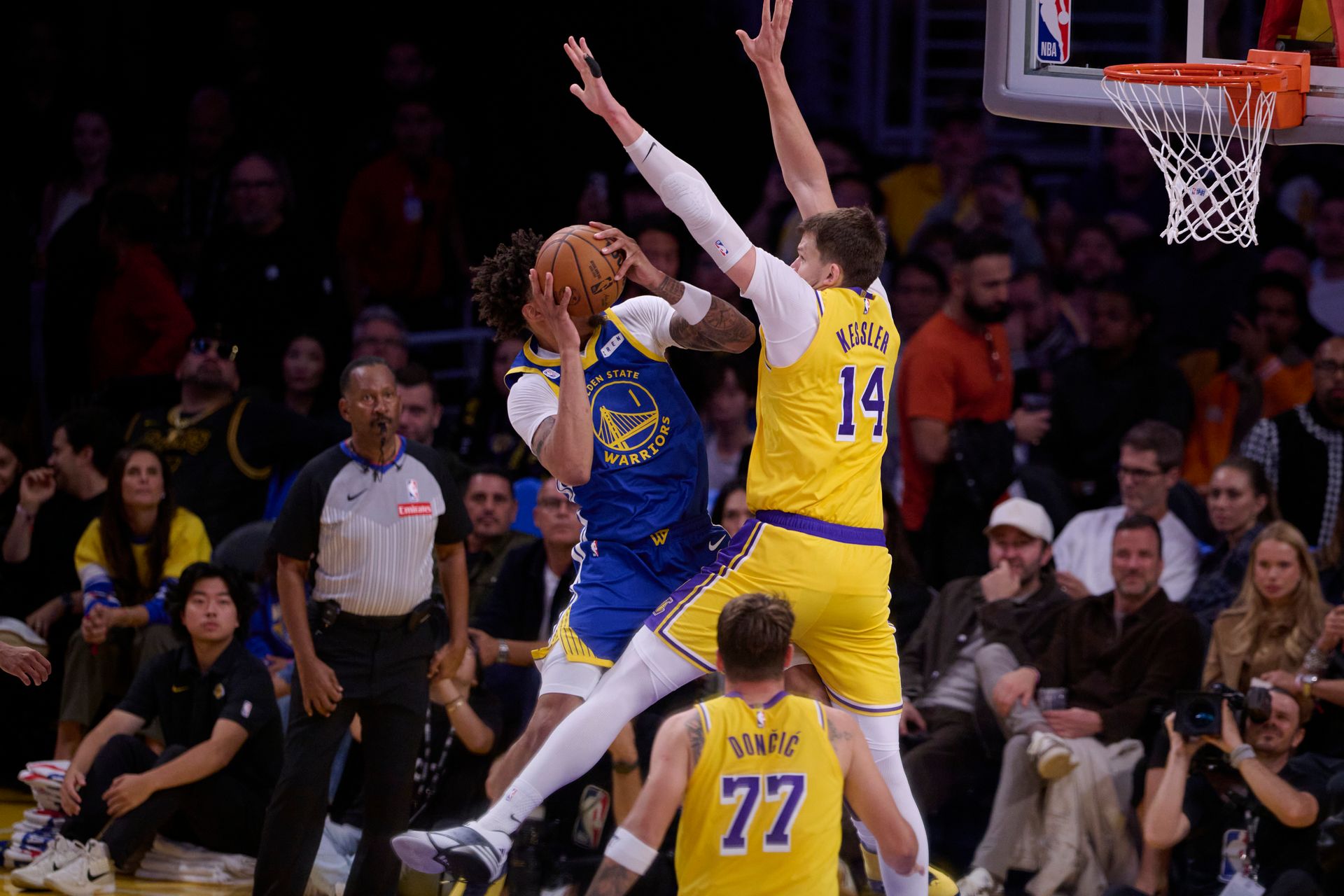
Los Angeles has already provided a glimpse of how that separation might happen. In Wednesday's 127-105 opening-night victory over Golden State, Dončić posted 28 points, eight rebounds and seven assists. Those numbers were excellent without requiring him to score 40. The more revealing development was the help around him: new center Walker Kessler scored 26 points on a perfect 12-for-12 shooting night, grabbed nine rebounds and finished 10 dunks. Austin Reaves supplied another 23 points.
Kessler's debut was not merely a highlight reel. A vertical threat who can finish above the rim gives Dončić a dependable outlet when defenses load up on his step-back shooting or send extra pressure toward the ball. Reaves offers a second creator who can initiate possessions and punish opponents for treating every trip down the court as a Luka isolation. A healthier distribution of responsibilities could improve the Lakers' record while allowing Dončić to conserve energy for the moments that require his individual brilliance.
The new arrangement also comes with uncertainty. LeBron James left for Philadelphia, and Los Angeles has had to reshape its rotation around a different hierarchy. Chemistry, defensive consistency and depth will matter more over 82 games than a single blowout of a Warriors side missing several important contributors. One opener cannot establish that the Lakers are a conference powerhouse. It can, however, show the type of roster balance that would strengthen Dončić's award case.
For an MVP run, the priorities are clear. First, Dončić needs sustained availability: enough healthy games for his production to carry full-season weight. Second, the Lakers need to translate their new offensive structure into a high Western Conference seed. Third, he must keep the efficiency and playmaking that make his scoring valuable rather than simply accumulating the largest point total. Finally, his defensive engagement and late-game decision-making can help turn a close statistical race in his favor.
There is a useful paradox here. Dončić might become a stronger MVP candidate by taking fewer difficult shots if the trade-off is a better Lakers offense and more wins. Voters do not have to reward the player who does the most by himself; they can reward the player who makes the entire team most effective. A team that wins 55 or more games with Dončić directing a balanced attack would be difficult to ignore, even if his points-per-game average falls below last season's 33.5.
Green's prediction will be remembered if Luka remains without the trophy. But it is not a deadline imposed by the league, and the first week of the season is far too early to treat it as one. The real test is whether this new Lakers roster gives its superstar the health, victories and signature moments that transform an obvious MVP talent into the season's most persuasive MVP choice.
Bottom line: Green is right that the MVP conversation involves expectations and narratives, not just raw points. He is on shakier ground when he turns that observation into a prediction that Dončić will never win after this season. Recent winners have demonstrated that familiar greatness can still earn the trophy, while Dončić's own history points to availability and team seeding as more tangible obstacles.
The Lakers have begun their new era with a convincing victory and signs of a more balanced offense. If those early signals become a full-season trend, Dončić will not need to surprise anyone with a new scoring trick. He will need to do what the strongest MVP candidates usually do: stay on the court, lift his team toward the top and make his impact impossible to separate from winning.