Borlase Scored Just Two — Her Block Showed Why Atlanta Trusts Her
GOATIFYIsobel Borlase scored two points in the Atlanta Dream's first WNBA Finals victory. Her box-score line would be easy to overlook beside Angel Reese's 30 points and 16 rebounds, but one defensive possession showed why the Australian rookie is earning the trust of a championship contender.
Late in the first half of Monday's Game 2 against the Golden State Valkyries, Borlase denied Veronica Burton at the rim. Atlanta turned the stop into an Allisha Gray three-pointer, Golden State called timeout, and Reese rushed over to celebrate with her young teammate. It was a brief exchange in a 79-65 win, yet it captured the sort of contribution that rarely dominates a Finals headline: defense that becomes offense without the defender taking a shot.
The series is tied 1-1 and shifts to Atlanta on Wednesday, October 21. For a Dream team trying to match Golden State's depth, Borlase's minutes could matter much more than her scoring average suggests.
The block that made a two-point night matter
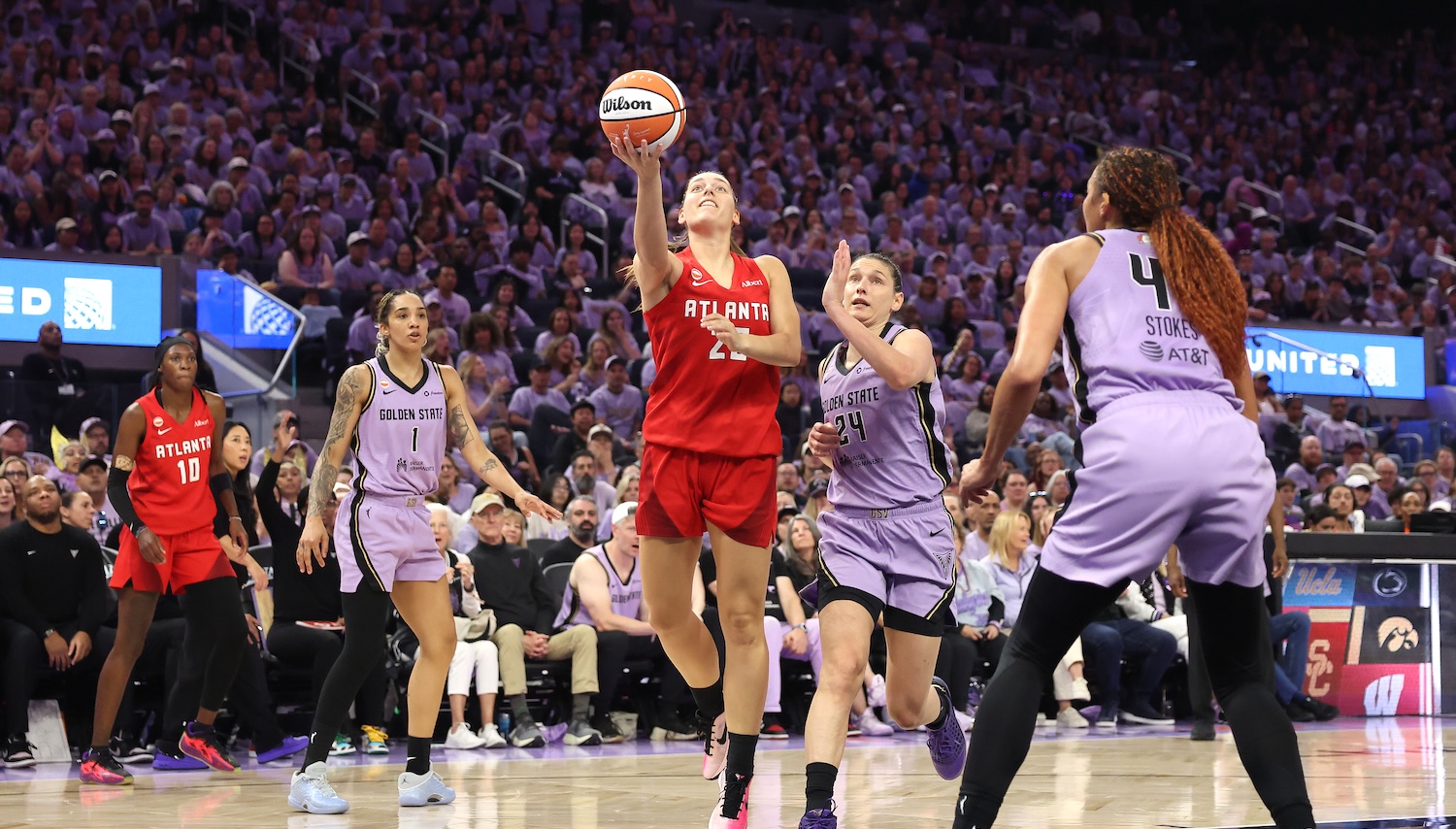
With the first half winding down in San Francisco, Atlanta had little room for another wasted defensive trip. The teams were trading narrow leads, Golden State's guards were finding ways to get downhill, and the Dream needed a stop that would not require another difficult half-court possession to turn into points. Isobel Borlase supplied it by blocking Veronica Burton late in the second quarter.
The sequence did not end at the block. Atlanta pushed the ball the other way, Allisha Gray hit a three-pointer, and the Valkyries called timeout. Reese immediately made her way toward Borlase for a chest-bump celebration. It was the kind of reaction that tells a rookie exactly what her teammates value: the defensive play was as important to the group as the shot that followed. Atlanta carried a 39-37 lead into halftime, and the exchange offered a glimpse of the energy it would bring after the break.
Borlase's personal scoring line was modest. She finished with two points, both at the free-throw line, after missing all five field-goal attempts. In roughly 17 minutes off the bench, however, she added an assist, a steal and a block, and Atlanta outscored Golden State by nine points while she was on the floor. Plus-minus in one game is not proof of individual dominance; it depends on teammates and opponents sharing the court. But paired with the visible defensive contribution, it helps explain why the coaching staff continued to trust her.
The distinction matters in a Finals series where every possession is contested. A reserve who makes a timely rotation, challenges a shot without surrendering a foul and gets the ball moving can contribute without needing a designed play. Borlase had scored four points in 12 minutes in Game 1, so Game 2 did not represent a scoring breakthrough. It showed something different: her role could survive a cold shooting night because her defense was still valuable.
There is a temptation to treat the block as the single play that won the game. That would ignore Reese's huge performance, Gray's scoring and the Dream's second-half pressure. The more useful reading is that Borlase gave Atlanta an extra high-quality possession at a tight moment. Over a seven-game series, the difference between a reliable rotation player and an uncertain one is often made up of exactly those small possessions.

The WNBL MVP who became Atlanta's playoff safety net

Borlase arrived in the WNBA with a reputation that was already substantial in Australia. She had been the MVP of the Women's National Basketball League with the Bendigo Spirit, a reminder that she was not learning how to lead a team for the first time. What changed in Atlanta was the scale and shape of her assignment. Instead of being a central scorer, she had to earn short, specific shifts beside established WNBA stars, often with no guarantee of enough touches to establish a shooting rhythm.
Her regular-season numbers tell that story. Borlase appeared in all 44 games, averaging 4.8 points in about 13 minutes per contest. Those are the statistics of a role player, not a franchise centerpiece. They also reveal that Atlanta kept using her throughout the season, giving her time to learn the speed of the league, the spacing around Reese and the demands of coach Karl Smesko's system. The value of that accumulated experience becomes clearer in October than it was in the summer.
The semifinals against New York provided a more obvious scoring argument for her minutes. With injuries affecting Atlanta's rotation, Borlase scored 11 points in the overtime Game 2 victory over the Liberty, then added 10 in the series-clinching Game 3. She produced those totals in different ways, including timely outside shooting in one game and efficient work around the basket in the next. It was not a sudden reinvention of her skill set; it was proof that she could deliver when the team asked her to carry a larger share of the offense.
Reese had already spoken about encouraging the rookie to play with the confidence she showed in Australia. That support matters because young reserves can easily become hesitant when their role fluctuates from one night to the next. Borlase has had to accept that 11 points might be required in one playoff game and a defensive block might be her signature contribution in another. Flexibility, rather than a fixed scoring target, is her clearest route to staying on the floor.
The move from WNBL MVP to WNBA Finals reserve is not a demotion in basketball terms. It is a different competitive problem: recognize when to attack, when to defend the next action, and when to leave the scoring to teammates. Game 2 showed that Borlase can contribute even when the ball refuses to go in. Atlanta's title hopes are better served by a rookie who keeps making the right decisions than by one who chases a familiar scoring average.

Atlanta's pressure needs more than Reese and Howard
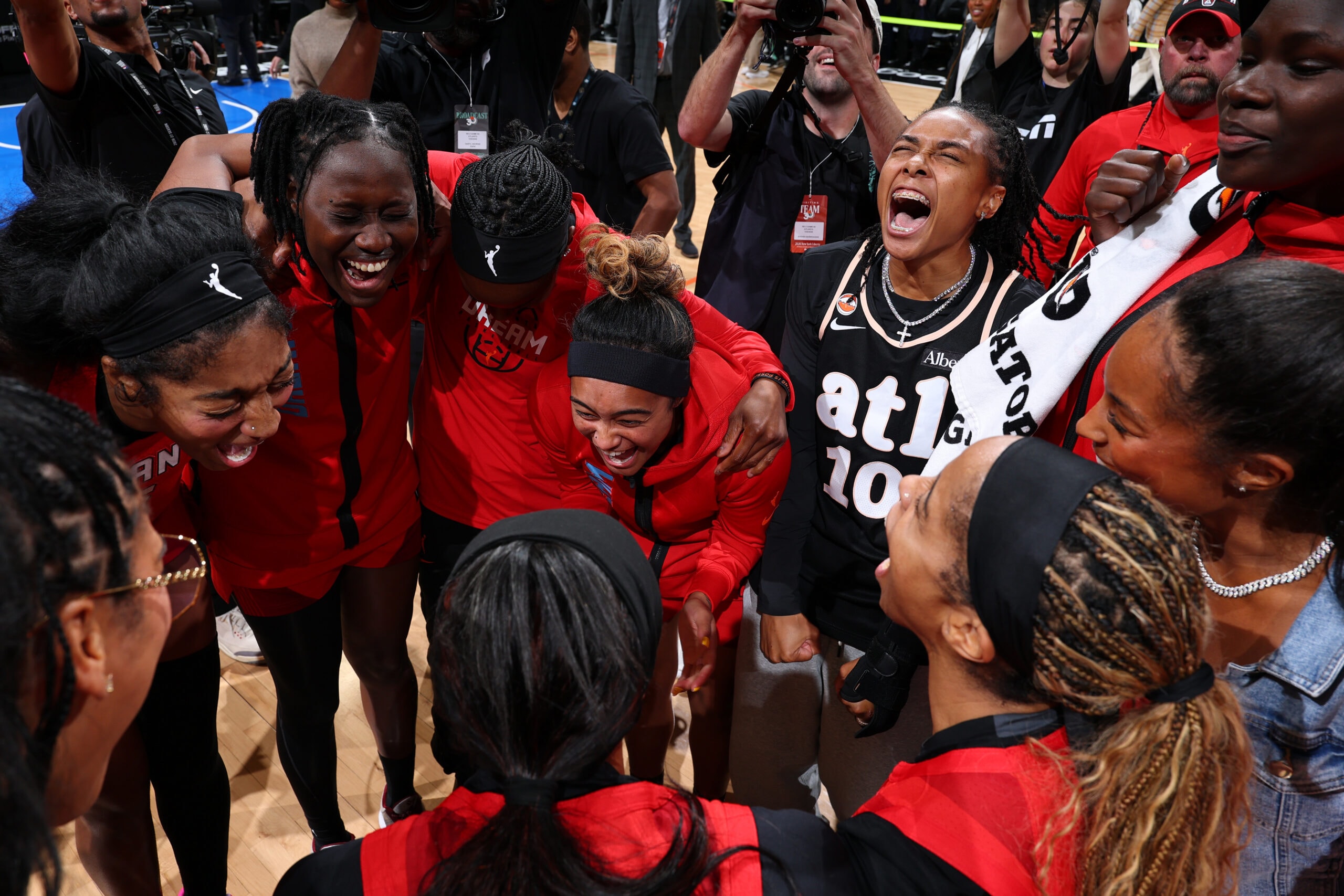
The Dream's Game 2 win was built on a defensive response that went well beyond one spectacular block. Golden State had stolen the opener with a late defensive squeeze, but Atlanta reversed the pressure on Monday. Rhyne Howard recorded six steals, a WNBA Finals single-game record, and the Dream turned Valkyries mistakes into 24 points. Atlanta also generated 19 fast-break points while holding Golden State to 34.4 percent shooting. Those figures explain how a two-point halftime edge became a comfortable win.
That defensive style only works if the entire rotation recognizes the same cues. The player guarding the ball can force a difficult angle, but a teammate has to be ready to help, contest and recover. A wing who anticipates the next pass can convert a stalled possession into a live-ball chance. Borlase's rejection of Burton fits that larger pattern: it was an individual defensive act with a collective reward, because Gray's three at the other end made the stop worth more than an empty trip.
Atlanta's third quarter illustrated how those details accumulate. The Dream outscored Golden State 21-9, holding the Valkyries to four makes on 15 attempts in the period. Remarkably, Atlanta itself hit only four of 16 shots in the quarter, but made all 12 free throws it attempted. The separation came from a combination of disciplined defense, pressure on the rim and an ability to make Golden State play uncomfortable basketball. It was not a sudden three-point shooting exhibition.
For a reserve like Borlase, this system offers a path to relevance even when she is not part of the primary offensive action. She can contest drives, stay attached to cutters and keep possessions alive by making the simple pass after a stop. Those responsibilities are not glamorous, but they reduce the burden on Reese and Howard to create every momentum swing. When a team relies heavily on its starters, dependable bench defense can be the difference between protecting a lead and asking exhausted stars to rescue it again.
There is a useful limit to the praise, too. Borlase's five missed field-goal attempts are a real offensive concern, and Golden State can test whether she remains willing to shoot open looks. Atlanta cannot let an opponent ignore a perimeter player indefinitely. But if the rookie keeps forcing difficult shots and moving the ball quickly, the Dream can live with a low-scoring night. In a Finals matchup shaped by defensive efficiency, the possession she prevents can be as valuable as the basket she makes.
Game 3 is a new test of Golden State's depth — and Borlase's composure
The Finals now move to State Farm Arena in Atlanta for Game 3 on Wednesday, October 21, at 8 p.m. ET. Game 4 follows there on Saturday, October 24. The series is tied 1-1, so the Dream have taken back home-court advantage without putting Golden State in anything like a desperate position. The Valkyries still have the depth and defensive structure that carried them to the championship round in only their second WNBA season.
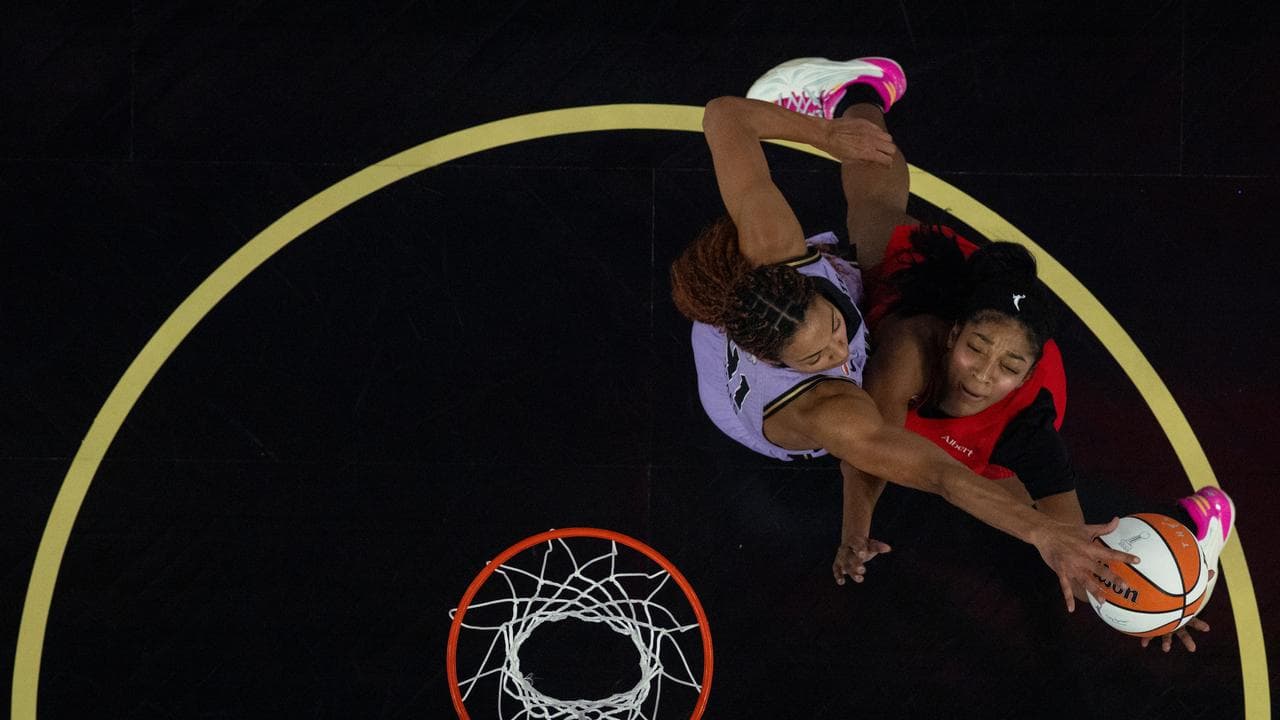
Golden State's adjustment starts with the frontcourt. Kiah Stokes continued to challenge Atlanta at the rim in Game 2, recording four blocks, even while Reese found ways to score around her. The Valkyries also have a variety of perimeter options: Gabby Williams and Tiffany Hayes scored 14 points each on Monday, while Burton added 11. Golden State will want cleaner possessions and better spacing after Atlanta repeatedly turned pressure into points. It is reasonable to expect the Valkyries to change how they attack the Dream's help defenders, rather than simply hoping their shots fall.
That creates a specific test for Borlase. If Burton attacks downhill again, the rookie must judge when to contest and when to stay connected to the next shooter. If Golden State uses its bench to speed up the game, Atlanta needs Borlase to run back in transition, avoid unnecessary fouls and make the first pass decisively after a stop. None of those assignments guarantees a headline, but they are exactly the details that determine whether a coach can keep a reserve on the floor during a tight fourth quarter.
Her offensive choices will be scrutinized as well. The 0-for-5 shooting line from Game 2 gives Golden State a reason to challenge her confidence, and the Dream cannot allow a defender to wander freely into Reese's space. Borlase does not need to force attempts; she needs to be prepared to take a clean look when the defense offers it, or move the ball before the advantage disappears. The semifinals showed she can score in double figures when circumstances demand it. The Finals will test whether she can make the same decisions when the crowd and stakes are bigger.
The matchup is especially interesting because Atlanta's bench has generally been shorter than Golden State's. The Valkyries can rotate multiple contributors without relying on one reserve to solve every problem. For the Dream, even a productive 15-to-18-minute stretch from Borlase can protect the starters and keep the defensive scheme intact. Her block in Game 2 was one possession. The challenge in Game 3 is to turn that level of alertness into a dependable shift, possession after possession.

Atlanta does not need Borlase to become another 30-point scorer. It needs the 22-year-old to defend without hesitation, move the ball quickly, and stay ready when Golden State's bench changes the pace. The block on Burton was a small moment on the scoreboard and a revealing one for the Dream's rotation.
Game 3 at State Farm Arena offers a different test: can the rookie reproduce that discipline in front of a home crowd, against a Valkyries team expected to adjust after its first Finals defeat? If she can, the story of this series may be told partly through the possessions that never make the highlight reel.
Shop GOATIFY WNBA products from the WNBA-filtered basketball collection.