

France Hit .295. The Mets Still Have a First-Base Decision.
GOATIFYNew York does not have to replace Jared Young simply because it is talking to other first basemen. That distinction is easy to miss in an offseason rumor cycle built around famous names and potential contracts. David Stearns has identified first base as an area the Mets want to strengthen, and reports have connected the club with Ty France and Alec Bohm. The questions are not only which player can hit, but how many at-bats the Mets should commit to someone new, what happens to Young, and how much money ought to be spent on a position that already has a credible incumbent.
France and Bohm represent two different kinds of gamble. France is fresh off an emphatic revival with San Diego, having hit .295 with a .363 on-base percentage, .502 slugging percentage and 21 home runs in 2026. That performance gives him leverage in free agency after a spell when his career appeared to be drifting. Bohm offers a familiar National League East name and the possibility of changing positions, but his 2026 numbers were considerably less convincing. Neither is a Met, and interest should not be confused with an agreement.
The complication for the front office is that Young just supplied value at a fraction of the attention. He hit .266/.330/.429 while carrying substantial first-base responsibility. A new starter could improve the ceiling; a platoon partner could improve the floor without undoing that progress. Picking between those approaches may tell us more about New York's offseason strategy than any individual rumor.
Stearns Has to Decide What France's Comeback Is Worth
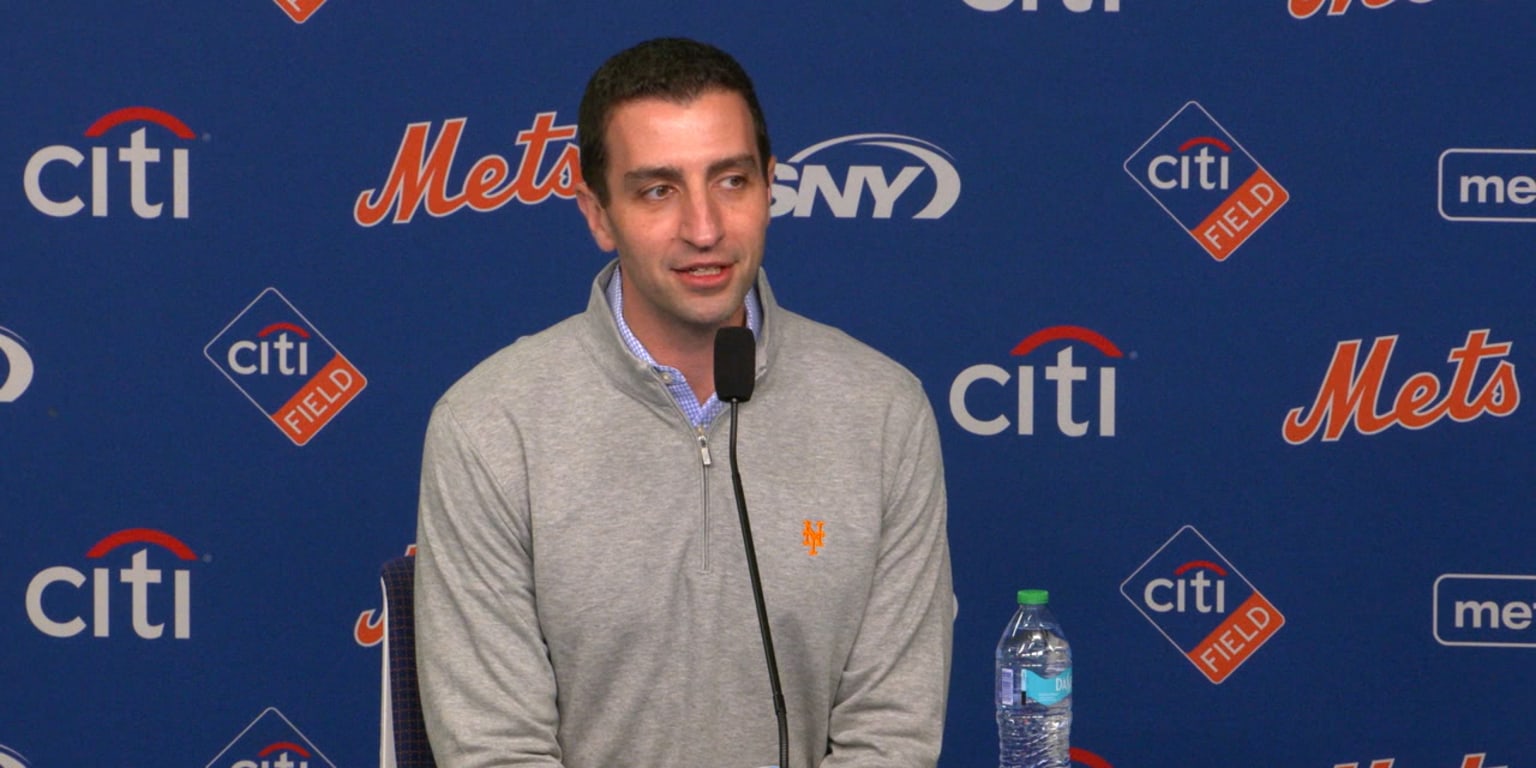
France has made himself a difficult player to value neatly. The 2026 version of the right-handed hitter was productive enough to attract teams seeking a clear everyday option. His .295/.363/.502 slash line, 21 home runs and 24 doubles offered a combination of contact, on-base ability and extra-base power. Those are attractive numbers at a position where a club cannot afford to give away plate appearances. Yet one strong season is not the same as a risk-free long-term projection.
His recent history explains why. France was an All-Star in 2022, then fell sharply from that level. Seattle placed him on outright waivers in July 2024, and his struggles continued after he moved to Cincinnati. His 2025 campaign, split between Minnesota and Toronto, was an improvement without fully repairing his market value. San Diego brought him back on a minor-league contract before 2026, and that modest commitment became the platform for his best recent season. The Padres benefited from betting on an undervalued player. Now another club may have to pay for the recovery rather than the uncertainty that preceded it.
Reports that the Mets have communicated with France's representatives matter because they turn a broad positional need into a plausible market conversation. They do not establish a formal offer, let alone a signing. France would be entering his age-32 season, and it is reasonable to expect his camp to seek security beyond a one-year prove-it arrangement. New York must decide whether the 2026 improvement is durable enough to justify paying for several seasons. The relevant comparison is not his peak against Young's ordinary year; it is what the Mets reasonably expect both players to deliver next season and beyond.
GOATIFY
GOATIFY Baseball
Ty France turned a minor-league contract into a comeback season. Discover GOATIFY baseball designs for fans who follow every twist of free agency.


White Baseball GOAT Sticker
A white baseball GOAT decal for your bottle, laptop or game-day gear.
Shop Now ↗


White Baseball GOAT Sweatshirt
Rep baseball’s greatest with a white GOAT graphic sweatshirt.
Shop Now ↗France can offer more than raw slugging. A hitter who reaches base regularly can lengthen a lineup and keep innings alive in front of higher-impact bats. His defensive reputation also has value in evaluating a first baseman, although one season's recognition is no guarantee of a flawless glove going forward. The decision turns on the total package: how much offensive improvement is expected, how confidently the team projects it, and whether the price leaves room to address other weaknesses.
This is where Stearns' description of the assignment becomes important. Seeking an upgrade is not a promise to install a full-time replacement. A reasonable deal for France could make him the everyday first baseman; an expensive multi-year demand could push New York toward a narrower move. The front office has to value the position, not simply reward the most eye-catching stat line on the available list.
Bohm Is a Different Bet, Not a Substitute for France
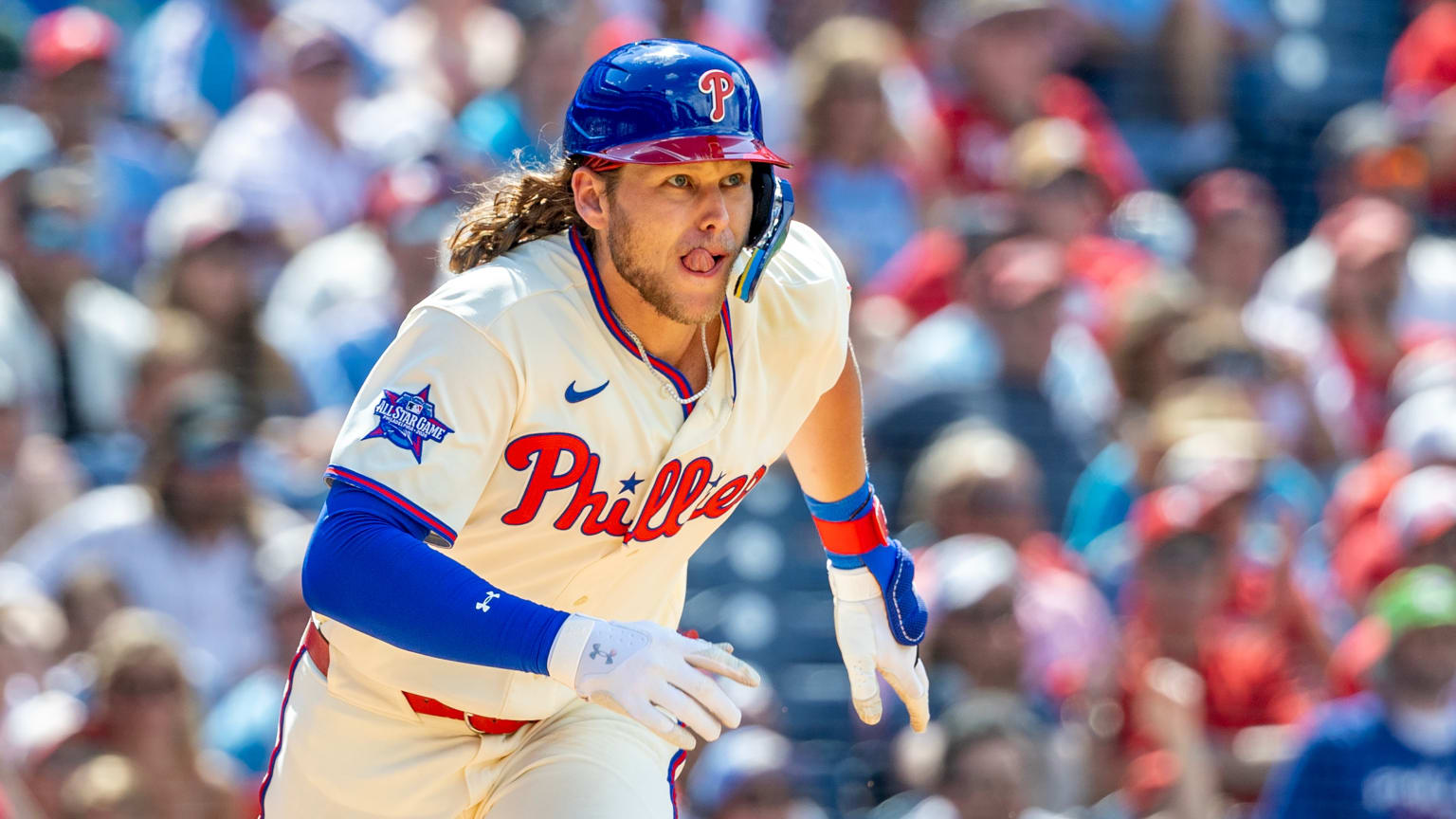
Bohm is a different proposition. His name carries familiarity because he has spent his major-league career with Philadelphia, facing the Mets regularly as a division rival. Familiarity, however, cannot stand in for an offensive projection. His 2026 line of .249/.315/.383 with 15 home runs was a step below the kind of production that would settle a first-base competition on its own. The season started even worse: a .433 OPS through its first six weeks left him trying to climb out of an enormous hole. A late recovery can make a full-year line respectable without proving the underlying problems have disappeared.
That matters particularly at first base. A corner-infield acquisition is normally expected to supply meaningful offensive value. If a player is moving there from third, the bar for his bat can become more demanding rather than less. Bohm has the dimensions and infield experience to make a transition feasible, but the Mets would need to believe their coaching and usage plan can unlock more consistent contact quality and production. Simply being available at two positions is not the same as being an offensive upgrade at either one.
His 2026 defensive sample at first provides clues, not a verdict. Bohm played 424 2/3 innings there, committed six errors and finished with one Defensive Run Saved above average in the cited accounting. That is enough experience to make the idea more than a hypothetical experiment. It is not a full season's worth of evidence that he is a superior defender to Young, nor should a tiny difference in a single fielding metric drive a roster decision. The Mets would want their own scouting and positioning assessments alongside the available data.
There is also an acquisition-cost question. A free-agent conversation and any trade or contractual route to Bohm are not automatically comparable. For New York, the relevant calculation is the entire cost of control: salary, years, any assets surrendered and the flexibility retained if another lineup need appears. A hitter with uncertainty in his recent trend may be an opportunity at the right price and a frustrating commitment at the wrong one.
Bohm's path makes the most sense if New York sees something specific to fix or wants a flexible contingency rather than a guaranteed marquee addition. Betting on his bat returning to an earlier level is defensible as a projection, but it should be labeled a projection. He is not the same type of 2026 performer as France. Treating the two names as interchangeable choices would conceal the central difference between them.
GOATIFY
GOATIFY Baseball
Alec Bohm's position and offensive future are part of a complicated Mets decision. Shop GOATIFY Baseball fan gear as the offseason market takes shape.


White Baseball GOAT Dad Hat
A white baseball GOAT design for ballpark days and everyday fan style.
Shop Now ↗
Gold Baseball GOAT Sticker
A gold baseball GOAT decal for your bottle, laptop or game-day gear.
Shop Now ↗


Gold Baseball GOAT Sweatshirt
Rep baseball’s greatest with a gold GOAT graphic sweatshirt.
Shop Now ↗Jared Young Has Earned a Seat at the Table
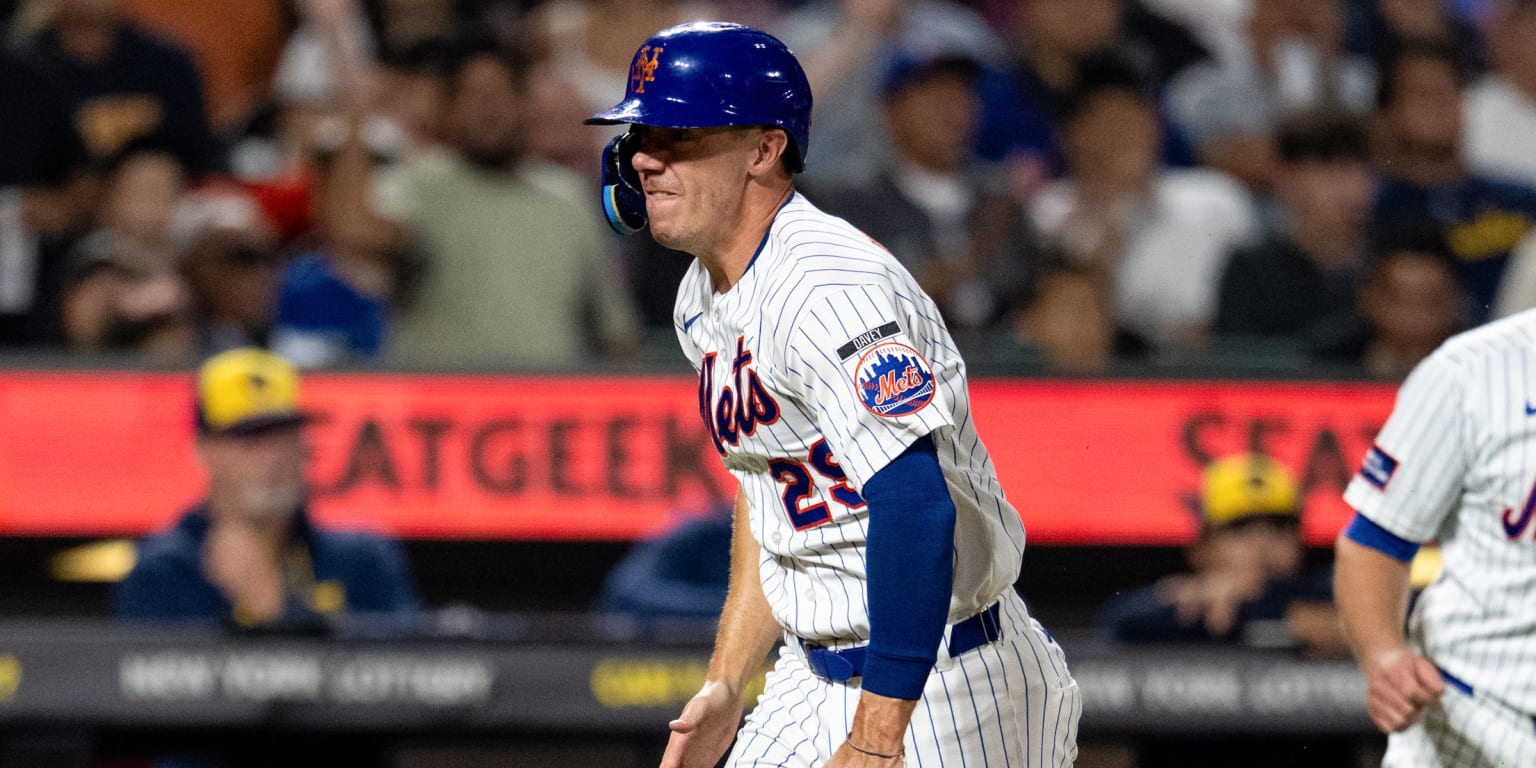
Young has made this a much more interesting discussion than it would have been a year ago. He did not enter 2026 as the obvious long-term solution at first base. His career path included a move to the Korean Baseball Organization and a return to the Mets organization with far more to prove than the average established veteran. An opening in the lineup created his chance; his hitting gave the club reason to keep using him. By late August, he had even spent stretches at the top of the Mets' team OPS leaderboard when more famous teammates were unavailable.
The full-season line of .266/.330/.429 is not a superstar performance, but it is meaningful production from a player who had to earn every inning. Young logged 641 2/3 innings at first base in 2026. That experience makes him a genuine part of the planning rather than an emergency name to circle at the bottom of the depth chart. It also gives the coaching staff a useful baseline for his hands, footwork, positioning and ability to support the rest of the infield.
A platoon is therefore not merely the cheap answer for an ownership group reluctant to spend. It can be an active baseball decision. Pairing Young with a complementary hitter might improve the team's handling of certain pitching matchups while preserving salary and roster flexibility. Of course, a platoon has costs: managers must find bench spots, identify meaningful offensive splits and avoid taking too many opportunities away from the stronger overall hitter. The approach works only if the players' actual skills support the division of labor. One should not assume that a right-handed newcomer and a left-handed incumbent automatically form an ideal pair without inspecting their splits.
There is also a human and developmental dimension. Young finally established himself in the majors after an unusually winding route. Removing him from regular playing time immediately after a successful season would require a tangible expectation of improvement, not just a more recognizable name on the lineup card. A role that keeps him engaged as a first baseman, designated hitter or occasional outfield option may be more productive than forcing a single winner-take-all competition.
Past roster shuffling shows how quickly plans can change. Jorge Polanco's ankle trouble opened playing time in 2026, while other injuries and performance fluctuations moved Young around the lineup. If the Mets sign a veteran to start every day, that veteran could still be injured or underperform, and Young's versatility would matter again. If they sign a complementary player, Young may retain enough opportunity to demonstrate that his breakout was sustainable. Either way, the case for preserving useful depth is stronger now than it looked before his 2026 emergence.
The Bigger Roster Decision Goes Beyond First Base

First base is not an isolated expense on a spreadsheet. The Mets enter the winter with questions about pitching, lineup balance, defensive reliability and how to build around their core players. Every additional year guaranteed to a new first baseman affects the resources available elsewhere. That does not mean they should choose the cheapest name. It means the cost of passing on a different upgrade belongs in this conversation, too.
GOATIFY
GOATIFY Baseball
Jared Young's breakout gives New York a real option at first. Explore GOATIFY baseball styles as the Mets weigh a new starter against a platoon.


Gold Baseball GOAT Dad Hat
A gold baseball GOAT design for ballpark days and everyday fan style.
Shop Now ↗
White Baseball GOAT Sticker
A white baseball GOAT decal for your bottle, laptop or game-day gear.
Shop Now ↗Consider the choices in practical terms. Signing France as a clear starter would produce the simplest depth chart. If his revived bat performs similarly, New York could gain a dependable middle-order presence and reduce the number of nightly matchup decisions. The downside is that the club would be paying for his age-32-and-beyond seasons after the most impressive campaign of his recent career. Paying a premium for 2026 production is rational only if the front office expects enough of it to persist.
Betting on Bohm would shift the uncertainty. He offers major-league experience and the possibility of versatility, but his recent offensive line does not automatically project as a meaningful first-base upgrade. A smaller commitment could make the upside appealing. A larger one would increase the risk of recreating the very production problem the team is trying to solve. For both players, context matters more than the player's reputation or the excitement of a rumor.
Staying with Young and adding a reasonably priced partner represents a third path. The Mets would still be acting on Stearns' stated desire to improve the position, but their improvement might come from matchup coverage and reliable depth rather than a headline acquisition. That approach could also preserve payroll capacity for the rotation, where the effect of an impact addition may be greater. These are choices New York can reassess as the market develops, not permanent commitments that must be settled in mid-November.
The designated-hitter situation complicates the puzzle further. Polanco's health and performance will influence how many at-bats are available to rotate players through first base and DH. The flexibility looks attractive on paper until several veterans all require regular plate appearances. A strong roster plan leaves the manager clear roles, not four players expecting the same 500 at-bats. Young's ability to move around can help, but only if those alternate spots are genuinely available.
Fans can reasonably prefer a bigger move. The team needs to turn good seasons into a more reliable offense, and France's rebound is the kind of production people want to see at a power-oriented position. But the best signing is not necessarily the one with the highest 2026 batting average. It is the one whose next seasons, defensive contribution, contract terms and opportunity cost collectively improve the Mets. Stearns has signaled that New York is shopping; the harder work is deciding which version of the job it actually needs to fill.
The Mets' reported interest in France and Bohm is evidence of a real search, not evidence that a deal is close. France offers the strongest recent batting line and the largest question about paying for a comeback at age 32. Bohm brings familiarity and possible positional flexibility but needs a more convincing offensive forecast. Young has already earned the right to be factored into either plan.
The smart outcome might be an everyday signing, a targeted platoon, or no immediate move if the prices never align. What should not happen is treating first base as vacant and ignoring the production New York already received. The choice is about future wins and roster resources, not just putting another recognizable name next to first base on the lineup card.
GOATIFY
GOATIFY Baseball
Shop GOATIFY baseball shirts, hoodies and stickers.


White Baseball GOAT Dad Hat
A white baseball GOAT design for ballpark days and everyday fan style.
Shop Now ↗White Baseball GOAT Sweatshirt
Rep baseball’s greatest with a white GOAT graphic sweatshirt.
Shop Now ↗


















