

Russell Had Six Good Laps in Austin — Mercedes Faces a Setup Mystery
GOATIFYGeorge Russell finished the United States Grand Prix with two questions he could not answer: why his Mercedes was so far off the pace for most of the afternoon, and why the same car suddenly looked competitive for a handful of laps after his pit stop. He started sixth in Austin, collected a five-second penalty on the opening lap and crossed the line eighth. Across the garage, Kimi Antonelli won by more than 13 seconds.
That contrast is the story Mercedes must solve before the championship moves to Mexico. Russell's penalty mattered, but he and team principal Toto Wolff both identified a deeper performance problem. The car could produce speed; Russell could not reliably access it. A race that should have been about defending his slim mathematical title chance became a diagnosis of how narrow the team's operating window may have become.
A five-second penalty hurt Russell, but it does not explain the missing pace
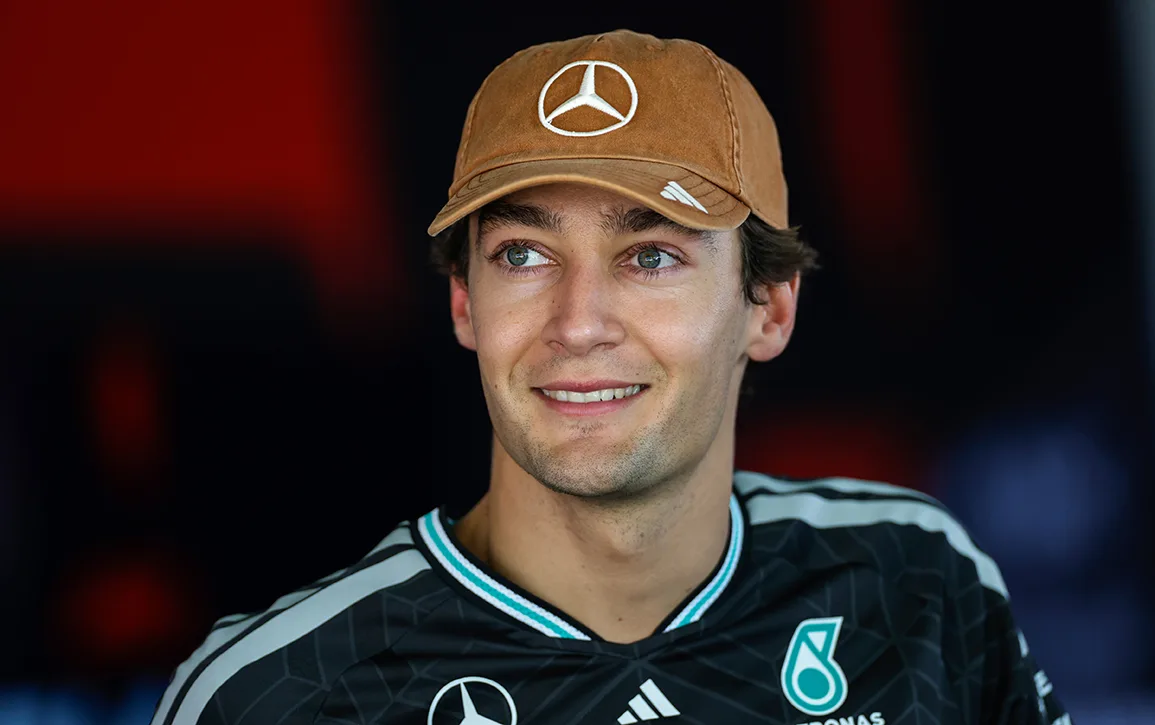
Russell's race began in traffic rather than in clean air. Starting sixth, he was immediately defending against the McLarens of Oscar Piastri and Lando Norris. The stewards judged that Russell had left the track and gained an advantage over Piastri during their opening-lap fight, and imposed a five-second time penalty. Because Mercedes committed to a one-stop race, that sanction had to be served when he came into the pits.
The time loss was not trivial. Five seconds in the middle of a closely packed field can decide whether a driver rejoins ahead of a rival or spends the next stint looking at the back of another car. At a circuit where overtaking still requires a meaningful pace or tyre advantage, surrendering track position can multiply the original damage. Russell said the penalty cost him a couple of places, and the subsequent running order made the price visible.
But there is a limit to what the penalty explains. Russell was not describing an otherwise quick car held back only by a steward's decision. He reported that the medium-tyre first stint was poor from the beginning, before the stop created the opportunity for a different compound and a different rhythm. His difficulty was pace as much as position. The penalty amplified the consequences of that weakness; it did not manufacture the weakness itself.
That distinction matters because Mercedes has to choose the correct repair. Reviewing the opening-lap decision and improving racecraft could prevent another avoidable sanction, yet neither action would explain why a car capable of winning in Antonelli's hands could be so hard to drive quickly in Russell's. The British driver's challenge is not simply to avoid trouble. It is to make the W17 consistently competitive from the first stint onward, rather than discovering its performance only after the race has escaped him.

Six quick laps on hard tyres exposed the race Russell could not sustain
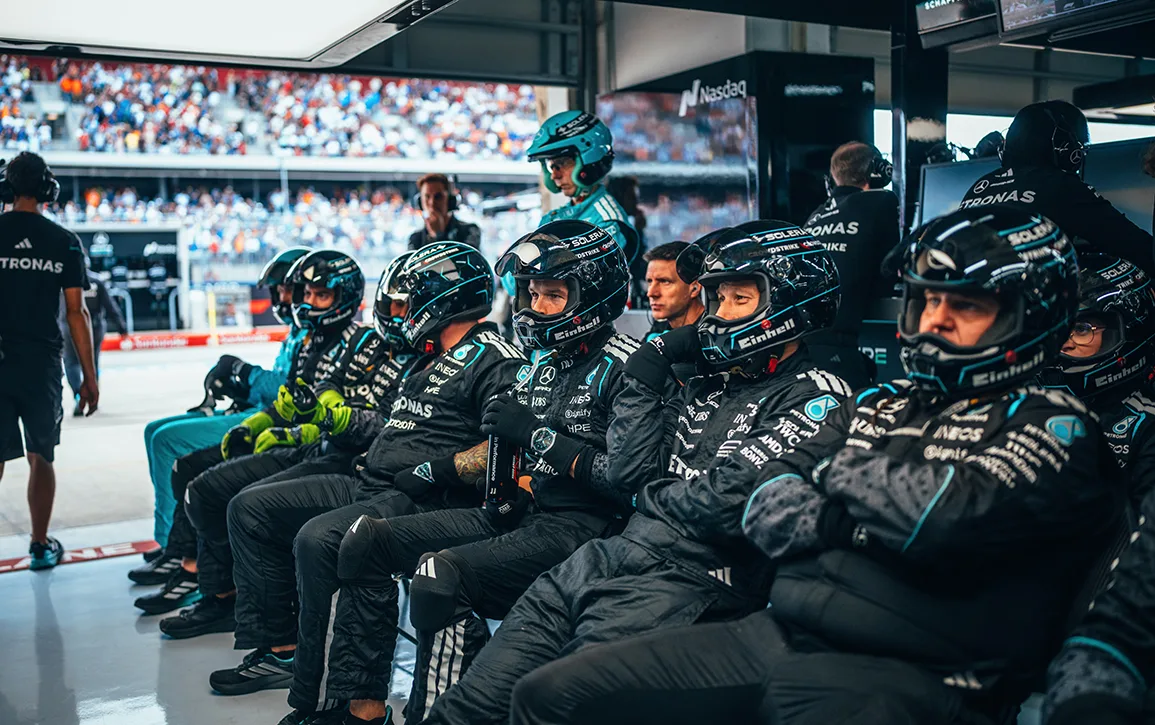
After his pit stop, Russell briefly found the performance he had been missing. On the hard compound he estimated that he ran roughly six laps at a pace comparable to Antonelli's. That is the most revealing detail of his post-race assessment. It suggests the problem was not an absolute lack of speed in the Mercedes, because a competitive window appeared within the same Grand Prix.
It also makes the result more frustrating. Russell then caught Piastri and could not complete the overtake. He remained stuck behind seventh-placed Piastri rather than converting the brief burst into a recovery, crossing the line just 1.6 seconds behind the McLaren. In the official classification, Piastri was seventh and Russell eighth, with the Mercedes 54.303 seconds behind the winner. The gap to the leader captures the scale of the afternoon; the gap to Piastri captures how tightly his late-race options were constrained.
Mercedes' strategic choice was not inherently the wrong one. The team kept both cars on a one-stop approach while rivals, including Red Bull and Ferrari, explored two-stop alternatives. Antonelli demonstrated the upside by managing his tyres and controlling the race to the flag. Russell had the same broad strategic framework but could not reproduce the same outcome. That makes this a useful comparison: the team strategy was successful, while one driver's ability to extract pace from the car was inconsistent.
Traffic complicates any comparison of lap times. A driver running behind another car cannot always use the same braking points, corner speeds or energy deployment as someone in clear air. Russell's strong initial hard-tyre laps therefore do not prove he would have matched Antonelli for an entire stint. Equally, the later inability to pass Piastri should not erase the improvement he felt immediately after the stop. The sensible reading is narrower: the hard tyre offered a temporary opening, and track position closed it before Russell could turn it into a better finish.

Wolff's diagnosis points to a setup window, not a talent deficit
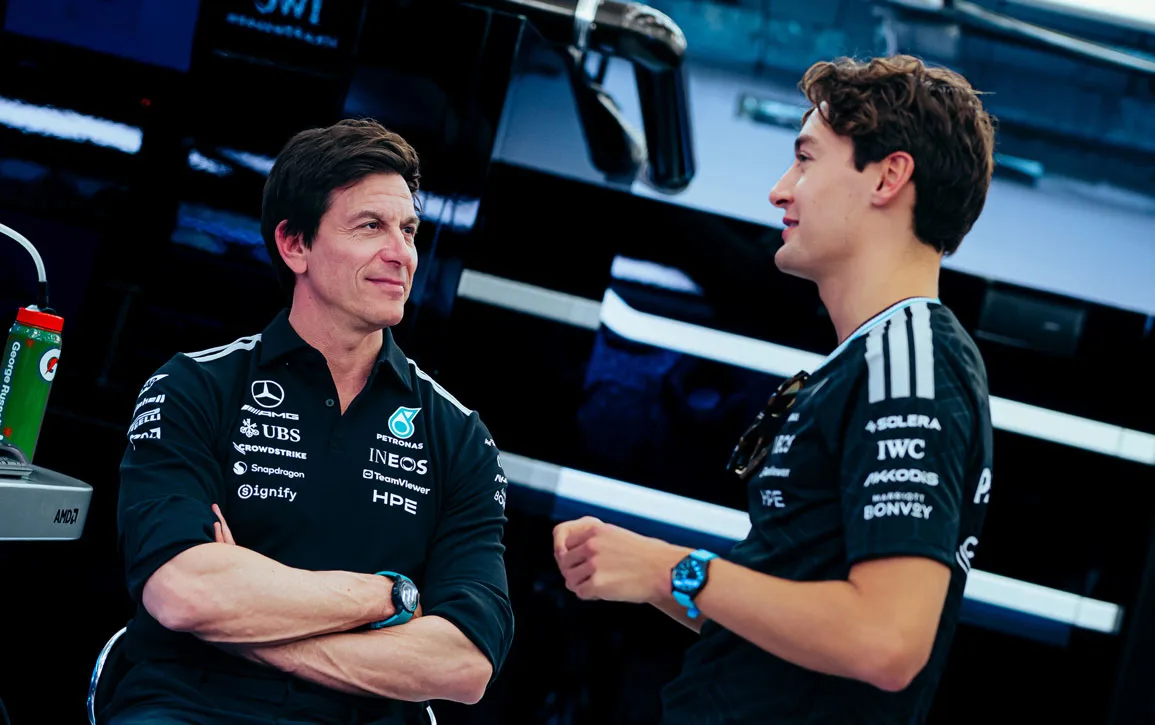
Toto Wolff's response was unusually precise. He defended Russell's standing as a top-level driver while acknowledging that the team's results have varied dramatically depending on whether the car lands in a setup range that suits him. Wolff did not suggest Russell had suddenly become several tenths slower than his teammate on raw ability. He suggested the Mercedes can become much less accessible to Russell when its balance moves outside a workable window.
That is a more actionable diagnosis than a generic call for more pace. Formula 1 cars operate through a chain of compromises involving ride height, suspension behavior, aerodynamic balance, tyre temperature and the driver's preferred response on corner entry and exit. A change that helps one part of the lap can make another less predictable. When a driver loses confidence in how the car will react, the effect can extend beyond one corner: the driver may need to protect the front tyres, hesitate on entry or wait longer before applying power.
Mercedes trackside engineering director Andrew Shovlin offered a related clue after the race. He said the car's setup window had felt harder to hit since the latest update. That observation is not proof the upgrade caused Russell's problems; it is a testable lead. The engineers can compare the balance Russell reported in practice, qualifying and both race stints, then examine how the tyres and fuel load changed the car's behavior. They can also compare where Antonelli found time without assuming the same settings will automatically work for both drivers.
There is a strategic tension here. A team fighting for both championships cannot afford to chase a perfect setup for one driver if the adjustment undermines the other. Yet Mercedes also cannot dismiss an eighth-place result as an isolated off-day when Russell himself says he does not know why the first stint was so slow. The best outcome from Austin may be a clear map of the conditions in which each driver can extract the W17's performance. That would turn a frustrating result into a practical development lesson rather than another round of guesswork.
Mexico is now about Russell's response — and protecting second place
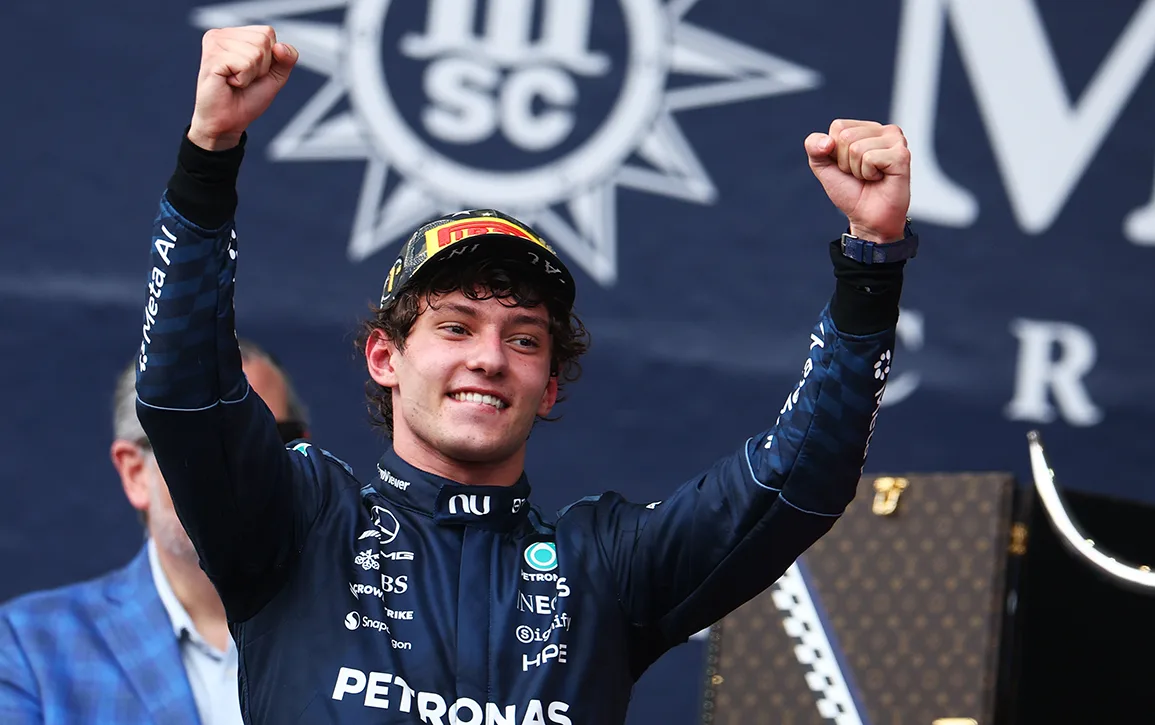
Antonelli leaves Austin with 365 championship points, Russell with 242 and Lewis Hamilton with 241. With five rounds remaining and a maximum of 125 points still available to an individual driver, Russell's title chance is mathematical rather than realistic: he trails his teammate by 123. Antonelli needs only two more points in Mexico to remove any doubt, which makes a ninth-place finish sufficient regardless of his rivals' results.
The more immediate battle for Russell is behind him. Hamilton's fourth place for Ferrari brought the seven-time champion to within a single point of second in the standings. Max Verstappen is on 236 and Charles Leclerc on 233, so the group chasing the runner-up position is tightly packed. Russell cannot treat the remaining races as a gentle run-in while Mercedes celebrates a likely championship. His own season result is still exposed.
There is also a team dimension. Mercedes leads Ferrari in the constructors' standings by 133 points after Austin, but a championship-winning car should be capable of scoring heavily with both drivers. Antonelli's victory brought the headline and the largest points haul; Russell's eighth place left performance on the table. In a different race, a similar setup problem could make the team more vulnerable to a fast Ferrari or Red Bull, particularly if Antonelli has a difficult weekend of his own.
The Mexico City Grand Prix arrives almost immediately, with practice beginning on October 30 and the race scheduled for November 1. That short turnaround limits how much Mercedes can redesign, but it does not prevent targeted setup work. Russell needs to arrive with a clearer idea of what he wants from the car on the first stint, a plan for avoiding costly track-position errors and enough confidence to attack without overworking the tyres. The title narrative may belong to Antonelli. The most important Mercedes question for Mexico could be whether Russell can make his car feel like the same front-running machine for an entire race.
Russell's eighth place was not merely a penalty story and not a straightforward example of a slower driver losing to a faster teammate. The penalty cost track position; the weak first stint cost competitiveness; the brief hard-tyre recovery showed the pace was sometimes there; and Piastri's McLaren prevented Russell from exploiting it for long.
Mercedes now has a specific task: understand why the W17's useful balance appeared for only a few laps in Russell's hands while Antonelli managed a race-winning afternoon. The team does not need to prove Russell's ability. It needs to make that ability accessible more often. With Hamilton one point behind him and Mexico only days away, there is little time to wait for the answer.

















