Warriors Explore Porziņģis Trade — His $3M Guarantee Changes Everything
GOATIFYThe Golden State Warriors opened the 2026–27 season with a problem that could not be solved by changing the starting lineup. On October 21, reports said Golden State had begun exploring trades involving Kristaps Porziņģis, the 7-foot-2 center it re-signed only months earlier to help Stephen Curry compete now. Porziņģis remains away from the team while dealing with health issues, and the Warriors have said they do not expect him around the club in the immediate future.
There are two different stories here, and confusing them would be unfair to both the player and the franchise. Porziņģis' health and his decision about his basketball future are personal matters. Golden State's salary-cap position, missing frontcourt minutes and ability to construct a workable roster are basketball-management problems. The new trade reporting connects those questions without providing a definite answer to either.
The surprising part is that Porziņģis may be more useful in a potential deal because of how little money is guaranteed next season than because of what he could do on the floor today. That distinction explains why a $20 million salary can be both a burden and an asset—and why the Warriors still have no obvious quick fix.
The Warriors’ message changed, but a trade is not a done deal
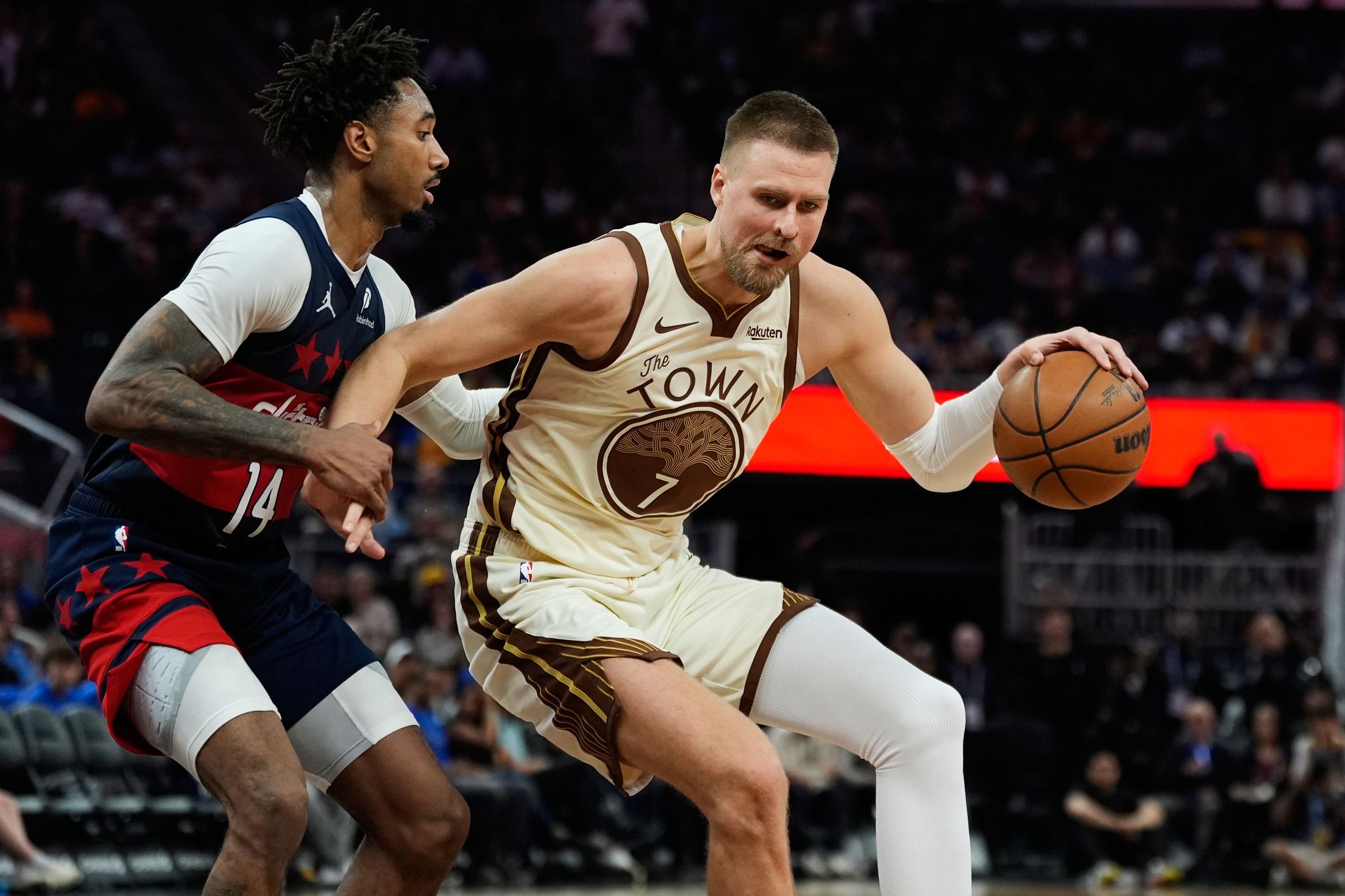
The immediate trigger was a report that the Warriors were looking into ways to move Porziņģis while the veteran considers his future in professional basketball. That is a significant development, but it is not a completed trade, a formal retirement announcement or proof that the two sides have reached a final decision. Golden State responded by declining to discuss trade speculation or the details of his health situation. Its clearest public update was that the center was not expected around the team in the immediate future.
The distinction matters because the club's position sounded different just a week earlier. When Golden State announced Porziņģis would remain out indefinitely, it indicated he would continue to be around team facilities. The newer statement acknowledged a more extended absence without setting a return date. The Warriors have not publicly offered a medical timetable, and outside observers should not pretend to know when he can play again.
Porziņģis previously disclosed a diagnosis of postural orthostatic tachycardia syndrome, or POTS, but his current medical situation is not something that can be conclusively characterized from reports alone. There is a legitimate human dimension to a player confronting recurring symptoms and uncertainty about his career. A team can explore its options while also respecting the player's privacy and prioritizing his well-being. Those actions are not inherently contradictory.
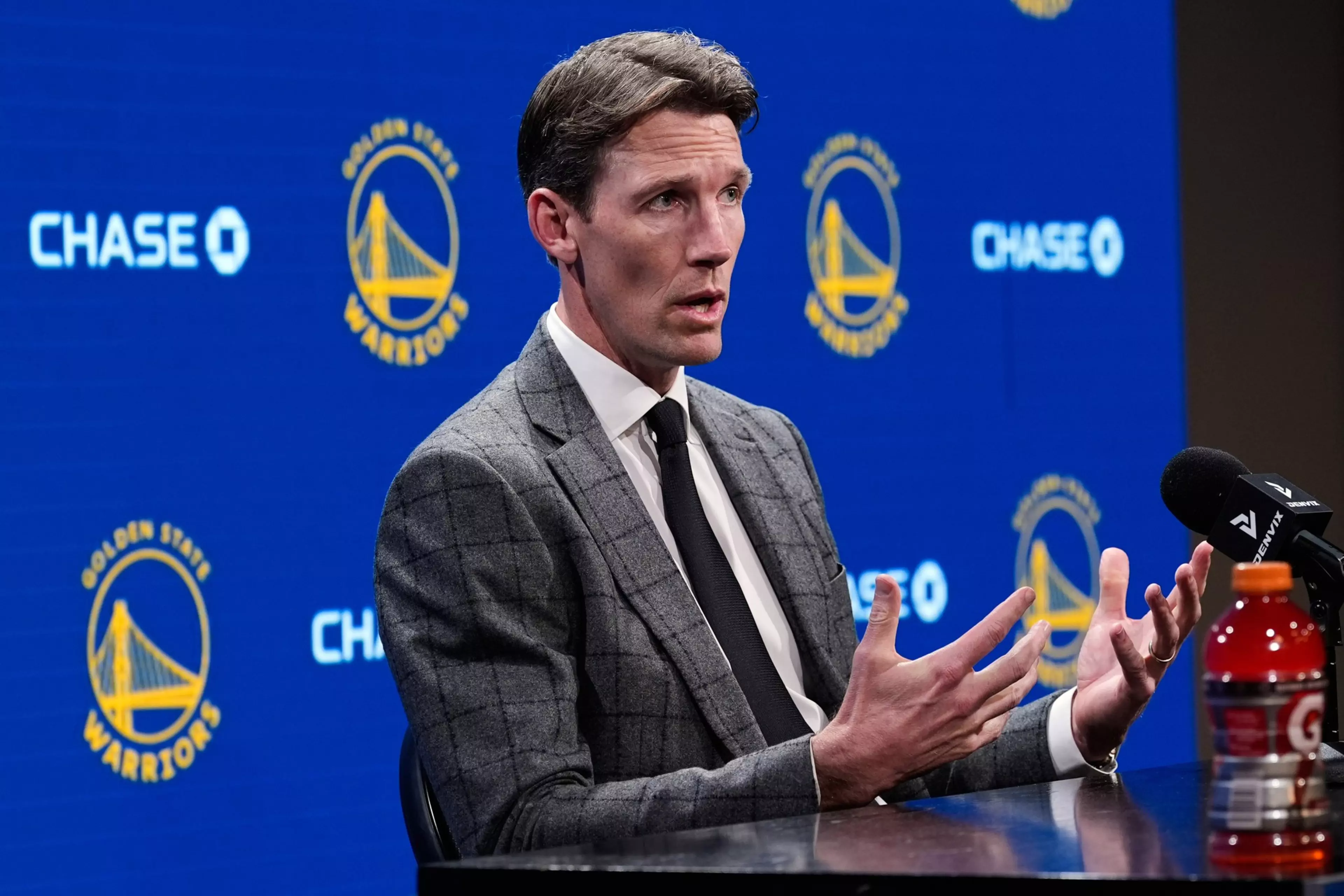
Golden State knew availability was the gamble. General manager Mike Dunleavy acknowledged in the offseason that the club had leaned toward talent rather than the safest possible health profile when building its roster. Porziņģis offered a rare combination of height, shooting and rim protection, traits that could theoretically complement Curry and Draymond Green. The decision was understandable on a talent chart, especially in a market with limited alternatives. The problem is that the chart assumes the player can be on the court.
There is also a difference between a team investigating its market and another team agreeing to take on the contract. The new reporting establishes that Golden State is exploring a path; it does not establish a bidding war. Any eventual transaction will depend on the financial structure and the receiving club's priorities, not merely on how much the Warriors would like another available center.

Why the $3 million guarantee is the key to a $20 million trade
Porziņģis' deal is worth $20 million for 2026–27 and another $20 million on paper for 2027–28. The critical detail is that only $3 million of the second season is guaranteed before the relevant guarantee date. A team acquiring the contract could potentially use it to move a player with a longer financial commitment, then decide whether to retain Porziņģis or take the relatively small future guarantee. That is the logic behind calling the deal effectively expiring, even though it technically runs for two seasons.
In the NBA, the value of a trade asset is not always the same as the value of its on-court production. A rebuilding or cost-conscious team might be willing to exchange a longer contract for shorter obligations. Golden State would hope to turn that accounting appeal into a healthy rotation player. But the other club would need a reason to surrender useful talent, and the Warriors might have to attach draft capital or another asset to make the offer attractive.
There is an important restriction: Golden State is above the first salary-cap apron. That limits its ability to take back more salary than it sends out in a trade. A straight Porziņģis exchange therefore cannot simply return a center earning substantially more than his $20 million salary. The Warriors can explore combinations, but every extra player changes the roster cost and the future consequences. A theoretical trade that works in a headline does not necessarily work under the collective bargaining agreement.
Orlando's Wendell Carter Jr. has been floated as one possible salary-range comparison, but he is a useful starter on a team with its own competitive plans. Milwaukee's Myles Turner is another recognizable name because he supplies spacing and rim protection, yet his contract is larger and longer. A Turner framework would likely demand additional outgoing salary and meaningful assets. Moses Moody has been discussed as a potential matching piece, but he is also a young player Golden State values and is recovering from a serious knee injury. Neither example is a reported agreement or a reason to assume a deal is close.
Waiving Porziņģis is not a magic solution, either. A team over the cap does not automatically receive enough spending room to replace a waived $20 million player with a comparable free agent. It could remain responsible for guaranteed money while still lacking a practical route to another high-level big man. That is why the small 2027–28 guarantee matters more to a possible trading partner than to a simple release today.
The Warriors must evaluate a trade on two timelines: whether it improves this season's rotation and whether it sacrifices flexibility after Curry's current window. Trading an uncertain contract for a healthier but more expensive veteran could stabilize the frontcourt while making future roster construction harder. Doing nothing preserves options, but it leaves the team short-handed in the meantime.
Curry’s clock is ticking while Kerr improvises in the frontcourt
The frontcourt shortage is not an abstract spreadsheet issue. Porziņģis was supposed to give the Warriors a genuine stretch center who could draw a defender away from the rim and still provide length behind the ball. Without him, coach Steve Kerr has to build lineups from players who offer only parts of that package. Draymond Green can direct the defense and make decisions from the middle of the floor, but using him as a smaller center changes the rebounding and rim-protection equation. Al Horford brings experience and shooting, yet he is another veteran whose minutes need to be managed.
Golden State's depth has been stretched further by injuries elsewhere. Jimmy Butler and Moses Moody are recovering from significant knee problems, while reserve big Charles Bassey was ruled out of the season opener with knee tendinitis. Those absences affect more than a substitution pattern: they reduce the team's margin for foul trouble, defensive mismatches and ordinary fatigue. A lineup that looks clever for six minutes may be hard to sustain for an entire month.
Rookie Yaxel Lendeborg and other younger options can provide energy, movement and developmental upside, but the club should not expect one inexperienced player to replace the interior size, shooting gravity and defensive versatility it hoped to get from Porziņģis. The Warriors can choose to play faster and spread the floor, yet smaller lineups often require near-perfect collective rebounding and transition discipline. Against teams with multiple large forwards, those compromises can show up quickly.
Curry is 38, and the organization cannot treat his remaining elite years as an unlimited resource. The Warriors also cannot responsibly rush a teammate back because their roster construction depends on him. Those two truths create the central tension. Every week without a conventional center may cost the team wins; a rushed trade that surrenders picks or young talent for a poor long-term fit could be worse.
For Kerr, the short-term priority is establishing combinations that can survive defensively without asking Curry to generate every point. For Dunleavy, it is gathering information about whether another club values the contract's future savings enough to send a useful player back. Those jobs happen simultaneously. The most logical trade may not be available in October, when other teams have barely begun evaluating their own rosters.
There is no certainty that Porziņģis will retire, return soon or be traded. A sensible front office can prepare for all three outcomes without publicly predicting a private medical decision. Until new facts arrive, the Warriors' opening-night rotation is a temporary answer to a problem that may last much longer.

Golden State's reported exploration of Porziņģis trades is a real new development, but the club has not announced a transaction. The appeal of his contract is unusually specific: a $20 million current salary with only $3 million guaranteed the following year. That structure could interest a team trying to shorten its obligations, although the Warriors' first-apron restrictions and the cost of any replacement sharply limit the options.
The larger question is whether Golden State can turn financial flexibility into dependable frontcourt minutes without weakening its future. Porziņģis deserves room to address his health and decide what comes next. The Warriors, meanwhile, must build a competitive team around Curry with the players who are available. Until a concrete offer changes the equation, patience may be less exciting than a blockbuster trade idea—but considerably more realistic.