

The WNBA Is Interviewing Its Next Commissioner. The Hard Part Starts After the Hire.
GOATIFYCathy Engelbert wants the WNBA to have its next commissioner before December 31. After a season that ended with Golden State winning the first Game 7 in WNBA Finals history, that deadline sounds tidy. The task behind it is anything but. The league has begun meeting candidates in person, according to November 13 reporting, and its outgoing leader has acknowledged that the interview process is moving while declining to offer a candidate count or a firm announcement date.
Engelbert's answer when asked whether a replacement could be named this year was brief: she hopes so. Her September retirement announcement established the target, but a willing interim handover is available if the search runs beyond it. The WNBA therefore does not face a leadership vacuum at midnight on New Year's Eve. It faces a more consequential choice: who can convert remarkable commercial expansion into a league that players, owners and fans trust to operate at a higher standard?
Candidate meetings have begun, but the December deadline remains a hope

The strongest news from the November 12 competition committee gathering in New York was not a surprise frontrunner. It was confirmation that the process has moved beyond collecting names. Excel Search & Advisory, brought in during October, has worked through the candidate pool; separate reporting says the league has met candidates in person during the preceding two weeks. Those interviews are a more meaningful marker of progress than general assurances that the search is under way.
Engelbert has been explicit about the distinction between a target and a guarantee. She announced her retirement in September with December 31 as the intended final day, and after Thursday's meeting she stopped short of promising that a successor would be installed by then. She has also said she would remain if necessary to bridge the gap. That gives the search committee room to vet finalists without having to make a rushed appointment simply to meet a calendar date.
The pool has reportedly attracted internal and external interest. Engelbert has spoken of submitting candidates herself and receiving periodic updates from the search advisers. None of those details identifies a favorite, and there is no publicly confirmed successor. Names floated without a sourcing trail would make the process sound further along than it is. The useful question is what the interview panel is testing, not who has generated the loudest speculation.
In a conventional business, a hiring committee might prioritize sponsorships, distribution and operations. This job also demands direct credibility with athletes who are becoming more influential, a board of governors investing heavily in clubs, and an NBA partner that still plays a structural role. Those groups can share a long-term goal while disagreeing sharply about near-term decisions. A commissioner has to explain the tradeoffs rather than let every conflict become a public relationship crisis.
GOATIFY
GOATIFY WNBA
The WNBA's next chapter starts with this leadership decision. Browse GOATIFY WNBA fan apparel and stickers from the WNBA-filtered collection.


BALLERina Girl's Basketball Ballet Air Sticker
Add basketball personality to your favourite gear.
Shop Now ↗

BALLERina Girl's Basketball Ballet Air Sweatshirt
A basketball fan design for everyday wear.
Shop Now ↗
BALLERina Girl's Basketball Ballet Air Sticker
Add basketball personality to your favourite gear.
Shop Now ↗
Caitlin Clark G.O.A.T. - Greatest of All Sweatshirt
A basketball fan design for everyday wear.
Shop Now ↗The timing makes the selection unusually visible. The end of a record-setting season, a new labor framework and preparation for an expanded 2027 schedule are colliding in the same offseason. A relatively smooth transition would let executives present one coherent plan; a prolonged, opaque process could make the league appear less organized than the business it is trying to become. Neither outcome is decided by the interviews alone.
The expansion boom is real. So is the execution risk behind it.
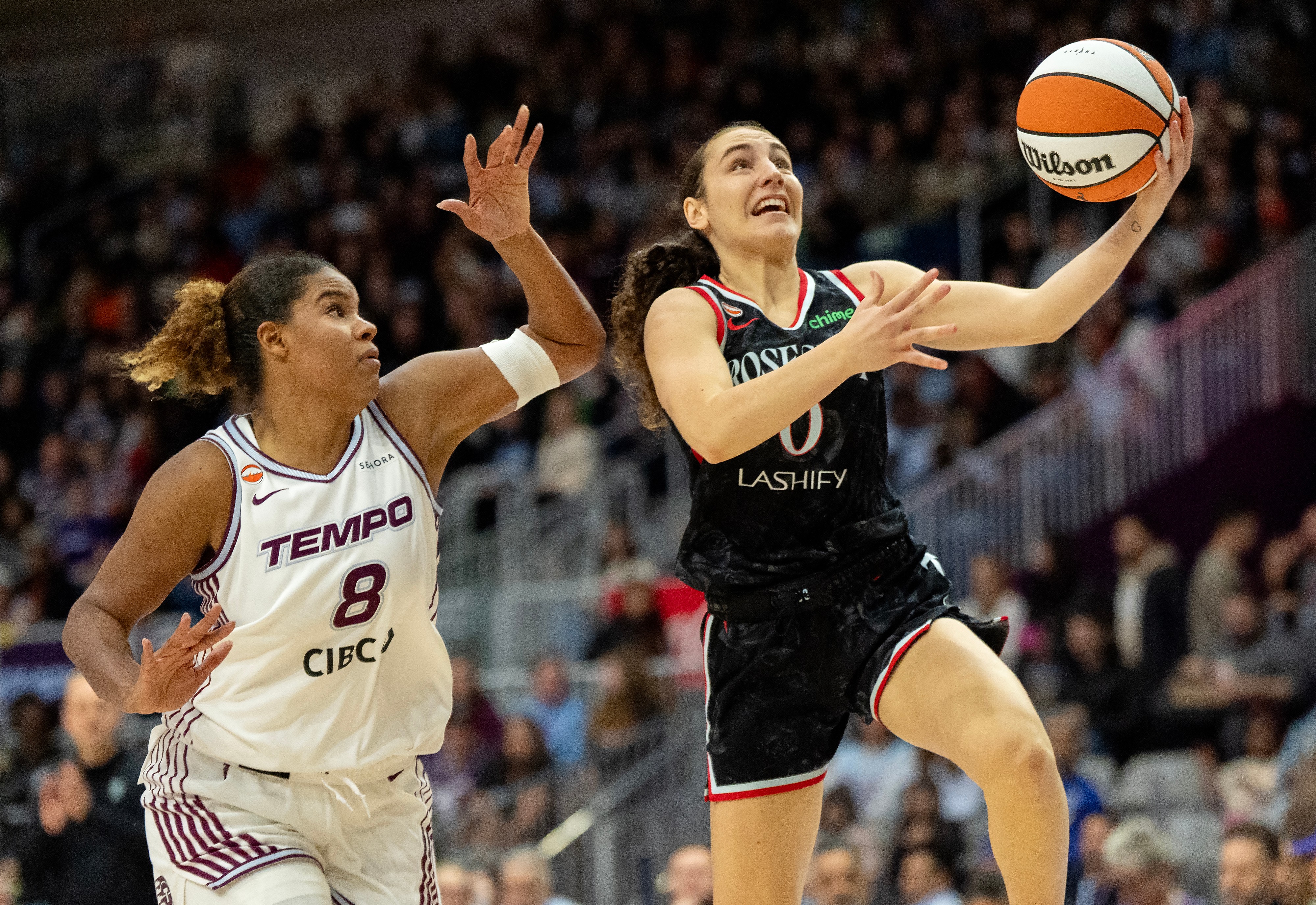
Engelbert will leave a league far larger and commercially more ambitious than the one she joined in 2019. The WNBA expanded from 12 teams to 15 by the 2026 season, and the approved roadmap calls for Cleveland in 2028, Detroit in 2029 and Philadelphia in 2030. Its new media arrangement has been reported at roughly $3.1 billion over 11 years. Those are not cosmetic announcements; they reshape expectations for owners, athletes and broadcasters.
They also make execution considerably harder. Every new franchise requires a viable basketball operation, an arena and scheduling solution, player-development infrastructure, staff, local marketing and a credible path to sustained fan demand. Expansion is not merely selling another ownership slot. Adding cities while maintaining competitive quality and sensible travel requires planning across the entire league, often several seasons before a new team tips off.
The Toronto Tempo and Portland Fire offered a preview of this complexity when they entered the competition in 2026. Their first head-to-head meeting was a fresh rivalry and a new business opportunity, but expanding markets also means additional demands on officiating, scheduling, broadcast production and talent distribution. The next commissioner inherits the decision-making consequences of those investments rather than simply the excitement of launch ceremonies.
Golden State's title shows both the upside and the difficulty of forecasting this growth. The Valkyries won the 2026 championship in their second season, defeating Atlanta in a seven-game Finals series that ended October 31. That is a spectacular sales pitch for competitive possibility in a newer market. But a breakthrough team does not make every venue or roster decision easy. The next leader must protect league-wide standards even when individual franchises grow at different speeds.
The upcoming schedule is another telling test. The WNBA plans to rise from 44 regular-season games in 2026 to 50 in 2027. More inventory gives broadcasters and partners additional programming, but it also increases the physical and logistical load on players and clubs. Travel arrangements, recovery, venue availability, production windows and postseason timing have to work together. The promise of growth only holds when the calendar itself is credible.
Engelbert's business record supplies the foundation. What the successor needs is a rigorous method for turning expansion announcements and rights agreements into reliable day-to-day experiences. Teams want returns on investment; athletes want competitive conditions; fans want to know the league can deliver consistently. Those are parts of the same business, not separate audiences to be managed through different press releases.
GOATIFY
GOATIFY WNBA
As the WNBA grows into new cities and its newest teams chase the league's established contenders, explore GOATIFY's WNBA designs for basketball fans.

Caitlin Clark Golden Goose - WNBA Indiana Sticker
Add basketball personality to your favourite gear.
Shop Now ↗
BALLERina Girl's Basketball Ballet Air Mug
Add basketball personality to your coffee break.
Shop Now ↗

Caitlin Clark G.O.A.T. - Greatest of All Hoodie
A basketball fan design for everyday wear.
Shop Now ↗

Caitlin Clark Golden Goose - WNBA Indiana Sweatshirt
A basketball fan design for everyday wear.
Shop Now ↗A richer labor agreement does not settle the question of player trust
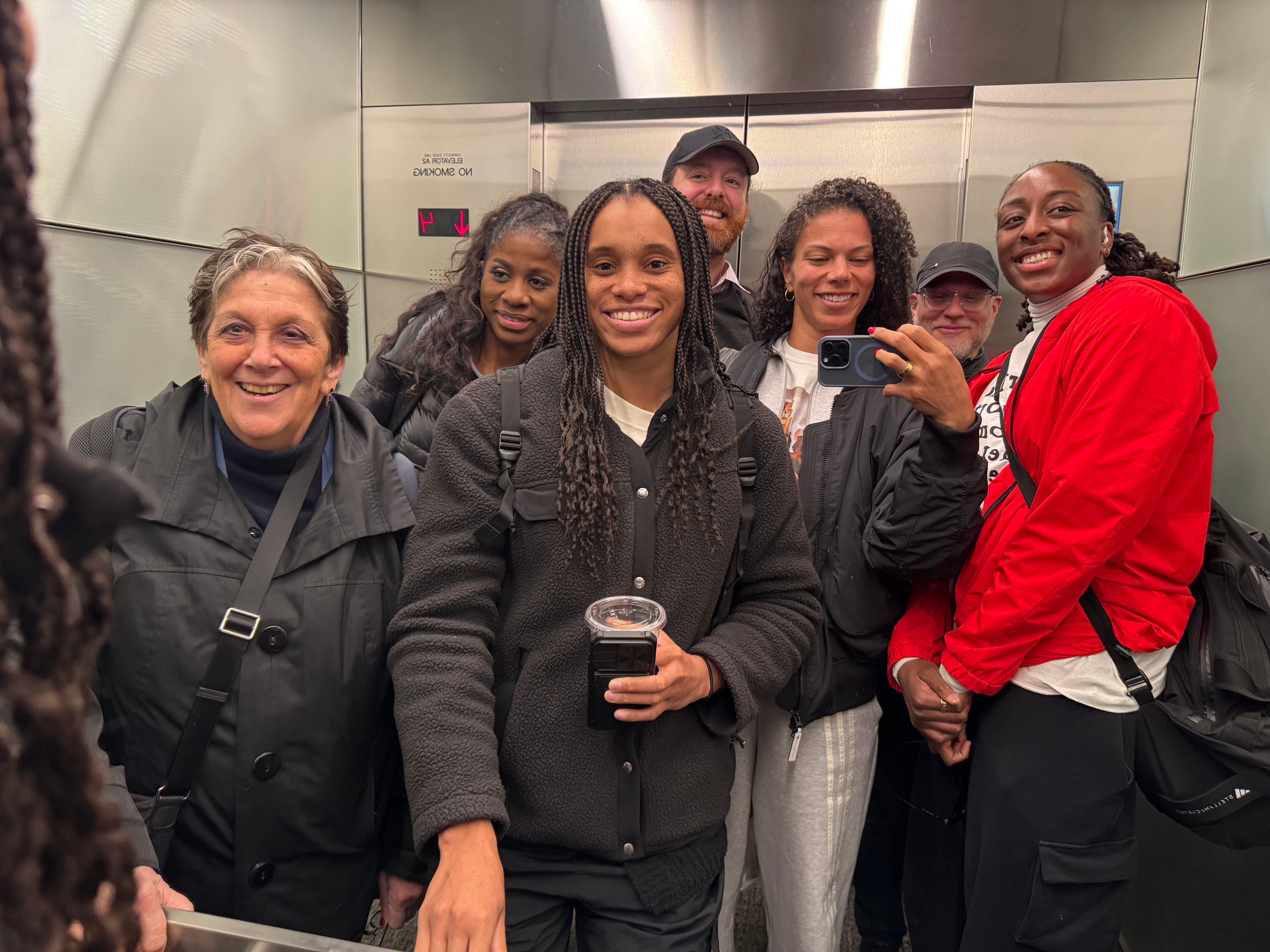
The next commissioner will not be negotiating from the salary structure of a decade ago. The seven-year collective bargaining agreement introduced for 2026 changed the economics dramatically. The league announced a $7 million team salary cap for the first season, up from $1.5 million in 2025, alongside a new revenue-sharing framework, a projected $1.4 million maximum salary and substantially larger minimum contracts. The package also covers retirement support, travel, team staffing and other working conditions.
That scale matters. It changes negotiations with agents, roster planning for general managers and the expectations young prospects bring into professional basketball. But a collective bargaining agreement is an operating framework, not a certificate that every relationship problem has disappeared. The league still needs to interpret, administer and communicate its rules in ways players regard as consistent and credible.
The past negotiations illustrated that progress and friction can happen simultaneously. Players sought greater participation in an expanding business; the league needed to balance compensation growth with franchise economics. A finished agreement is a substantive achievement for both sides. Yet the new commissioner will be judged on what follows it: whether mandated standards become normal everywhere, whether disputes can be handled without personal escalation, and whether athletes have reason to trust the process.
Facility improvements are a particularly concrete example. Teams are making major practice-site investments, while some projects will not be ready on the schedule originally advertised. A leader cannot make every construction problem disappear, but can publish practical expectations and require credible contingency plans. The difference between a temporary disruption and an institutional failure is often whether affected players receive timely, honest information and reasonable alternatives.
Officiating represents another pressure point. Coaches and general managers discussed replay infrastructure and officiating after the 2026 season; a new replay center is being prepared for next year. That is a process improvement with measurable outcomes if the league commits to explaining how decisions are reviewed, how consistency is assessed and what changes when a mistake is identified. Fans and athletes will always debate calls. They should not have to guess what standards officials are applying.
Player leaders, including WNBPA president Nneka Ogwumike, have framed compensation and professional conditions as part of the league's long-term value. The successor's challenge is to treat that claim as a governance input rather than a public-relations problem. Money, facilities and communication reinforce one another. A league can grow payroll and still lose trust if it appears reluctant to hear complaints or explain decisions.
The first 100 days should be judged by decisions, not an introduction speech
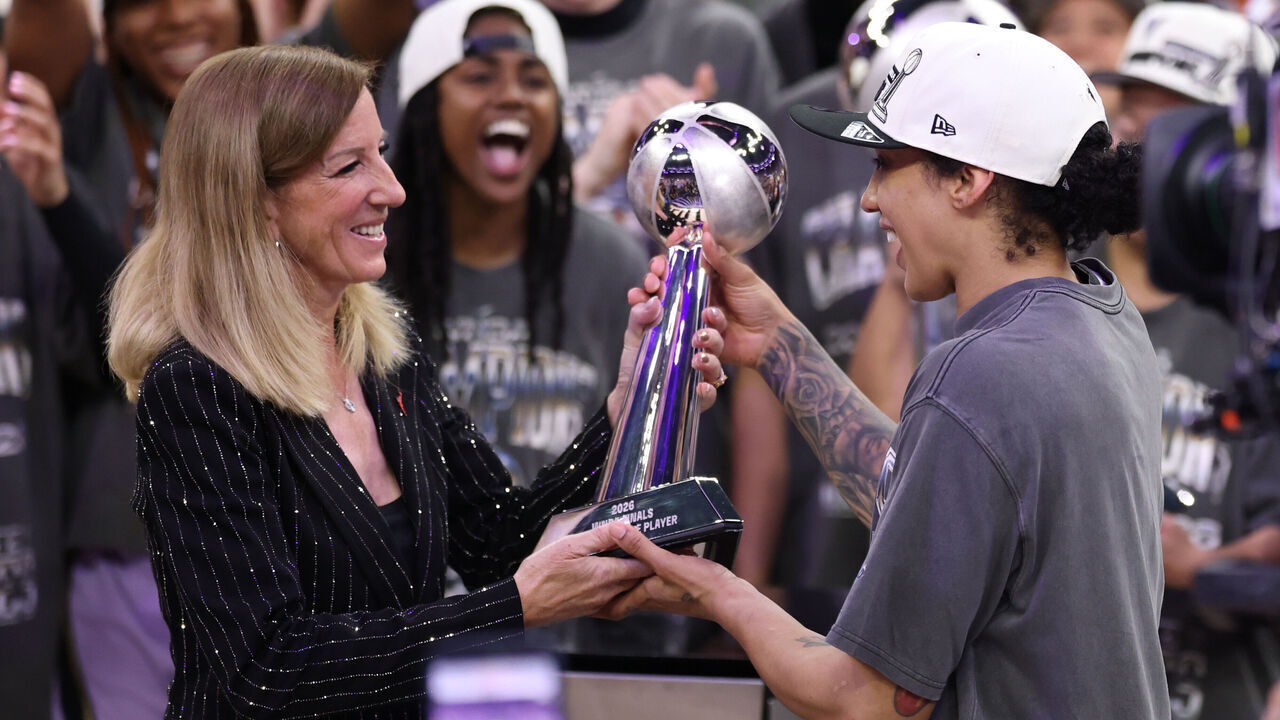
If a new commissioner is appointed before year-end, the public unveiling will be the easy part. The incoming leader will arrive as teams organize their first full offseason under the 2026 labor agreement, prepare for a 50-game 2027 schedule and plan further expansion. The quality of that handoff can be assessed without guessing the eventual candidate's identity.
GOATIFY
GOATIFY WNBA
From player leadership to the next generation of stars, celebrate women's professional basketball with GOATIFY WNBA styles.


Caitlin Clark G.O.A.T. - Greatest of All Sticker
Add basketball personality to your favourite gear.
Shop Now ↗
Caitlin Clark Golden Goose - Women's Sweatshirt
A basketball fan design for everyday wear.
Shop Now ↗

BALLERina Girl's Basketball Ballet Air Mug
Add basketball personality to your coffee break.
Shop Now ↗
First, the league should put a clear implementation timetable behind the new calendar. What changes for travel and recovery? How will arena conflicts be resolved? Can the postseason finish at a sensible point without the interruptions that made recent scheduling especially difficult? The league has indicated there should be no international tournament pause next season. A workable published schedule will matter more than broad promises of additional games.
Second, commissioner-level priorities should include a report on competitive operations. Teams need clarity on the new replay center, officiating standards and the way rule disputes are communicated. That does not require a guarantee of perfect calls. It requires a predictable system that coaches, players and fans can understand, especially as the audience expands and every controversial sequence spreads instantly through social media.
Third, the office needs to maintain direct working relationships with the players' association and individual clubs. The recent CBA provides the common framework; applying it fairly will require conversations with teams at very different stages of commercial maturity. The champion Valkyries and newer expansion markets will not have identical operational problems. The commissioner still has to hold them to coherent league standards rather than let outcomes depend on who makes the loudest request.
Fourth, the league should communicate expansion milestones without treating future franchise announcements as substitutes for present delivery. Cleveland, Detroit and Philadelphia represent valuable long-term growth, but the story of 2027 will be played by the teams already competing. Fans will see ticket prices, television access, travel-related absences, arena choices and basketball quality long before any new executive's strategic presentation yields results.
That is why the selection criteria are more demanding than a celebrated corporate résumé. The WNBA needs someone who can manage an expanding business, listen without promising everyone the same answer, defend consistent rules and explain difficult tradeoffs under scrutiny. Engelbert helped bring the league to a point where the stakes are much higher. Whether the next commissioner succeeds will be determined by routine decisions that keep the larger operation running.
The December 31 target matters, but it is not the scorecard for the WNBA's next era. Candidate interviews show meaningful progress; they do not tell us who will be chosen or how well that person can lead. Engelbert has offered to remain through a delayed transition if necessary, which makes deliberate vetting preferable to a rushed ceremonial deadline.
The league now has richer contracts, more franchises, new broadcast commitments and evidence that an expansion team can become champion almost immediately. It also has bigger operational obligations and more stakeholders prepared to question every compromise. The most valuable successor will be the one who understands both halves of that equation and can turn a booming league into a more dependable one.
GOATIFY
GOATIFY WNBA
Shop GOATIFY WNBA products from the WNBA-filtered basketball collection.


Caitlin Clark Golden Goose - WNBA Indiana Hoodie
A basketball fan design for everyday wear.
Shop Now ↗BALLERina Girl's Basketball Ballet Air Sticker
Add basketball personality to your favourite gear.
Shop Now ↗
BALLERina Girl's Basketball Ballet Air Sweatshirt
A basketball fan design for everyday wear.
Shop Now ↗BALLERina Girl's Basketball Ballet Air Sticker
Add basketball personality to your favourite gear.
Shop Now ↗



















