

Bedard Faces Another Surgery Call. Chicago's Rebuild Can't Wait.
GOATIFYA 6-3 win over Toronto should have been a brief moment of relief for a Chicago team that has spent much of November searching for momentum. Instead, the image that matters is Connor Bedard leaving the ice after a face-off early in the third period. The captain had scored the go-ahead goal minutes earlier. By Thursday, the question was no longer whether Chicago could finish one game without him. It was whether another shoulder operation might change the rest of his season.
Chicago said on November 20 that surgery and rehabilitation were both under consideration for Bedard's injured right shoulder. Coach Jeff Blashill ruled him out for Thursday's Columbus game and the subsequent three-game trip, but offered no definitive procedure, diagnosis or return date. Those unknowns matter. A four-game minimum is not a four-game forecast, and treating it as one would misrepresent the decision the club still has to make.
The Blackhawks are 6-14-2 after a 4-2 loss to Columbus. They are moving Anton Frondell onto the first line and Frank Nazar into the most demanding power-play vacancy. What follows is a test of roster construction, player development and whether Chicago can ask its young captain to be the foundation without making him the entire building.
The injury decision is bigger than the next four games

The latest injury happened during an ordinary-looking piece of center-ice routine. With 54 seconds played in the third period against Toronto, Bedard lowered his stick for a draw opposite Nick Paul. The sticks made contact, Bedard reacted immediately and he left the game. That sequence does not establish a medical diagnosis. It establishes why the team is examining both the mechanics of the play and the choices available for recovery. The Blackhawks' public position is that they are still gathering information. There has been no announcement that an operation is booked, that rehabilitation has failed, or that a particular recovery calendar should be expected.
The troubling part is the pattern rather than the isolated contact. Bedard injured his right shoulder on a face-off in St. Louis on December 12, 2025. He missed twelve games and returned January 9, but Chicago managed his exposure to face-offs afterward. He did not take another game draw until February 26. In July 2026 he injured the other shoulder in an offseason session and underwent surgery. He returned to NHL action on October 13, earlier than the original November expectation. It would be inaccurate to conflate those episodes into one injury or say that July's procedure predicts the outcome now. It would be equally careless to ignore that they have shaped a large share of his last year.
Blashill has described similarities between the stick movement in the two right-shoulder incidents. His point was not that the same collision guarantees the same treatment, but that the motion of lowering a stick into another player's stick deserves scrutiny. The coach has floated alternatives in face-off technique rather than declaring that Bedard must stop playing center. That is a football-field-sized tactical debate squeezed into a few inches of ice: the face-off is one of a center's defining responsibilities, but the value of winning another draw has to be weighed against the availability of the team's best offensive player. Neither fans nor coaches can solve that medical trade-off from a replay clip.
GOATIFY
GOATIFY Hockey
A difficult injury period for the captain? Explore GOATIFY hockey fan gear while following the Blackhawks.


The immediate schedule only sharpens the distinction. Chicago faced Columbus on Thursday before trips to Calgary, Vancouver and Seattle. Bedard is out of those games under the announced plan. Everything beyond that depends on examinations and a treatment choice that the club had not finalized when it spoke. If rehabilitation is selected, it should not be mistaken for a promise of a quick comeback. If surgery is selected, it should not be portrayed as the end of his long-term trajectory. There is no useful analysis in pretending the team's uncertainty is a secret timetable waiting to be guessed.
The sensible competitive response is therefore to plan for an extended disruption without asserting one. Line combinations, center responsibilities and special-teams repetitions should be useful even if the captain returns earlier than feared. Chicago cannot control how fast injured tissue recovers. It can control whether every game without Bedard becomes an improvisation.
Frondell gets a first-line test that Chicago cannot fake
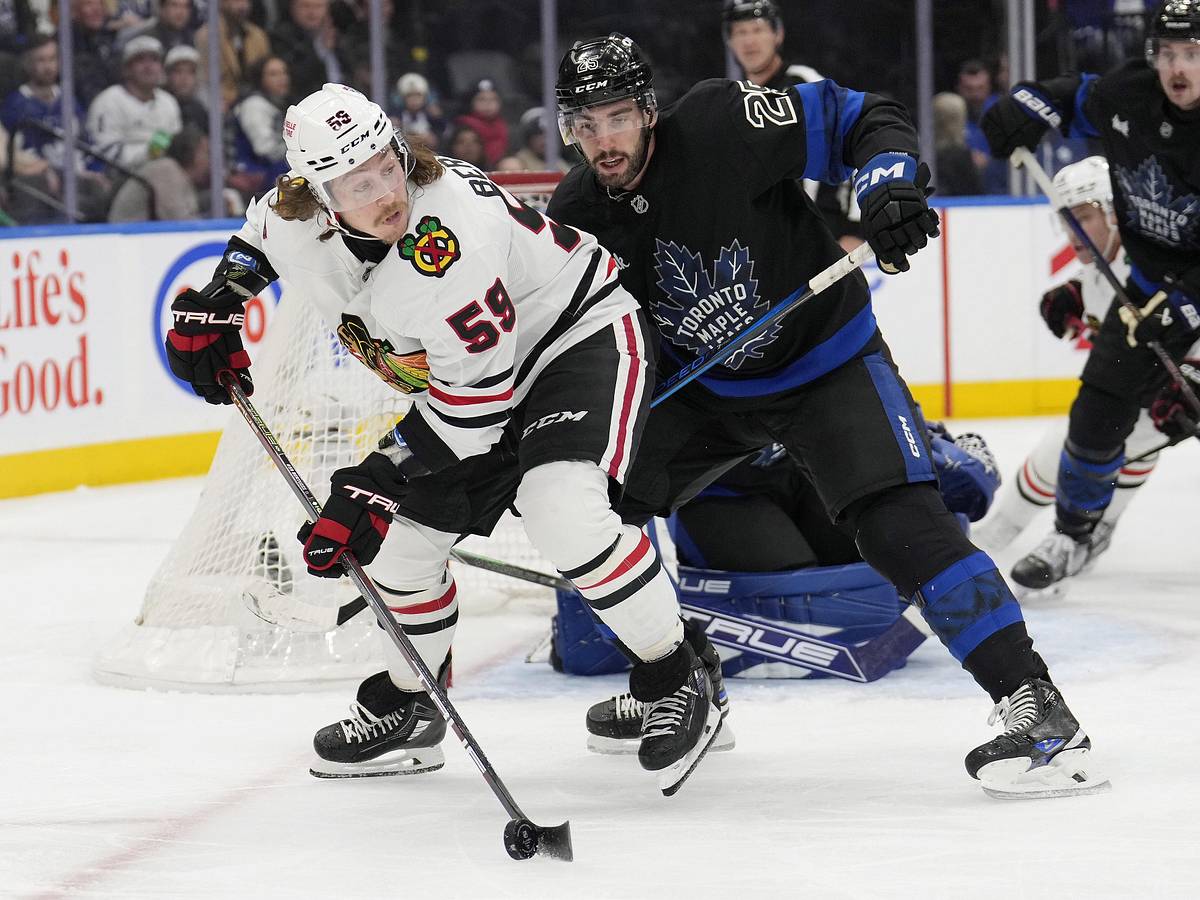
The most revealing lineup decision may be the one that moves a teenager into the middle of Chicago's top line. After Wednesday's practice, Anton Frondell was the expected first-line center with Roman Kantserov and Tyler Bertuzzi. This is not a claim that Frondell can replace Bedard's 18 points in 15 games. It is a decision to give an emerging player the hardest possible learning environment: top opposing defenders, high-leverage touches and an entire team's expectation that somebody will keep the attack organized. It asks the coaching staff to evaluate Frondell's decisions, not simply his scoring column.
Bertuzzi is important to the experiment because he gives the line a veteran whose work does not require a perfect entry pass. He can occupy defenders around the crease, compete for loose pucks and turn a stalled possession into a second chance. Kantserov offers another developing skill set on the wing. If the three can recover pucks and play with a consistent forecheck, the unit has ways to create offense without copying Bedard's individual shot and deception. Frondell's job is to connect those pieces at a speed he has rarely been asked to sustain against first-pair opponents.
There is a danger in treating increased responsibility as proof of immediate readiness. A young center may make the correct pass but arrive a half-step late to his defensive coverage; he may generate a rush chance but lose the next face-off in his own zone. The correct measures over these games are whether Chicago exits cleanly with Frondell under pressure, whether his line spends less time pinned below its goal line, whether Bertuzzi has rebound opportunities and whether Kantserov receives the puck in dangerous areas. A single goal can be a misleading success signal; a stretch of repeatable defensive and transition decisions tells the organization much more.
A second issue is how Blashill protects the rookie without stripping the assignment of its value. Throwing Frondell into every difficult matchup might accelerate the stress test, but constantly starting him in his own end against the opponent's best trio could hide the offensive progress Chicago wants to see. Favorable offensive-zone starts are not a sign that the coaches lack faith. They are a reasonable method for giving a developing center more opportunities to handle the puck while other lines absorb some of the most demanding defensive minutes. Over a three-game trip, the balance can be adjusted shift by shift.
There is also an organizational benefit that does not appear on the scoreboard. Chicago needs to know whether Frondell can grow into a true center alongside Bedard or whether his ceiling and the club's best shape point toward another role. The current vacancy is a chance to gather evidence rather than conduct a permanent position change after one practice. If Bedard returns, Frondell will not have wasted those repetitions. Chicago will have learned what its next wave can do when the captain is not there to rescue every broken possession.
GOATIFY
GOATIFY Hockey
Follow Chicago's next generation of skaters with GOATIFY NHL-inspired hats, tees and hoodies.
Nazar can change the power play, but not duplicate Bedard

Chicago's first power-play unit now has to solve a different problem. Without Bedard, the structure is expected to feature Frank Nazar, Tyler Bertuzzi, Roman Kantserov, Patrick Kane and defenseman Sam Rinzel. Blashill identified Nazar's right-handed shot and his familiarity with a flank position as reasons for the move. Bertuzzi's presence closer to the net gives Chicago a screen and a rebound threat, while Kane can organize the puck and Rinzel can help manage the line. The arrangement is coherent on a whiteboard. Whether it becomes productive depends on how quickly the players establish habits with one another.
Bedard's absence removes a unique kind of pressure from the defense. Opponents ordinarily have to respect the speed with which he can turn a harmless reception into a shot or a diagonal pass. That threat shifts defenders before the puck arrives. Nazar is a good player, but asking him to impersonate that particular package would invite forced one-timers and possession-ending shots. The better question is whether Nazar can threaten enough from his side that the other four players receive more space. Power plays thrive when every defender has two uncomfortable assignments; they stall when one side of the ice can safely be ignored.
The Toronto game supplies a useful reminder that the supporting cast can contribute under genuine pressure. Nazar scored twice, Bertuzzi twice and Rinzel collected three assists in Chicago's 6-3 win. Those outcomes do not guarantee that the combinations work every night, especially against a more settled penalty kill. They do show that the young players do not have to wait for Bedard to make the first move before they attack. The task now is to translate those isolated bright moments into entries, puck retrievals and repeatable shot sequences rather than relying on a rush of emotion after the captain leaves.
Consider a typical power-play possession. Kane draws attention near the outside, a defender challenges the puck carrier, Rinzel offers an outlet and Bertuzzi occupies the goaltender's sightline. If Nazar holds the puck too long before shooting, the defensive box can reset. If he releases too quickly every time, the penalty killers can anticipate the pattern. Alternating shots and sharp passes is how he forces hesitation. Kantserov's movement through the seams adds another way to prevent opponents from treating the man advantage as a static passing drill. A good unit does not need one player to touch the puck on every dangerous play.
Special teams also give Chicago a measurement tool. Even if the club struggles to win, the coaching staff can ask whether the first unit sets up with control, whether failed entries lead to pressure the other way and whether Nazar looks comfortable making decisions after his initial option disappears. The stretch without Bedard can reveal which young players drive offense and which merely benefit from standing near him. That knowledge could still help when the captain returns and Chicago has to decide how much of the first unit should revolve around a single shooter.
A $75 million cornerstone cannot be the entire rebuild
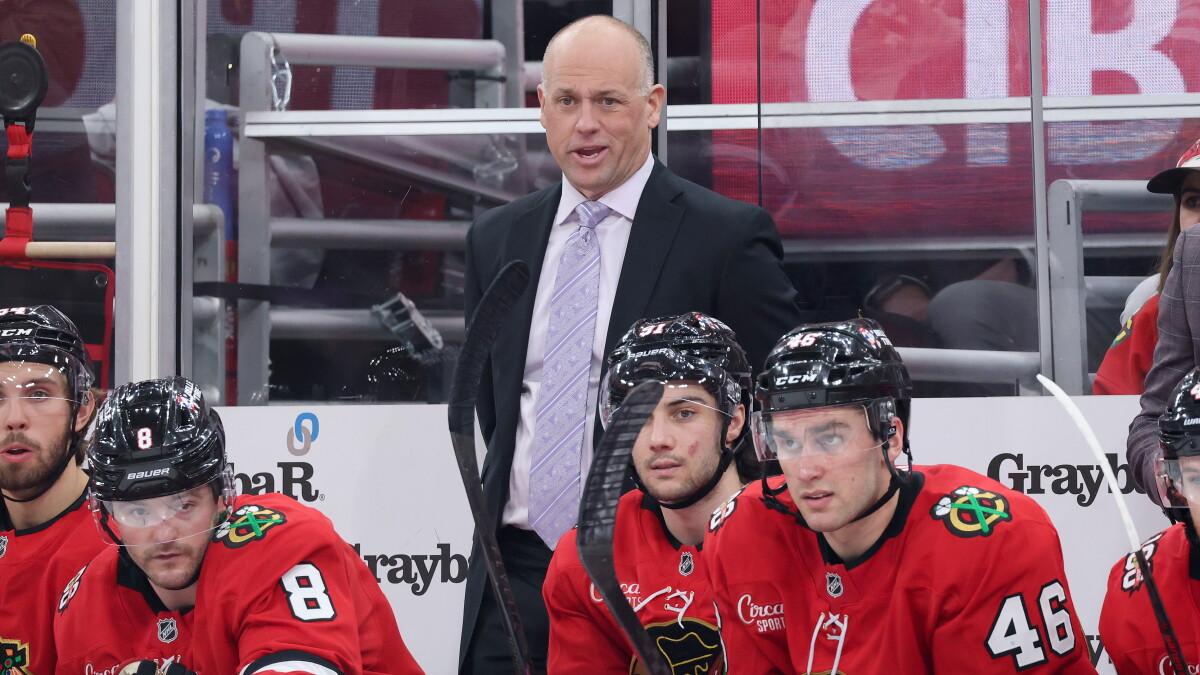
The blunt standings context is unavoidable. Chicago emerged from Thursday at 6-14-2, and the loss to Columbus removed some of the optimism generated by beating Toronto. Any team with that record would miss an 18-point scorer who also occupies its top center position. The Blackhawks are in a different situation because the absent player is the 21-year-old captain and the center of their long-term identity. Chicago gave Bedard a five-year, $75 million extension in July, with a $15 million annual cap hit through 2030-31. That is a declaration of commitment, not an instruction to hurry him back to rescue a difficult November.
GOATIFY
GOATIFY Hockey
Power-play moments deserve a little extra hockey pride. Discover GOATIFY hockey designs.
This is where roster building becomes a test of priorities. In a rebuild, a poor month can tempt decision-makers into treating every result like a referendum on the plan. Sending a young star back too quickly or sacrificing development opportunities simply to steal one road win would be a short-term answer to a long-term question. None of that means Chicago should accept losing. It means the club should know which decisions are about this Saturday's game and which decisions shape the next five seasons. Medical decisions belong to qualified professionals and the player; the hockey staff should have plans that work across plausible return scenarios.
Veteran leadership matters here in a practical way. Patrick Kane has acknowledged how much Bedard contributes to the organization and to the entertainment value of its games, but he also stressed that the remaining group has to support him. Kane cannot reproduce the speed and shooting profile of a 21-year-old center, nor should that be the standard. He can help the next generation manage possessions, recover from a bad shift and keep the power play from becoming frantic. Bertuzzi can turn effort into net-front chances. Blashill can create a structure in which the young players know exactly what responsibility they are being asked to own.
The three road opponents offer different tests without requiring any prediction about a result. Calgary is the first opportunity to see whether Chicago can implement its new top line away from the United Center. Vancouver presents another set of matchup choices, and Seattle can show whether the coaching staff has made adjustments after seeing the revised power-play personnel in action. The performance indicators worth following are five-on-five shot quality, time spent defending after a failed entry, discipline when trailing and whether the team can produce sustained offense without sending all its best forwards onto one line. Those are actionable development signals even when standings points do not arrive.
The biggest question is not whether Frondell can become Bedard or Nazar can shoot exactly like him. They cannot, and the coaching staff should not ask. It is whether Chicago has assembled enough complementary talent that the captain's absence reveals options rather than exposing emptiness. A successful rebuilding organization does not need its cornerstone to be healthy every single night to recognize progress. Bedard's return should be treated as the addition of an exceptional player to a growing team, not the restoration of the team's only functioning system. The coming games will offer evidence on which version of Chicago is being built.
The next official update on Bedard's shoulder will matter more than any speculation about operating rooms or recovery dates. As of November 20, Chicago had not chosen publicly between surgery and rehabilitation. Bedard was confirmed out for four games, not given a final timetable. That uncertainty deserves to be represented accurately because it is central to the story.
What Chicago can assess now is concrete: how Frondell carries top-line responsibilities, whether Nazar gives the first power play a credible second identity, and whether veterans and coaches can protect the club's developing players from having to solve every problem by themselves. Bedard is the obvious centerpiece of the Blackhawks' next successful team. A stronger organization will be the one that learns how to function while he is away.
GOATIFY
GOATIFY Hockey
Shop GOATIFY NHL and hockey shirts, hoodies and stickers.


















