The Revierderby Is Back: Dortmund vs. Schalke, Explained
GOATIFYFor three seasons, German football had a conspicuous empty space on its calendar. Borussia Dortmund could keep chasing trophies and Schalke could keep trying to rebuild, but the men’s Revierderby could not happen in the Bundesliga while the neighbours occupied different divisions. That changes in 2026/27. Schalke have returned to the top flight, and the fixture that divides households, workplaces and whole corners of the Ruhr is back.
Borussia Dortmund versus Schalke 04 is not simply a contest between two nearby clubs. It is a century-long argument about identity, local pride and whose colours should define the coal-and-steel heartland of Germany. Its history contains title hopes destroyed, spectacular collapses, strange incidents and years when the biggest victory was just being able to play the other side again.
Here is how the Revierderby began, why the rivalry has survived different fortunes and what its long-awaited December 2026 return means. The historical episodes below are just that: historical; no old photograph or result is presented as a scene from the upcoming match.
Born in the Ruhr: Coal, steel and a rivalry older than the Bundesliga

The Ruhrgebiet is not one neat football town. It is a connected urban region of cities and districts whose fortunes were shaped by coal mines, steelworks, factories and the journeys workers made between them. Dortmund is in its eastern part; Gelsenkirchen, Schalke’s home, lies farther west. Depending on the route and measurement, the clubs are only a few dozen kilometres apart. Close enough for everyday encounters, but separate enough to insist that a city’s football identity belongs to itself.
The word Revier comes from the language of a mining district. That is why the name matters. It places football inside a landscape of shifts, pits, industrial housing and working-class communities, rather than treating the fixture as a celebrity contest invented by television. This connection does not mean every supporter is a miner or that the modern region remains the economy of a century ago. It means industrial history gives both clubs an unusually powerful vocabulary for belonging.
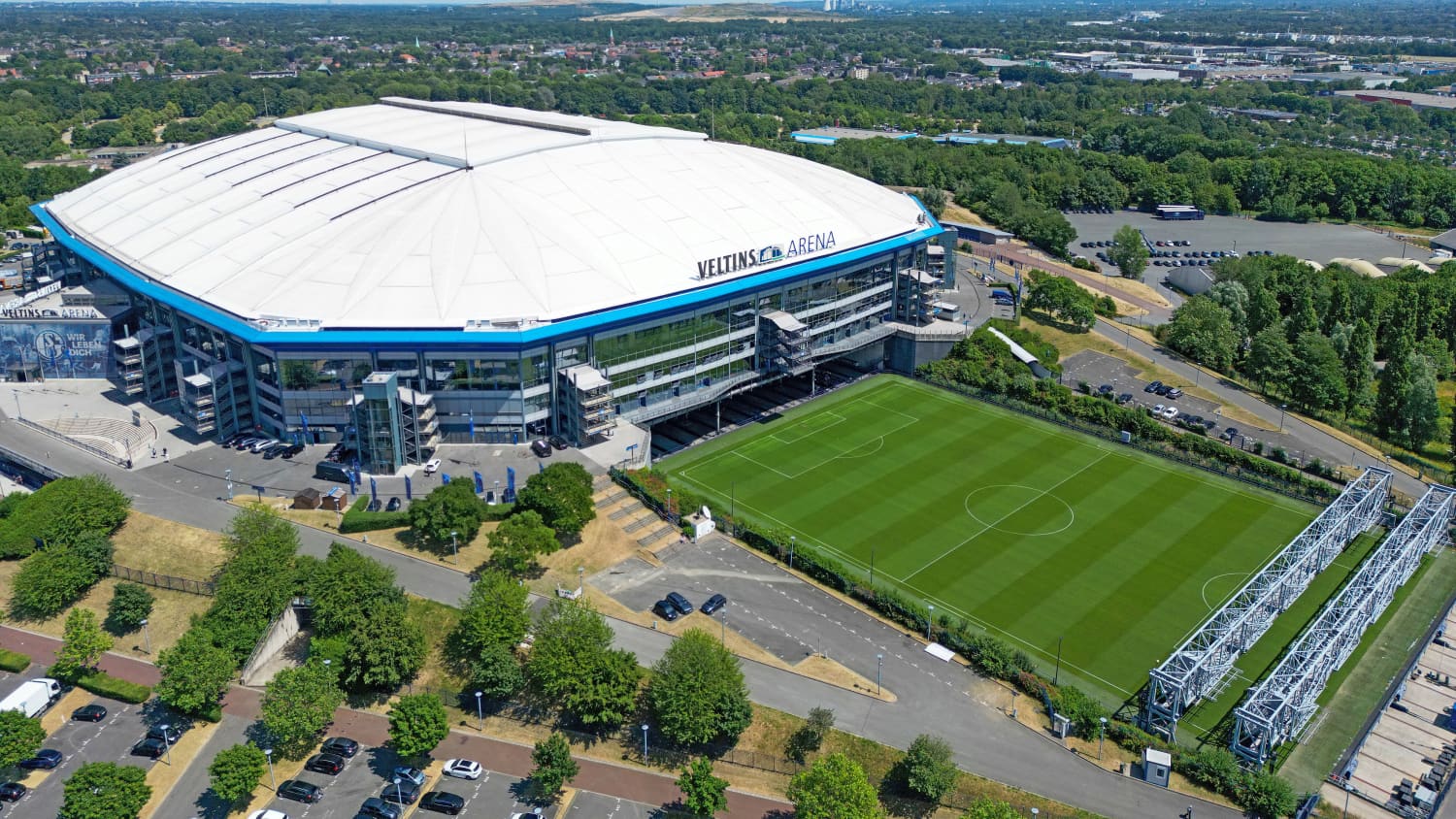
Schalke were founded in 1904 and Dortmund in 1909. Their first recorded meeting came on 3 May 1925, with Schalke winning 4-2. In the early meetings the Royal Blues were overwhelmingly stronger: a Bundesliga historical account records Schalke winning 16 of the next 18 matches. Schalke developed into an established German powerhouse before the national Bundesliga was created, and their association with Gelsenkirchen's mining community became central to the club's self-image. The nickname Die Knappen invokes miners, while the modern Veltins-Arena's tunnel consciously recalls that industrial past.
It would be misleading, however, to treat the rivalry as a simple unbroken streak of Schalke dominance. Dortmund strengthened during the postwar era and built their own national achievements. German football itself changed from regional competitions to the Bundesliga in 1963. The specific phrase '100 Bundesliga derbies' therefore counts a different thing from all matches between the clubs in earlier competitions, cups and friendlies. Any all-time head-to-head total must specify which games are included, rather than mixing historical and Bundesliga records.
In the first 100 Bundesliga encounters, Dortmund had 37 wins, Schalke 32 and the clubs drew 31. The numbers look remarkably even considering how differently the clubs' fortunes have swung over many decades. One side has enjoyed periods of European glamour; the other has endured dramatic financial and sporting turbulence. Yet a derby cannot be reduced to the current league table because the rivalry predates many of the structures that now measure success.
GOATIFY
GOATIFY Soccer
Explore GOATIFY football designs inspired by the game’s enduring rivalries.

Kylian Mbappe – El Dictator Football Graphic Tee
A football fan design for everyday wear.
Shop Now ↗
Kylian Mbappe Ninja Turtle Football Euro 2024 Hoodie
A football fan design for everyday wear.
Shop Now ↗
Lamine Yamal – Messi Bath Photo Parody Sticker
Add football personality to your favourite gear.
Shop Now ↗
GLINEOS OUT Manchester United Protest Against Sweatshirt
A football fan design for everyday wear.
Shop Now ↗
Ousmane Dembele – Comeback GOAT Muscle Shirt Tank
A football fan design for everyday wear.
Shop Now ↗
Kylian Mbappe Ninja Turtles Real Madrid Soccer Hat
A football fan design for everyday wear.
Shop Now ↗Another distinction gets lost in simplified descriptions: the Revierderby is not an imported ideological or religious conflict. Both clubs draw support from the wider Ruhr. Families can be split between yellow and blue. The competitive edge comes from local identity, memories and sporting humiliation. A neighbour who celebrates your defeat at work on Monday can make a routine league game feel more important than a distant final.
Why the derby feels personal: Two cities, two colours, one enormous stage
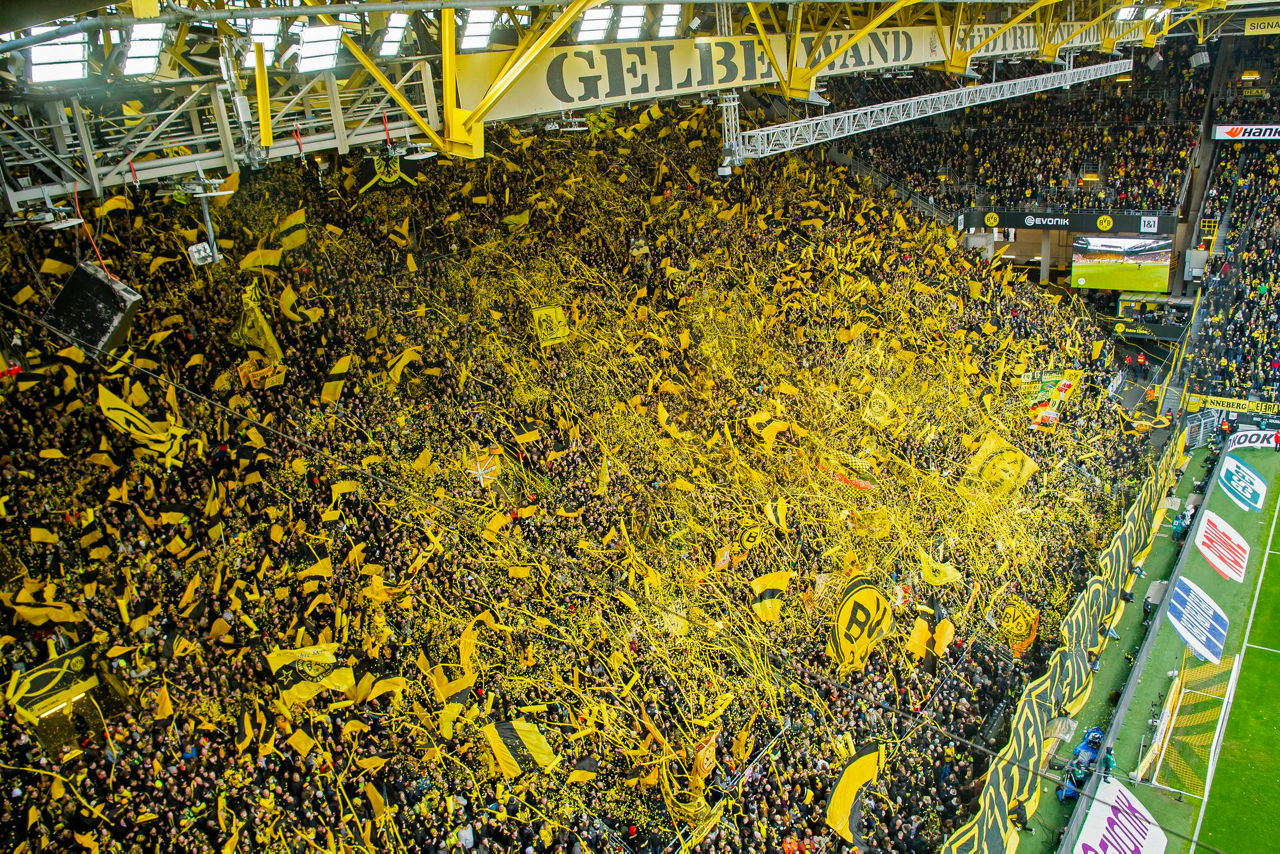
Put the history book away for a moment and think about the matchday journey. Dortmund’s Signal Iduna Park and Schalke’s Veltins-Arena are two of the great theatres of German club football, but they do not offer the same visual language. The Dortmund crowd is famous for the immense Südtribüne, often called the Yellow Wall. Schalke’s Royal Blue identity and the northern end of its own ground create a different wall of allegiance. The derby turns those colours into a very public statement of where supporters feel they belong.
For outsiders, the temptation is to describe this as 'two loud stadiums'. The scale of the terraces is only the surface. A local derby is made in the days before kickoff: colleagues debate lineups, friends send old goals back and forth, generations repeat stories about what happened when their side supposedly had no chance. A fan who barely remembers a comfortable league win may still recall the minute of an injury-time derby equaliser from years ago. Football results become family anecdotes, and family anecdotes become the rivalry's informal archive.
It is important not to confuse the fan cultures entirely. Dortmund and Schalke each have their own history, songs, rituals and grievances. A cliché about 'the Ruhr working class' flattens thousands of different people into one stereotype. Some supporters arrive from the immediate neighbourhood, some have moved away, others chose their team through a parent or a television moment. What unites those stories is that the fixture makes a claim on local belonging: your colours are not a neutral accessory when the opposition is close enough to share your rail network.
The emotional weight also explains why results behave differently from an ordinary three-point calculation. Defeat can linger all week. A point can feel like a victory if it denies a neighbour a trophy; it can feel like a missed opportunity if your team squandered a commanding lead. At the same time, the fixture's value should not be measured by hostility or dangerous behaviour. Stadium safety, respect for other supporters and the ability to attend a match without intimidation are essential, not optional, parts of keeping a historic rivalry alive.
There is also a practical difference between a derby and a season-long hierarchy. Dortmund have generally possessed stronger resources and European ambitions in recent years, while Schalke have lived through repeated relegation and rebuilding. That disparity can make the teams feel farther apart on paper even as their home towns remain close. The Revierderby gives the underdog a 90-minute opportunity to rewrite the conversation, and gives the favourite a match where its status offers no guarantee against embarrassment.
When they meet, every mistake acquires extra meaning. A loose back pass can become a story told for a decade; a goalkeeper's recovery save can earn the kind of applause normally reserved for a match-winner. That is why understanding the derby begins with the supporters, not a list of famous players. Those players change clubs. The families, friends and neighbourhood loyalties are the deeper thread.
GOATIFY
GOATIFY Soccer
Show your football allegiance with GOATIFY Soccer favourites.

OUTEOS INEOS OUT Manchester United Protest Sweatshirt
A football fan design for everyday wear.
Shop Now ↗
Trashford Marcus Rashford Manchester United Hoodie
A football fan design for everyday wear.
Shop Now ↗
Championship Tottenham Hotspur Parody , Sticker
Add football personality to your favourite gear.
Shop Now ↗

Glazers Out Manchester United Fan Protest Mug
Add football personality to your coffee break.
Shop Now ↗
The matches nobody forgets: 1969, 2007, 2017 and the last meeting
Plenty of derbies generate noise. Very few generate stories quite like a footballer being bitten by a police dog. On 6 September 1969, at Dortmund's Stadion Rote Erde, supporters spilled onto the pitch after Schalke took the lead. Amid the confusion, police dogs bit Schalke players, including Friedel Rausch. The game finished 1-1; Rausch received treatment and continued. For the return fixture, Schalke's president brought tame lion cubs onto the pitch. It sounds like a story exaggerated over decades, but the incident belongs to the Bundesliga's documented history. The serious lesson, beneath the absurdity, is how different matchday crowd control used to be.
Then there is 12 May 2007, the day a derby result spilled into the national title race. Schalke were fighting to become German champions, but Dortmund beat them 2-0 through goals from Alexander Frei and Euzebiusz Smolarek. VfB Stuttgart seized the advantage and ultimately won the Bundesliga title. From Dortmund's point of view, denying their neighbours the trophy was a triumph in its own right. From Schalke's point of view, it became one more painful chapter in a long search for a postwar national championship. That result helps explain why a modest Dortmund league season could still contain an unforgettable victory.
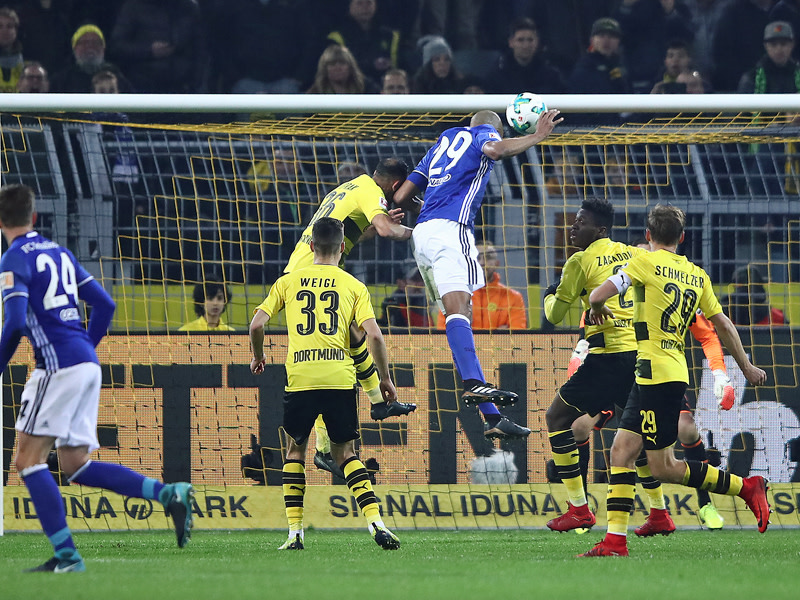
Nothing, however, has eclipsed 25 November 2017 for pure scoreline madness. Dortmund were 4-0 ahead after 25 minutes and held that advantage at half-time. Pierre-Emerick Aubameyang, an own goal by Benjamin Stambouli, Mario Götze and Raphaël Guerreiro had apparently settled the match. Then Guido Burgstaller and Amine Harit scored for Schalke early in the second half, Daniel Caligiuri made it 4-3 in the 86th minute and Naldo headed the equaliser in the fourth minute of stoppage time. The final score was 4-4. It is not enough to call this 'a comeback'; it reshaped the sense of what a secure derby lead can mean.
Schalke added another piercing Dortmund memory in April 2019, winning 4-2 away after a match in which Dortmund finished with nine men. That victory mattered not simply because of the score but because rivals have a way of turning the opponent's worst afternoon into their own favourite story. Dortmund have provided their share of one-sided replies too. The fixture is not a single team's collection of triumphs, even if either fan base will happily recount it that way.
Before the 2026/27 renewal, the most recent men's Bundesliga derby had been 11 March 2023. Dortmund led twice at the Veltins-Arena, through Nico Schlotterbeck and Guerreiro, but Schalke twice responded. Marius Bülter's equaliser was followed by Kenan Karaman's header to make it 2-2. It was the 100th Bundesliga meeting. Dortmund had won the earlier 2022/23 encounter 1-0, but Schalke's subsequent relegation meant the next derby could not be scheduled as a regular league fixture for three full seasons.
These games expose the derby's recurring plot: a result that seems ordinary at the beginning becomes extraordinary because of what is at stake for the other side. Every fresh contest carries the risk of joining that list, and every player knows a single defining action can last longer in local memory than an entire season of respectable performances.
The Revierderby returns in 2026/27: Dates, stakes and what to watch
The central fact for 2026 is easy to overlook if you remember only Schalke's difficult recent years: the Royal Blues are back in the Bundesliga. After their 2023 relegation, Schalke finished 10th and then 14th in the second division before winning promotion as 2. Bundesliga champions under Miron Muslić in 2025/26. Kenan Karaman, who scored in the last men's Bundesliga derby in March 2023, remained a recognisable link to that previous chapter. For Dortmund, coached by Niko Kovač when Schalke earned promotion, the return creates a game that had been absent from the league calendar.
GOATIFY
GOATIFY Soccer
Celebrate legendary football memories with GOATIFY fan styles.

Championshit Tottenham Hotspur Parody , Sticker
Add football personality to your favourite gear.
Shop Now ↗
Amad Diallo Goal Celebration AMADNESS Sweatshirt
A football fan design for everyday wear.
Shop Now ↗
Christian Pulisic – Captain America Football Hoodie
A football fan design for everyday wear.
Shop Now ↗
Bottlers FC Tottenham Hotspur Parody , Spursy Tee
A football fan design for everyday wear.
Shop Now ↗

The first 2026/27 Revierderby is scheduled for Sunday, 6 December 2026 at 15:30 local German time, with Schalke hosting Dortmund in Gelsenkirchen. Dortmund confirmed the precise kickoff in a 5 November 2026 fixture announcement. The reverse meeting is assigned to Bundesliga Matchday 29, over 9–11 April 2027, in Dortmund; its exact kickoff should be checked against the latest fixtures before making travel plans. The December game will be the 101st Bundesliga meeting between the clubs. Neither the season opener nor the last meeting can be used as a substitute for the forthcoming result: as of this article's November 2026 research check, the December derby has not yet taken place.
The return deserves a little restraint in its framing. Schalke's promotion is genuine progress, but it does not erase the challenge of building a competitive top-flight squad. Dortmund's recent position as a consistent European contender does not mean the result is decided. The promoted side can benefit from the urgency of a first home derby in years; the established side can bring greater technical depth. Both claims are plausible football analysis, not promises. The opening half-hour and set pieces will offer early clues about whether emotion is helping each team or making it reckless.
What should a neutral watch beyond the score? First, track how Schalke handle Dortmund's transitions after losing possession. A team eager to press high in front of its own fans can create chances, but it can also surrender dangerous open space. Second, watch the physical battles and fouls around midfield. Derbies invite urgency, though a team that collects unnecessary bookings can lose tactical flexibility. Third, notice who controls the tempo after a goal. The historical lesson from 2017 is not that four-goal leads routinely disappear; it is that emotional momentum can change far faster than a comfortable scoreline suggests.
There is a broader question for the clubs as well. Schalke want to show that promotion means sustainable top-flight belonging, not another brief visit. Dortmund want derby wins to fit within their wider pursuit of trophies and continental places rather than becoming isolated celebrations. Those priorities are different, but they collide on the same pitch. This is exactly why fans have missed the contest: league tables can separate two institutions for years without reducing the significance of their next meeting.
If you are planning to attend, check the clubs' official ticket channels and current entry instructions rather than relying on resale claims or old fixture screenshots. For anyone following from abroad, confirm the final local kickoff and television rights close to matchday; rights vary by country. The story should age as a guide to the rivalry, not as a misleading live match preview once December arrives.
The Revierderby began in the industrial Ruhr long before the Bundesliga had a national table, and it has outgrown any single generation of players. Schalke's early dominance, Dortmund's rise, the 2007 title blow, Naldo's impossible-looking 2017 equaliser and the defiant 2023 draw are not disconnected trivia. Together they explain why a result between these neighbours becomes a story about a place and its people.
Schalke's 2026 promotion has restored that conversation to Germany's top division. The next men's league derby is scheduled for 6 December 2026 in Gelsenkirchen, with Dortmund due to host again in April 2027. The uncertainty of those future scorelines is the point: after three seasons without it, the rivalry finally gets a new chapter on the field.
GOATIFY
GOATIFY Soccer
Explore GOATIFY Soccer shirts, hoodies, stickers and gifts.


Open Heart Surgery Manchester United Ralf Mug
Add football personality to your coffee break.
Shop Now ↗