

Paris Booed Jake Paul. Doumbé Made the Dubai Fight Personal.
GOATIFYJake Paul came to Paris to sell a December 24 boxing match. The crowd made sure the first contest was verbal. At a November 10 press conference, French fans loudly booed the American and repeatedly shouted insults while Cédric Doumbé, the celebrated French kickboxer and mixed martial artist across the table, appeared delighted to have a home advantage. Paul answered with provocations about the city and its history, turning what should have been a routine promotional launch into an unusually personal confrontation.
The two men will not actually fight in France. Their eight-round cruiserweight bout is scheduled for Coca-Cola Arena in Dubai on Christmas Eve, under boxing rules and with 10-ounce gloves. But the hostile reception has already given this crossover matchup an emotional hook: Doumbé says Paul's boxing is nowhere near the level of his own striking expertise, while Paul argues that Doumbé's success in other combat sports will not translate neatly to a professional boxing ring.
Beyond the insults is a compelling question. Paul has the deeper recent boxing résumé but is returning after a damaging loss to Anthony Joshua. Doumbé has fought far more often across combat sports, yet his professional boxing record is much thinner. Their press conference exposed exactly where each man thinks the other is vulnerable.
The Paris crowd made this a fight before the bell
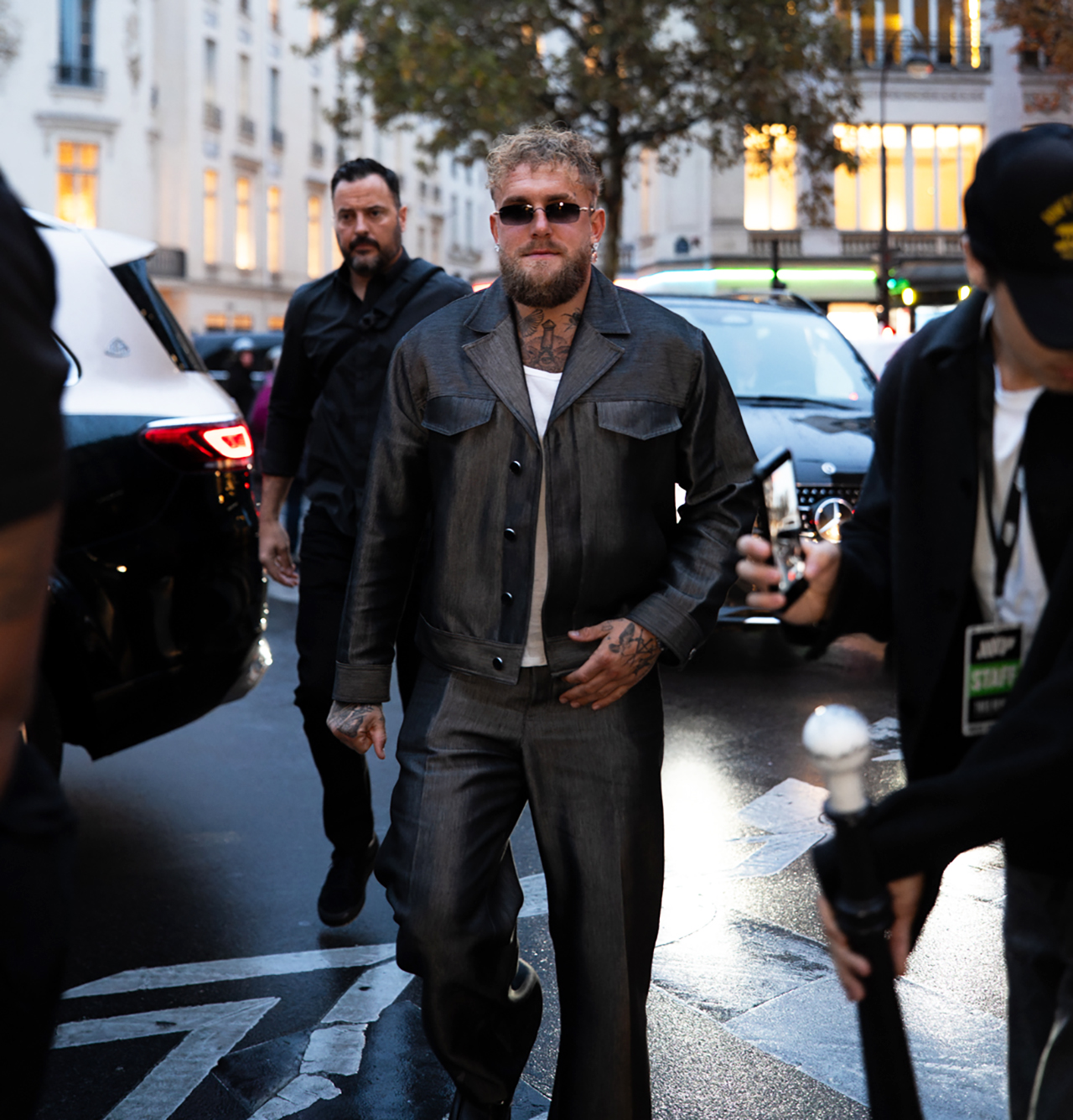
The Paris audience did not wait for a dramatic announcement or a contentious question to make its position clear. From Paul's first appearance, boos and hostile chants punctuated the event. The setting mattered: Doumbé is a French sporting figure, and Paul is both an overseas visitor and an entertainer who has built his boxing career around polarizing reactions. For a public event intended to create anticipation, that contrast guaranteed an atmosphere more like a rivalry than a polite news conference.
Paul did not attempt to win over the room. He mocked the crowd for booing him, made inflammatory references to recent unrest in Paris and invoked his family's connection to the Second World War. Those remarks went beyond ordinary prefight needle and handed the audience another reason to jeer. He also joked about how easily the gathering could have been conducted remotely. None of it established anything about his ability to win a boxing match; it demonstrated how willingly he will escalate a hostile exchange when cameras are rolling.
That approach has an obvious commercial logic. An event promoted around two recognizable personalities benefits when casual viewers can understand the conflict without studying their records. Paris provided instant protagonists, a crowd willing to take sides and clips designed to travel well beyond the press room. Yet drawing attention and controlling the resulting narrative are different things. The more Paul's comments focused on France itself, the less the discussion concerned his boxing preparation or his opponent's weaknesses.
Doumbé exploited that imbalance without needing the crowd to do all the work. He called Paul's fighting ability into question, described his opponent primarily as a successful internet personality and dismissed the technical challenge ahead. His most effective joke was about the business relationship: since Paul is also central to the promotional operation alongside Nakisa Bidarian, Doumbé framed the assignment as receiving a paycheck to knock out a boss. It was a sharp way to portray himself as the fighter and Paul as the employer who had wandered into a ring.
The two men also disagreed on what the booking says about their respective careers. Paul defended Doumbé as an established champion and major attraction whose following makes this a worthwhile event, even while predicting an early finish. That combination is not a contradiction so much as a promotional necessity. He needs viewers to believe the matchup is dangerous enough to matter, but he also wants to present the outcome as comfortably within his control. Doumbé has no reason to cooperate with the second part.
The most revealing element was the absence of any pretense that the crowd's reaction would decide the fight. Both men can leave Paris claiming a victory in public relations: Doumbé looked at home and Paul drew enormous attention simply by responding. In Dubai, neither will be able to summon the same audience as protection. The noise will recede, and the size of their technical differences will become visible.
GOATIFY
GOATIFY Boxing
Paris made this crossover contest personal. Explore GOATIFY Boxing shirts, hoodies, hats and stickers while the rivalry heats up.


Doumbé's knockout résumé comes with a boxing question
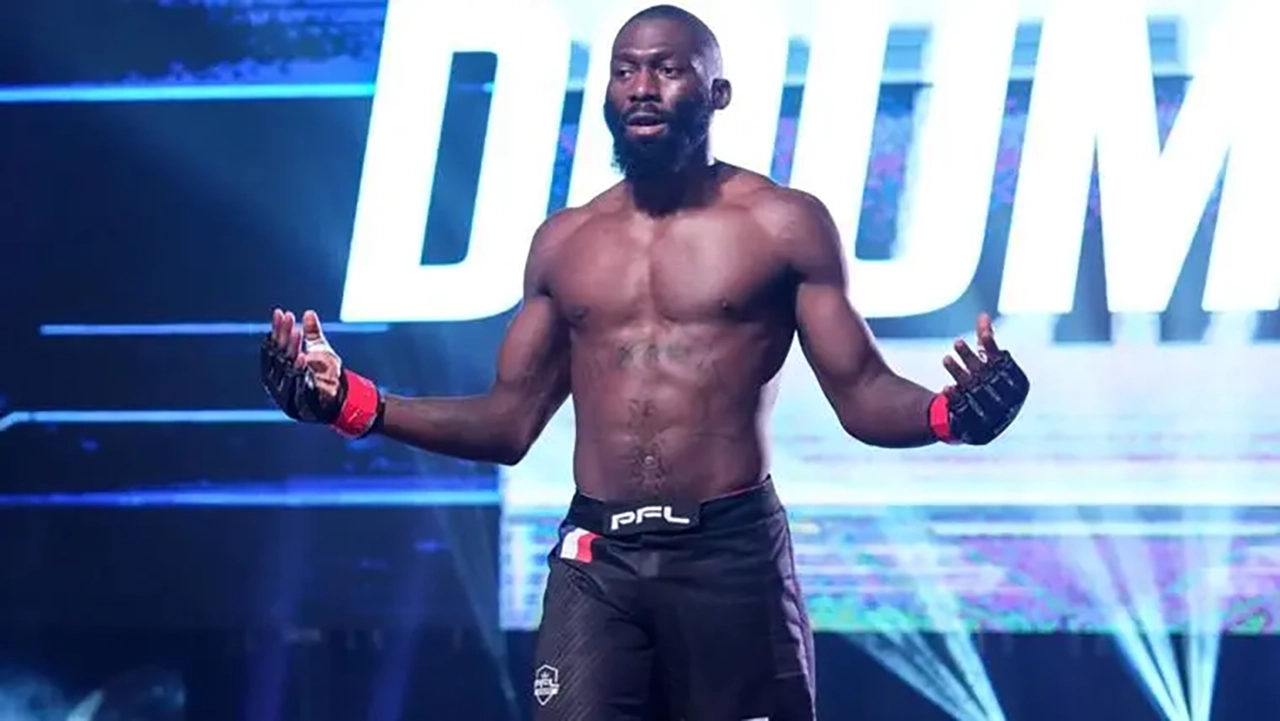
Doumbé's confidence is built on much more than hometown cheers. His recorded professional kickboxing career stands at 75 wins, seven defeats and one draw, with 45 knockouts. He won two GLORY world championships and became a recognized name in mixed martial arts, where his published record is 6-1 with six knockouts. Those numbers explain why a fighter accustomed to breaking opponents down with powerful strikes might consider a crossover boxing contest straightforward.
But professional boxing narrows the tools available. The advertised December 24 contest is scheduled for eight rounds at 200 pounds with 10-ounce gloves. Doumbé will not be able to use kicks to manage distance, punish a lead leg or change the opponent's attention between levels. His punches, footwork and timing still matter, as does a career spent performing under pressure. What changes is how long he must solve defensive problems using only the instruments permitted in a boxing match.
His listed professional boxing record, by contrast, is 1-0. That should not be mistaken for proof of inexperience as a striker, but neither can it establish that his kickboxing achievements automatically make him a polished eight-round boxer. Adjusting to a different range, the rhythm of exchanges and the scoring priorities is a genuine challenge. Repeating a heavyweight's or kickboxer's overall win total without accounting for the rules risks hiding the question that fans are actually paying to see answered.
Paul's comparable numbers point in the opposite direction. The promotion lists him at 12-2 with seven professional boxing knockouts. He has spent years preparing specifically for bouts where the jab, head movement, punch selection and ring positioning shape the result. His advantage is familiarity with this format, not necessarily a claim to be the superior all-around combat athlete. Doumbé could own the stronger broad striking résumé while Paul could be better adapted to these particular restrictions.
At the press event, Paul argued that Doumbé telegraphs some of his attacks, leaves openings in his defense and does not rely on a sufficiently disciplined jab. He predicted a finish in the third or fourth round. Those observations are his scouting claims, not independently established diagnoses. Doumbé, for his part, portrayed the necessary training as little more than getting his weight down. He imagined either a second-round knockout or deliberately stretching the beating into the later rounds. Such statements say more about intent and confidence than they do about a reliable forecast.
The most interesting technical possibility sits between those extremes. If Paul controls the middle distance with straight punches and repeatedly makes Doumbé reset, the rule set may favor his preparation. If Doumbé reads entries quickly, closes distance and lands the harder clean shots, his years of elite striking work could matter enormously. Neither scenario is guaranteed by a press conference. That uncertainty makes the bout more than a simple contest between a famous YouTuber and a famous kickboxer.
GOATIFY
GOATIFY Boxing
Doumbé's decorated striking background puts boxing technique under the spotlight — browse GOATIFY Boxing gear for fans of the fight game.
Eight rounds in Dubai will settle more than the insults
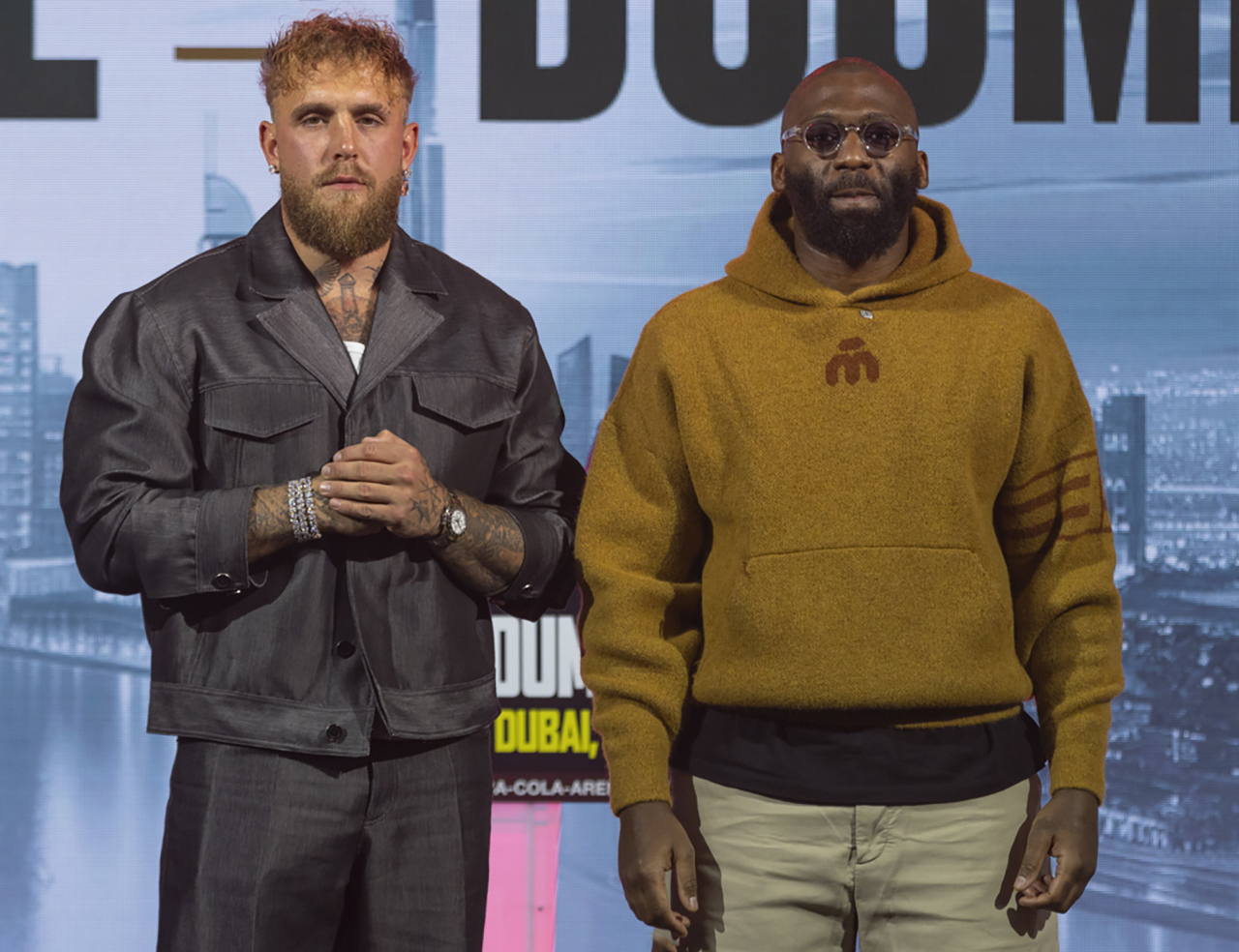
December 24 gives this bout a distinctive stage. Coca-Cola Arena in Dubai is the announced venue, a deliberate choice for an international show built around two personalities with audiences in different markets. Tickets were scheduled to go on general sale on November 15, according to the promoters. Moving the contest out of Paris means Doumbé will not necessarily have the wall of French support that greeted him on November 10, but Paul also cannot count on his usual domestic crowd or familiar setting.
The fighters have different kinds of pressure on their shoulders. Paul is returning to competition after the Anthony Joshua fight left him with a broken jaw. A serious defeat carries consequences beyond the official result: the boxer has to prove he can handle a hard punch, recover trust in his own defense and make the right choices when another powerful striker moves forward. A change of opponent and venue does not erase those questions, no matter how emphatically he answers fans at a microphone.
There is also a promise hanging over the promotion. Paul confirmed at the Paris event that he would retire if he lost to Doumbé. It is a dramatic statement from an athlete who has publicly discussed world-title aspirations, but it remains a conditional pledge rather than a binding contract or an established career endpoint. The sensible reading is that Paul is trying to attach genuine consequences to a matchup critics might otherwise regard as another high-profile crossover attraction.
For Doumbé, victory would carry its own complicated meaning. Beating Paul under professional boxing rules would not suddenly give him the championship record of a long-established cruiserweight contender. It would, however, be a conspicuous result against one of the division's most visible promotional figures, achieved while entering that figure's preferred sport. A loss would give Paul's supporters an immediate argument that specialized boxing preparation can neutralize much broader combat-sports experience, even if a single fight cannot settle every comparison between disciplines.
The promotional relationship adds another layer. Most Valuable Promotions is staging the event, while Paul is both an athlete in the headliner and one of the faces of the business around it. Doumbé's joke about being paid to beat his boss works because the overlap is unusual. It also places the burden of selling a credible competitive fight on a company tied to one of its contestants. Clear rules, visible officiating and transparent event details will matter much more than the noise of a press conference once fight week arrives.
Paul's remarks in Paris risk distracting from another point: he did not dismiss Doumbé's athletic background entirely. He described his opponent as a successful champion with a large following and acknowledged that dangerous power may still transfer into the ring. Doumbé similarly understands enough about the event to make the verbal battle part of his own strategy. Both men are advertising certainty, but their actual matchup contains unanswered questions about conditioning, adjustment, ring craft and whether a clean punch will change their plans.
The prediction game is therefore easy to start and difficult to finish. Paul sees an early technical opening; Doumbé describes a knockout whenever he chooses to deliver it. Neither claim should be treated as a result. Eight scheduled rounds at cruiserweight offer enough time for patterns to emerge and enough punching power for those patterns to be overturned in a moment. Their preparation between November 10 and December 24 is more relevant than any verdict from the crowd.
GOATIFY
GOATIFY Boxing
The Dubai showdown promises more than verbal fireworks. Show your love of boxing with GOATIFY fight-fan gear.
The Paris press conference succeeded in making Paul versus Doumbé feel personal. Boos turned into an argument about respect, the fighters traded sharp insults and both offered confident knockout predictions. But the story that will survive fight night is more precise: a specialist professional boxer rebuilding after a damaging defeat will face a decorated kickboxer and MMA finisher adapting his skills to an eight-round boxing contest.
Doumbé won the room in France; Paul made certain the room stayed focused on him. The greater prize is waiting in Dubai on December 24, when neither man's popularity, promotional role nor comeback narrative will count on the scorecards.

















