

Andreeva Won 11 Games Straight. Sabalenka Couldn't Stop the Slide.
GOATIFYFor five games, Aryna Sabalenka looked ready to control one of the biggest round-robin matches of the 2026 WTA Finals. She had broken Mirra Andreeva, established a 4-1 lead and put the 19-year-old under the kind of pressure that usually decides matches between elite opponents. An hour later, the scoreboard told a completely different story: Andreeva had won 6-4, 6-0, captured the final 11 games and booked a semifinal place in Indian Wells.
The astonishing part was not simply the straight-sets score. Andreeva claimed 45 of the last 55 points against a player who had won Indian Wells earlier in the season and completed the Sunshine Double. The match lasted only 62 minutes, yet contained a full reversal of momentum and another breakthrough in an already remarkable young career.
The win also turned a highly competitive WTA Finals group into two separate stories. Andreeva has already secured first place in Group 2; Sabalenka must now recover quickly to face Elina Svitolina for the remaining semifinal ticket. The pressure therefore moved from the teenager who seemed trapped at 1-4 to the established contender who had allowed the match to escape completely.
How a 4-1 deficit became 11 consecutive games
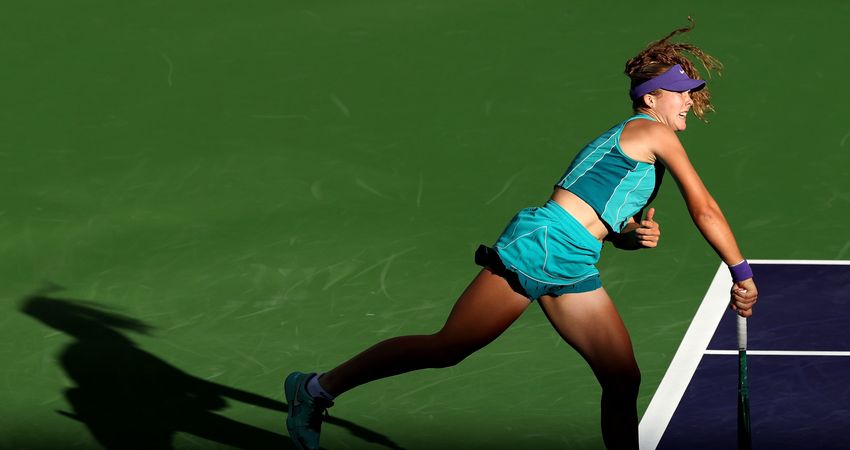
The first change came at the most fragile point in Andreeva's match. Sabalenka had moved ahead 4-1 after punishing loose play, and Andreeva had surrendered a service game with a double fault on break point. That left her visibly frustrated. The response was striking because she did not try to hide the frustration or pretend that her tennis had been comfortable. She used her next service game to reset the pace and attack the problem directly.
Serving more assertively gave Andreeva something reliable to build on. Rather than defending every point against Sabalenka's power, she began starting rallies in a stronger position and playing return games with greater conviction. She won 12 consecutive points to level the opening set at 4-4, then took 20 of 23 points during the stretch that flipped its balance. Three consecutive aces completed the set, an extraordinary finish considering how vulnerable her serve had looked earlier.
Those numbers matter more than the shorthand description of a collapse. Sabalenka did make it difficult for herself once the lead disappeared, but Andreeva repeatedly earned the initiative. She was no longer waiting for errors to arrive; she was preventing her opponent from building the first-strike patterns that had created the original advantage. The decisive question in this type of matchup is not whether Sabalenka can hit through an opponent. It is whether the opponent can keep enough depth and first-serve authority to deny her a comfortable sequence of attacking shots.
The second set showed just how completely that answer had changed. Andreeva won every point played behind her first serve and dropped only two points on serve in the set. Across the closing stretch of the match she took 45 of the final 55 points. Once a player protects service games that efficiently, the opponent's margin for recovery becomes tiny. Sabalenka could not find the extended holding pattern she needed to restore pressure on Andreeva's service games, and the games continued to accumulate on one side of the scoreboard.
A 6-0 set against this caliber of opponent is rarely just a matter of bad luck. It usually requires one competitor to combine clean execution with relentless scoreboard pressure while the other struggles to interrupt the rhythm. The 11-game run illustrated both forces. Andreeva's serve reduced exposure to break points, her returning kept asking questions, and every unsuccessful Sabalenka game made the next one feel more urgent. That is how a five-game opening disadvantage became one of the most lopsided finishes of the tournament.
GOATIFY
GOATIFY Tennis
An 11-game run transformed Andreeva's WTA Finals match. Discover the Tennis collection for fans who appreciate every momentum swing.


Tennis GOAT Golden Racket & Ball Decal Sticker
Add tennis personality to your favourite gear.
Shop Now ↗The teenager's milestone came against a familiar Indian Wells rival
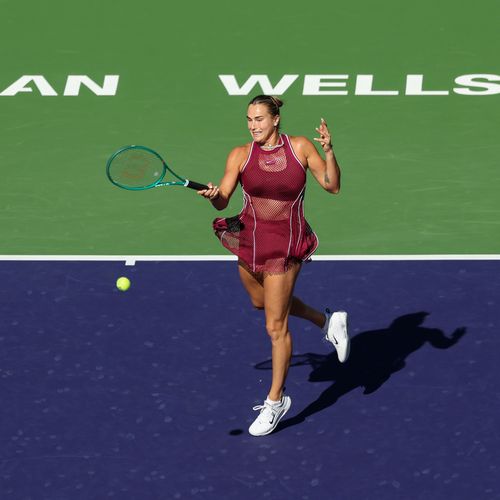
Andreeva's age is impossible to ignore, but the more revealing part of her achievement is how quickly she has learned to win matches against the best players. At 19, she became the youngest WTA Finals semifinalist since Caroline Wozniacki in 2009. She is also only the fifth teenager to advance to the semifinals since the present round-robin structure was introduced in 2003, joining a group that includes Maria Sharapova, Ana Ivanovic, Wozniacki and Coco Gauff.
She entered the year-end championship with just one victory over a Top 10 opponent in 2026. After two matches at Indian Wells, she has added two more. That is an important correction to the idea that her strong season had necessarily produced consistent results against the toughest competition. Andreeva has accumulated wins across the tour, but the Finals presents a concentrated challenge: there is no early-round cushion, and nearly every match demands the standard ordinarily associated with the final weekend of a major tournament.
Her first appearance in this event had already supplied evidence that she was ready for that challenge. Against Svitolina on Monday, she won 6-4, 6-0 in 70 minutes, taking the final seven games and saving all six break points she faced. She came out of that match with 51 tour-level victories for the season. The detail that stands out is not the numerical symmetry of two consecutive 6-0 second sets. It is the different pressure she survived before each: a seasoned former champion in the opener and one of the sport's most destructive ball-strikers next.
Andreeva became the first player in WTA Finals history to record a 6-0 set in each of her first two matches in the tournament. There is no guarantee that such dominance will carry through the knockout rounds, but the historic marker helps explain why the Sabalenka result is more than a single hot streak. Two separate opponents had opportunities to test her under conditions designed to expose weaknesses, and neither could hold back her strongest finish.
The rivalry with Sabalenka adds another layer. Before their November meeting, their previous encounter had been the 2025 Indian Wells final, where Andreeva came from a set down to defeat the then-world No. 1 and win the title. Sabalenka returned to Indian Wells in 2026 and won the event as part of her Sunshine Double, proving that the conditions suit her as well. Wednesday's match was therefore not the story of a veteran being surprised by an unfamiliar teenager. Both knew how dangerous the other could be on this court. Andreeva simply produced the more complete adjustment once the match began slipping away.
Coach Conchita Martínez has been part of Andreeva's effort to turn that talent into repeatable performance. After the Svitolina win, the teenager described wanting extra practice time to clean up her shots and feel freer on serve. Her resilience against Sabalenka demonstrated what that sort of work can look like when an important match becomes uncomfortable: make a clear technical or tactical adjustment, trust it under stress, and force the opponent to respond rather than letting the scoreboard dictate every decision.
GOATIFY
GOATIFY Tennis
Teenage milestones and elite rivalries make the WTA Finals unforgettable. Explore GOATIFY Tennis designs as the next generation takes the stage.

Tennis GOAT Golden Racket & Ball Crewneck Sweatshirt
A tennis fan design for everyday wear.
Shop Now ↗


Sabalenka still has a path—Svitolina is waiting on Friday
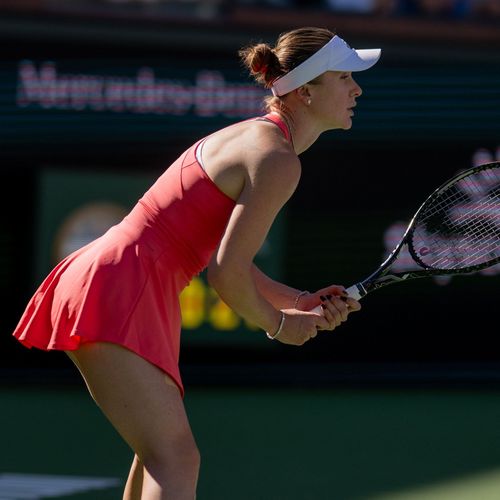
The semifinal race in Group 2 is now unusually simple in one respect and complicated in another. Andreeva has won her first two matches, claimed the group lead and assured herself of a place in the last four. Her remaining round-robin match against Karolina Muchova will still matter as a competitive test and a chance to extend her momentum. But it will not carry the same qualifying jeopardy that now surrounds Sabalenka's final group outing.
Sabalenka meets Elina Svitolina on Friday, November 13, with the second semifinal place at stake. That match is a fresh problem for a player who had looked comfortable for much of the opening set against Andreeva. Moving on from a painful scoreline can be difficult, particularly when the next opponent arrives with her own comeback win and a specific incentive to exploit any hesitation.
Svitolina strengthened her position on Wednesday by rallying from a set down to beat Muchova 3-6, 6-2, 6-2. That result kept her in the hunt and ensured the final Sabalenka-Svitolina match would carry real stakes for both players. Sabalenka has won six of their previous seven meetings, a significant head-to-head advantage, but it does not award her any games on Friday. The challenge is to convert experience and firepower into an orderly start after a result that was anything but orderly.
For Andreeva, the larger question is whether her current form is sustainable against the even narrower margins of a semifinal. Winning 11 consecutive games is spectacular, but championship runs also include matches in which the opponent serves superbly, breaks up long rallies or survives an early surge. The next stage will ask whether she can control stretches without needing the emotional jolt of a 4-1 deficit. Her impressive hold and return patterns give her reason to be confident; they are not a guarantee of an identical scoreline.
There is a practical advantage in reaching the semifinal ahead of the last group match. Andreeva can approach the final round-robin assignment with the pressure of qualification lifted and direct attention to the standard she wants to carry into the knockout stage. She cannot afford to switch off against Muchova, but the freedom to test her game against another elite opponent may prove valuable. This is especially meaningful for a teenage debutant learning the peculiar rhythm of the season-ending event.
The biggest lesson for everyone else in the field may be that Andreeva has more than one route through trouble. Against Svitolina she protected every service game and pulled away late. Against Sabalenka she fell behind, adjusted her delivery and turned the match into a sequence of rapid, one-sided points. Two opponents, two different forms of adversity, two emphatic finishes. The group winner now has to show that those adjustments are part of a reliable championship game rather than a perfect two-match burst.
The score will survive as one of the most memorable lines from this WTA Finals: 6-4, 6-0 after trailing 1-4, with 11 straight games against Aryna Sabalenka. But the deeper achievement was the change in command. Mirra Andreeva solved the pressure on her own serve, took control of the return games and kept her advantage once it arrived. At 19, she has already earned a place among the youngest semifinalists in the event's modern format.
Sabalenka still has the chance to rescue her week against Svitolina. Andreeva, meanwhile, gets to discover how far this remarkable momentum can carry her. The group stage has answered whether she belongs among the best players in the world. The semifinal will ask whether she can keep beating them when everything is on the line.
GOATIFY
GOATIFY Tennis
Shop GOATIFY tennis products from the Tennis-filtered collection scope.


Tennis GOAT Golden Racket & Ball Crewneck Sweatshirt
A tennis fan design for everyday wear.
Shop Now ↗


















