

Antonelli Wins Austin by 13 Seconds — Now Two Points Separate Him From F1 History
GOATIFYAndrea Kimi Antonelli did not leave Austin with the Formula 1 world championship trophy. He left with something almost as decisive: his ninth Grand Prix win of 2026, a 123-point advantage over Mercedes teammate George Russell and a remarkably simple assignment for Mexico. Two more points will put the title beyond reach. For a 20-year-old whose season has repeatedly made extraordinary performances look routine, the United States Grand Prix was another demonstration of control under pressure.
Antonelli won from pole on October 25, beating Ferrari's Charles Leclerc by 13.078 seconds and Red Bull's Max Verstappen by 17.485. Lewis Hamilton was fourth, Lando Norris fifth and Russell eighth. The result was not a chaotic last-lap escape. It was a race built around a clean launch, a long first stint on medium tyres and the confidence to make one pit stop work while major rivals committed to two.
The victory mattered because of the arithmetic, but it also mattered because of the contrast. One Mercedes driver appeared to have the race entirely in hand; the other spent much of the afternoon trying to understand where his pace had gone. Ferrari was fast enough to fight for second, Red Bull recovered from a difficult start, and yet nobody could force Antonelli into an error that changed the winner.
Antonelli won the first lap — then refused to give the lead away
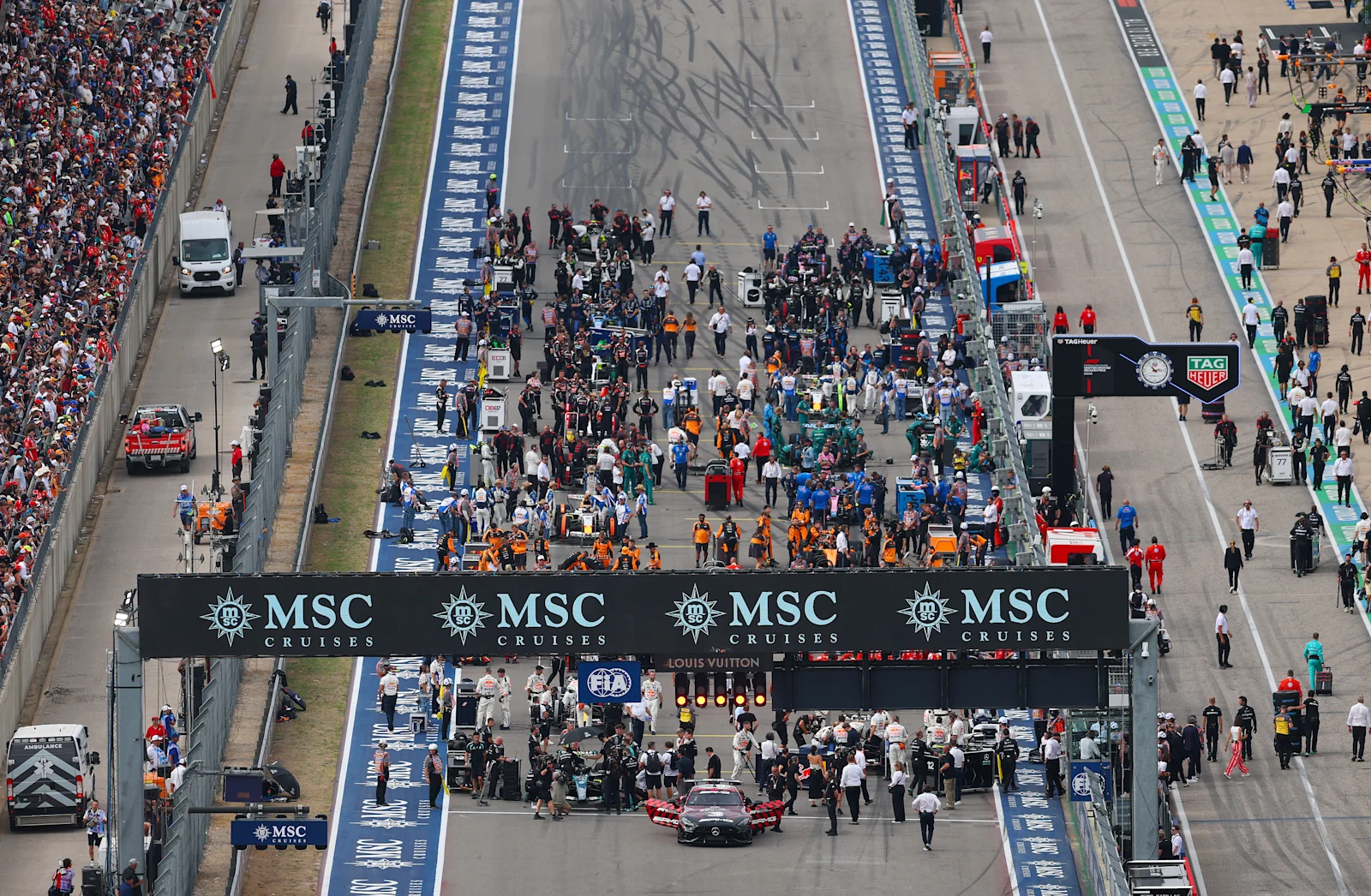
Pole position was only the beginning of Antonelli's job. Verstappen started alongside him and had Red Bull teammate Isack Hadjar close enough to complicate the opening sequence. Ferrari had shown genuine pace in practice, while the split tyre choices suggested that the field was not going to run a single shared strategy. Mercedes and McLaren selected medium tyres for the start; several leading rivals preferred the faster-warming soft compound. That created an immediate test of both launch execution and early tyre management.
Antonelli made the start he needed. Verstappen lost momentum, Charles Leclerc attacked into second and Lewis Hamilton joined the scramble behind. By the end of the opening lap the Mercedes leader was already 2.3 seconds clear. That gap was more than a headline number: it gave him the breathing room to protect his tyres, avoid dirty air and control the opening phase without spending every straight defending a position. A short Virtual Safety Car to clear debris on lap two did not undo the advantage.
Verstappen recovered second before the first lap was complete, but the Red Bull was not immediately able to convert that position into a sustained threat. By lap ten Antonelli's margin had grown to nearly three seconds. The Italian did not need a spectacular overtaking move because he had done the hardest work before his first braking zone. In a championship race where every rival was searching for an opportunity to disrupt him, maintaining clean air was a strategic asset.
The contrast with his teammate became sharper as the laps accumulated. Russell, starting sixth, became involved in a first-lap dispute with Oscar Piastri and received a five-second penalty for leaving the track and gaining an advantage. The stewards' decision hurt his track position, but his underlying pace problems proved at least as costly. One Mercedes was shaping the race from the front; the other was already trapped in a very different contest.
One stop, two compounds and a victory built on patience
The central strategic decision was not to chase the first pit window. Verstappen stopped on lap 14 for another set of soft tyres. Ferrari also brought Hamilton and Leclerc in early, putting its drivers on a path that would require a second visit to the pits. Mercedes instead extended Antonelli's opening medium-tyre stint. As the pit sequence unfolded, the leader could focus on lap-time consistency rather than reacting to every temporary change in the order.
Antonelli made his only stop at the end of lap 24 and switched to the hard compound. He rejoined in fourth, ahead of Hamilton, and still had the flexibility to run to the finish. That is the crucial difference between a successful one-stop and a desperate one-stop: the first stint must be long enough to make the final stint manageable, but not so long that the driver returns to the track without the pace to recover position. Mercedes found that balance in Austin.
Red Bull and Ferrari briefly occupied the places ahead as their pit cycles played out. Leclerc inherited the lead for a moment, but Antonelli moved past and re-established himself at the front with around 20 laps remaining. A lock-up while negotiating backmarker Carlos Sainz at Turn 12 was a reminder that even a controlled race contains hazards. It did not turn into a meaningful loss of time or a change of plan. The Mercedes continued to deliver the lap times required.
Norris offered the clearest warning about the limits of a long hard-tyre stint. McLaren kept him out, hoping track position would preserve a podium, but his tyres faded and the cars behind began to arrive. Verstappen and Leclerc both passed him late, and Hamilton eventually moved through as well. Antonelli's hard tyres, by contrast, remained sufficiently effective to protect a double-digit winning margin. The result was not simply fewer stops; it was the combination of tyre life, clean air and disciplined execution that made fewer stops faster.

Leclerc stole second from Verstappen — neither could touch the winner
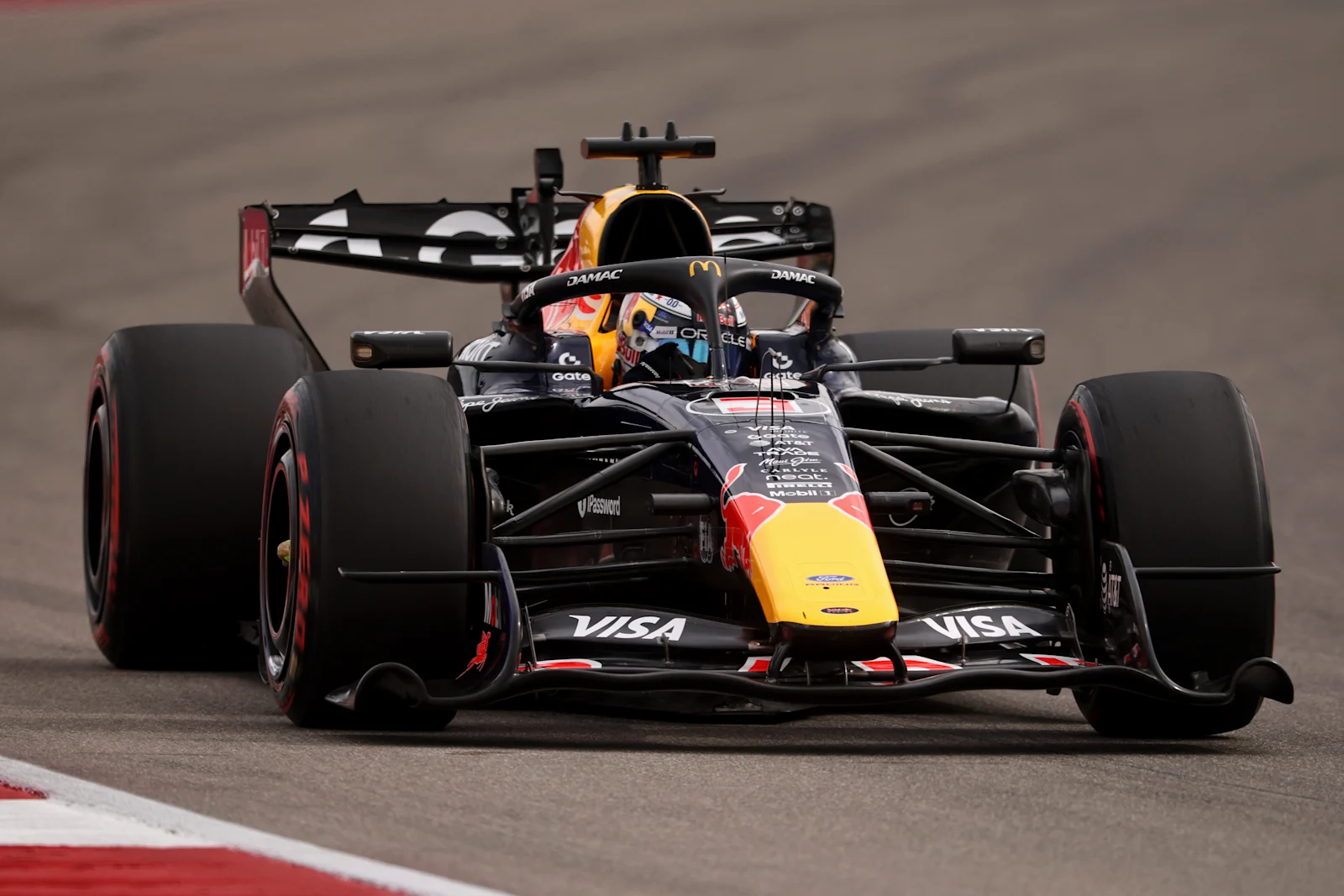
Second place became the genuine fight of the closing laps. Verstappen had recovered from his poor launch and Red Bull used an aggressive two-stop plan to try to generate enough speed to challenge Mercedes. His teammate Hadjar initially stayed out longer, then yielded when Verstappen needed a clear route through. Yet Red Bull's afternoon was complicated by handling and mapping complaints. Verstappen described the car as difficult to drive, and the team could not produce the uninterrupted chase that might have forced Antonelli to respond.
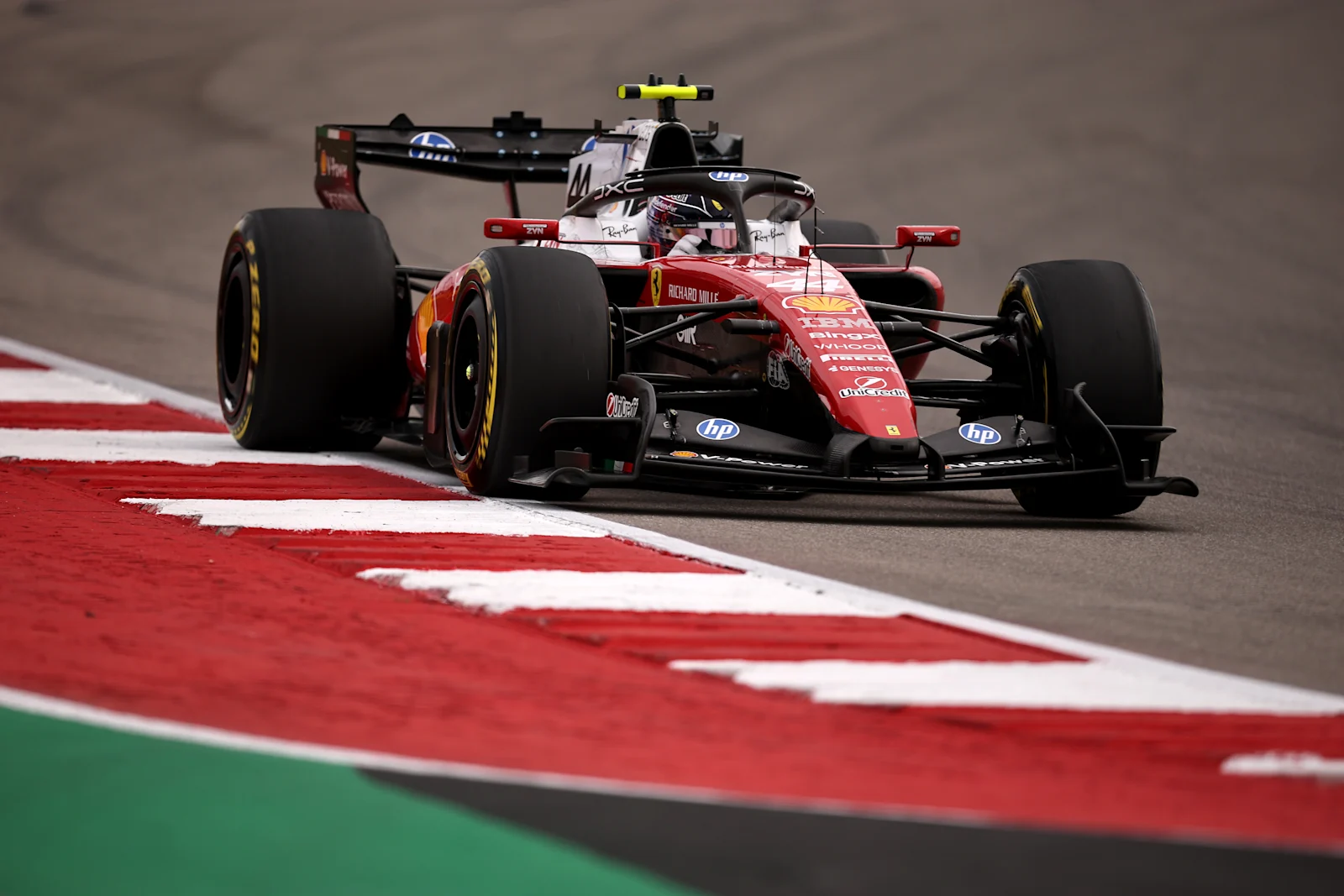
Ferrari had a different pattern: impressive speed over the weekend, but an early pit sequence that required its drivers to regain ground later. Leclerc's second stop gave him the tyre advantage to attack a crowded podium battle. Norris, running on ageing hard tyres, became vulnerable first. Verstappen moved past the McLaren at the beginning of lap 47; Leclerc followed and then pressed the Red Bull. His late overtake for second made it a second consecutive runner-up finish and underlined that Ferrari had enough pace to compete for serious points even without controlling the race.
Hamilton also gained places in the final phase and finished fourth, roughly one second behind Verstappen. A late Virtual Safety Car, caused by Valtteri Bottas stopping his Cadillac, interrupted the chase and limited the remaining opportunity to attack. That neutralisation did not create Antonelli's advantage: the Mercedes already had a comfortable lead. But it mattered for the minor places and, unexpectedly, for the championship timeline.
For Verstappen, third place extended a run of six consecutive podium finishes and showed that Red Bull can still bring speed to the front. For Ferrari, second and fourth provided a strong haul and suggested that the team had recovered from its qualifying frustration. Neither conclusion diminishes Antonelli's achievement. The winner had forced two ambitious rivals into a race in which their late bursts were aimed at one another rather than at him.

Russell's eighth and Hamilton's fourth delayed a historic coronation
The championship almost ended in Texas. Antonelli's ninth win lifted him to 365 points, 123 ahead of Russell on 242. Hamilton remained mathematically alive just one point behind Russell. With a maximum of 125 points still available across the remaining four rounds, both rivals retained a slender route to the title. Had Hamilton finished fifth instead of fourth, or had Russell slipped further back, the arithmetic might have changed. The Italian did his part; the last two contenders did just enough to postpone the celebration.
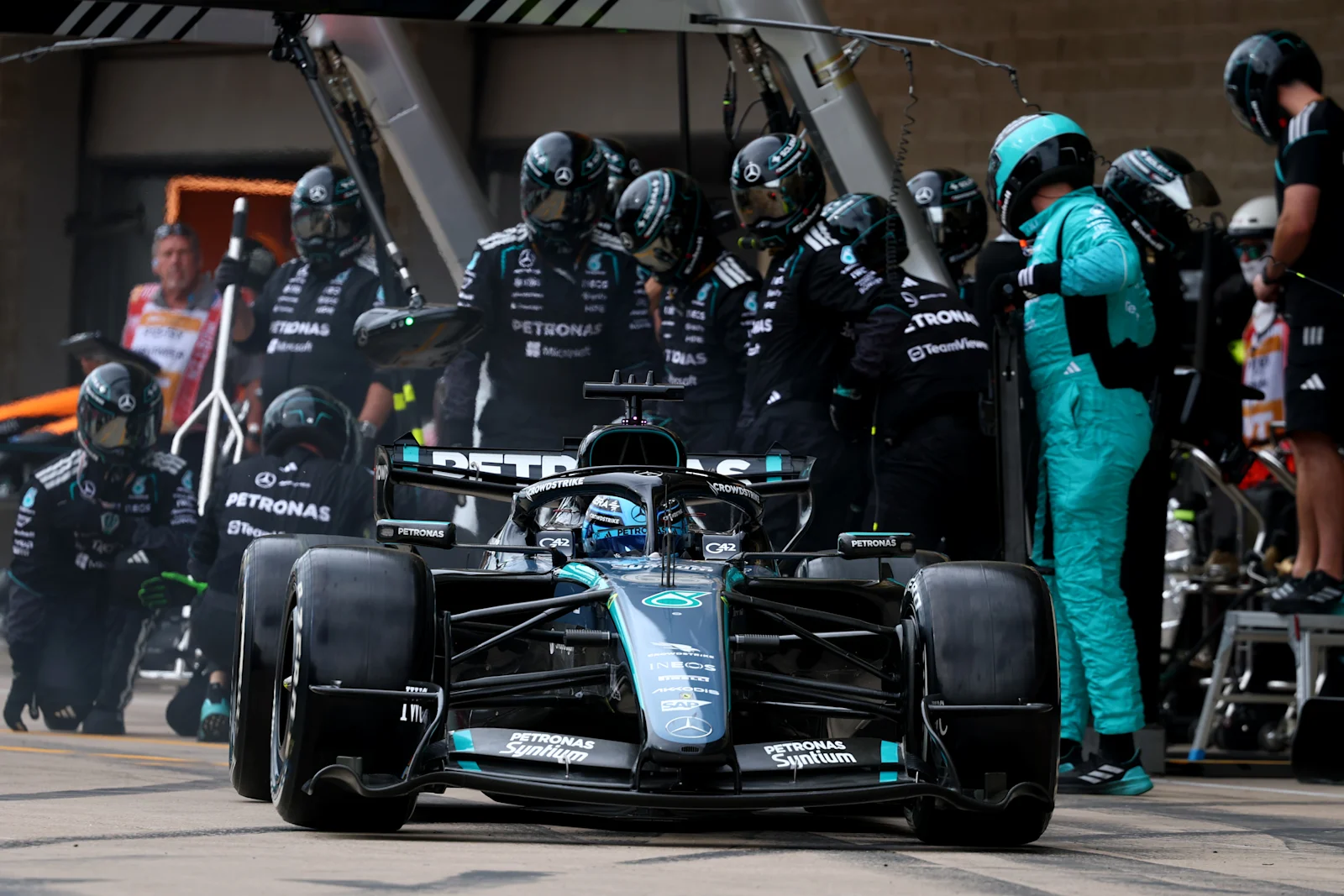
Russell's result was particularly damaging because it exposed a gap inside the same garage. He finished eighth, 54.303 seconds behind the winner on the road, and his five-second penalty had to be served at his only pit stop. He also struggled to find a way past Piastri after the penalty reshuffled the order. Russell said afterward that only a handful of laps had felt competitive and that the team needed to understand why the pace disappeared. It is one thing to lose to a teammate after a tactical gamble; it is another to be unable to explain a persistent performance deficit.
Hamilton's fourth place was almost the opposite kind of disappointment. Ferrari had enough late pace to threaten Verstappen, but the VSC blunted the closing pursuit. Fourth was not the podium he wanted, yet those 12 points kept his mathematical chance alive for another week. In a season dominated by Antonelli, that is now a narrow distinction rather than a realistic momentum shift. The title leader does not need another victory to finish the job.
The next race is the Mexico City Grand Prix on October 30–November 1. Antonelli needs only ninth place, worth two points, to guarantee the championship regardless of Russell's result. If he does it, he would become Formula 1's youngest world champion, surpassing Sebastian Vettel's record. The more interesting question may be whether he can repeat Austin's composure when the pressure changes from winning a race to completing a season-defining formality.
After Austin, the championship battle is less about whether Antonelli can outpace the field than whether anything can prevent him from collecting the small number of points he needs. Mercedes has supplied a car capable of winning; Antonelli has supplied the execution. The combination produced nine wins and a title advantage that almost no rival can now overcome.
Mexico will bring different altitude, cooling demands and tyre behaviour, so treating the next race as a ceremonial lap would be a mistake. Yet Austin offered the strongest evidence of the mindset required: take the lead when the opportunity arrives, commit to the correct strategy and resist the temptation to turn every challenge into a dramatic duel. The youngest champion in Formula 1 history may be just two points away, but his ninth victory already looked like the work of a driver who understands how championships are won.

















