

Babcock's Oilers Are 14–3–3. Toronto Has Lost Five Straight at Home.
GOATIFYMike Babcock's return to Toronto has every ingredient of an uncomfortable reunion: seven years away, a coach whose methods still divide opinion, and a former club trying to stop a collapse on its own ice. Yet the scoreboard has changed the story. Babcock comes back behind an Edmonton bench that has opened 14-3-3. The Maple Leafs, the team that fired him on November 20, 2019, have lost five straight at home and are 8-11-2 heading into Saturday's game.
There is another reason this is bigger than a coaching homecoming. Connor McDavid arrives with points in each of Edmonton's first 20 games, 49 in total, and an opportunity to turn an already extraordinary streak into another historical marker. Toronto can counter with a memory of its own: it won 7-2 in Edmonton on October 24. That result makes it impossible to write the rematch off as a simple meeting of a giant and a struggler. The tension is whether the Leafs can rediscover that level precisely when the building has stopped giving them shelter.
Babcock's Toronto years built a contender, but the playoff breakthrough never came

When Babcock arrived in 2015, Toronto was not a finished contender that needed someone to manage a parade. He signed an eight-year agreement with a franchise facing a serious rebuild. His first season ended with just 69 points and the worst record in a 30-team league. The long-term reward came in the draft lottery: Toronto selected Auston Matthews first overall in 2016, changing the direction of the franchise. It is easy to remember the coach's exit more vividly than the environment he walked into, but both belong in an accurate account of his time there.
The improvement was real. Toronto reached the playoffs in three straight seasons and put up 105 points in 2017-18, a franchise best at that point. Babcock helped establish expectations of regular-season competence for a young team growing around Matthews and a high-end offensive core. The problem was that every one of those postseason trips ended in the opening round. The Leafs became good enough to demand more from themselves without becoming the team that could deliver the first major breakthrough. A coach can be credited for the climb and still be judged on the ceiling.
Those conflicting judgments explain why this particular return is more than a routine stop on an NHL schedule. Babcock spent parts of five seasons in Toronto before being dismissed only 23 games into the 2019-20 campaign. Coaching tenures do not usually end with unanimous consent, and this one did not. His account of the experience at Friday's media availability was affectionate about the early years while acknowledging that the final stretch was far less enjoyable. He even joked about the lengthy holiday that followed. The humor may be genuine, but it does not erase the seriousness of what happened between the rebuilding promise and the eventual separation.
GOATIFY
GOATIFY Hockey
Explore GOATIFY hockey gear while looking back on the Toronto rebuild and Babcock's return.


There is also the issue of how he leads players. His long record includes a 2008 Stanley Cup with Detroit and Olympic gold with Canada in 2010 and 2014, but his coaching style has drawn strong criticism. His planned 2023 appointment in Columbus ended before he coached a game after concerns about requests for players' personal photos. The league reviewed those events before Edmonton hired him in June 2026 and said it found no basis to prohibit him from coaching. Those facts matter because an improved win-loss record cannot, by itself, settle every question about leadership and trust.
For Toronto supporters, Saturday offers a chance to revisit what the club was and what it became. The current Maple Leafs still have a captain in Matthews who was drafted at the beginning of Babcock's tenure, but the relationship between a successful rebuild and unfulfilled expectations has followed the franchise ever since. The visitor's bench now carries the man associated with that turning point. The home team has to look across the ice and deal with an immediate problem that no old argument can fix: stopping another loss.
McDavid's 20-game streak is the loudest argument for Edmonton's new direction
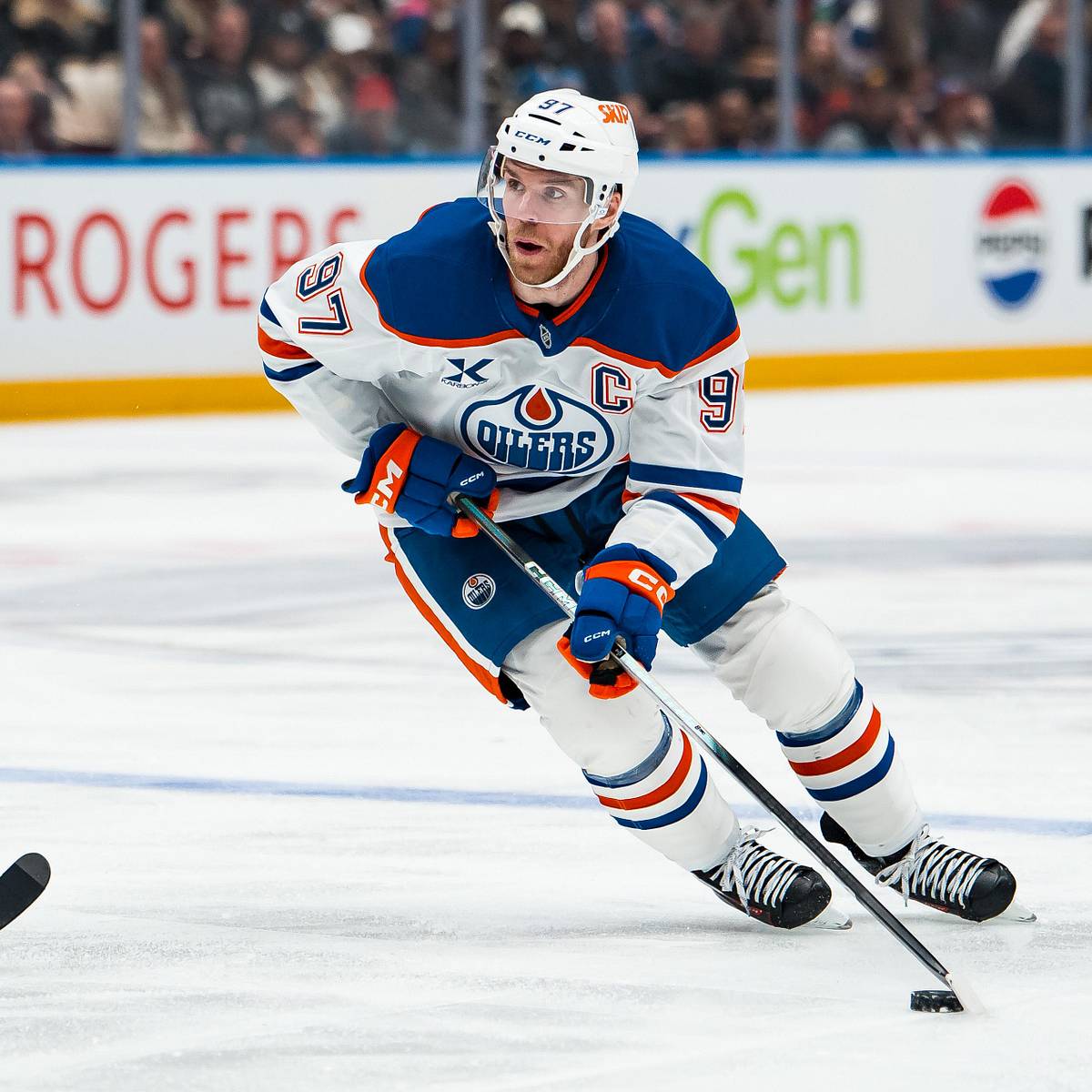
There was an obvious risk in Edmonton's coaching change. Kris Knoblauch had taken the club to consecutive Stanley Cup Finals in 2024 and 2025. When the Oilers went out in the first round in spring 2026, management made a conspicuous bet that a different voice was needed to finish the job. Babcock was not hired to guide a rebuild through patient phases. He arrived to work with a win-now core that had already experienced the pain of reaching the final stage without lifting the trophy.
Edmonton's 14-3-3 opening record is an encouraging answer, though not a definitive one. The Oilers enter Toronto on a three-game winning streak and have taken points from 11 of their previous 13 games, going 9-2-2 in that stretch. Results of that consistency suggest the early system is at least functioning well enough for an elite offense to keep taking points. What the figures cannot tell us on their own is how much improvement comes from coaching, individual brilliance, favorable finishing or underlying possession play. Assigning all the credit to Babcock would be as simplistic as ignoring his role entirely.
McDavid's contribution, however, is unmistakable. Through the first 20 games he has 11 goals and 38 assists for 49 points. More strikingly, he has recorded a point in every one of those games. Only three other players had managed a point in each of their first 20 games of a season before him: Wayne Gretzky, Mats Sundin and Dany Heatley. Gretzky reached 51 in 1983-84, Sundin reached 30 in 1992-93 and Heatley reached 22 in 2005-06. It is an extraordinary list for a player whose resume hardly required a new validation exercise.
If McDavid records a point in Toronto, he will extend the streak to 21. He is also on the threshold of 50 points before the end of his 21st game, a pace NHL history associates with Gretzky, Mario Lemieux, Bernie Nicholls and Mike Bossy. The last player to do it was Lemieux in 1995-96. History is not a substitute for a game plan, but it places the defensive burden in perspective. Toronto is not merely being asked to slow a hot scorer for one night; it is being asked to disrupt a creator who has found an answer in every game so far.
GOATIFY
GOATIFY Hockey
Browse GOATIFY hockey styles as McDavid's scoring streak takes center stage.
The coaching fit matters because Edmonton's stars were part of the conversation before Babcock took the job. At his June introduction, he described meeting McDavid, Leon Draisaitl and Zach Hyman and discussing changes the team might need to make to win. He said those talks helped convince him to return. It is not proof that every tactical choice has been embraced, but it establishes that the new coach did not arrive without input from the players most central to the club's ambitions. When a demanding coach and a veteran leadership group agree on the objective, the relationship can be productive; the real test is maintaining that agreement after adversity arrives.
Saturday's question is therefore not just whether McDavid adds a point. Toronto must decide how it wants to spend its defensive resources against his speed, passing and ability to pull coverage toward him. Aggressive pressure can disrupt a rush but create space behind the first layer; passive protection can allow Edmonton to keep possession and choose its next attack. Draisaitl supplies another elite threat that stops the Leafs from concentrating all their attention on a single player. Babcock's group has the tools to make Toronto pay for either an overcommitment or a hesitation. Whether it does is still to be played, not assumed in advance.
Toronto's five-game home skid gives the reunion an immediate competitive edge

For Toronto, the most damaging statistic is not its record against Edmonton. It is the run of results in the building where a contender should expect to draw energy. The Leafs are 8-11-2 and have lost five straight games, every one at home, by a combined 22-9 score. That is thirteen more goals conceded than scored in five appearances before the same supporters. One poor night can be explained away. Five in a row begin to affect how the next first goal, turnover or failed power play feels to everyone in the rink.
The immediate opportunity is the end of a six-game homestand. A win would not make the previous losses disappear or resolve every early-season concern, but it would stop the accumulation of bad results in the place where the team most needs confidence. A defeat would extend a very visible run at precisely the moment the head coach who was fired seven years ago returns with one of the league's best records. Those are not reasons for players to overreact; they are reasons a routine Saturday matchup will attract heavier scrutiny than its place on the November calendar might suggest.
GOATIFY
GOATIFY Hockey
Shop NHL-inspired GOATIFY gear ahead of the Oilers-Leafs showdown in Toronto.
There is a useful corrective to assuming Edmonton has this game settled before the puck drops. Toronto beat the Oilers 7-2 in Edmonton on October 24. William Nylander scored twice that night. Since then, according to Saturday's league preview, Nylander has scored three goals in eight games. The earlier result demonstrates that the Leafs have already found a way to generate dangerous attacks against this opponent. But it also means Edmonton has direct evidence of how Toronto can hurt it and an obvious incentive to adjust. A blowout from three weeks earlier is relevant information, not a prediction that it will repeat.
Matthews is the central piece of Toronto's effort to change the terms of the match. Against McDavid, the best answer is seldom to demand that your captain replicate the visitor's entire scoring output. Matthews can instead influence possession through the quality and location of his touches, draw matchups, create traffic near the crease and help keep shifts from turning into repeated Edmonton entries. If Toronto can force Edmonton to defend longer stretches rather than constantly racing downhill, the Leafs may reduce the number of situations in which McDavid's speed and vision become the defining factor.
Game management is likely to be just as important as individual highlights. In a run of home losses, teams can become tempted to manufacture a response in a single risky shift. Pinching too aggressively to keep a puck alive, chasing a hit in the neutral zone or handing an opponent a power play can feed the exact pattern the club is trying to stop. Toronto's route back to competitiveness starts with cleaner exits, connected support through the middle and patience to create good chances instead of forcing the spectacular one. Those are tactical priorities to watch, not claims about what has already happened in Saturday's game.
Babcock's reception will naturally produce noise. Some fans may remember the growth from the rebuilding years, others the first-round losses or the difficult ending. But the crowd will spend most of the game responding to what the current Maple Leafs do with the puck. If the home side starts well, the reunion may quickly become a footnote to a contest between two talented teams. If Edmonton strikes early and extends its control, the old coach's presence will become an easy symbol of the contrasting directions. The players can change that story in ways a pregame quote cannot.
Saturday's Edmonton-Toronto meeting gives three separate stories a common scoreboard: Babcock's first trip back as an opposing NHL head coach, McDavid's pursuit of a 21st straight game with a point, and Toronto's attempt to escape its five-game home slide. They overlap, but they should not be confused. One win cannot validate every choice Edmonton made in hiring Babcock, and one loss cannot rewrite the five seasons he spent building the Maple Leafs.
The clearest immediate measure is much simpler. Can the Leafs make their 7-2 win in Edmonton feel relevant again by playing a connected, disciplined game at home? Or will a 14-3-3 Oilers team take another step while its captain threatens more history? The result has not been played yet. The stakes have already been made plain by the form on both sides.
GOATIFY
GOATIFY Hockey
Shop GOATIFY NHL and hockey shirts, hoodies and stickers.


















