

Crow-Armstrong Swept Every MVP Vote. His 10.6 WAR Shows Why.
GOATIFYPete Crow-Armstrong did not just win the 2026 National League Most Valuable Player award. The Chicago Cubs center fielder received all 30 first-place votes, becoming the franchise’s first unanimous winner of the modern award and beating a finalist in Shohei Ohtani who had spent much of the past several seasons redefining what a baseball superstar could be.
The voting margin has a simple explanation, but it takes more than a home-run total to understand. Crow-Armstrong hit 45 homers, stole 41 bases, led the majors in runs and extra-base hits, and produced a defensive season that would have been exceptional even without his leap at the plate. The result was 10.6 FanGraphs wins above replacement, comfortably ahead of every other major leaguer. Few players have combined power, speed, run creation and run prevention on such a scale.
Chicago had already celebrated his Gold Glove, Platinum Glove and Hank Aaron Award before Thursday’s MVP announcement. This final trophy changed the historical frame of the season. It also shifted the Cubs’ question from whether they possess a star to what a club should build around a player who can influence a game in almost every inning.
Thirty first-place votes ended the Ohtani debate
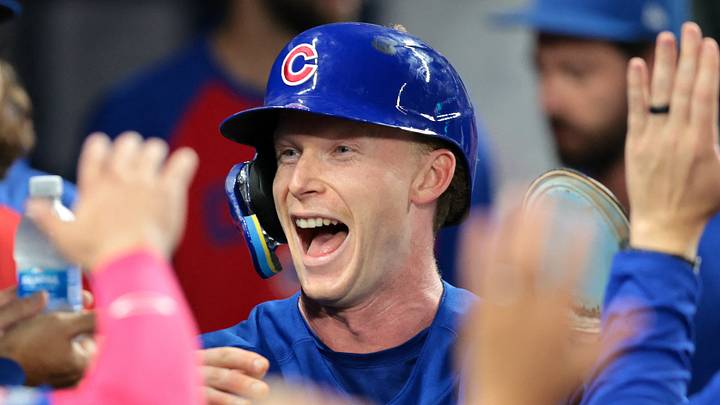
The votes arrived on Thursday, November 12, and left no uncertainty about the National League’s choice. Crow-Armstrong received every first-place selection in the Baseball Writers’ Association of America ballot, giving him 420 points. Ohtani finished second, with Milwaukee second baseman Brice Turang third. A competitive race on paper had become a consensus decision by the time voters assessed the full 162-game season.
That result carries a special distinction in Chicago. The Cubs have had great MVP seasons from Kris Bryant, Sammy Sosa, Andre Dawson, Ryne Sandberg and Ernie Banks, but no player had previously swept the first-place vote. Bryant was the franchise’s most recent winner, in 2016. Crow-Armstrong now joins that lineage at 24, an age when many players are still trying to make their best tools translate consistently against major-league pitching.
Ohtani’s presence matters to the scale of the award. The Dodgers star had won the previous two NL MVPs and entered 2026 with four career MVP trophies. He began the year as the established benchmark, not simply another finalist. Yet injuries disrupted elements of his two-way game and production, while Crow-Armstrong kept accumulating value through a remarkably complete season. The ballot is a regular-season judgment, not a verdict on who has had the better career or who might be most talented at full health.
There was another historical wrinkle: Houston’s Yordan Alvarez swept all 30 first-place votes in the American League. Both MVP awards were unanimous, emphasizing how clearly voters separated the two winners from the rest of their respective fields. But their profiles could hardly be more different. Alvarez overwhelmed opponents with the bat, while Crow-Armstrong supplied a broader package of offense, baserunning and center-field defense.
GOATIFY
GOATIFY Baseball
Thirty MVP votes made the Cubs' star impossible to overlook. Browse GOATIFY Baseball designs while celebrating a standout season.


White Baseball GOAT Sticker
A white baseball GOAT decal for your bottle, laptop or game-day gear.
Shop Now ↗


White Baseball GOAT Dad Hat
A white baseball GOAT design for ballpark days and everyday fan style.
Shop Now ↗
The Cubs’ achievement also extends beyond the trophy itself. A young player who arrived as a defensive prospect is now the defining player on a roster that led baseball in runs scored in 2026. Awards can sometimes feel like an individual story disconnected from team results. Here, the connection is unusually direct: a leadoff hitter generating extra-base damage and a center fielder turning potential doubles into outs are both valuable to the same collective goal.
For Crow-Armstrong, the most important consequence may be psychological. He has described competing against his own standard rather than chasing Ohtani’s reputation. The unanimous vote suggests that approach delivered something more persuasive than a narrow statistical lead. It delivered a season with no obvious weakness and little room for dissent.
The 45–41 season was built on better decisions at the plate
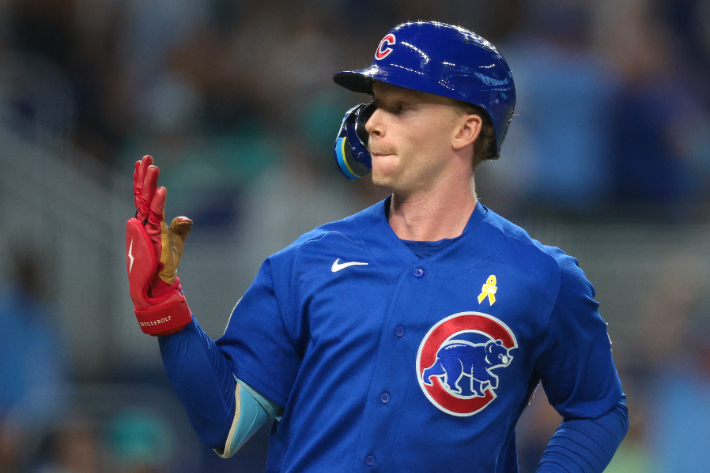
A 40-homer, 40-steal season is already rare; Crow-Armstrong finished with 45 home runs and 41 steals. He became only the seventh member of Major League Baseball’s 40-40 club and the first player in Cubs history to reach both thresholds in the same year. It is a combination that puts unusual pressure on an opponent: a pitcher cannot ignore the home-run threat, and a defense cannot relax when he reaches base.
Power alone would have made his year noteworthy. His 45 homers tied Philadelphia’s Kyle Schwarber for the major-league lead, and he established a Cubs single-season record for a left-handed hitter, passing Billy Williams’ 42 in 1970. He added 31 doubles and eight triples. His 84 extra-base hits and 357 total bases led all of baseball. Those numbers represent more than a handful of highlight swings; they describe sustained damage across every category of extra-base offense.
What makes the line harder to explain is his role in Chicago’s batting order. Crow-Armstrong spent significant time leading off, a position often expected to prioritize reaching base and scoring rather than driving runners home. He nevertheless finished with 107 RBIs alongside 119 runs scored, the latter leading the majors. That combination is a sign of how frequently he could create an advantage himself, whether by putting a ball over the fence, taking an extra base or making the next hitter’s opportunity better.
The full slash line was .280/.372/.570, with a .942 OPS that led the National League. Those figures matter because they show a player who developed beyond the stereotype of a speed-first center fielder who occasionally runs into one. He was getting on base more often and producing harder contact when he did swing, converting athletic upside into an offensive approach opponents had to take seriously every night.
GOATIFY
GOATIFY Baseball
From 45 homers to 41 steals, 2026 had no shortage of fireworks. Explore GOATIFY Baseball fan gear for every big moment.


White Baseball GOAT Sweatshirt
Rep baseball’s greatest with a white GOAT graphic sweatshirt.
Shop Now ↗
Gold Baseball GOAT Sticker
A gold baseball GOAT decal for your bottle, laptop or game-day gear.
Shop Now ↗

The change in plate discipline was especially revealing. Crow-Armstrong drew 83 walks in 726 plate appearances in 2026. Across his first three major-league seasons combined, he had drawn 53 walks in 1,076 plate appearances. His walk rate rose from 4.5 percent in 2025 to 11.4 percent in 2026. That improvement gave him more opportunities to use his speed, forced pitchers to come into the strike zone and helped make his extra-base production more sustainable than a pure hot streak might suggest.
Several individual games showed what the season looked like at full voltage. He hit for the cycle, produced a three-homer game and delivered both a leadoff and walk-off home run in one contest against the White Sox. The 40th stolen base in September brought a milestone that had seemed improbable for a Cub until he made it happen. Each highlight stood on its own, but together they illustrate the larger story: different skills kept deciding games on different nights.
The 40-40 club is crowded with famous names, yet Crow-Armstrong occupied an even smaller group. He joined Ohtani in 2024 and Alfonso Soriano in 2006 as the only players to record at least 45 homers, 40 steals and 30 doubles in one season. That is not a guarantee of another MVP year. It is proof that his particular 2026 blend has very few historical comparisons.
The glove made the 10.6-WAR season impossible to ignore
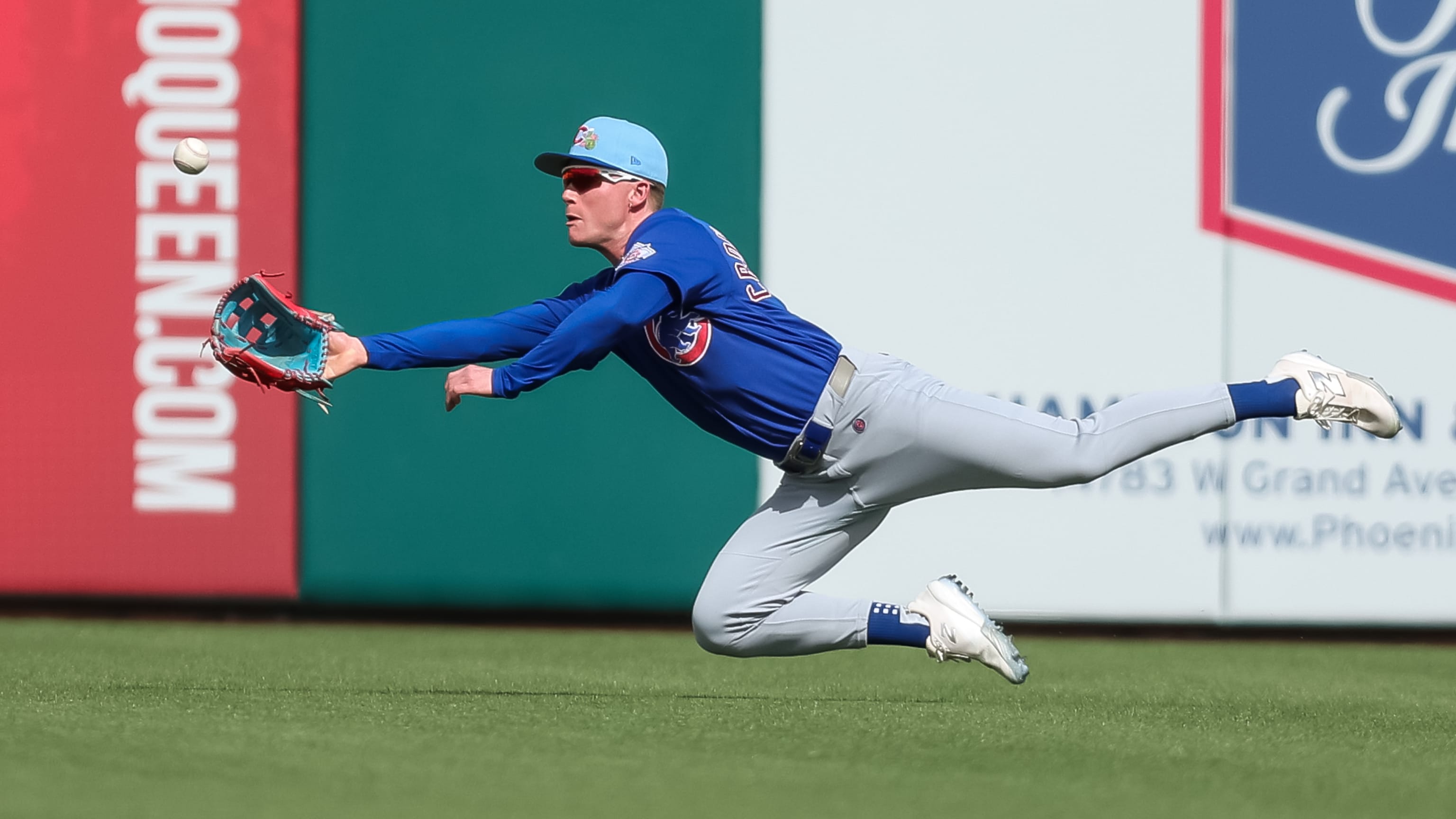
When the conversation shifts from homers and steals to total value, Crow-Armstrong’s defense is what separates this MVP from an ordinary breakout. He finished with +26 outs above average, tying Byron Buxton’s 2017 total for the highest single-season mark by an outfielder in the Statcast era. His +26 fielding run value was also a Statcast-era outfield record. Chicago did not need him to hit to appreciate what happened when an opposing batter sent a ball toward center.
Center field is an especially demanding position because the player must cover both gaps, manage the ball off the wall and make rapid reads on trajectories that change in wind and daylight. Crow-Armstrong’s range affects how pitchers can attack hitters. Balls that would test another club’s outfield may become routine outs. That is value that never shows up beside an RBI in a box score, but it changes the number of opponents who reach base and the number of innings that escape control.
His 10.6 FanGraphs WAR was the highest mark in the majors, a full 3.6 wins ahead of Kansas City’s Bobby Witt Jr. at 7.0. The gap between first and second was a rare one in the historical data, while the figure itself ranked second among Cubs position-player seasons to Rogers Hornsby’s 11.0 in 1929. Different WAR systems use different defensive and replacement-level calculations, so a single decimal should not be treated as an absolute ranking across eras. Even with that caveat, the separation from the 2026 field was substantial.
GOATIFY
GOATIFY Baseball
Crow-Armstrong changed games with his glove as well as his bat. Shop GOATIFY Baseball shirts, caps and stickers for all-around fans.


Gold Baseball GOAT Dad Hat
A gold baseball GOAT design for ballpark days and everyday fan style.
Shop Now ↗

Gold Baseball GOAT Sweatshirt
Rep baseball’s greatest with a gold GOAT graphic sweatshirt.
Shop Now ↗That distinction explains why a Gold Glove and a Platinum Glove belong in the MVP discussion rather than in a separate paragraph about defensive awards. The Cubs also took home the National League Team Gold Glove. An elite center fielder can make the pitchers in front of him look better and help the corner outfielders cover more manageable territory. Chicago’s strong team defense was not attributable to one player alone, but Crow-Armstrong was an anchor of the entire structure.
There is a longer development story behind the numbers. Chicago acquired Crow-Armstrong from the New York Mets in the 2021 deal involving Javier Báez, betting that an exceptionally talented prospect would eventually turn into a useful major leaguer. At first, the most obvious selling point was the glove. By 2025 he had become a 30-30 player and Gold Glove winner. In 2026 he took the much harder step from dangerous all-around contributor to the sport’s most valuable regular-season position player.
Those leaps create expectations that need to be handled carefully. A 10-win season is an extraordinary ceiling, not a sensible annual baseline. Home-run totals can move, defensive metrics fluctuate, and every player has seasons when health or mechanics work against him. The encouraging sign for the Cubs is not simply that Crow-Armstrong hit 45 homers once; it is that improved swing decisions, elite athleticism and defensive instincts give him several ways to remain valuable even when one skill cools.
Chicago must now look toward 2027 with more than individual hardware in mind. The franchise has a cornerstone at a premium defensive position, but it also faces roster decisions around veteran outfielders and how best to surround its MVP with reliable run producers and pitching. Fans will remember the unanimous vote. The front office’s job is to turn the player’s prime years into opportunities for a deeper postseason run, rather than assuming the next historic season will arrive automatically.
Crow-Armstrong’s 2026 was the unusual MVP case in which a simple headline and a detailed analysis lead to the same answer. Every first-place voter chose him because his season was exceptional at the plate, on the bases and in the field. Forty-five home runs, 41 steals, a .942 OPS and elite center-field defense did not compete for attention; they reinforced one another.
The first unanimous MVP in Cubs history has also reset the standard of success around Wrigley Field. The next challenge is not another award ballot. It is maintaining the changes that made this season possible, translating individual value into more October wins and navigating an offseason in which Chicago must build with urgency around a 24-year-old superstar.
His season has a place in the franchise’s history already. Whether it becomes the start of a sustained championship window depends on the supporting cast and on Crow-Armstrong’s ability to keep improving from a height most players never approach.
GOATIFY
GOATIFY Baseball
Shop GOATIFY baseball shirts, hoodies and stickers.

White Baseball GOAT Dad Hat
A white baseball GOAT design for ballpark days and everyday fan style.
Shop Now ↗White Baseball GOAT Sticker
A white baseball GOAT decal for your bottle, laptop or game-day gear.
Shop Now ↗White Baseball GOAT Sweatshirt
Rep baseball’s greatest with a white GOAT graphic sweatshirt.
Shop Now ↗


















