

Charlo Called Tszyu–Lara 'Stupid.' His Own Comeback Is on the Line.
GOATIFYJermell Charlo has not thrown a competitive punch since September 2023, but he has already landed a verbal one on the biggest fight of his comeback night. The former undisputed super-welterweight champion has dismissed Tim Tszyu's December middleweight title opportunity against Erislandy Lara, questioned the Australian's credentials and predicted the Cuban veteran will stop him. The criticism is unusually combustible because Charlo and Tszyu have unfinished business of their own.
There is a catch. Before Charlo gets to judge anyone else's place in a championship queue, he must beat Brock Jarvis in the ten-round co-main event at Cbus Super Stadium on the Gold Coast. The December 13 local-time show, advertised for December 12 in the United States, puts two very different tests on the same bill: Tszyu trying to recover a world title against a seasoned champion, and Charlo trying to recover his standing after three years away. The trash talk sells both fights. The ring will decide whether any of it survives contact with reality.
Charlo's Tszyu Verdict Has History—and an Obvious Blind Spot

Jermell Charlo's latest attack on Tim Tszyu is not an isolated prediction tossed out during an ordinary fight week. The former undisputed champion and the Australian contender have spent years appearing on one another's short lists without settling the matter between the ropes. That history changes the tone when Charlo questions Tszyu's right to challenge WBA middleweight champion Erislandy Lara. It sounds less like a detached ranking argument and more like a man evaluating the rival whose name has followed him through his absence.
In a November 18 media-roundtable account, Charlo dismissed the matchup as a bad piece of matchmaking, predicted that Lara would stop Tszyu and suggested the challenger was chasing a belt rather than building an authentic championship legacy. Those are Charlo's opinions, not established verdicts about either fighter's merit. The distinction matters. A fighter can have a persuasive scouting read and a personal reason for delivering it with unnecessary contempt at the same time. Charlo has both an unusually knowledgeable eye and a considerable stake in the narrative.
Tszyu's recent résumé is more complicated than the insult allows. He endured painful setbacks after his earlier run at junior middleweight, including battles that interrupted his rise toward the sport's elite. In July 2026 he then defeated Errol Spence Jr by unanimous decision over 12 rounds in Sydney. The official scorecards read 118–110 and 117–111 twice. That victory did not transform Tszyu instantly into the division's most proven middleweight, but it provided a meaningful answer to whether he could still operate at a high level under major-event pressure.
Charlo is entitled to criticize the quality of that fight. Spence had been inactive for years, was moving beyond his traditional welterweight territory and announced retirement afterward. Looking less than peak Spence is not a shocking observation. Yet applying that caveat selectively would be convenient for Charlo, who is about to return after a similarly lengthy disappearance. If Spence's rust diminishes the value of Tszyu's win, Charlo must also confront what prolonged inactivity could do to his own combinations, reactions and stamina.
An actual title challenger is not chosen by a mathematical equation that awards the next opportunity to whoever has accumulated the largest number of spotless years. Rankings, promotional alliances, availability, commercial value, weight-class moves and previous achievements all influence which fight is made. Fans are free to debate that system. The more useful boxing question is whether the chosen contender is capable of competing with the champion, not merely whether somebody else might have been awarded the booking instead.
GOATIFY
GOATIFY Boxing
Boxing history makes every comeback personal. Explore GOATIFY boxing shirts, hats and stickers for fans of the sweet science.


Tszyu has also resisted Charlo publicly. At a Gold Coast promotional appearance earlier in November, he mocked the American's position as the undercard attraction while he himself headlines the stadium show. The needle is entertaining because each can point to a genuine advantage: Charlo holds the more decorated junior-middleweight history, while Tszyu has recently completed a difficult 12-round contest. Neither fact settles how a direct meeting would unfold in December or at some later date.
Most importantly, the card provides a reality check for both men. Tszyu has the harder championship assignment on paper against Lara, while Charlo's opponent Brock Jarvis possesses a punching record that makes a careless comeback dangerous. A verbal winner will be crowned well before the first bell. A sporting winner has to make weight, absorb pressure, recognize live speed and make tactical adjustments. Those requirements cannot be argued into existence at a microphone.
The old rivalry is therefore only part of the story. Charlo's criticism raises the stakes for Tszyu, but it also creates a standard by which Charlo himself will be judged. A returning former champion should welcome that scrutiny. If he wants the public to treat his words as a current champion's authority rather than nostalgia, Jarvis is the first person he must convince.
Lara Can Make This a Bad Fight for Tszyu Without Charlo Being Right About Everything
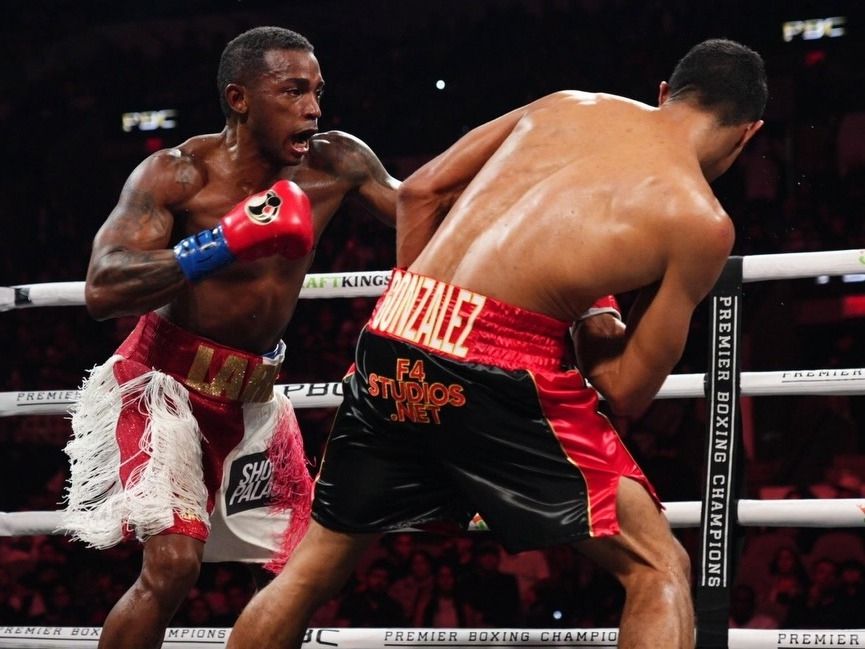
The fairest part of Charlo's argument concerns the opponent, not the insult. Erislandy Lara has spent a long career turning ambitious challengers' aggression into their own inconvenience. He is a veteran southpaw who rarely needs to win exchanges in spectacular fashion to control them. Lara makes opponents reach for a target that is already moving, then places the straight left hand into the space they have just opened. That tactical puzzle remains serious even when the athlete setting it is in his forties.
Lara's December 2025 defense against Johan Gonzalez offered a practical reminder that his championship is not simply a souvenir of a better era. He scored knockdowns in the first and final rounds on the way to a wide unanimous decision, maintaining distance and countering when Gonzalez tried to close the gap. The performance did not prove the champion is immune to decline, and one fight cannot erase the normal questions that accompany an aging fighter. It did show that anyone expecting an automatic collapse is making a dangerous assumption.
Tszyu's natural approach supplies both an opportunity and a risk. He is at his best when his feet put him near enough to throw hard, compact punches without chasing aimlessly. His front-foot pressure can force a technically gifted opponent to work at a pace that becomes uncomfortable over 12 rounds. At the same time, a fighter who follows Lara in straight lines will spend a lot of the night entering behind his own defensive mistakes. The Cuban has built much of his success around recognizing exactly that pattern.
The lead-foot battle could be decisive. An orthodox fighter approaching a southpaw wants angles for the right hand, rather than endlessly running the rear glove into the champion's guard. Tszyu must vary his entries, touch the body and avoid letting Lara dictate the center with feints. Firing every right hand at maximum force would make his intentions easier to read. A steady mix of jabs, body work and controlled steps is more likely to create repeatable scoring opportunities than waiting for one dramatic sequence.
GOATIFY
GOATIFY Boxing
Whether you favor precision or pressure, celebrate the skill behind championship boxing with GOATIFY fight-inspired gear.
Lara has questions of his own. At his age, every bout asks whether he can sustain the foot movement, concentration and late-round recovery that once came more readily. If Tszyu can keep him working along the ropes, prevent clean escapes and make him reset repeatedly, the champion may have to fight in exchanges he would ordinarily sidestep. That does not guarantee a stoppage or even a comfortable decision for the Australian. It simply identifies a plausible path that the sweeping prediction from Charlo ignores.
The venue further complicates the calculus. An Australian crowd at Cbus Super Stadium will create noise whenever Tszyu moves forward, but judges are supposed to score clean effective punching and ring generalship, not volume alone. The challenger cannot count crowd reactions as landed punches. Equally, Lara cannot assume retreat automatically equals control if Tszyu is closing the exits and landing to the body. The correct tactical answer will be visible in where the exchanges happen and who ends them in position.
Both men are also fighting above the weight range that defined portions of their earlier careers. Tszyu is trying to make his middleweight chapter feel permanent after the Spence victory, while Lara must guard an existing middleweight title against a younger athlete with financial and sporting reasons to press hard. The bout represents an authentic championship challenge even if one disapproves of the way it was negotiated. There is a meaningful difference between saying the champion should be favored and saying the contender has no credible way to win.
Charlo may turn out to be an excellent forecaster. Lara could neutralize Tszyu's offense for long stretches and make the younger man's aggression increasingly desperate. But that is an argument about footwork, timing, angles and stamina, not a moral judgment about who deserved the invitation. Until December, the prediction deserves analysis rather than unquestioning applause.
Brock Jarvis Is Not Merely the Man Standing Between Charlo and Tszyu

On the official schedule, Jermell Charlo versus Brock Jarvis is a ten-round middleweight co-main event on December 12 in the United States and December 13 at the Gold Coast venue. It is listed on the same show as Lara–Tszyu, with DAZN advertised for the American broadcast. That is a significant distinction: Charlo's return is an actual scheduled fight, whereas any future clash with Tszyu remains an attractive idea rather than a booked contest. Boxing has a habit of promoting the next opponent before the current one has been beaten. Jarvis is being given exactly that chance to upset the projection.
The basic records explain why Charlo enters with a reputation advantage. The former undisputed champion is listed at 35 wins, two losses and one draw with 19 knockouts. Jarvis is 23-2 with 21 knockouts, a dramatically higher proportion of stoppages against the opponents he has faced. Their win columns do not describe equivalent opposition. Charlo's best years came under elite championship pressure; Jarvis's hardest tests are better known for exposing weaknesses than for establishing him as a world-level force.
Jarvis lost to Liam Paro in the first round in 2022 and was stopped by Keith Thurman in three rounds in 2025. Both defeats matter because they demonstrated what can happen when his attacking instincts meet seasoned opponents who can time him. They are not proof that he will lose to every experienced boxer. Fighters change, preparations improve and a powerful right hand is still a problem regardless of what happened in a previous stadium. A three-year layoff for Charlo prevents any fair assessment from treating the American as his 2022 version by default.
Jarvis has also expressed the scale of the opportunity. Defeating a name associated with the undisputed junior-middleweight championship would do far more for his career than adding another win over an unranked opponent. That incentive should produce a boxer willing to take chances and increase the pace, particularly if Charlo spends early rounds testing his range. The Australian will have crowd support, a familiarity with the venue environment and the knowledge that nearly every prediction in his favor must account for his previous high-profile defeats.
GOATIFY
GOATIFY Boxing
Jarvis has a puncher's chance, and December has the spotlight. Shop GOATIFY boxing apparel for fans following the comeback.
Charlo's best technical answer would likely begin with discipline rather than the ferocity of his interview. The sharp jab, compact counters and ability to adjust to an opponent's rhythm helped him build his titles. Against an opponent with Jarvis's knockout record, standing still to prove toughness would be a poor substitute for intelligent distance management. A returning fighter needs to know whether his timing still holds when an aggressive boxer changes speeds and attacks the body. Training footage cannot replicate those reactions in a sanctioned contest.
Equally, Jarvis should not be allowed to convert every exchange into a clean power contest. If he charges from too far out, Charlo's counterpunching experience can make the Australian pay even without the explosiveness he showed at his peak. A disciplined first half could draw the riskier entries the favorite wants. If Charlo starts slowly or becomes too upright, Jarvis can try to make the veteran defend in sustained sequences, especially near the ropes. Neither game plan is guaranteed. The question is which boxer can impose it before mistakes accumulate.
The distance is another detail worth refusing to overlook. Ten rounds offer enough time to expose conditioning weaknesses without the full championship limit of twelve. Charlo has not recently proved he can maintain a high output against a live professional opponent for that span. Jarvis, meanwhile, must demonstrate he can retain effectiveness after his early attacks have been studied. If the fight reaches the late rounds, a former champion's craft and a puncher's physical freshness could pull in opposite directions.
A comfortable Charlo victory would validate the first stage of the comeback, not automatically restore a ranking, belt or future Tszyu booking. A difficult win would be evidence that further tuning is required. A loss would turn his aggressive November commentary into an awkward historical footnote. That is precisely why Jarvis deserves attention before the microphones start asking about the next rivalry.
Three Years After Canelo, Charlo Must Rebuild the Evidence Behind His Name

To understand why Jermell Charlo is so eager to reclaim the conversation, begin with the last time he actually fought. In September 2023 he jumped from his established junior-middleweight territory to challenge Canelo Álvarez at super middleweight. The financial and historical attraction was obvious: a former undisputed champion could test another undisputed champion across two divisions. The result was sobering. Canelo controlled the fight, scored a seventh-round knockdown and won by unanimous decision. Charlo had risked his undefeated-in-years aura and emerged without the headline victory.
That defeat should not erase what came before it. At 154 pounds, Charlo unified the belts and established himself as an elite operator who could adjust during difficult contests. The move all the way to 168 pounds against one of boxing's most experienced stars was a different athletic problem. It would be simplistic to use a decision loss at that weight to declare he was never a legitimate champion. It would be equally simplistic to assume the reputation he built before 2023 guarantees his present performance at 160 pounds.
Time changes the equation. Three years is a long stretch for any professional athlete to go without verified competition, and it is especially consequential in a sport where a split-second adjustment can decide the outcome of an exchange. Sparring offers some answers, and training camp can rebuild conditioning, but neither subjects a boxer to the exact combination of risk, adrenaline and scorekeeping that arrives on fight night. When Charlo says he has faced many styles, his record supports that experience. Whether he can execute those solutions at today's speed is still untested.
GOATIFY
GOATIFY Boxing
Belts are earned in the ring. Explore GOATIFY boxing-themed hoodies, tees and accessories as Charlo seeks his return.
The media roundtable also revealed a more personal source of frustration. Charlo said that the difficulties surrounding his twin brother Jermall have affected how people view their family name and that some fans mistakenly treat their separate careers as interchangeable. The distinction is essential. Jermell is the former undisputed junior-middleweight champion preparing to face Jarvis. Jermall is a different boxer with his own career and controversies. Criticism directed at one should not be carelessly attributed to the other, even when the surname and public perception overlap.
Charlo additionally criticized sanctioning bodies and the handling of his previous title status. Those are complaints he made, not findings that an organization behaved improperly. Boxing's alphabet-belt structure can be opaque to viewers, with rules around vacancies, mandatory challengers and special statuses that are not always intuitive. But a fighter's unhappiness with an administrative decision cannot itself establish that a current belt holder or challenger is illegitimate. A better way to rebuild authority is to win fights under the rules actually in force.
Another complication is the weight. Charlo was most accomplished as a 154-pound fighter; he fought Canelo at 168 and is listed to return against Jarvis at the middleweight limit. That places him in a new competitive setting rather than an uncomplicated resumption of his old championship run. The extra pounds could help him avoid a difficult cut or alter the way he handles opponents physically. They do not automatically preserve the power, movement and stamina he once displayed at a different weight.
The relationship between Charlo and Tszyu is attractive precisely because there is an unsettled sporting argument. They occupied overlapping championship conversations when both were among the most talked-about names around junior middleweight, yet the collision never materialized. A shared stadium card keeps that question alive. If both look sharp in December, promoters will have a compelling storyline. The winner of Lara–Tszyu would also hold a middleweight belt, making the future possibilities even more commercially interesting. None of this means a Charlo–Tszyu date, division or contract has been agreed.
Charlo is right about one principle: championship credibility ultimately has to be demonstrated between the ropes. The irony is that it applies to his own return as thoroughly as to Tszyu's shot. He can talk as an accomplished former champion, and listeners should respect those achievements. His claim to current championship relevance, however, can only be updated by what he does against Jarvis. On the Gold Coast, the simplest comeback message will be the one delivered without a microphone.
Charlo's strongest argument is his history at 154 pounds: he was a genuine undisputed champion, and Tszyu never got to settle that rivalry in the ring. His weakest argument is the timing. In late 2026, a three-year absence gives him no more automatic entitlement to a championship opportunity than the challenger he is criticizing.
December's Gold Coast card offers two answers, not one. Lara can prove whether age has meaningfully narrowed his margin for error against Tszyu, while Jarvis can expose whether Charlo's old authority still translates into live rounds. If both Americans win, a future Charlo–Tszyu grudge match becomes harder to sell immediately; if Tszyu and Charlo both win, it becomes a natural talking point, not an agreed booking. For now, the most interesting thing about Charlo's prediction is that his own return is every bit as uncertain.
GOATIFY
GOATIFY Boxing
Shop GOATIFY boxing shirts, hoodies, caps and stickers for fight fans.


















