

Smart's Punch Costs Houston Three Games. Sheppard Gets the Next Test.
GOATIFYHouston won a game against Golden State on Wednesday, but it lost a rotation guard for three more. The NBA suspended Marcus Smart for three games without pay on November 12 after ruling that he punched Warriors big man Charles Bassey in the face during the Rockets' 115–108 victory. A flagrant-2 foul and an ejection ended Smart's night immediately. The league's decision now keeps him out of Houston's next three games.
That changes the question from who was right in a heated third-quarter exchange to how a 9–3 Rockets team operates without a guard recruited specifically for difficult defensive assignments. The sequence that provoked the confrontation remains disputed between the two camps. The disciplinary outcome does not: the league reviewed the punch, stated that it made facial contact, and imposed a penalty that extends well beyond one emotional possession.
Smart is due to miss home action against the Utah Jazz on November 13 and road contests with Washington and Miami before he becomes eligible to play again. Reed Sheppard and Bruce Thornton are potential beneficiaries in minutes, but extra court time does not automatically replace Smart's defensive communication or the trust he shares with coach Ime Udoka. Houston has a short, revealing experiment ahead of it.
What the NBA actually punished — and when Houston loses Smart
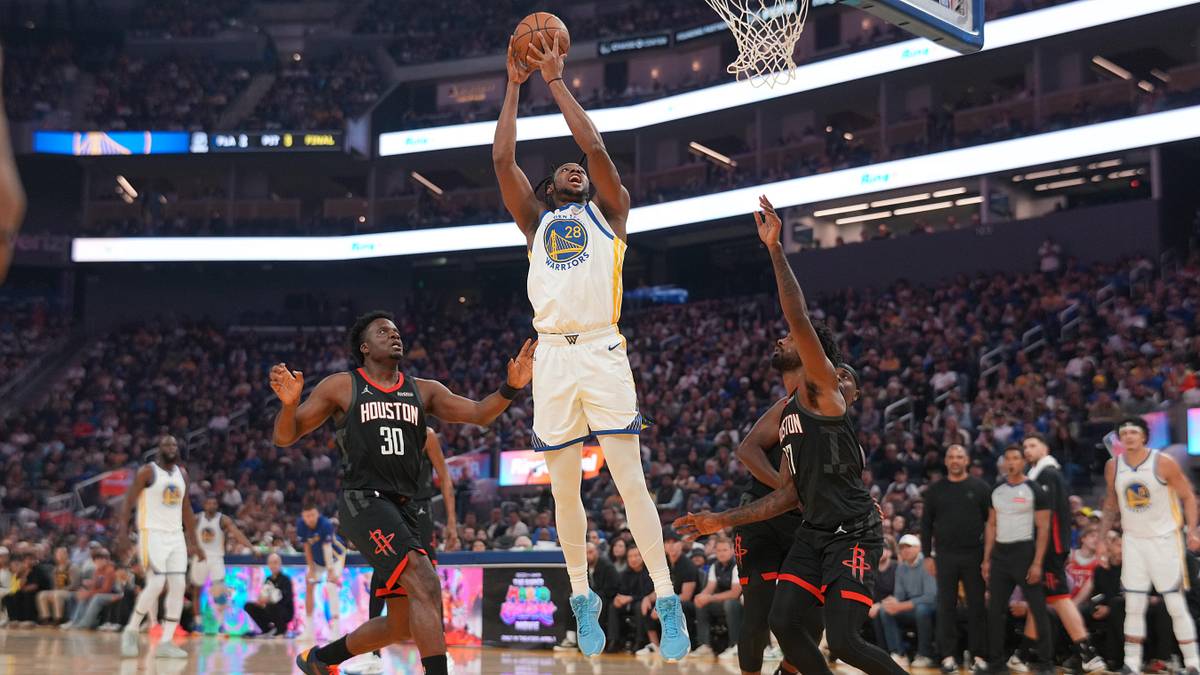
The defining moment arrived with 21 seconds left in the third quarter at Toyota Center. Smart and Bassey had been contesting positioning around the basket. As the possession turned and players moved toward the opposite end, their contact carried into a confrontation. Smart followed Bassey, the two exchanged words, and Smart swung at the Warriors forward-center. Other players moved between them before the dispute could grow into a larger fight.
Officials reviewed the incident and assessed a flagrant foul 2, which meant an immediate ejection. Houston continued without Smart and ultimately won 115–108. The result mattered in the standings, yet it was not the determining fact in the subsequent disciplinary process. The NBA's statement on Thursday described a punch that made contact with Bassey's face; the league did not leave the matter at the in-game penalty.
Smart had scored six points on two successful three-point attempts in roughly 17 minutes. He added two rebounds and one assist, a modest box-score line that understates why Houston wanted him. The veteran is commonly asked to absorb assignments, pressure the ball and help direct less experienced teammates. His absence from the final stretch against Golden State offered only a preview of the additional minutes now unavailable to Udoka.
The official three-game suspension is without pay. It starts with the Jazz's visit to Houston on Friday, November 13. The following games are in Washington on Sunday and Miami on Monday. That sequence is important because the Rockets cannot solve the absence by changing lineups once: the coaching staff must prepare a workable rotation for three opponents, two venues and a compact travel window.
GOATIFY
GOATIFY Basketball
Smart's punch made the league's three-game penalty unavoidable. Browse GOATIFY Basketball designs while Houston prepares to face Utah without him.

Yao Ming GOAT - Basketball Decal Sticker
Add basketball personality to your favourite gear.
Shop Now ↗
James Harden G.O.A.T. - Basketball - Greatest Hoodie
A basketball fan design for everyday wear.
Shop Now ↗
Alperen Sengun GOAT - Basketball Casual Top Tee
A basketball fan design for everyday wear.
Shop Now ↗
Yao Ming GOAT - Basketball - Greatest Sweatshirt
A basketball fan design for everyday wear.
Shop Now ↗
James Harden G.O.A.T. - Basketball Decal Sticker
Add basketball personality to your favourite gear.
Shop Now ↗
Alperen Sengun G.O.A.T. - Houston Rockets Sweatshirt
A basketball fan design for everyday wear.
Shop Now ↗The schedule may look manageable on paper. Each of those opponents was below .500 at the time of the announcement, and Houston has established an early winning record. But favorable records do not guarantee comfortable matchups. The Rockets still have to defend quick guards, manage turnovers, organize their second unit and protect players from excessive minutes when the calendar tightens.
The league's conclusion also leaves little room for confusing the ejection with the suspension. A flagrant-2 decision is made for the game in progress; a subsequent league review determines additional punishment. The exact wording about facial contact matters, because that is the conduct being sanctioned. The three-game duration—not simply the fact that he was sent to the locker room—is what creates the current basketball problem.
This is a distinct development from the other major story in Wednesday's game, Stephen Curry's early exit with abdominal soreness. Golden State must assess its star's injury, while Houston must adjust for a suspension arising from the same night. Both clubs came away with questions, but the Rockets already know the number of games Smart must miss. Their uncertainty is about the responses they can get from everyone else.
Two accounts of the confrontation, one undisputed punch
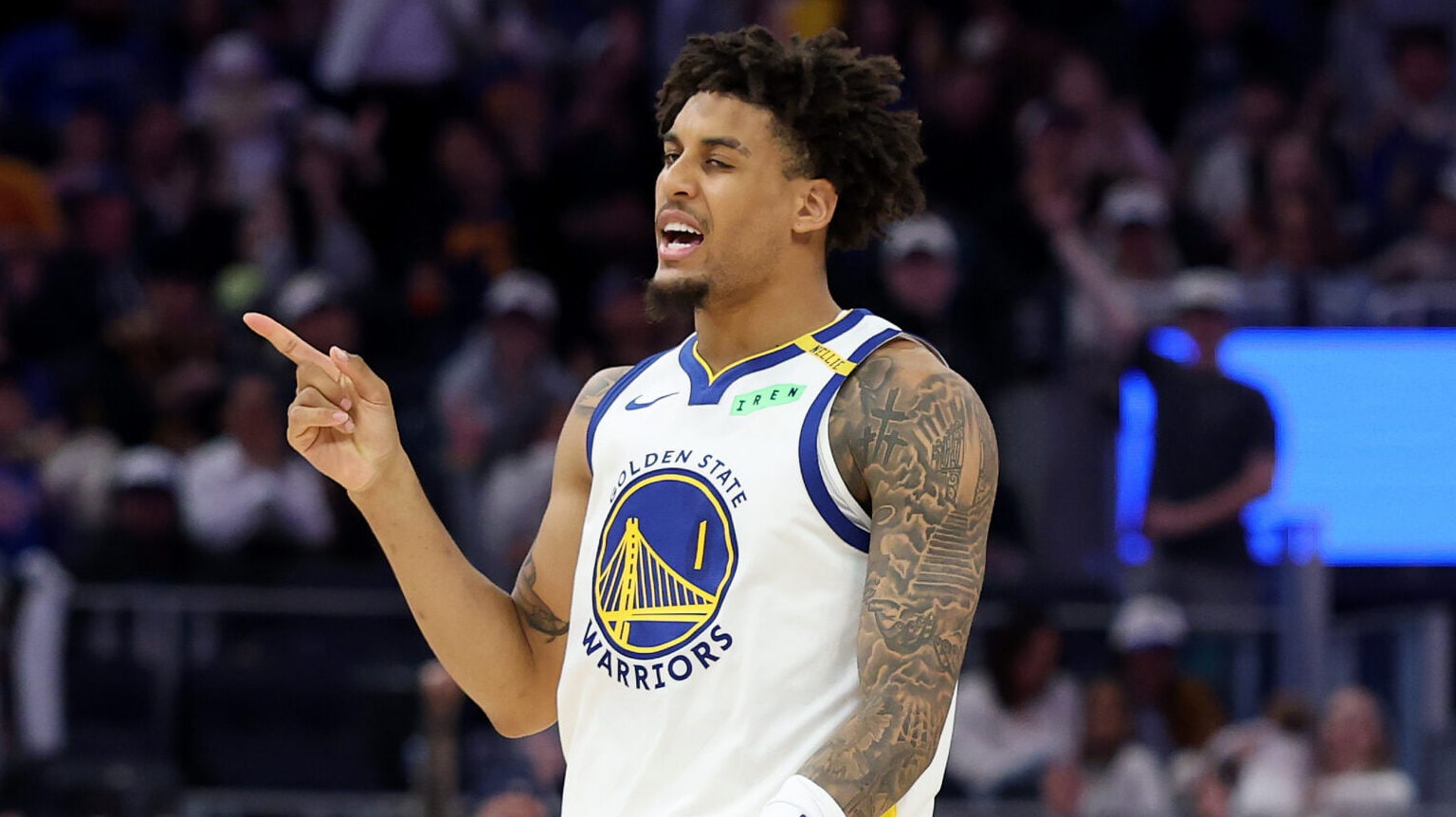
The accounts of the confrontation contain a significant difference. Houston coach Ime Udoka explained afterward that Smart believed Bassey had put pressure on an elbow he had previously injured during the rebounding struggle. According to the coach's account of what Smart told him, the contact was followed by words between the players. Udoka's description provides context for Smart's anger, but it is not an independent finding about Bassey's intentions.
Bassey offered a sharply different interpretation. The Warriors big man accused Smart of rough play earlier in the game, including contact around his knee during a screen and around his hand during the later rebounding action. He characterized Smart's response as unnecessary and questioned whether the guard was focused on competing at that moment. Those statements were Bassey's assessment of the sequence, not a judgment reached by officials about the earlier physical contact.
Yaxel Lendeborg was among the Golden State players near the confrontation, with other players attempting to separate the participants. Bassey did not respond by throwing a punch and remained available to his team. The visible act of retaliation therefore became the centerpiece of the league review, irrespective of how either player interpreted the contact that preceded it.
The important distinction is between explanation and permission. In professional basketball, a player can legitimately protest an opponent's hold, ask officials to examine it or demand a whistle. None of those concerns gives a player license to punch another competitor. The league's decision addresses the conduct it could evaluate; it does not require an official ruling that one version of every disputed exchange was perfectly accurate.
Smart's reputation makes the incident more complicated without making it mysterious. His edge has long been an asset. A forceful perimeter defender, he has earned three All-Defensive First Team selections and the league's 2021–22 Defensive Player of the Year honor. During that award season he played for Udoka in Boston, giving Houston's coach direct experience with the version of Smart who can disrupt an offense while organizing a defense.
GOATIFY
GOATIFY Basketball
The disagreement between Smart and Bassey is now secondary to the NBA's ruling. Explore GOATIFY basketball gear as the Rockets try to channel their physical edge.

LeBron James – LeGOAT Basketball Muscle Shirt Tank
A basketball fan design for everyday wear.
Shop Now ↗


Michael Jordan - Crying Jordan GOAT Crewneck Sweatshirt
A basketball fan design for everyday wear.
Shop Now ↗
Basketball Victor Wembanyama Matrix Decal
Add basketball personality to your favourite gear.
Shop Now ↗
Michael Jordan G.O.A.T. - Basketball Coffee Mug
Add basketball personality to your coffee break.
Shop Now ↗That same high-intensity style has been accompanied by disciplinary incidents. Reporting on Thursday counted multiple previous ejections, fines and suspensions over Smart's long NBA career. There is a difference between a hard contest and a retaliation that requires teammates to finish without you; the newest penalty highlights precisely where that line sits. It also places responsibility on Houston to keep its defensive aggression useful rather than costly.
The Rockets signed Smart in July on a reported two-year, $13 million agreement, after he helped the Lakers beat Houston in the 2026 playoffs. The move represented more than adding another guard to the roster. Smart brought familiarity with Udoka, an established defensive résumé and playoff experience to a team attempting to compete high in the West. When the club invested in that profile, it was buying composure and leadership alongside physicality.
Judging this episode only as a spectacle would miss its longer-term implication. Udoka does not have to strip Smart of his edge when he returns; he does need the guard to channel it into defensive execution. The best version of an emotional leader sets a demanding standard and stays on the floor to enforce it. Three games in the stands is the opposite outcome, no matter how heated the preceding exchange felt.
Sheppard's opportunity — and the Rockets' three-game rotation test

The immediate tactical issue is guard coverage. Smart can take difficult assignments and function as a secondary ball-handler, which gives Houston flexibility beside Fred VanVleet, Amen Thompson and the team's other perimeter options. Remove him and the Rockets must decide which qualities they can recover from the remaining players—and which compromises they are willing to accept.
Reed Sheppard is an obvious candidate for additional work. His shooting can punish defenses that collapse toward Alperen Sengun or Kevin Durant, and more possessions would give Houston information about his comfort running actions against regular-season pressure. Sheppard's presence, however, changes the defensive profile of some lineups. Extra spacing is valuable, but it does not make him a direct substitute for Smart's physical one-on-one coverage.
Bruce Thornton is another possible option. For a young guard, even a limited opportunity matters: minutes reveal whether he can handle opponents' pressure, make routine reads quickly and execute a defensive assignment without constant intervention. Yet handing him more responsibility is not necessarily the same thing as trusting him to close a tight game. Udoka's rotation decisions can be expected to reflect the score, the opposing guards and each player's performance.
VanVleet brings experience and structure, but Houston also has to think about workload. Three games in four calendar days, including a road back-to-back, make minute management more important than it appears when one reads the suspension as only a three-game count. The staff could distribute some playmaking duties through Thompson, Sengun and Durant rather than simply increase one guard's total to replace Smart's time.
Amen Thompson's versatility becomes particularly useful when a conventional guard is unavailable. He can pressure opposing ball-handlers and help on larger wings, while his ability to attack the paint can create opportunities for shooters. The challenge is balancing those assignments with the rest of Houston's offense, especially if a lineup combines several players who prefer to work inside the arc.
GOATIFY
GOATIFY Basketball
Sheppard and Thornton may get more court time, but Smart's defense is harder to replace. Follow Houston's backcourt story with GOATIFY Basketball gear.

James Harden G.O.A.T. - Basketball - Greatest Sweatshirt
A basketball fan design for everyday wear.
Shop Now ↗
Alperen Sengun G.O.A.T. - Houston Rockets Hoodie
A basketball fan design for everyday wear.
Shop Now ↗

Alperen Sengun G.O.A.T. - Houston Rockets Sticker
Add basketball personality to your favourite gear.
Shop Now ↗
James Harden G.O.A.T. - Basketball Casual Top Tee
A basketball fan design for everyday wear.
Shop Now ↗
Houston may also adjust how it sends help against penetration. Smart's strength is partly the freedom he gives teammates to stay attached to their own matchups. Without that option, the Rockets could employ more cross-matches, switch selected screens or commit help earlier. Each adjustment carries a cost, whether it is a mismatch at the rim, an open perimeter shooter or additional rebounding responsibility for the wings.
The Golden State game showed both the team's resources and the limits of treating one result as a solution. Durant scored 20 points; Sengun and Thompson supplied 19 apiece as Houston overcame the in-game ejection. That balance is encouraging, but Wednesday required Houston to improvise for about a quarter. Friday through Monday will test whether the same roster can prepare and execute a complete game plan with the absence known in advance.
Friday's Utah matchup is the first evaluation. The two subsequent road dates will test continuity and concentration, not merely talent. A reserve who shines in the opening game might attract different defensive attention by the third, while a new rotation could reveal chemistry issues that were hidden behind a veteran's communication. Coaches value those lessons, but they would rather receive them without giving up a proven player for avoidable reasons.
Even if Houston wins all three, the suspension will not be a harmless episode. It will have consumed a portion of the season, shifted workloads and provided three chances for opponents to probe an altered backcourt. If the younger guards respond well, the Rockets gain usable depth information. If they struggle, Smart's value becomes clearer. Either result will be part of the team's evaluation when he is available again.
The bigger picture is that Houston's ambitions depend on consistency. A 9–3 start demonstrates that the Rockets can beat quality opposition and compete near the top of the conference, but good teams also protect the small advantages that accumulate over months. A veteran acquired to steady difficult situations has temporarily created a difficult situation of his own. How the Rockets handle it will say something about the maturity of their rotation.
The league has settled the disciplinary question: Smart will serve three games without pay for his punch at Bassey. The argument over how the confrontation began may continue, but it does not change the games Houston must play without him. Smart's next eligible appearance is against Indiana on November 18, assuming no other change to his availability.
For the Rockets, the useful response is on the court. Sheppard and Thornton can turn an unwanted opening into valuable minutes, Udoka can learn how far his backcourt depth extends, and the team can reinforce a simple point: toughness helps only while it remains controlled. The suspension is short enough not to define a season, but long enough to show whether Houston can keep its early momentum without a guard it expected to lean on.
GOATIFY
GOATIFY Basketball
Shop GOATIFY basketball shirts, hoodies and stickers.

Kobe Bryant – GOAT Celebration Muscle Shirt Tank
A basketball fan design for everyday wear.
Shop Now ↗
Michael Jordan - GOAT Chicago Bulls Basketball Sticker
Add basketball personality to your favourite gear.
Shop Now ↗
LeBron James – Retro Lakers GOAT Dunk Sweatshirt
A basketball fan design for everyday wear.
Shop Now ↗

Russell Westbrook G.O.A.T. - Basketball - Hoodie
A basketball fan design for everyday wear.
Shop Now ↗
Nikola Jokic G.O.A.T. - Basketball Coffee Cup Mug
Add basketball personality to your coffee break.
Shop Now ↗



















