Atlanta Reached the WNBA Finals — Then Lost Its 17,000-Seat Home Court
GOATIFYAtlanta has waited 13 years to return to the WNBA Finals. Now, just days before facing the Golden State Valkyries, the Dream have a problem that has nothing to do with scouting reports or rotations: the 17,044-seat building that hosted their playoff surge cannot accommodate their biggest games. State Farm Arena is already booked on every potential Atlanta date in the championship series.
The collision is especially striking because the Dream have outgrown their 3,500-seat regular home and announced a full-time move downtown for 2027. Their opponent, meanwhile, plays in an 18,064-seat building that has become synonymous with sellout crowds. The Finals are still a contest between two excellent teams, but the arena puzzle has turned into an uncomfortable measure of how quickly women's basketball is growing—and how slowly its venue arrangements can catch up.
A Championship Run Collides With Three Existing Bookings
The Atlanta Dream did everything they were supposed to do to earn a bigger spotlight. They finished the regular season 30-14, took care of Washington in the first round and swept New York in the semifinals. Three home playoff dates were staged at State Farm Arena, where the crowds averaged 9,695. For a team accustomed to a 3,500-seat building in College Park, those games demonstrated the appeal of a downtown championship atmosphere.
But the WNBA Finals schedule lands on top of commitments made before Atlanta knew it would reach the last round. Game 3 is scheduled for October 22, when a Sombr concert occupies State Farm Arena. Game 4 falls on October 24, the same day the Atlanta Hawks are scheduled to play at home. A possible Game 6 on October 29 also overlaps with a Hawks home game. These are not gaps that can be fixed by changing a tip-off by an hour; they involve arena access, event setup, staffing, television windows and commitments to other ticket holders.
The result is a strange reversal. Angel Reese, Rhyne Howard and Jordin Canada have helped put the Dream on the sport's biggest stage, yet their own city cannot automatically give them the venue where they spent the preceding rounds. Atlanta is not being denied home games: it is trying to find an appropriate home for those games. That distinction matters. The series will still come to Georgia, but the difference between playing before nearly 10,000 fans and before 3,500 is a major change in scale.
There is also a competitive dimension. The Dream developed momentum in a large building with a growing postseason crowd, and now face uncertainty over the atmosphere, sightlines and routines of the Finals home leg. None of that excuses a poor performance or guarantees a disadvantage. It simply means a team that has navigated injuries and high-pressure playoff possessions must also adjust to a logistical problem that arrived after the basketball work was done.

Gateway Center Can Host the Games — but the Numbers Are Hard to Ignore
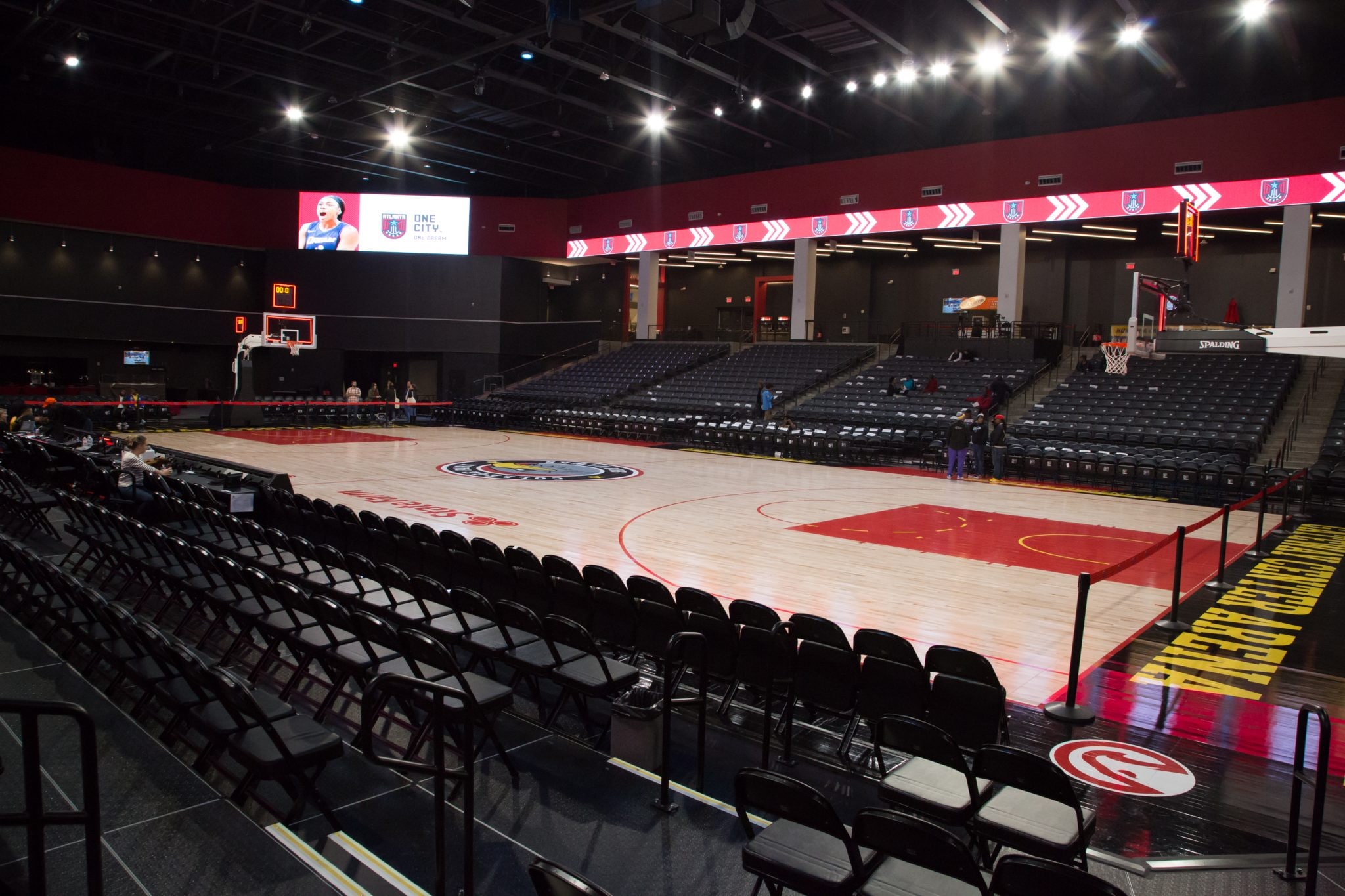
Gateway Center Arena is a real home for the Dream, not an emergency practice gym. It has hosted the club's regular-season games, developed its own fan traditions and supplied the intimate noise that makes a smaller venue feel hostile to visiting teams. The issue is not whether a championship can be played there. It is whether the league should be comfortable fitting a Finals audience into a basketball capacity of roughly 3,500 when the same team has already drawn much larger postseason crowds.
The arithmetic is stark. Atlanta's average crowd of 9,695 across its three State Farm Arena playoff dates is about 2.8 times Gateway's basketball capacity. State Farm itself seats 17,044, nearly five times as many people as Gateway. Even if every Gateway ticket finds an enthusiastic fan, thousands who might have attended in the larger venue would be left looking for another way to experience the Finals. The smaller setting could be electric inside while still being a missed opportunity outside the doors.
Atlanta has examined alternatives. Gas South Arena in Duluth offers a reported capacity of around 13,000, while Georgia Tech's McCamish Pavilion has room for about 8,600. Each option carries its own availability, conversion, security and broadcast considerations. Reporting on October 12 pointed toward Gateway as the likely fallback after attempts to secure a larger venue failed, although a publicly confirmed final arrangement should be distinguished from expectations attributed to sources.
There is no perfect answer for fans. A different arena might allow more people in but ask season-ticket holders to travel to an unfamiliar building. Gateway preserves established routines and can reward a loyal core of supporters, but demand for the first Atlanta Finals appearance since 2013 could easily exceed supply. Pricing, ticket allocation and communication will matter as much as the venue name. The Dream's challenge is to protect a genuine home-court feeling without turning a landmark week into a scramble for access.
Golden State Has the Arena Certainty Atlanta Wants
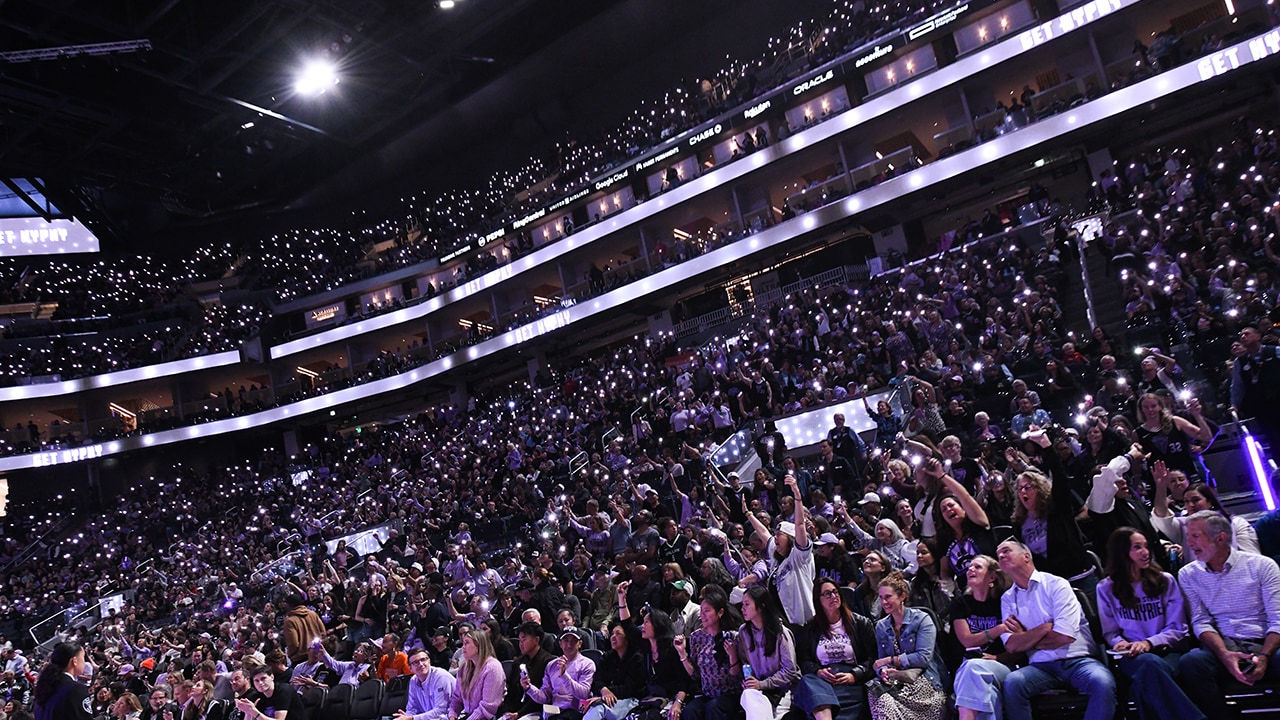
The other side of the matchup illustrates what a stable large-arena arrangement can look like. The Golden State Valkyries will open the Finals at Chase Center on October 17 and return there for Game 2 on October 19. If the series extends, Games 5 and 7 would also be in San Francisco. The building's basketball capacity is 18,064, and Golden State has sold out every home game in its first two seasons. That gives a second-year expansion franchise a major-league stage that feels established rather than improvised.
It is not just a commercial success story. Golden State went 32-12 in the 2026 regular season and 17-5 at home, then swept the defending champion Las Vegas Aces to reach the Finals. Its defensive identity, developed under Natalie Nakase, travels, but the noise of Chase Center is a useful advantage when the team is defending possessions or trying to recover from a scoring drought. Fans have turned the venue into a recognizable part of the Valkyries' identity. The photograph here captures that atmosphere during the 2025 sellout run, before the franchise had even reached a championship series.
Golden State had a scheduling problem of its own: a Doja Cat concert was booked at Chase Center for October 19. Rather than move a Finals game, the concert was rescheduled to October 25. That does not mean every event conflict can be resolved the same way. Contracts, touring routes and the ownership relationship with a venue vary. It does, however, highlight how valuable advance contingency planning becomes when a team unexpectedly reaches a championship stage.
The contrast could shape the television presentation of the series. Golden State's home games are expected to fill a large purple arena; Atlanta's may be staged in a far smaller building. Crowd size alone does not determine atmosphere, and a compact home court can make every possession feel close. But for a league selling the Finals as a marquee event, a swing from more than 18,000 seats in one market to about 3,500 in the other is impossible to ignore.

Atlanta's 2027 Move Shows How Fast the League Has Changed

The most frustrating detail is the timing. On October 6, the Dream announced a multi-year agreement to make State Farm Arena their full-time home beginning in 2027. With the WNBA expanding to a 50-game regular season, Atlanta plans to stage all 25 home dates downtown. The club pointed to demand that has grown well beyond what Gateway Center can serve. Under the current ownership group, season-ticket membership has risen by more than 400% over five years, according to the team.
Atlanta also said every Gateway Center game had sold out over the previous three seasons and that it had sold out State Farm Arena eight times during that period, including several games with crowds above 17,000. Those figures explain why the 2027 decision makes business sense. The audience already exists. The building agreement catches up with it next year, but the championship has arrived one season too soon for the new arrangement to solve this October's calendar conflict.
Venue complications are not new to the WNBA. Atlanta used an alternate arena during its 2013 Finals appearance, and Washington staged 2019 Finals games in a much smaller home building. What is different now is the scale of interest and the growing expectation that women's professional basketball can command the same event planning priority as other major sports. A modern league cannot guarantee that every playoff team will have an empty 18,000-seat arena waiting in October, but it can build stronger postseason holds and backup plans into the way venues are booked.
For Atlanta, this moment is both a setback and evidence of progress. The Dream have reached their first Finals since 2013 and have a larger permanent home secured for the future. Their players deserve to be judged by what happens against the Valkyries, not by an arena calendar. Yet the organization and the league should treat this scheduling clash as a lesson: when a team's fan base grows faster than its building arrangements, the championship is exactly when the gap becomes most visible.
Atlanta's players earned a championship stage through five consecutive postseason wins, not through a scheduling favor. Whether the Dream ultimately play in College Park or find a larger temporary building, their ability to compete with Golden State will depend on the same defense, rebounding and late-game composure that carried them through Washington and New York. A small arena can still be loud, and an arena change does not decide a best-of-seven series.
Yet the venue question matters beyond these games. A franchise preparing to welcome 17,000-plus spectators in 2027 is confronting the possibility of staging its 2026 championship home dates before just 3,500. The Finals begin October 17 in San Francisco. By the time the series moves east, Atlanta needs more than an address: it needs a home-court plan worthy of the audience this team has built.
Shop GOATIFY WNBA products from the WNBA-filtered basketball collection.