Coello and Tapia Lost the First Two Games — Then Won Their 11th Title in Düsseldorf
GOATIFYFor two games, Franco Stupaczuk and Jon Sanz looked ready to change the script in Düsseldorf. They broke the world's leading pair immediately and raced to a 2–0 lead in the Germany Premier Padel P2 final. Arturo Coello and Agustín Tapia then won six straight games, took the opening set and eventually closed out a 6–2, 7–6 victory in 84 minutes. Their 11th title of 2026 was secured, but the scoreline alone misses the moments when the final could have tilted the other way.
The champions had already beaten the same opponents in Rotterdam one week earlier. This rematch was more competitive, particularly when Stupaczuk and Sanz earned a chance to serve out the second set. Coello and Tapia erased that opportunity and won the tiebreak, extending a title run that now includes the Paris Major, Rotterdam P2 and Düsseldorf P2. The result says something about their power, but even more about how quickly they solve trouble.
A 2–0 Lead Disappeared in Six Consecutive Games

The opening break was the sort of start Stupaczuk and Sanz needed. Their aggressive intent pushed the favorites into an early deficit and briefly suggested that a second final in eight days might end differently. It also made the next phase unusually revealing: instead of forcing bigger shots, Coello and Tapia worked their way into the exchanges and stopped letting the challengers dictate where the ball went.
Coello's ability to absorb pace at the net was particularly important. Sanz's sharp, skidding víbora can make an opponent defend from uncomfortable positions, but Coello repeatedly handled that pressure and turned the next ball into an opportunity for Tapia. That exchange matters because the winners do not need to dominate every shot. They need to neutralize the first attack long enough to take the center of the court back.
Tapia then supplied the variation that makes the partnership so difficult to read. His touch and changes of pace stopped the rallies from settling into a predictable hitting contest, while Coello's reach made short replies dangerous. The early 0–2 score became 6–2 because the number ones won six games in succession, not because the opening break had been meaningless. The challengers had exposed a route into the match; they simply could not keep that route open.
That pattern also explains why the first set felt more decisive than its initial two games suggested. Once the favorites were comfortable controlling the net, Stupaczuk and Sanz needed either exceptional returns or sustained precision to reclaim initiative. In a final against the most consistent partnership on the tour, one early break is only a starting point. Keeping the pressure on through the middle of a set is the harder task.

Stupaczuk and Sanz Had Their Chance to Force a Decider
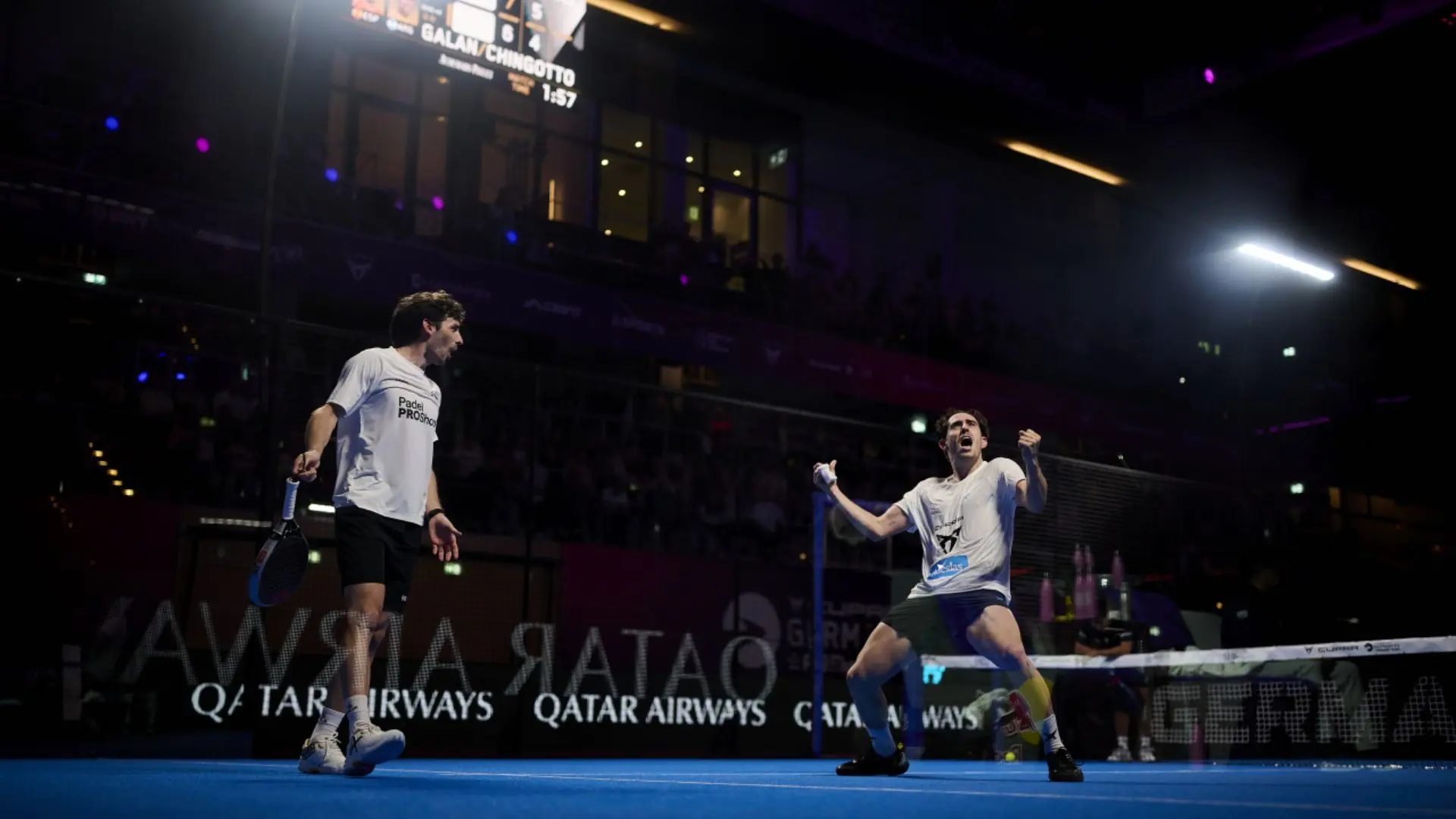
After dropping six straight games, the challengers could easily have let the final slip away. Instead, Sanz raised the attacking tempo and Stupaczuk kept the pair organized through longer rallies. Their second-set response made the match much more competitive than the first-set score suggested. The pair earned a break and reached the point of serving for the set, putting a deciding third set within reach.
That was the defining missed opportunity. Coello and Tapia broke back rather than allowing the momentum to become a full comeback, then pushed the set into a tiebreak. The champions' ability to make that immediate adjustment is a major reason their opponents so often leave finals feeling that they had a genuine chance without quite getting the reward. At this level, the difference between serving out a set and facing a tiebreak can be a few points played with better positioning.
Sanz had already shown how dangerous he could be the previous evening, when he and Stupaczuk beat Alejandro Galán and Federico Chingotto 7–6, 6–4. His left-handed attacking angles and willingness to accelerate had helped unsettle the second-ranked pair. Against Coello and Tapia, the same weapons generated pressure, but the favorites were more effective at protecting the middle of the court and denying repeatable finishing opportunities.
Tapia and Coello ultimately won the tiebreak 7–5, closing the final in straight sets. That narrow margin is important: the second set was not a procession, and the challengers did not simply fade after their first-set collapse. They forced the champions to solve a different problem. The number ones did so quickly enough to avoid another hour of work and to take a third consecutive trophy into the next tournament.
The Numbers Reveal How Coello and Tapia Controlled the Net
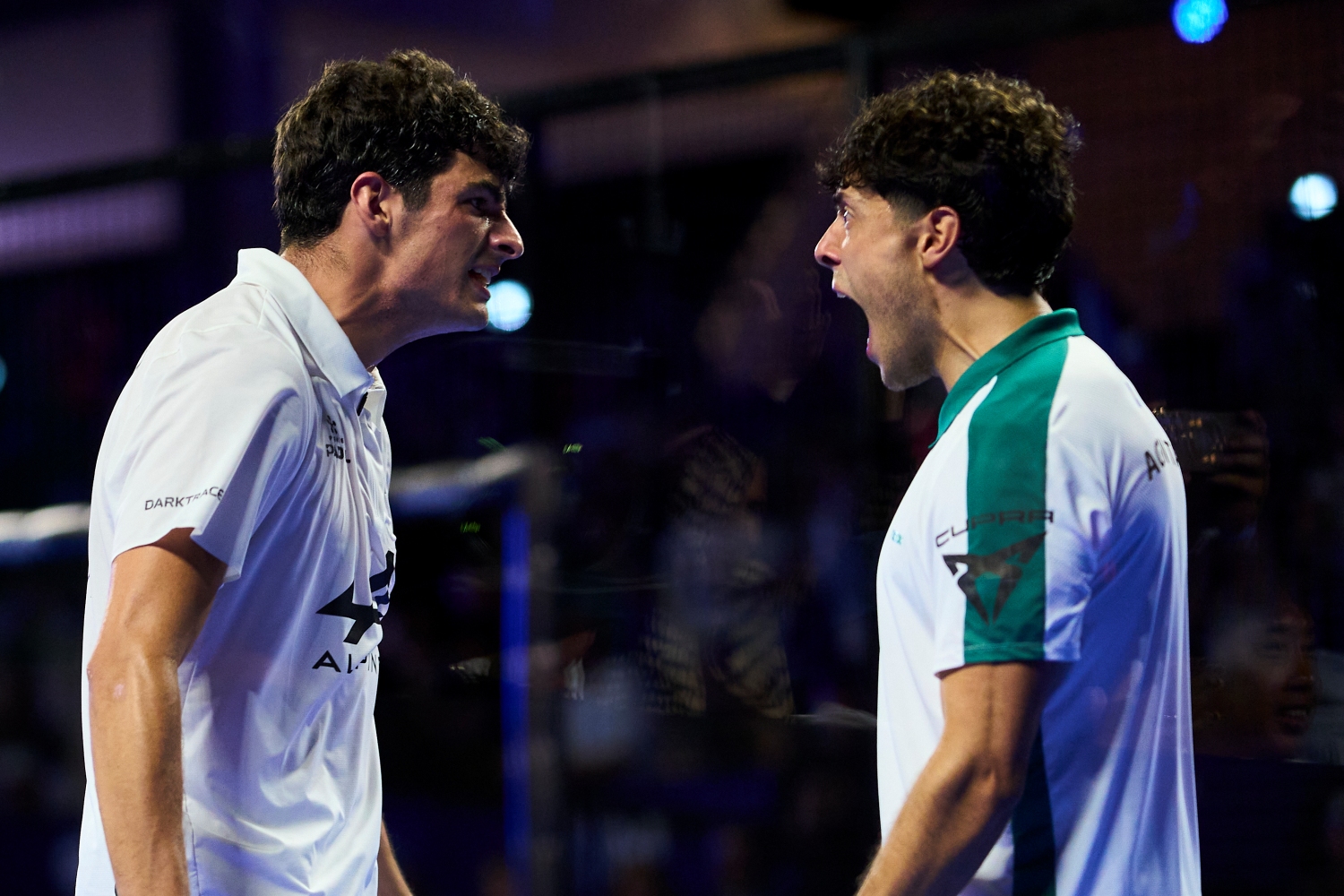
The most useful match statistics point in the same direction as the tactical picture. Coello and Tapia recorded 32 winning smashes to 24 for Stupaczuk and Sanz, while committing 26 unforced errors against their opponents' 33. The winners were both more productive when finishing points and more disciplined when exchanges were not ready to end. Those are separate advantages, and having both in the same match is unusually difficult to overcome.
Coello's influence goes beyond the obvious overhead winners. When he blocks a fast ball back with enough depth, he forces the opposing pair to attack again from a worse position. That buys Tapia a fraction more time to choose between a controlled lob, a soft change of pace and an attacking ball. The next smash may look spectacular, but it is often made possible by a defensive touch several shots earlier.
For Stupaczuk and Sanz, the lesson is not simply to hit harder. They showed in the second set that they can create attacking sequences against the champions. The problem was sustaining that quality through return games and the moments immediately after a break. Seven additional unforced errors may not sound enormous over an 84-minute final, but a small cluster of errors in a service game can erase an advantage that took several rallies to build.
That is why the second-set break back carries more meaning than the scoreboard alone. Coello and Tapia did not need a perfect afternoon; they needed the cleaner decision on the biggest few points. Their advantage in winners and errors made that possible, and their experience helped them recognize when to simplify the rally rather than chase a highlight shot. This is the difference between playing at championship level and reliably finishing championship matches.
Eleven Titles Put Their 2024 Record Back in Play
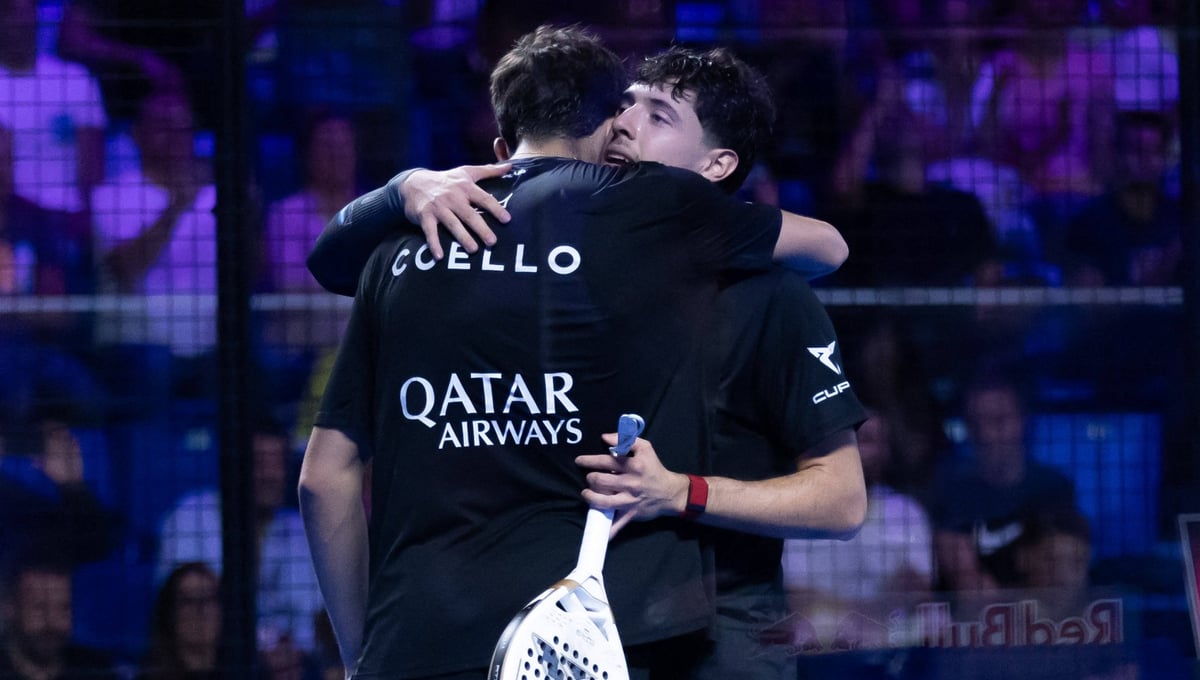
Düsseldorf was Coello and Tapia's 11th title of the season, following the Paris Major and Rotterdam P2 in this latest three-tournament streak. Their 2024 campaign set a formidable benchmark of 14 titles, so another victory moves them within three trophies of matching that mark. With Milan and several major events still ahead, the question is no longer whether their late-season run is strong. It is whether the pair can keep converting every opportunity as the calendar gets tighter.
The standings context makes the timing even more valuable. Galán and Chingotto, the most established challengers to the number ones, were eliminated by Stupaczuk and Sanz in the Düsseldorf semifinals. That was the second consecutive tournament in which the newly formed pair had beaten them. Coello and Tapia therefore gained another title while their nearest rivals lost a chance to answer in the final, reinforcing the sense that the race is being decided by consistency across entire tournament weeks.
Stupaczuk and Sanz should not leave Germany thinking their partnership is a failure. Their run has included a final at the FIP Platinum in Lyon and finals in Rotterdam and Düsseldorf, along with those back-to-back wins over Galán and Chingotto. They pushed the number ones harder in Germany than in their 6–3, 6–2 Rotterdam defeat. The next step is to turn those spells of pressure into complete sets against the one pair that has repeatedly escaped them.
Next comes the Milan P1, scheduled for October 12–18. A higher-tier event brings another demanding draw and another opportunity for the challengers to reset. For Coello and Tapia, it offers the chance to win four tournaments in succession and edge closer to their own historic benchmark. Düsseldorf supplied the familiar result, but the first two games and the second-set escape showed why that result still had to be earned.

Coello and Tapia did not win Düsseldorf by avoiding pressure. They won after falling behind 0–2, after their opponents earned a chance to serve out the second set, and after a tiebreak that demanded another clean finish. Their 6–2, 7–6 victory was built on smarter recovery, more winning smashes and fewer errors, not on the illusion that every rally was effortless.
Stupaczuk and Sanz have proved they belong in these finals and have already disrupted the usual order by beating Galán and Chingotto twice in succession. But the number ones keep finding a solution when the score gets dangerous. With 11 titles already secured and Milan next on the calendar, the defining story of the 2026 season is becoming less about who can challenge Coello and Tapia for a set and more about who can sustain that challenge all the way to the trophy.
Shop GOATIFY padel products from the Padel-filtered collection scope.