Kyrie Scored in 14 Seconds — Dallas Finally Saw What Irving and Flagg Can Become
GOATIFYThe first possession was the moment Dallas had been waiting for. Kyrie Irving received the ball on the right side, saw the baseline open against Houston's defense and finished a reverse layup. Fourteen seconds into his first NBA appearance since March 2025, the nine-time All-Star had already reminded the Mavericks what they had missed: a guard who can manufacture a good shot without requiring the entire offense to manufacture it for him.
Irving finished with 17 points, three assists and two rebounds in just under 22 minutes as Dallas beat the Houston Rockets 132-115 in Macao on October 11, splitting the two-game preseason series. The score mattered less than the shape of the victory. Cooper Flagg shared the floor with Irving for the first time, Dallas pushed the ball after turnovers, and several role players supplied the connective tissue that had been absent in Friday's 135-117 defeat.
This was a preseason game, not proof of a finished contender. But after a 26-56 season without Irving, it offered the first credible look at how Dallas intends to build a functioning offense around its returning veteran and its rising young centerpiece.
The First 14 Seconds Reintroduced a Different Dallas Offense
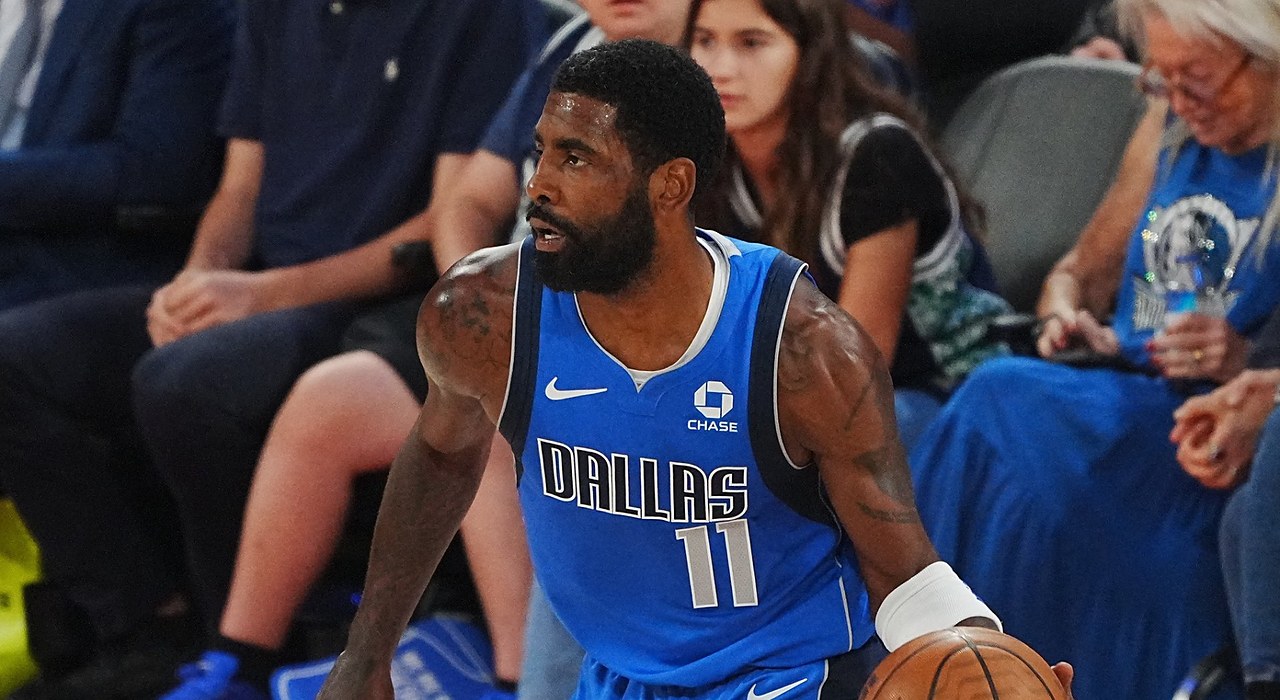
Irving's first touch was not an elaborate set. Coach Dusty May called the opening action for him, and Irving read the switch involving Amen Thompson and Jabari Smith Jr. The baseline was there; he took it. A reverse finish made a potentially anxious comeback feel almost ordinary. That ordinariness was the striking part. He did not need a long settling-in period to recognize an angle and attack it.
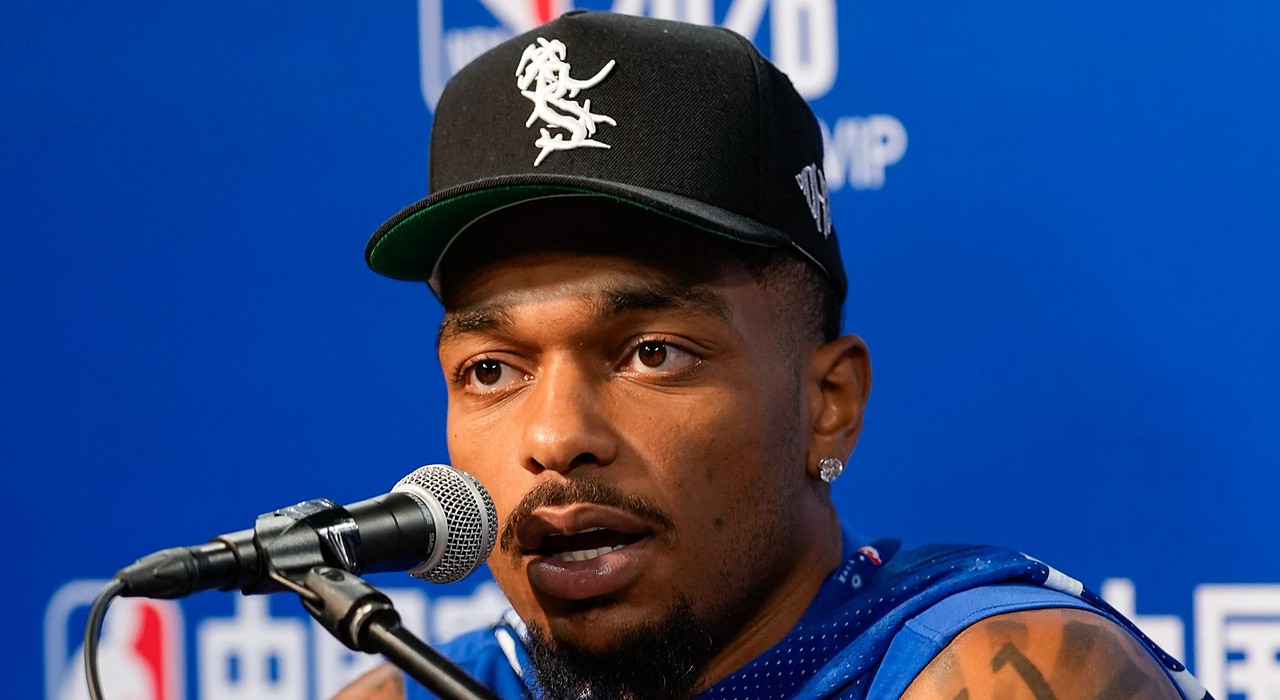
The 34-year-old had torn the ACL in his left knee on March 3, 2025, against Sacramento. He missed the end of that campaign and all of 2025-26. There is a difference between looking comfortable in individual workouts and being able to make instant decisions against NBA length, contact and live defensive rotations. Macao was the first public test of the latter. Irving shot 6-for-13, made two of six three-pointers, converted all three free throws and scored 14 of his 17 points before halftime.
Dallas did not ask him to chase a spectacular number. His 21:56 of playing time was the more important figure. He did not appear in the fourth quarter, allowing the staff to evaluate movement, timing and physical response without treating an exhibition like a playoff game. The right measure of this return is not whether every jumper fell. It is whether he could stop, accelerate, turn a corner and still make the correct pass when help arrived.
May praised Irving's feel for manipulating the game, but the broader question is what that feel does for teammates. A young roster can spend entire possessions trying to create a favorable matchup. Irving starts many possessions with one already in mind. When he draws attention, a cutter or screener has a clearer job. When the defense stays home, he has the craft to finish through a narrow opening.
The caution is equally important. One healthy-looking night cannot establish durability over 82 games, and a controlled minutes load cannot predict how his knee will respond to travel, back-to-backs and a full defensive scouting report. Still, Dallas did not need a promise of 30 points per game. It needed evidence that its most experienced shot creator could still organize an offense while playing his own game. The opening possession supplied exactly that kind of evidence.

Flagg's Seven Assists Explain Why the Pairing Matters
The other first in Macao was the partnership. Irving and Cooper Flagg had never appeared together in an NBA game. Flagg, the reigning Rookie of the Year, had carried enormous responsibility during a difficult debut season. He now has a veteran guard capable of absorbing some of the hardest half-court decisions without making the young forward a spectator.
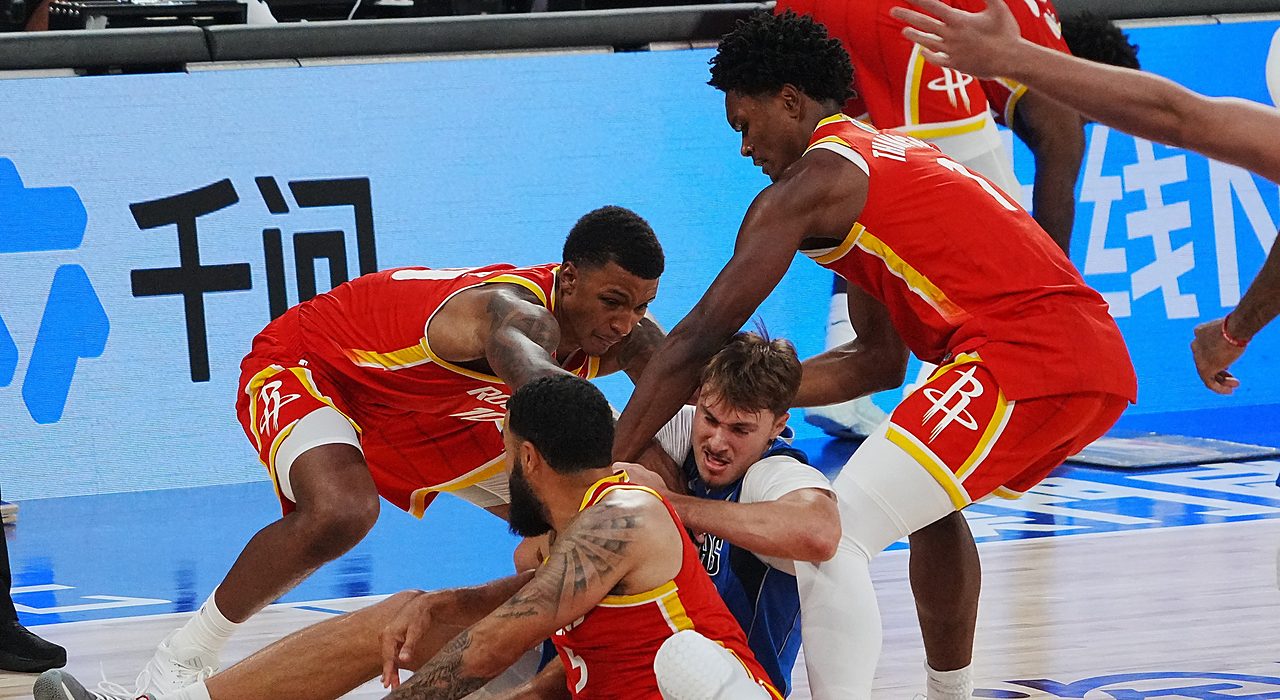
Flagg's shooting line on Sunday was modest: 14 points on 3-for-10 from the field. But his seven assists in 25 minutes were a more useful clue to his development. He stole the ball from Marcus Smart and finished in transition, found P.J. Washington for a lob, and helped move the ball toward Daniel Gafford at the rim. Those possessions showed that Dallas can create offense through Flagg without insisting that every good possession ends with a Flagg jumper.
A central benefit of Irving's return is role flexibility. With a reliable veteran handler, Flagg can attack a tilted defense, cut into space, crash the glass and choose when to initiate. Without that handler, he may be asked to create advantages from a standing start against the opposition's best wing defender. The distinction matters more than a preseason shooting percentage. One arrangement develops his scoring burden; the other develops his full range as a connector and eventual offensive leader.
The partnership also creates a coaching problem worth embracing. Irving thrives when teammates move around his improvisation, but young players can become too fascinated by a brilliant isolation. May has already identified the danger of everyone watching instead of cutting. Flagg must learn the difference between giving Irving room and leaving him alone. A well-timed backdoor cut or relocation can punish the defender who turns toward the ball.
Dallas still has to decide which lineups offer enough shooting around the pair. A paint-bound center and a hesitant perimeter player can compress Irving's driving lanes and Flagg's passing windows. Sunday's willingness to launch 40 threes was encouraging, but volume alone is not spacing; opponents must believe the shots will go in. The most promising version of the Mavericks uses Irving to generate the first advantage and Flagg to multiply it. Their first shared outing was not a masterpiece, but it was a glimpse of a much more coherent design.
Flagg's rookie season offered a warning about how quickly an exceptional teenager can become a team's entire problem-solving mechanism. He averaged 21 points, 6.7 rebounds and 4.5 assists across 70 games while Dallas won only 26 times. That workload helped accelerate his development, but it also made every cold shooting night feel like a referendum on his future. Playing beside Irving gives the staff a chance to evaluate Flagg in a different context: not merely whether he can beat the first defender, but whether he can recognize the weak side, deliver a pass on time and relocate for the return possession.
That evolution matters for late-game basketball. Defenses can trap a primary ball handler, load up on a wing scorer or switch a favorite action out of existence. Teams with two genuine decision-makers have more counters. Irving can initiate while Flagg screens, then Flagg can initiate when Irving becomes the off-ball threat. Neither configuration is automatically better, and their chemistry will require repetitions. But the possibility of changing the point of attack without substituting an entirely different lineup is a meaningful upgrade over Dallas's offense a season ago.
Dallas Scored 32 Points Off Turnovers — and Found a Repeatable Route to Easy Offense
Dallas did not win solely because Irving could still score. The Mavericks produced 32 points off Houston's 22 turnovers and held a 24-11 advantage in fast-break points. They scored 50 in the paint, hit 15 of 40 three-point attempts and made 35 of 39 free throws. Those numbers describe a team generating different kinds of pressure rather than asking one star to solve every half-court possession.
The game turned through bursts. After Houston moved ahead early in the second quarter, Dallas ripped off a 21-3 stretch that put it firmly in control. When the Rockets briefly regained a third-quarter lead, the Mavericks answered with another decisive run. Naji Marshall's activity and Max Christie's transition shooting were part of that response. Houston's ball security gave Dallas opportunities, but the Mavericks still had to convert those opportunities quickly enough to change the game.
Washington's return from missing Friday's opener added another stabilizing piece. He scored 10 points in the first half, hit two three-pointers and supplied defensive plays around the rim. Gafford scored nine points on three made field goals and gave Dallas a vertical target. Christie finished with 14 points. None of those lines is the headline, yet all of them matter if Irving's return is supposed to raise the floor of the entire roster.
There are reasons not to overstate the win. Houston did not play Kevin Durant, Alperen Şengün, Fred VanVleet or Steven Adams on Sunday. Marcus Smart led the Rockets with 20 points, and Reed Sheppard scored 17, but this was not the complete Houston rotation Dallas will encounter during the regular season. The Rockets also won the rebounding battle 50-46, a warning that Dallas's transition game can be interrupted if it fails to secure the defensive glass.
The lesson is not that Dallas suddenly has a top-tier defense. It is that an offense becomes easier to operate when the defense creates possessions with a head start. Irving can dictate tempo after a stop; Flagg can turn a steal into a direct attack; Gafford can sprint to the rim before the opposing big man gets organized. The Mavericks looked more dangerous when they chained those actions together.
The regular-season opener on October 21 is another meeting with Houston, this time on the Rockets' home floor. It will be a more meaningful examination of whether Dallas can protect the ball, defend without fouling and maintain its pace against a stronger opposing lineup. For now, the preseason rematch showed the type of possession economy May wants: more steals, fewer stalled possessions and less reliance on difficult late-clock shots.
Friday's loss provides a useful control sample. Houston had scored 135 while Dallas managed 117, and the Mavericks struggled to make their own possessions look connected. Sunday was not simply a change in final score: Dallas's 28 assists, quick outlets and greater willingness to attack early in the clock reflected a different rhythm. Irving's presence helps explain some of that, but the adjustment in effort and execution from the supporting players deserves equal credit. Preseason comparisons are imperfect because rotations change, yet the contrast gives May specific film to reinforce.
Houston's absences also matter when projecting forward. Şengün's passing from the center position and Durant's half-court scoring would have placed a different stress on Dallas's defense. The Mavericks must show they can execute when they cannot simply run away from missed shots and loose passes. If they can keep their offense organized in slower games, the transition gains will be a bonus rather than a crutch.

Risacher and de Larrea Made the Comeback Bigger Than One Player
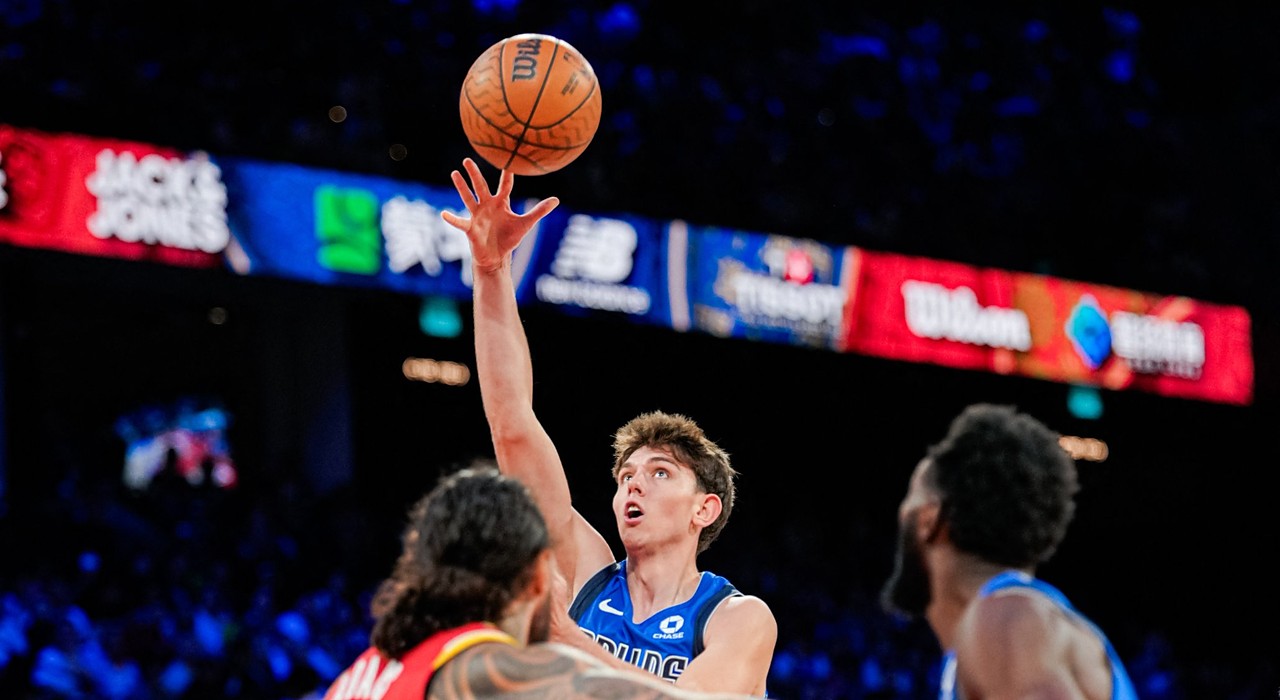
The supporting cast supplied another reason for cautious optimism. Zaccharie Risacher, acquired by Dallas during the offseason, finished with 16 points on 7-for-13 shooting. His first half was uneven, but nine fourth-quarter points helped keep Houston from turning a late push into a genuine comeback. For a young wing learning a new team's language and spacing, a strong finish is more meaningful than a clean-looking box score with no adversity.
Sergio de Larrea offered a different kind of promise. The rookie guard scored nine points, grabbed seven rebounds and delivered four assists in roughly 22 minutes. Dallas outscored Houston by 34 points during his time on the floor, an eye-catching figure that should not be mistaken for a stable individual metric after one preseason game. What matters is how comfortable he looked making decisions, getting the ball moving and helping the second unit avoid empty possessions.
De Larrea's role may become especially valuable because Dallas is trying to balance generations. Irving can lead the offense now, while Flagg, Risacher and de Larrea need enough genuine responsibility to become more than finishers. Veterans such as Dwight Powell can steady lineups without monopolizing possessions. Dallas does not need every prospect to make a leap at the same time. It needs enough reliable contributors to let May manage workloads and avoid turning an Irving absence into an offensive emergency.
The franchise knows what a great veteran can mean to younger teammates. Dirk Nowitzki represented continuity through multiple versions of Dallas basketball, and Irving's return offers a different kind of bridge between the team's history and its next core. The comparison is about leadership and continuity, not identical playing styles or career paths. The current Mavericks still have to discover which combinations defend, rebound and shoot well enough to win together.
A single exhibition cannot resolve those questions. Risacher's shot selection, de Larrea's defensive assignments and Flagg's off-ball habits will all be tested against better-prepared opponents. Irving will need to prove he can sustain his rhythm as minutes and defensive attention increase. The encouraging development in Macao was that Dallas won with several contributors looking purposeful, not with a heroic scoring outburst that would be impossible to reproduce.
The next phase is less glamorous: establish a rotation, keep the spacing alive, and make the veteran's return useful even on nights when his own shot is not falling. If Dallas does that, Irving's 17 points will be remembered not as the peak of a comeback, but as the opening signal of a better-organized season.

Irving's first game back was emotional, but the basketball lesson was practical. Dallas finally put a high-level shot creator next to Cooper Flagg, received productive minutes from its supporting cast and converted defensive disruption into fast offense. The Mavericks did not have to ask Irving to carry the entire evening to feel his influence.
The real tests arrive when the games count, opponents are at full strength and the minutes restrictions gradually loosen. Macao did not answer whether Dallas is a playoff team. It answered a smaller, necessary question first: can Irving still make this young roster look like a team with an offensive plan? For one night, emphatically, yes.