

Sal Stewart's 32-Homer Rookie of the Year Season Is Historic — and a Challenge to the Reds
GOATIFYThe National League Rookie of the Year trophy belongs to Sal Stewart, but the story in Cincinnati is bigger than a trophy. The Reds' 22-year-old first baseman produced 32 home runs, 112 RBIs and a remarkably complete rookie schedule in 2026, winning 20 of the 30 first-place votes. He was the most productive power hitter among the league's rookies and, in the eyes of the voters, its clearest all-around Rookie of the Year choice.
That is the easy part of the conversation. Harder is deciding what the award means for a franchise coming off a 75-win, last-place finish in the NL Central. Stewart's historic output earns Cincinnati both a cornerstone player and a valuable extra draft pick. Neither solves the rest of the roster. This is why Stewart's season should be celebrated without mistaking an individual breakout for a team turnaround.
The 32-homer, 112-RBI season made Stewart a historic Reds rookie
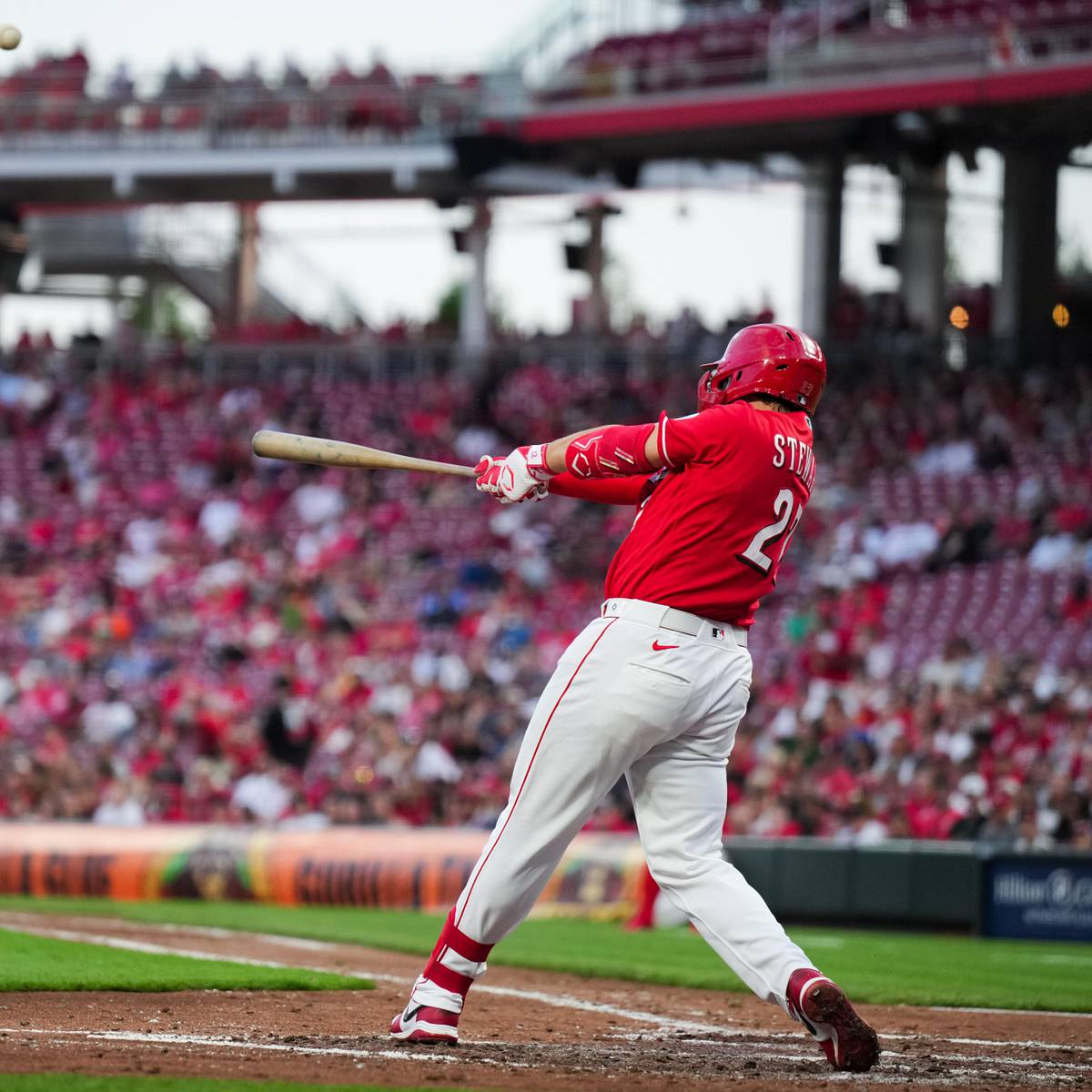
The headline numbers are already unusual for a first-year major leaguer. Stewart finished with 32 home runs, 112 runs batted in, a .263 average and a .787 OPS. He led National League rookies not only in home runs and RBIs but also in extra-base hits, with 57, and total bases, with 285. Those figures show a hitter doing damage repeatedly rather than constructing one memorable month and fading when pitchers adjusted.
For Cincinnati, the historical comparison is enormous. Before Stewart, the only Reds rookie to reach 30 home runs was Hall of Famer Frank Robinson, who hit 38 in 1956. Stewart became the franchise's first rookie to combine at least 30 homers with 100 RBIs, and his 112 RBIs established a Cincinnati rookie record. Across all of Major League Baseball, only 14 rookies, including Stewart, have completed that 30/100 combination, and the previous nine to do it since the award's introduction in 1947 had all won Rookie of the Year. Stewart made it ten out of ten.
His production was not limited to the long ball. Stewart collected 164 hits, a Cincinnati rookie total last surpassed by Pete Rose's 170 in 1963, and he also scored 87 runs and drew 63 walks. There are different ways of valuing offense, but this blend of contact, patience and extra-base power helps explain why his case did not depend entirely on a traditional RBI tally. The 112 runs he drove in still matter: they indicate that the Reds frequently had a dangerous hitter available when runners were in scoring position.
Great American Ball Park is a favorable environment for power hitters, so the obvious question is how much the stadium inflated the home-run total. Stewart's split provides a useful answer without pretending to isolate every ballpark factor: 17 of his home runs came on the road, compared with 15 at home. A slight road majority does not turn a raw statistic into a park-adjusted one, but it is solid evidence that the power traveled. Cincinnati was watching a genuine major league slugger, not just a player exploiting his home dimensions.
GOATIFY
GOATIFY Baseball
Bring some baseball power to your game-day wardrobe with GOATIFY's MLB-inspired designs.


Playing all 162 games turned a great rookie season into a reliability statement

There is another number in Stewart's case that is easier to overlook than his 32 home runs: 162. He appeared in every Cincinnati game in 2026, making 161 starts. According to MLB's award report, no rookie had played the complete 162-game schedule since Delmon Young did it for Tampa Bay in 2007. That is a different kind of achievement from a spectacular home-run streak. It demands months of health, preparation, usable matchups and a manager who keeps trusting the same player.
A young hitter must deal with an unusually long season while opposing clubs collect new scouting information about his swing and approach. Pitchers will test whether he chases breaking balls out of the zone, whether he can be beaten in predictable counts and whether his best results disappear after a rough series. Stewart's year was not immune to those daily adjustments, but remaining in the lineup throughout them gave Cincinnati a durable source of offense. His accumulated production rests on availability as much as bursts of brilliance.
Stewart also wasn't restricted to a single defensive assignment. First base became his primary position, yet he made starts at third base, second base and designated hitter. That flexibility should not be confused with proof he is an elite defender at all those spots. It does show why a manager can keep a reliable bat in the game when the rest of the lineup needs movement. A first baseman who can handle occasional alternate assignments makes the roster easier to organize than a hitter who must occupy exactly one position every night.
The timing matters for Cincinnati's roster construction. The club spent several seasons searching for consistency at first base following Joey Votto's departure, and Stewart supplied an answer much sooner than a typical rookie projection would have assumed. The next step is preserving that everyday role rather than asking the 2026 totals to guarantee an identical 2027. A player can be an excellent long-term building block even if his home-run count fluctuates. The better evidence is the underlying combination of patience, impact and repeatable availability.
Benge and Wetherholt had real arguments, but the ballot favored Stewart
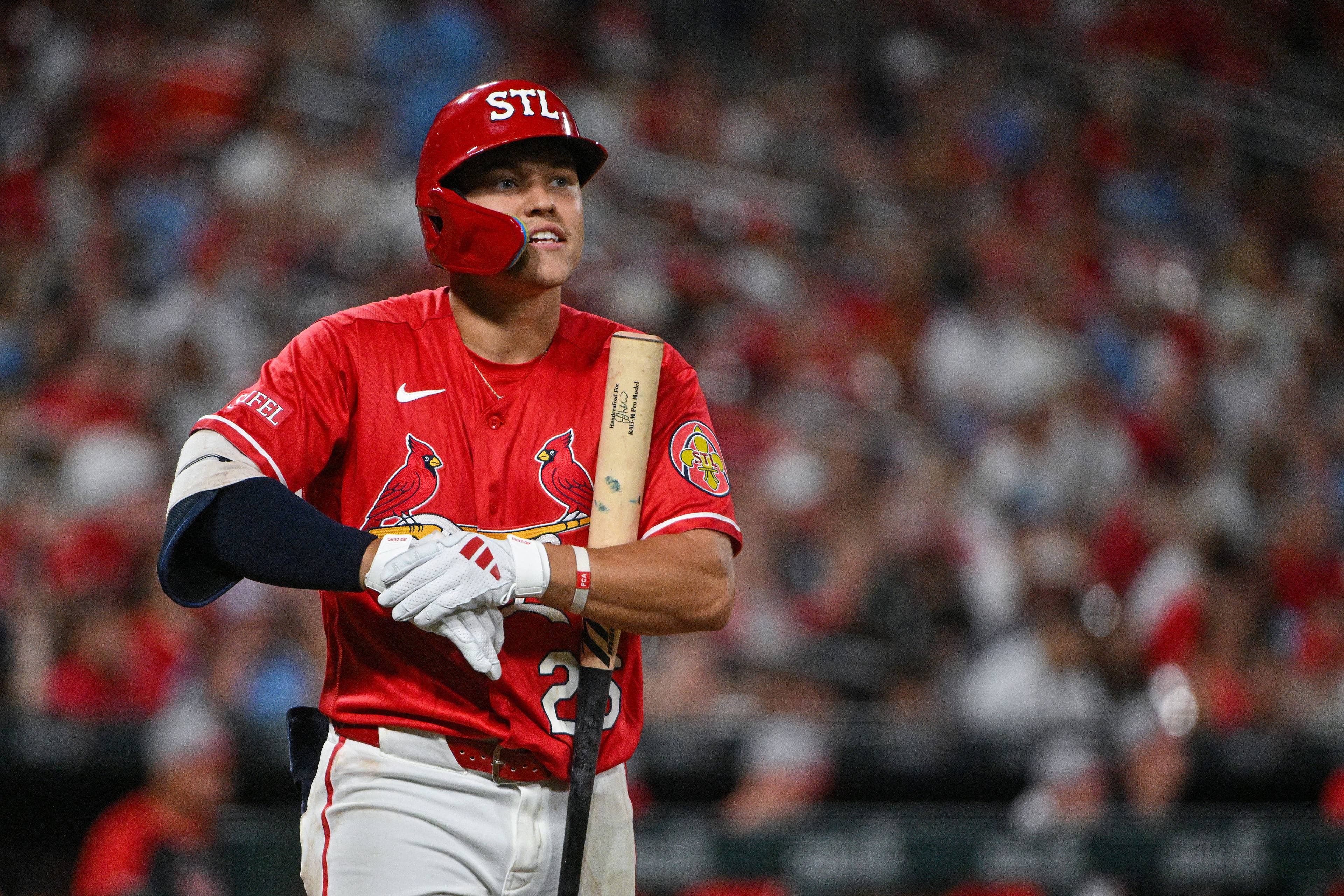
The NL race was not uncontested. Mets outfielder Carson Benge collected seven first-place votes and 107 points. Cardinals infielder JJ Wetherholt received three first-place votes and 99 points. Stewart finished with 20 first-place selections and 170 points, a clear lead but not a unanimous decision. Mets pitcher Nolan McLean was fourth and appeared on 29 ballots, reflecting an unusually deep group of first-year players who had legitimate reasons to enter the discussion.
Those voting totals deserve interpretation rather than just a ranking. Benge and Wetherholt offered voters different offensive and positional profiles. Stewart's case had more obvious statistical milestones: an entire season of appearances, the rookie lead in several power categories, and an RBI mark rarely reached by a rookie anywhere. He was also the only player named on all 30 ballots. That consensus suggests that even voters who preferred another candidate still viewed his season as impossible to leave out of the top group.
It is possible to respect the alternatives without pretending every measure points to the same conclusion. Benge hit for average and contributed as an outfielder; Wetherholt's value comes from a different defensive position and overall contribution. A voter who weighs position or comprehensive wins-above-replacement metrics more heavily might reach a different first-place choice. Rookie of the Year ballots are not a referendum on who will have the best career. They reward what happened over one season, with room for reasonable disagreement over how to compare roles.
Stewart's advantage was the unusually straightforward story of his 2026 contribution. He appeared every day, delivered the league-leading rookie power totals and produced runs in a lineup that needed them. Even in a crowded field, no competitor matched that exact combination. The result also gave the Reds their ninth Rookie of the Year winner, placing Stewart in a lineage that includes Robinson, Rose, Johnny Bench, Chris Sabo and Jonathan India. That is significant history, but it does not require predicting Hall of Fame outcomes for the newest winner.
The bonus draft pick is useful; escaping last place is the real assignment
Stewart's Rookie of the Year win delivers a second, more tangible reward to the organization. Cincinnati qualified for a supplemental first-round selection in the 2027 amateur draft through MLB's Prospect Promotion Incentive system. The mechanism rewards clubs that carry eligible top prospects on the Opening Day roster rather than delaying their arrival. Stewart began 2026 on that roster, then produced an award-winning season, giving the Reds an additional early opportunity to add talent.
An extra selection is not the same thing as an immediately improved major league lineup. Drafted players take time to develop, and even high selections are never automatic successes. But for a club that needs multiple contributors, another premium pick increases the number of chances to build depth. The incentive is particularly meaningful because Cincinnati did not have to choose between its young first baseman's development and the long-term reward: putting him in the majors at the right time ultimately benefited both.
Still, the uncomfortable number is 75. That was the Reds' win total in 2026, leaving them last in the National League Central and out of the postseason. Stewart had debuted in September 2025 and experienced playoff baseball, but his award season ended in October without a new run. The contrast is the central tension in this story: one of Cincinnati's best individual rookie seasons arrived while the club as a whole slid backward in the division standings.
Terry Francona and the front office now have evidence that an everyday middle-of-the-order hitter can be part of the next competitive Reds team. They do not yet have evidence that one young star can make an entire lineup, pitching staff and bench playoff caliber. The responsible response is to improve around Stewart, protect against depth problems and avoid treating a single breakout as permission to stand still. His home-run total may vary next season. Cincinnati's team ambitions should not rely on him replicating a career year to compensate for holes elsewhere.
Stewart has spoken about wanting to stop watching the postseason and start playing in it. That is a far more demanding objective than appearing on an awards ballot. He has already demonstrated the patience and toughness to carry an everyday role; the Reds must demonstrate they can turn that role into victories. In that sense, the 2027 draft pick is an encouraging consequence of a wise prospect decision. The more important test is whether Cincinnati can use the flexibility and time it has gained to construct a winning club.
GOATIFY
GOATIFY Baseball
Follow the MLB season and show your baseball obsession with GOATIFY fan gear.


Gold Baseball GOAT Sweatshirt
Rep baseball’s greatest with a gold GOAT graphic sweatshirt.
Shop Now ↗
White Baseball GOAT Sweatshirt
Rep baseball’s greatest with a white GOAT graphic sweatshirt.
Shop Now ↗


Gold Baseball GOAT Sticker
A gold baseball GOAT decal for your bottle, laptop or game-day gear.
Shop Now ↗Stewart earned this award with something stronger than a highlight reel: 162 games of availability, record-setting run production and enough road power to answer the easy ballpark objection. The voters saw it, and the Reds now hold both a special young hitter and an extra 2027 draft asset. The honor validates his first full season. Only team improvement can answer the larger question: what does Cincinnati build from here?

















