

Seattle Gets No. 4. The Storm's Bigger Draft Problem Is Fit.
GOATIFYSeattle did not win the 2027 WNBA Draft Lottery. Toronto did. But while the Tempo get to imagine the franchise-changing possibilities of the first pick, the Storm have a more interesting decision at No. 4: what sort of talent actually makes their youngest players better? Seattle already has a center capable of changing the geometry of a possession, an unusually versatile rookie frontcourt partner and a guard who supplied instant scoring without waiting for the rebuild to become respectable.
The league's November 15 lottery left Seattle fourth, behind Toronto, Houston and Washington. That was the expected outcome rather than a sudden stroke of luck. The Storm earned their place after an 8–36 season that exposed the distance between enticing individual development and a team capable of finishing close games. A third straight high selection can be the bridge between those two things. It can also become a third talented prospect asked to solve the same problems with too little support.
Three potential names illustrate the choice. South Carolina's Tessa Johnson promises shooting, Notre Dame's Hannah Hidalgo offers pressure and creation, and French prospect Sarah Cissé adds another layer of frontcourt upside. None is locked into Seattle's draft slot, and the class can change before April. The useful question is not which name wins the earliest mock draft. It is which skill the Storm cannot afford to be without when Dominique Malonga, Awa Fam and Flau'jae Johnson are ready to win.
The Storm have three building blocks. They do not yet have a balanced team.
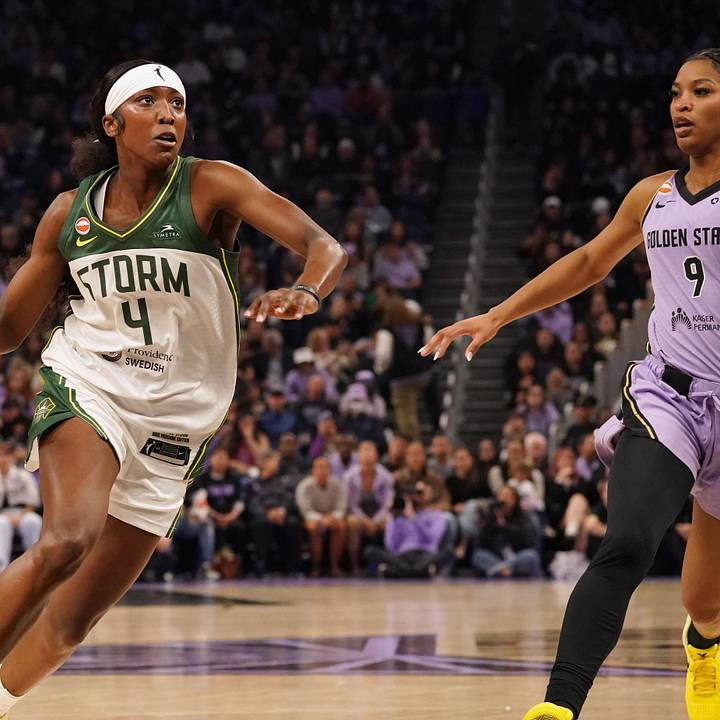
The most encouraging part of an 8–36 season is not that the number can be spun as progress. It cannot. Seattle lost too often, and no collection of promising highlights changes that. The encouraging part is that its three youngest headline pieces already do different things. Malonga can occupy the paint and pressure a defense above the rim. Fam can operate alongside another big rather than only replacing her. Johnson can generate perimeter offense when a possession stalls. Those are complementary starting ingredients, not a completed recipe.
Malonga's sophomore season was the most unmistakable leap. Seattle's official roster lists 17.1 points and 8.8 rebounds a game for 2026, compared with 7.7 points and 4.6 boards as a rookie in 2025. Her first All-Star selection was recognition of genuine production, not merely fascination with size or dunks. The 6-foot-6 center has enough touch and mobility to create unusual decisions for opponents: stay small and absorb her interior reach, or play bigger and risk losing ground when Seattle accelerates.
But a featured center changes what everyone around her must do. When the ball reaches Malonga, defenses are supposed to face a dilemma. Help from the wing and surrender a clean outside look; stay home and trust one defender against her height and finishing ability. If the shooters are not respected, that dilemma disappears. Multiple defenders can shade toward the lane without paying a proportionate price. The best No. 4 selection would make those gambles more expensive, whether by accuracy, drive-and-kick passing or both.
Fam's rookie season supplies a second reason not to assess the draft in isolation. She averaged 10.3 points and 5.9 rebounds and showed credible range, hitting 35.2 percent of her attempts from three according to the year-end figures. That is interesting for a frontcourt player asked to share space with Malonga. It does not prove that every opposing defense will guard her like a specialist, and it certainly does not guarantee two-center lineups will work against all opponents. It does give Seattle a real experiment instead of an imagined one.
Johnson made the adjustment to the professional game with less hesitation than many rookies. Her 14.9 points, 4.8 rebounds and 2.9 assists per game came with record-setting rookie production for the franchise. Seattle's own season review notes 626 points, 60 made threes and 58 steals. Those are useful indicators because they span scoring volume, long-range threat and disruptive defense. She was not merely a high-usage shooter collecting numbers during a poor season.
GOATIFY
GOATIFY WNBA
Seattle's new draft choice could complement its rising WNBA core. Discover GOATIFY WNBA fan gear.

Caitlin Clark G.O.A.T. - Greatest of All Sticker
Add basketball personality to your favourite gear.
Shop Now ↗
Caitlin Clark Golden Goose - Women's Sweatshirt
A basketball fan design for everyday wear.
Shop Now ↗

BALLERina Girl's Basketball Ballet Air Sticker
Add basketball personality to your favourite gear.
Shop Now ↗

BALLERina Girl's Basketball Ballet Air Sticker
Add basketball personality to your favourite gear.
Shop Now ↗That still leaves an important distinction between a player who can create her own shot and a team that consistently creates good shots for everybody. Johnson is a natural attacking guard, but asking her to serve as the primary organizer every night could force her to choose between getting teammates involved and exploiting her own scoring advantages. A rookie point guard who controls tempo could help; so could a dependable off-ball sniper who gives a veteran ball handler cleaner space.
Natisha Hiedeman's 2026 production—14.7 points and five assists per game—illustrates that Seattle did have experienced playmaking. The question is how the club wants to distribute responsibility as its younger players mature, and which roles remain stable when rotations or contracts change. A lottery pick is not a substitute for that roster decision. Drafting a nominal point guard makes little sense if the entire plan is to use her off the ball; drafting another scorer makes little sense if no one can set the table.
On defense the arithmetic is equally demanding. Malonga and Fam can contest shots, but a crowded frontcourt is less valuable if guards are routinely beaten at the point of attack. Johnson's steals suggest active hands and anticipation, not automatically a complete perimeter unit. One more two-way wing or disruptive ball handler could raise the floor without becoming Seattle's leading scorer. That possibility deserves consideration alongside the most exciting names.
Here is the central test for every candidate: does her arrival turn at least one current Storm strength into something opponents cannot easily avoid? A great pick can be a star in her own right. A great fit can be the player who transforms the existing stars into a viable five-player attack. At No. 4, Seattle should demand serious evidence of both rather than accept an appealing draft-day slogan.
Tessa Johnson versus Hannah Hidalgo is really a spacing-versus-creation debate.
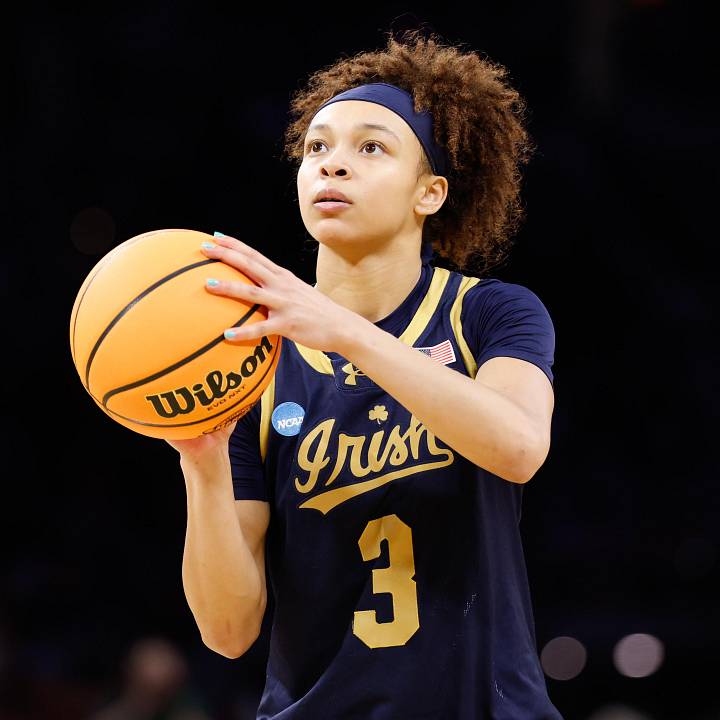
Hannah Hidalgo and Tessa Johnson both appear on early draft boards, but their profiles should not be collapsed into the category of 'another guard.' The distinction between how they create value is the entire point. Hidalgo is the kind of player who wants to put the ball under pressure, attack the defense before it is set and manufacture advantages with activity. Tessa Johnson can bend a defense without even touching the ball, because leaving a strong shooter unguarded has a direct cost.
Hidalgo's early 2026–27 scoring figures are eye-catching: the November reporting placed her around 28.3 points a game, among the nation's leaders at that moment. That is a snapshot, not a full-season WNBA projection. College defenses will adjust, tournament opponents will present different coverage, and a player's professional role depends on the spacing and athletes around her. Seattle's evaluators should be more interested in the ways she creates shots than the raw November average.
Imagine the Storm with Hidalgo bringing the ball up after a rebound. Malonga races toward the rim, Fam trails toward the arc and Johnson runs into open space on the wing. If Hidalgo beats the first defender, the defense must choose which threat to protect. The ball can find an interior mismatch, a trailing big or a shooter, depending on the help. That is the most compelling pro-Hidalgo argument: she could change how often Seattle reaches useful positions before the shot clock becomes an emergency.
The cost is that playing a pressure-first creator changes the responsibility distribution. Johnson must receive enough possessions in advantage situations rather than become a spectator. Malonga needs catches in her preferred areas rather than merely finishing hurried passes. Hiedeman's role would also need definition. The more the roster depends on the same player dominating the ball, the more important it becomes that her jumper and decision-making survive defenses that dare her to slow down.
GOATIFY
GOATIFY WNBA
College guard comparisons make draft season electric. Explore GOATIFY WNBA apparel and gifts.


Caitlin Clark Golden Goose - Women's Sticker
Add basketball personality to your favourite gear.
Shop Now ↗

BALLERina Girl's Basketball Ballet Air Sweatshirt
A basketball fan design for everyday wear.
Shop Now ↗

BALLERina Girl's Basketball Ballet Air Mug
Add basketball personality to your coffee break.
Shop Now ↗Tessa Johnson offers the opposite kind of simplification. The South Carolina guard entered the season scoring about 17 points per game and making around half her three-point attempts in the small early sample described in November reports. Those percentages will almost certainly move with volume and scouting attention. The stable basketball proposition is simpler: Seattle needs opponents to respect somebody behind the arc while Malonga and Fam work inside.
Place an excellent movement shooter one pass away from Johnson's drive and the help defender has an unpleasant choice. A hard stunt toward the ball can produce a quick kickout. A late closeout can become another driving lane. Even when the shooter never attempts a shot, a defender staying attached creates more working room for Malonga. That kind of value is easy to overlook if the draft debate consists only of which prospect can score thirty in college.
An off-ball fit is not automatically a lesser prospect. The history of good offenses is full of players whose gravity let someone else look like the star of a highlight. Yet Seattle must ask whether Tessa Johnson can contribute when a defender runs her off the line, how many positions she can guard and whether she can create something against a set defense in a late-clock possession. A jumper alone does not guarantee lottery-level value.
Availability complicates the comparison. Hidalgo could be gone before Seattle selects; some early projections put her near the very top. Tessa Johnson may be available later or rise sharply with the college season. Neither has an obligation to fit a November mock draft, and eligibility decisions and team needs can rearrange the order before April 12. Seattle should evaluate tiers of skills, not write a wish list that assumes every preferred prospect somehow falls.
The strongest strategy is to have an answer for three very different draft rooms. If an elite on-ball creator slides, Seattle needs to know whether the ceiling justifies reorganizing the guards. If a high-end shooter is available, the team must compare her broader upside with the immediate benefit of spacing. If neither represents clear value at four, the Storm should not force the position simply because the roster looks cleaner on paper.
The winner of this debate will not be determined by one hot shooting month or one spectacular transition bucket. It will be determined by how often each player can create advantages against professional defenders and how cheaply the Storm can obtain similar skills elsewhere. That is what makes this more than a vote between two familiar college names.
Sarah Cissé would make Seattle bigger. That does not automatically make it better.

Seattle already has the kind of interior size that makes other front offices curious. The temptation to add another young international frontcourt talent is understandable. Malonga and Fam look like a foundation; why not keep pouring concrete? Sarah Cissé, a 19-year-old French prospect playing for Lattes Montpellier, is one early name connected with the No. 4 discussion. Her reported early-season production of roughly 13.3 points and 7.6 rebounds suggests intriguing tools rather than a finished professional profile.
The first question is where her best minutes would come from. Malonga is a franchise-level development priority, and Fam was drafted third overall only a year before this lottery. Those two already need time together to learn whether their different skills can form a modern pairing. A third young big would not simply take a vacant seat. She would compete for possessions, touches, defensive assignments and coaching attention with players Seattle must already develop.
There is a difference between having versatile bigs and being able to play several of them together. Offensive spacing is not an abstract preference. If a defense can leave two non-shooters near the lane, Johnson has less room to penetrate, Malonga encounters extra bodies on the catch and every ball screen becomes easier to contain. Fam's perimeter progress helps, but a small early shooting sample does not erase that equation. Cissé's shooting development would be one of the decisive scouting questions.
GOATIFY
GOATIFY WNBA
Seattle's versatile young bigs are a reason for optimism. Browse women's basketball fan favourites.

Caitlin Clark G.O.A.T. - Greatest of All Hoodie
A basketball fan design for everyday wear.
Shop Now ↗


BALLERina Girl's Basketball Ballet Air Sweatshirt
A basketball fan design for everyday wear.
Shop Now ↗BALLERina Girl's Basketball Ballet Air Sticker
Add basketball personality to your favourite gear.
Shop Now ↗
BALLERina Girl's Basketball Ballet Air Mug
Add basketball personality to your coffee break.
Shop Now ↗The defense offers a stronger case for stacking size. Long forwards can switch, recover, contest shots without fouling and clean the glass. In theory, one can protect the rim while another steps toward a driver. But that only works if the group can handle the foot speed and pull-up shooting of small professional lineups. A defender who dominates rebounding in one league can still be targeted repeatedly by a WNBA guard in space.
Cissé might also prove more of a mobile forward than a traditional center. Her reported 6-foot-2 frame makes role projection especially important: does she defend wings at the next level, or does she generate most of her current value close to the basket? The answer would radically change her compatibility with Malonga and Fam. A versatile forward who can keep the ball moving and guard across positions addresses a real Seattle need. A third interior-only prospect carries much more overlap.
The international evaluation matters because comparing box-score averages across leagues is hazardous. Roles, competition, minutes, defensive rules and physical matchups differ. Scouting should start with film of how she handles contact, reads rotations and recovers to shooters, not with a neat numerical comparison to a college guard. Her age may create patience for development, but a team coming off 36 losses should be precise about which development bets fit together.
There is also a timing issue. Malonga is already producing at an All-Star level, and Fam is getting meaningful WNBA minutes. An athlete selected fourth is valuable enough that Seattle should expect a plausible path to rotation impact. If Cissé needs extensive time before she can share the floor with either existing center, the opportunity cost is larger than it appears. Seattle would have passed on a guard or wing who might immediately change the spacing and defensive balance.
The right answer depends on talent tier. If Seattle's scouting team believes Cissé is plainly the best player available and has a significantly higher ceiling, positional overlap should not become an automatic veto. Teams that draft solely for short-term holes can miss exceptional players. Yet being the best pure prospect and the best asset at four are not always the same. Trade interest, development plans and future roster flexibility all belong in the calculation.
Seattle's choice should come down to whether another frontcourt prospect solves a distinctive problem or merely adds another version of a problem it is already working on. Three young bigs sound like a formidable future. A competitive five-player lineup requires enough shooting, ball handling and perimeter defense to make that size matter.
At No. 4, Seattle should buy a skill it cannot cheaply replace.

One thing the lottery does not tell Seattle is which player the club can actually select. Toronto holds the top pick, Houston second and Washington third, and those organizations will make their decisions before the Storm reach the board. JuJu Watkins could dominate the conversation if she enters, but college declarations and the three teams ahead are unresolved. Treating a November mock draft as a settled April order would be a poor way to manage a valuable asset.
The Storm need a short list of non-negotiable skills. The first is accurate shooting that changes the way an opponent defends Malonga. The second is a reliable source of penetration and playmaking that frees Johnson to attack with momentum. The third is perimeter defense strong enough to protect a lineup using two developing bigs. Not every pick can check all three boxes. The purpose of the list is to establish what the roster cannot easily manufacture internally.
That is where another name such as LSU's Mikaylah Williams enters the conversation. Some early projections place her with Seattle because she offers size and shot-making on the perimeter. A different mock may send her elsewhere. The point is not to crown a fourth favorite, but to challenge the idea that the choice is confined to the three prospects most frequently mentioned in a single article. A team should evaluate every comparable shooter and creator at the likely draft range.
GOATIFY
GOATIFY WNBA
Drafting a true roster fit takes patience. Shop the GOATIFY WNBA collection.


Caitlin Clark G.O.A.T. - Greatest of All Sweatshirt
A basketball fan design for everyday wear.
Shop Now ↗

BALLERina Girl's Basketball Ballet Air Sticker
Add basketball personality to your favourite gear.
Shop Now ↗
Caitlin Clark Golden Goose - WNBA Indiana Hoodie
A basketball fan design for everyday wear.
Shop Now ↗Think of the choices in basketball rather than marketing terms. If a guard can punish defenses for tagging Malonga on the roll, she has immediate tactical value. If she can also attack the closeout, the value compounds. If a bigger wing can defend elite scorers and make catch-and-shoot threes, the Storm might be able to keep Johnson and two bigs on the floor without exposing obvious weak points. The relevant unit of analysis is the whole lineup.
A high-upside creator would change Seattle's distribution of touches. The front office should know whether the coaching staff can make that work before investing pick four in another player who needs the ball. A high-upside off-ball shooter raises a different question: can she hold up physically and defensively long enough to stay on the court when opponents target her? A versatile forward must show that mobility and decision-making justify the minutes she would take from Fam.
Trading down is another legitimate scenario, not a default solution. If Seattle sees several prospects as near equals, turning No. 4 into a lower pick plus a useful asset could increase flexibility. But moving down makes sense only if a plausible partner actually offers sufficient value and the club is comfortable losing access to its first choice. A late first-round pick is not automatically better than a rare opportunity to select an outstanding player fourth.
Trading the selection for a veteran is more complicated. Seattle needs experienced help, especially after a season of constant losses, yet sacrificing cheap early-career talent can make a young roster expensive before it becomes truly good. The team should be wary of one-year fixes that improve the win total slightly while narrowing its longer-term window. A veteran who fills a precise missing skill and fits the roster timeline would be different from a famous name acquired for reassurance.
The date to circle is April 12, 2027, the scheduled WNBA Draft. Between now and then, the college season will test Tessa Johnson's shooting against better scouting, Hidalgo's shot creation under pressure and the wider class's ability to defend and play without the ball. International evaluations will evolve, and Seattle will learn more about its own roster options. Nobody should present a November projection as a completed transaction.
The value of choosing fourth is not that Seattle gets to pick from the most famous names left over. It is that the organization can still acquire a player with a credible path to changing a franchise. That is why the selection deserves more scrutiny than the easy claim that a team with an All-Star center should simply take the best scorer.
The Storm already possess a plausible future frontcourt and an exciting young perimeter player. Now they need to connect the pieces. The right fourth pick might not have the loudest college scoring average, the tallest frame or the best social-media reel. She will be the player who forces opponents to defend Seattle differently, night after night, and makes an 8–36 rebuild look less like an accumulation of prospects and more like the beginning of a team.
Seattle's lottery result was ordinary. Its opportunity is not. Malonga, Fam and Johnson have given the Storm a genuine starting point, and pick four is a chance to add the connective tissue that three talented individuals cannot supply alone. Shooting, creation and perimeter resistance should be the first questions in every scouting meeting, with pure upside as the deciding argument when the talent gap is truly substantial.
If Hidalgo unexpectedly reaches Seattle, the club should evaluate what a new offensive organizer could unlock. If Tessa Johnson or another elite shooter profiles as the best value, the spacing payoff could arrive quickly. If Cissé or a different versatile forward proves too talented to pass, Seattle must show how the frontcourt minutes and defensive matchups would work. A successful draft is not about winning an argument in November. It is about giving the Storm a better five-player game in 2027 and beyond.
GOATIFY
GOATIFY WNBA
From draft debates to the season ahead, find GOATIFY WNBA apparel, stickers and basketball gifts.

Caitlin Clark Golden Goose - WNBA Indiana Sticker
Add basketball personality to your favourite gear.
Shop Now ↗


Caitlin Clark G.O.A.T. - Greatest of All Sweatshirt
A basketball fan design for everyday wear.
Shop Now ↗















